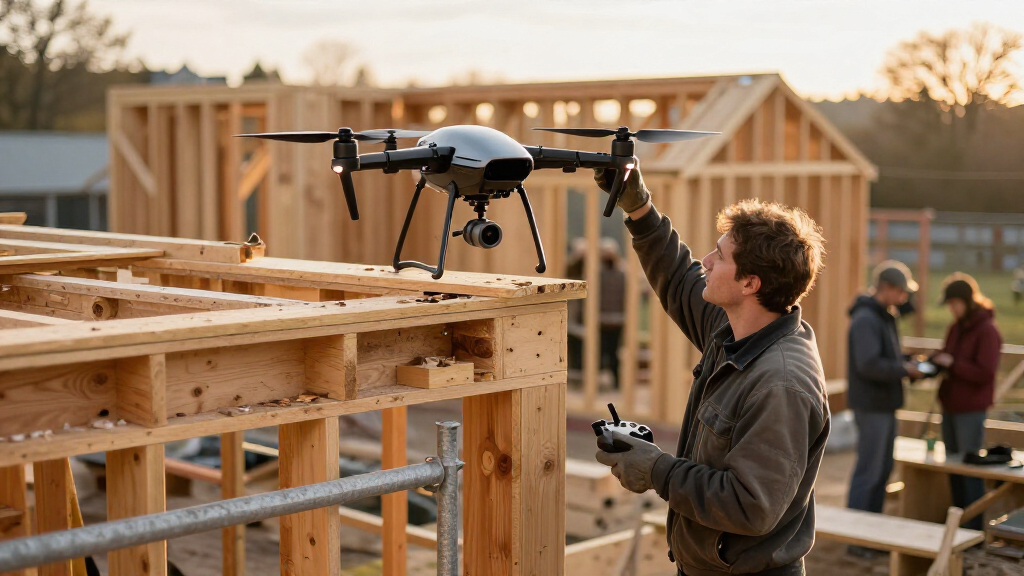
For a jobsite drone that can document roofs, façades, and construction progress, I would start with the DJI Mavic 4 Pro Fly More Combo: its high-resolution main camera and dual tele cameras give inspectors more ways to capture details from a safe distance. The DJI Air 3S is a more portable alternative with a wide and medium tele camera, while the DJI Mini 5 Pro prioritizes compact carry and a light airframe. These picks differ most in image detail, field-kit convenience, and how much camera capability you need to bring to routine site walks.

Get business pricing on tools and workshop supplies
- Business-only prices and quantity discounts
- Tax-exempt purchasing
- Multiple users, one account, clear invoices
I ranked them for site inspection work, where readable detail, repeatable coverage, practical flight time, and obstacle awareness matter more than travel photography features alone. The Mavic takes the lead for image flexibility; the Air 3S models offer a smaller inspection kit; and the Mini is easiest to carry between locations. I also call out bundle differences and app or charger caveats, since those can affect how smoothly a drone fits into a workday.
Complete the kit


Key Takeaways
- The DJI Mavic 4 Pro ranks first for inspectors who need the most camera flexibility, with a 100MP Hasselblad main camera and two tele cameras.
- The DJI Air 3S Fly More Combo with the 128GB card adds a wide/medium tele pair and a memory card, but its accessory bundle may be bulky.
- The standard DJI Air 3S Fly More Combo has similar core camera and flight capabilities, but its charger is sold separately.
- The DJI Mini 5 Pro is the most compact pick here and includes three batteries, though its 249.9 g class airframe does not replace a purpose-built mapping workflow.
- All four descriptions list long maximum flight times; actual inspection coverage still depends on conditions, route planning, regulations, and battery management.
| DJI Mavic 4 Pro Fly More Combo with DJI RC 2 | 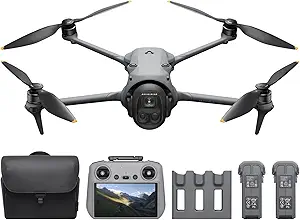 | Best Overall for Image Detail | Main camera: 100MP Hasselblad | Video: 6K/60fps HDR | Tele cameras: Dual | VIEW LATEST PRICE | See Our Full Breakdown |
| DJI Air 3S Drone with RC 2 Fly More Combo and 128GB Memory Card |  | Best Value Bundle for Field Documentation | Wide-angle camera: 1-inch CMOS, 24mm, 50MP | Medium tele camera: 1/1.3-inch CMOS, 70mm, 48MP | Video: 4K/60fps HDR | VIEW LATEST PRICE | See Our Full Breakdown |
| DJI Air 3S Fly More Combo with RC 2 Remote Controller |  | Best Air 3S Kit for a Leaner Setup | Primary camera: 1-inch CMOS | Video: 4K/60fps HDR | Dynamic range: Up to 14 stops | VIEW LATEST PRICE | See Our Full Breakdown |
| DJI Mini 5 Pro Fly More Combo Plus with DJI RC 2 |  | Best Compact Pick for Routine Site Walks | Image sensor: 1-inch CMOS | Video: 4K/60fps HDR | Gimbal rotation: 225° | VIEW LATEST PRICE | See Our Full Breakdown |
| jobsite drone for site inspection | Video | Obstacle sensing | Maximum flight time | Included |
|---|---|---|---|---|
| DJI Mavic 4 Pro Fly More Combo | 6K/60fps HDR | 0.1-Lux Nightscape Omnidirectional | Up to 51 minutes | DJI Mavic 4 Pro, DJI RC 2, three batteries, charging hub, accessories |
| DJI Air 3S Drone with RC 2 Fly | 4K/60fps HDR | Omnidirectional with forward-facing LiDAR | Up to 45 minutes | Three batteries, 128GB microSD, charging hub, filters, bags, accessories |
| DJI Air 3S Fly More Combo with | 4K/60fps HDR | Omnidirectional with forward-facing LiDAR | Up to 45 minutes | — |
| DJI Mini 5 Pro Fly More Combo | 4K/60fps HDR | Omnidirectional with forward-facing LiDAR and vision sensors | Up to 52 minutes per battery | — |
More Details on Our Top Picks
DJI Mavic 4 Pro Fly More Combo with DJI RC 2
The DJI Mavic 4 Pro is my first choice when inspection records need to show both broad context and fine visible detail. Its 100MP Hasselblad main camera and dual tele cameras give a team more framing options than the Air 3S pair, which uses a wide camera and one medium tele camera. That flexibility can help capture an entire elevation and then tighter views of a visible condition without changing aircraft.
The listed 6K/60fps HDR video and 360° Infinity Gimbal are more imaging headroom than many routine progress flights require. They make more sense for inspectors who expect to crop, compare image sets, or record moving walkthrough footage. Up to 51 minutes of flight time is the longest stated figure among the DJI Mavic and Air options here, and the combo includes three batteries and a charging hub for multiple sorties.
This capability comes with a larger commitment than the Mini 5 Pro’s compact design and more complexity than the Air 3S. The provided drawback is practical: the DJI Fly app must be downloaded from DJI’s website, rather than Google Play. For a crew standardizing a fleet, app installation should be sorted out before field deployment. The Mavic suits detail-heavy visual inspection; teams whose deliverable is simple progress documentation may find the Air 3S easier to justify as a carry kit.
Pros:- 100MP Hasselblad main camera with 6K/60fps HDR video
- Dual tele cameras complement the main camera for tighter framing
- Up to 51 minutes of stated flight time
- Three batteries, charging hub, and DJI RC 2 are included
Cons:- DJI Fly must be downloaded from DJI’s website rather than Google Play
- Its larger imaging feature set may be more than basic progress documentation requires
- Maximum flight time and transmission range depend on operating conditions
Best for: Inspection teams that want the broadest camera choice and high-resolution image capture for documenting visible site conditions.
Not ideal for: Crews that prioritize a small, light carry kit or only need straightforward progress photos from routine flights.
- Main camera:100MP Hasselblad
- Video:6K/60fps HDR
- Tele cameras:Dual
- Gimbal:360° Infinity Gimbal
- Obstacle sensing:0.1-Lux Nightscape Omnidirectional
- Maximum flight time:Up to 51 minutes
- Video transmission:Up to 30 km (18.6 mi), O4+
- Included:DJI Mavic 4 Pro, DJI RC 2, three batteries, charging hub, accessories
Our verdict“Choose the Mavic 4 Pro when camera flexibility and image detail take priority over a compact, simple field kit.”
DJI Air 3S Drone with RC 2 Fly More Combo and 128GB Memory Card
This Air 3S bundle is the practical middle ground for inspectors who want a capable two-camera drone without the Mavic 4 Pro’s emphasis on maximum image resolution and camera range. Its 50MP wide camera and 48MP medium tele camera cover broad site views and closer framing, making it more adaptable than a single-camera compact option. The Mavic adds two tele cameras and a 100MP main sensor, but many crews documenting ordinary progress may prefer this more portable balance.
The package stands out for its three batteries, 128GB memory card, RC 2 screen controller, charging hub, filters, and carrying bags. That is a useful field kit if the team wants storage and accessories packed together. Up to 45 minutes of stated flight time and omnidirectional sensing with forward-facing LiDAR add practical support for repeated site flights, though LiDAR and return-to-home behavior should not be mistaken for autonomous hazard avoidance in every environment.
The accessory list is also its main inconvenience: the bundle may be cumbersome to carry compared with a leaner setup, especially for inspectors already moving tools or PPE between work zones. Nighttime return-to-home depends on operating conditions, and crews should not rely on sensors in place of a planned route and a clear launch area. Compared with the standard Air 3S combo, this listing supplies the memory card and more accessories; choose it if those items fit your workflow, not simply because the box is fuller.
Pros:- 50MP wide and 48MP medium tele cameras
- Up to 45 minutes of stated flight time
- Omnidirectional obstacle sensing with forward-facing LiDAR
- Three batteries, 128GB microSD card, RC 2, hub, and listed accessories
Cons:- The accessory bundle may be cumbersome to carry around a jobsite
- Nighttime sensing and return-to-home depend on conditions
- Does not offer the Mavic 4 Pro’s 100MP main camera or dual tele cameras
Best for: Small inspection teams that want dual-camera coverage and a ready-to-pack bundle with memory and accessories included.
Not ideal for: Inspectors who want the lightest possible bag, already own the listed accessories, or need the Mavic’s higher-resolution camera system.
- Wide-angle camera:1-inch CMOS, 24mm, 50MP
- Medium tele camera:1/1.3-inch CMOS, 70mm, 48MP
- Video:4K/60fps HDR
- Maximum flight time:Up to 45 minutes
- Obstacle sensing:Omnidirectional with forward-facing LiDAR
- Live transmission:1080p/60fps, up to 20 km
- Controller:DJI RC 2 with screen
- Included:Three batteries, 128GB microSD, charging hub, filters, bags, accessories
Our verdict“Pick this Air 3S package for a flexible inspection camera pair and a particularly complete field bundle.”
DJI Air 3S Fly More Combo with RC 2 Remote Controller
The standard Air 3S Fly More Combo keeps the central strengths of the other Air 3S listing: a 1-inch CMOS primary camera, dual 4K/60fps HDR cameras, up to 45 minutes of stated flight time, and omnidirectional sensing with forward-facing LiDAR. For visual inspections, that gives a useful balance of wide coverage and a second perspective without stepping up to the Mavic 4 Pro’s higher-resolution 100MP main camera and dual tele cameras.
This package includes three batteries, a charging hub, ND filters, and an RC 2 remote with a built-in screen. Compared with the memory-card bundle, the supplied list is more focused on core flight and camera accessories. It may suit crews that already manage their own storage cards or want to avoid carrying a larger accessory assortment. The screen-equipped controller also provides a dedicated control setup rather than requiring a phone as the display.
There is a clear setup caveat: the charger is sold separately, despite the included battery charging hub. Buyers should check what charging equipment they have available before planning a multi-battery day. The product description also calls this travel-focused, and the Mini 5 Pro is still the more compact carry option in this roundup. I would choose this Air 3S when the camera pair matters more than smallest size, and the separate charger does not disrupt the team’s kit plan.
Pros:- 1-inch CMOS primary camera and dual 4K/60fps HDR cameras
- Up to 14 stops of stated dynamic range
- Three batteries, charging hub, ND filter set, and RC 2 included
- Forward-facing LiDAR alongside omnidirectional sensing
Cons:- Charger is sold separately
- No memory card is listed as included
- Larger than the Mini 5 Pro compact carry option
Best for: Inspectors who want Air 3S camera capability and a screen controller, and who already have a compatible charger and storage plan.
Not ideal for: Buyers who want a bundle with a listed memory card and extensive carry accessories, or who need a charger included.
- Primary camera:1-inch CMOS
- Video:4K/60fps HDR
- Dynamic range:Up to 14 stops
- Maximum flight time:Up to 45 minutes
- Transmission range:Up to 20 km
- Obstacle sensing:Omnidirectional with forward-facing LiDAR
- Controller:DJI RC 2 with built-in screen
- Included accessories:Three batteries, charging hub, ND filter set; charger sold separately
Our verdict“Choose this Air 3S combo when its dual-camera inspection capability fits your workflow and you can supply the charger separately.”
DJI Mini 5 Pro Fly More Combo Plus with DJI RC 2
The DJI Mini 5 Pro is the portability pick. Its foldable, palm-sized form and approximate 249.9 g weight make it the easiest aircraft in this lineup to bring along when a site visit may or may not need aerial documentation. It still has a 1-inch CMOS sensor and 4K/60fps HDR video, so choosing the compact model does not mean dropping to a basic camera. Compared with the Air 3S, though, its listed camera details do not include a second tele camera for alternate framing.
For inspection teams, the 225° gimbal rotation and true vertical filming are distinctive tools for capturing tall structures or portrait-oriented records. Omnidirectional sensing, forward-facing LiDAR and vision sensors, and ActiveTrack 360° add flight and subject-tracking functions. Up to 52 minutes per Plus battery is the longest stated maximum here, and this combo lists three batteries, a charging hub, spare propellers, ND filters, and the RC 2.
Those strengths do not make the Mini a substitute for a specialized mapping aircraft or a guarantee of clearance around cranes, scaffolding, cables, or moving equipment. Its compact format is best for routine visual checks and quick documentation; teams that need the Mavic’s multiple tele options should step up, while those needing an Air 3S camera pair should choose one of the Air bundles. DJI Fly must be downloaded from DJI’s website rather than Google Play, and nighttime flights may require permits depending on local rules.
Pros:- Compact foldable design at approximately 249.9 g ± 4 g
- 1-inch CMOS sensor, 4K/60fps HDR, and true vertical filming
- Up to 52 minutes per Plus battery as listed
- Three batteries, charging hub, RC 2, ND filters, and spare propellers included
Cons:- No second tele camera is listed, unlike both Air 3S options
- DJI Fly must be downloaded from DJI’s website rather than Google Play
- Night flights may require permits depending on local regulations
Best for: Inspectors who travel between sites, value a compact aircraft, and primarily need routine visual records rather than multiple tele-camera views.
Not ideal for: Teams requiring the Mavic 4 Pro’s multi-tele camera flexibility or a dedicated mapping workflow for measured deliverables.
- Image sensor:1-inch CMOS
- Video:4K/60fps HDR
- Gimbal rotation:225°
- Obstacle sensing:Omnidirectional with forward-facing LiDAR and vision sensors
- Tracking:ActiveTrack 360°
- Internal storage:42 GB
- Maximum flight time:Up to 52 minutes per battery
- Weight:Approximately 249.9 g ± 4 g
Our verdict“Pick the Mini 5 Pro when easy carry and capable routine site imagery matter more than a multi-camera inspection setup.”
How We Picked
I compared these four models against the demands of visual jobsite inspection: documenting changing work areas, checking visible roof or façade conditions, and collecting images that a team can review later. I gave the most weight to camera options and the ability to frame details, then considered stated flight time, obstacle sensing, remote-controller setup, and what comes in each bundle. The Mavic 4 Pro earns the top position because its 100MP main camera and dual tele cameras create the broadest imaging toolkit in this group.
Bundle details matter because inspection work often involves repeated flights and moving between locations. I noted battery count, charging equipment, memory, filters, and controller inclusion rather than treating “Fly More” as a uniform package. The two Air 3S listings are close in core capability, but the card bundle includes a 128GB microSD card and a list of additional accessories, while the other specifically notes that its charger is sold separately. That distinction changes setup convenience more than image quality.
I also considered portability and operating caveats. The Mini 5 Pro is the compact choice, while the Air 3S and Mavic 4 Pro give inspectors larger camera systems. Obstacle sensing and LiDAR can support awareness and return-to-home functions, but they do not guarantee safe operation; site clutter, lighting, weather, and flight rules still matter. These are product comparisons based on the supplied specifications and descriptions, not claims of hands-on testing. I did not treat any listed maximum flight time or transmission range as a guaranteed field result.
| jobsite drone for site inspection | Maximum flight time | Included | Controller |
|---|---|---|---|
| DJI Mavic 4 Pro Fly More Combo | Up to 51 minutes | DJI Mavic 4 Pro, DJI RC 2, three batteries, charging hub, accessories | — |
| DJI Air 3S Drone with RC 2 Fly | Up to 45 minutes | Three batteries, 128GB microSD, charging hub, filters, bags, accessories | DJI RC 2 with screen |
| DJI Air 3S Fly More Combo with | Up to 45 minutes | — | DJI RC 2 with built-in screen |
| DJI Mini 5 Pro Fly More Combo | Up to 52 minutes per battery | — | — |
Factors to Consider When Choosing Best Jobsite Drone For Site Inspection
I would choose a jobsite drone by starting with the inspection deliverable: repeatable visual records, detailed close framing, or a compact aircraft for occasional checks. Camera specifications matter when they support a specific view or review task; battery and bundle details matter when several flights are planned across a workday.
Match the camera to the inspection task
For visible condition checks, ask whether the team needs to capture a broad elevation, then frame a particular area from a distance. The Mavic 4 Pro’s 100MP main camera and dual tele cameras offer the widest camera choice here. The Air 3S models pair a wide camera with a medium tele camera, which gives them a useful middle position. The Mini 5 Pro lists a 1-inch sensor but no second tele camera, so it is the simplest fit when portability outweighs focal-length flexibility.
High resolution and HDR do not by themselves create an engineering measurement or replace close physical inspection. If the goal is a visual progress archive, consistency in flight path, angle, and timing can matter as much as the camera headline. Confirm that the camera output supports the team’s documentation process before selecting a model around a single spec.
Treat maximum flight time as a planning figure
The listed maximums run from 45 minutes on the Air 3S models to 51 minutes on the Mavic 4 Pro and 52 minutes per Mini 5 Pro Plus battery. These are stated upper figures, not a promise for every jobsite. Wind, temperature, flight behavior, payload, and return reserves affect usable time, so plan each inspection route with a safe margin and keep battery state visible to the pilot.
Three batteries are listed with each combo, which can support multiple sorties. A hub helps organize charging, but it does not mean the kit can recharge without a suitable power source or any separately required charger. The standard Air 3S listing explicitly says its charger is sold separately; account for that in field preparation.
Read obstacle sensing as assistance
All four descriptions include obstacle sensing in some form, and the Air 3S and Mini 5 Pro descriptions mention forward-facing LiDAR. These systems can contribute to awareness and support return-to-home behavior, but a construction site presents changing hazards: wires, cranes, temporary structures, moving vehicles, and people. A drone’s sensors do not remove the need for a trained pilot, a clear launch area, a route plan, and direct observation.
The Air 3S card bundle description specifically qualifies nighttime sensing and safe return by operating conditions. The Mini listing also notes that night flights may require permits depending on local regulations. Check applicable aviation rules and site permissions for the location and flight conditions before scheduling an inspection.
Compare the complete field kit
The two Air 3S bundles share core aircraft features, but their listed contents differ. The 128GB card bundle includes a card, filters, bags, hub, three batteries, and additional accessories; that can reduce separate packing but may add bulk. The other Air 3S combo lists a hub and ND filters but says the charger is sold separately. The Mavic bundle includes three batteries and a hub, while the Mini listing adds spare propellers, ND filters, and a hub.
Choose accessories around the team’s actual workflow. A memory card is useful only if its capacity and handling fit the image management process; filters are useful when the flight conditions call for them. A screen-equipped RC 2 is included with every listed bundle, providing a dedicated controller display. Confirm each package’s full contents before ordering, since bundles can vary.
Decide what portability is worth
The Mini 5 Pro is the easiest to carry, which matters for inspectors walking large sites or visiting several locations in one day. The Air 3S remains the middle choice for a two-camera setup in a foldable form, while the Mavic 4 Pro leads on camera flexibility. A smaller drone can be more convenient to deploy, but convenience should not outweigh the view and documentation quality the inspection requires.
For a team that flies only occasionally, a compact option may increase the likelihood that the aircraft is on hand. For a dedicated inspection program, compare image framing needs, the number of sorties, storage and charging routines, and staff training. This lineup is aimed at visual inspection; buyers needing survey-grade mapping, thermal data, or specialized reporting should verify those requirements separately because they are not established by the listed specifications.
Frequently Asked Questions
Which drone is the strongest choice for detailed visual site inspection?
I rank the DJI Mavic 4 Pro first for detail-oriented visual work because it combines a 100MP Hasselblad main camera with two tele cameras and 6K/60fps HDR video. The Air 3S models are less camera-rich but still offer a wide and medium tele option, which may be enough for routine progress records. The right choice depends on how often inspectors need tighter framing and how much camera flexibility the documentation process uses.
Which pick is easiest to carry between jobsite locations?
The DJI Mini 5 Pro is the compact option in this group, with a foldable, palm-sized design and an approximate weight of 249.9 g ± 4 g. It also lists a 1-inch CMOS sensor and 4K/60fps HDR video, so its portable role still includes capable visual capture. Choose an Air 3S or Mavic instead if a second tele view or broader camera selection matters more than minimizing the aircraft’s carry footprint.
Are the two DJI Air 3S bundles essentially the same?
They share the Air 3S platform’s core camera and flight features, including a wide camera, medium tele camera, up to 45 minutes of stated flight time, and forward-facing LiDAR. Their listed bundle contents differ: one includes a 128GB microSD card and a larger accessory assortment, while the other lists three batteries, a hub, ND filters, and an RC 2 but says the charger is sold separately. Compare the package details against the equipment your team already has.
Can obstacle sensing make a drone safe to fly around construction equipment?
No sensor description should be read as a guarantee around cranes, cables, scaffolding, vehicles, or people. Obstacle sensing and LiDAR can support awareness and certain return functions, but real performance depends on the aircraft, surroundings, lighting, and operating conditions. I would treat them as additional assistance and still use a trained pilot, a planned route, and direct observation while following applicable site and aviation rules.
Which model should I choose for routine progress documentation?
For routine visual progress records, the Air 3S is a balanced starting point if you want both wide and medium tele cameras. Choose the card bundle if its storage and accessory package suits your field kit; select the other Air 3S combo if you have a charger and prefer its listed contents. If lightweight carry matters most, the Mini 5 Pro can suit simpler checks, while the Mavic 4 Pro makes the most sense when maximum camera flexibility is part of the requirement.
Conclusion
I would choose the DJI Mavic 4 Pro for inspection teams that need the most camera flexibility and high-resolution capture. For a balanced two-camera setup, the DJI Air 3S card bundle is the practical package when its extra accessories fit your routine; the standard Air 3S combo makes sense if you already have charging equipment and want its leaner listed kit. Pick the DJI Mini 5 Pro for a compact aircraft that is easy to bring on ordinary site walks. Match the choice to the images your team must review, then plan routes, charging, permissions, and safe operating procedures around the actual site.
Fall yard work Picks
leaf blowers
As an affiliate, we earn on qualifying purchases.