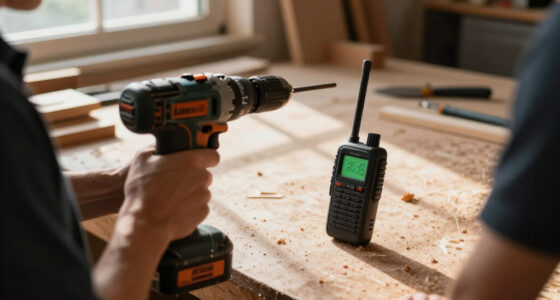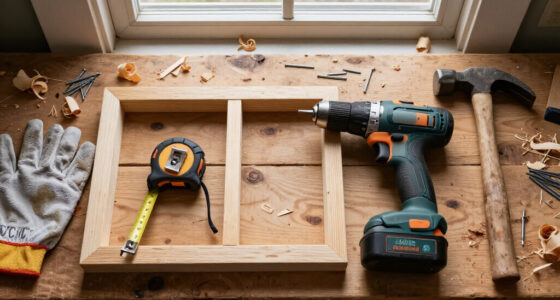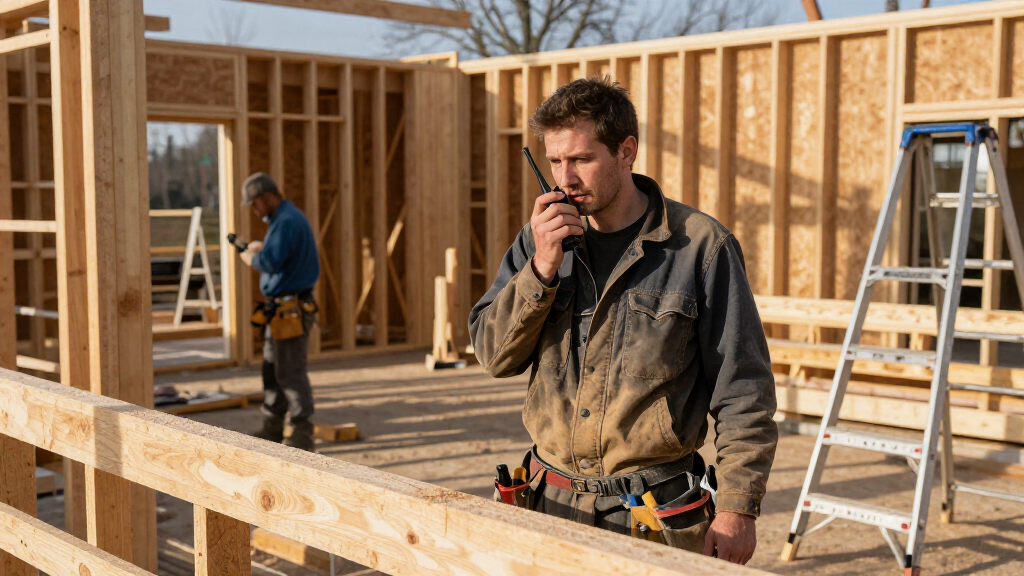
The best construction site walkie-talkie for most crews is the Retevis RB48A IP67 10-pack, which pairs rugged water and dust protection with enough radios for a larger team. For smaller crews, the DEWALT DXFRS800 stands out as a heavy-duty two-radio option, while the SAMCOM FPCN30A includes speaker microphones for hands-free access. The right choice depends on how many workers need radios, how rough or wet the site gets, and whether accessories matter more than kit size. A larger pack can simplify crew-wide communication, but a smaller set may suit supervisors or a compact team better. Read on for the full comparison, selection criteria, and advice on matching a radio kit to your site.

Get business pricing on tools and workshop supplies
- Business-only prices and quantity discounts
- Tax-exempt purchasing
- Multiple users, one account, clear invoices
Complete the kit


Key Takeaways
The RB48A IP67 10-pack is the strongest crew-wide pick in this lineup because it combines protective construction with a larger ready-to-issue set.
Pack size changes the buying decision: the RB48A 4-pack and SAMCOM FPCN30A 4-pack suit smaller teams, while the Retevis RB48A 10-pack and pxton 4-pack address different kit and accessory needs.
Speaker microphones separate the SAMCOM and MateTalk options from basic radio kits, offering a practical way to keep the radio accessible while working.
Waterproof ratings matter for exposure, not every jobsite risk: the IP67 RB48A and RB48 models suit wet or dusty conditions better than options without that rating stated in their names.
The lineup favors FRS-style crew communication over specialist site systems, so buyers should check local radio rules, coverage needs, and compatibility before expanding an existing fleet.
| Retevis RB48A IP67 Waterproof Two-Way Radios, 10-Pack |  | Best for Large Crews | Pack size: 10 radios | Radio type: FRS | Channels: 22 | VIEW LATEST PRICE | See Our Full Breakdown |
| Retevis RB48 FRS Long-Range Two-Way Radios |  | Best for Tough Site Conditions | Radio type: FRS two-way radio | Durability standard: MIL-STD-810H tested | Water and dust protection: IP67 | VIEW LATEST PRICE | See Our Full Breakdown |
| SAMCOM FPCN10A Two-Way Radios with Waterproof Speaker Mics (2-Pack) |  | Best for Small Teams with Speaker Mics | Pack size: 2 radios | Channels: 20 | Frequency range: UHF 406.1–470 MHz | VIEW LATEST PRICE | See Our Full Breakdown |
| SAMCOM FPCN30A Two-Way Radios with Speaker Microphones, 4-Pack |  | Best for Licensed, Higher-Power Teams | Pack size: 4 radios | Channels: 20 | Frequency range: 406.1–470 MHz UHF | VIEW LATEST PRICE | See Our Full Breakdown |
| DEWALT DXFRS800 2W FRS Walkie Talkies, 2-Pack |  | Best for Hands-Free Operation | Pack size: 2 radios | Power: 2W | Channels and privacy codes: 22 FRS channels; 121 privacy codes | VIEW LATEST PRICE | See Our Full Breakdown |
| Retevis RB48 Heavy-Duty Two-Way Radios |  | Best for Harsh Jobsite Conditions | Model: RB48 | Durability standard: MIL-STD-810H | Battery capacity: 2,000 mAh | VIEW LATEST PRICE | See Our Full Breakdown |
| pxton Rechargeable Two-Way Radios with Earpieces, 16 Channels, Flashlights, and Chargers (4-Pack) |  | Best Accessory Bundle for Small Crews | Pack size: 4 radios | Channels: 16 | Privacy codes: 165 | VIEW LATEST PRICE | See Our Full Breakdown |
| Retevis RB48A Rugged FRS Two-Way Radios, 4-Pack |  | Best Four-Pack for Long Shifts | Pack size: 4 radios | Frequency and channels: FRS, 22 channels | Water and dust resistance: IP67 | VIEW LATEST PRICE | See Our Full Breakdown |
| Retevis MateTalk B4 Walkie-Talkies with Waterproof Shoulder Mic, 4-Pack |  | Best for Hands-Free, Noisy Work Areas | Pack size: 4 radios | Frequency and channels: FRS, 22 channels | Battery capacity: 1,200 mAh, 3.72 V | VIEW LATEST PRICE | See Our Full Breakdown |
| Retevis RB48 IP67 Waterproof Two-Way Radios, 6-Pack |  | Best for Larger Crews | Model: RB48 | Pack size: 6 radios | Frequency and channels: FRS, 22 channels | VIEW LATEST PRICE | See Our Full Breakdown |
| construction site walkie talkie | Pack size | Battery |
|---|---|---|
| Retevis RB48A IP67 Waterproof | 10 radios | 2000mAh, 3.7V |
| Retevis RB48 FRS Long-Range Tw | — | 2000mAh |
| SAMCOM FPCN10A Two-Way Radios | 2 radios | 3000mAh |
| SAMCOM FPCN30A Two-Way Radios | 4 radios | 1500mAh rechargeable lithium polymer |
| DEWALT DXFRS800 2W FRS Walkie | 2 radios | — |
| Retevis RB48 Heavy-Duty Two-Wa | — | — |
| pxton Rechargeable Two-Way Rad | 4 radios | — |
| Retevis RB48A Rugged FRS Two-W | 4 radios | 2,000 mAh, 3.7 V |
| Retevis MateTalk B4 Walkie-Tal | 4 radios | — |
| Retevis RB48 IP67 Waterproof T | 6 radios | — |
More Details on Our Top Picks
Retevis RB48A IP67 Waterproof Two-Way Radios, 10-Pack
The 10-radio pack suits a construction crew that needs to outfit several work zones from one order. Its IP67 protection against water and dust, plus shock-resistant construction, fits messy outdoor sites, while the glove-friendly push-to-talk button is easier to operate during hands-on work. The 2000mAh battery is rated for up to 23 hours, longer than the RB48’s stated 20 hours, which may help crews get through a shift with fewer charging interruptions. Noise reduction and a 1000mW speaker support clearer messages around equipment. The tradeoff is that this FRS set has a stated range of two miles, and real coverage depends on terrain and obstructions. Choose it for broad crew coverage; the SAMCOM FPCN30A offers higher transmit power but requires licensing.
Pros:- Ten radios can equip multiple workers or work zones
- IP67 waterproof and dustproof protection with shock-resistant construction
- Battery rated for up to 23 hours
- Large glove-friendly push-to-talk button, noise reduction, and 1000mW speaker
Cons:- Two-mile stated range may not cover obstructed or spread-out sites
- FRS format offers less transmit power than the licensed SAMCOM FPCN30A
Best for: Construction managers equipping a large crew that needs durable, license-free FRS radios and a ten-unit set.
Not ideal for: Small crews or sites that need longer-range licensed communications; this pack may include more radios than needed, and its stated range is limited to two miles.
- Pack size:10 radios
- Radio type:FRS
- Channels:22
- Stated range:2 miles
- Battery:2000mAh, 3.7V
- Protection:IP67 waterproof; dustproof and shock-resistant
- Speaker output:1000mW
Our verdict“Choose this ten-pack to equip a large crew with rugged FRS radios and long-rated battery life, provided two-mile stated range fits the site.”
Retevis RB48 FRS Long-Range Two-Way Radios
The RB48 is the durability-focused choice for crews working around dust, water, and frequent drops. Its IP67 rating and stated testing to MIL-STD-810H set it apart from the DEWALT DXFRS800, which also has IP67 protection but does not list the same durability standard in the supplied details. Retevis also reports testing for 1,000 drops from two meters, a useful distinction for radios passed between workers or carried on active sites. A 2000mAh battery, USB-C charging, and an included charging station make shift-to-shift charging more practical. The manufacturer claims coverage up to 300,000 square feet or 25 floors, but actual communication depends on site layout and interference. Its yellow finish improves visibility, though crews wanting a less conspicuous radio may prefer another option.
Pros:- IP67 water and dust resistance
- MIL-STD-810H testing and stated 1,000-drop testing from two meters
- 2000mAh battery rated for up to 20 hours
- USB-C charging and charging station included
Cons:- Actual range can vary with walls, terrain, and interference
- Bright yellow design may not suit crews seeking a low-profile radio
Best for: Site supervisors and outdoor crews who prioritize drop, dust, and water protection and want USB-C charging with a station.
Not ideal for: Buyers who need a verified coverage guarantee or prefer a subdued radio design; the range figure is a manufacturer claim and the yellow finish is prominent.
- Radio type:FRS two-way radio
- Durability standard:MIL-STD-810H tested
- Water and dust protection:IP67
- Drop testing:Tested for 1,000 drops from 2 meters
- Manufacturer-stated coverage:Up to 300,000 sq. ft. / 25 floors
- Battery:2000mAh
- Charging:USB-C and charging station
Our verdict“Pick the RB48 for a rugged FRS radio with flexible charging when durability matters more than a restrained appearance or guaranteed coverage.”
SAMCOM FPCN10A Two-Way Radios with Waterproof Speaker Mics (2-Pack)
This two-radio set is a focused choice for a foreman and a second worker who need hands-free access to waterproof, noise-canceling speaker microphones. Group calling and oversized push-to-talk buttons help keep messages direct when coordinating a small crew. Its 3000mAh battery is rated for more than 24 hours, exceeding the RB48’s up-to-20-hour rating, and its 2-watt UHF transmission gives it a different role from the license-free FRS options here. That UHF format may suit teams already equipped for compatible radios, but buyers should check licensing requirements for their use. The key limitation is water protection: the IP67 rating applies to the speaker microphones, while the radio body is described only as water resistant. Compared with the four-radio FPCN30A, this set prioritizes battery capacity over team size and transmit power.
Pros:- Waterproof speaker microphones with noise-canceling technology
- Group calling and oversized push-to-talk buttons
- 3000mAh battery rated for over 24 hours
- 2-watt UHF radios with 20 channels
Cons:- IP67 rating applies to the speaker microphones, not the radio bodies
- Two-radio pack is too small for larger crews
- UHF use may require licensing, depending on operation
Best for: Foremen and small crews who need two UHF radios with speaker mics, group calling, and a long-rated battery.
Not ideal for: Crews needing IP67 protection for the radio bodies or a larger ready-to-issue fleet; only two radios are included, and radio water resistance is less specific than the mic rating.
- Pack size:2 radios
- Channels:20
- Frequency range:UHF 406.1–470 MHz
- Transmission power:2 watts
- Stated range:Up to 5 miles
- Battery:3000mAh
- Water protection:Radio described as water resistant; speaker microphones rated IP67
- Warranty:3 years for radio body; 1 year for accessories
Our verdict“Choose the FPCN10A for a small team that values long battery life and speaker mics, after confirming its UHF use fits your licensing needs.”
SAMCOM FPCN30A Two-Way Radios with Speaker Microphones, 4-Pack
The FPCN30A gives a small work crew 5-watt UHF radios and a useful accessory bundle: speaker microphones, earpieces, long antennas, and dock chargers. That higher transmit power distinguishes it from the 2-watt SAMCOM FPCN10A and the FRS Retevis sets, making it worth considering for teams that already operate licensed radios. Group calling and 20 channels can help coordinate separate tasks, while four included units cover more workers than the FPCN10A’s two. Its stated range reaches 10 miles, but the real result will depend on site conditions. Battery capacity is 1500mAh, with 8+ hours of continuous-use rating, so it has less battery headroom than the FPCN10A’s 3000mAh pack. The radio is described as water resistant, not IP67-rated.
Pros:- 5-watt transmission power and 20 channels
- Four radios include speaker microphones, earpieces, long antennas, and dock chargers
- Group calling supports team coordination
- Stated range is up to 10 miles
Cons:- Requires an appropriate radio license
- 1500mAh battery is rated for 8+ hours continuous use
- Water resistance is specified without an IP67 rating
Best for: Licensed construction teams that want four higher-power UHF radios with speaker mics, earpieces, and dock chargers.
Not ideal for: Crews seeking license-free operation, IP67 radio-body protection, or longer battery capacity; this set requires an appropriate license and is rated for 8+ hours continuous use.
- Pack size:4 radios
- Channels:20
- Frequency range:406.1–470 MHz UHF
- Transmit power:5 watts
- Stated range:Up to 10 miles
- Battery:1500mAh rechargeable lithium polymer
- Battery life:8+ hours continuous use; 12+ hours standby
- Water resistance:Water resistant
- Included accessories:Speaker microphones, long antennas, earpieces, dock chargers, belt clips
Our verdict“Choose the FPCN30A when your licensed crew wants four higher-power UHF radios and accessories, and can work within its battery and water-protection limits.”
DEWALT DXFRS800 2W FRS Walkie Talkies, 2-Pack
The DXFRS800 is a practical pick for a pair of workers who want hands-free VOX operation and familiar FRS setup. Its 22 channels and 121 privacy codes give crews options for organizing conversations, while the IP67 rating and drop protection suit dusty, wet, or rough work areas. A dual-port dock charger keeps both included radios together between shifts. Compared with the Retevis RB48, the DEWALT’s battery is rated for 18 hours rather than up to 20, and the listed talking range is two miles despite a broader coverage claim of up to 300,000 square feet or 25 floors. Those figures describe different conditions, so neither should be treated as guaranteed site coverage. This set makes sense for a two-person task team, but a larger crew will need a higher-count pack such as the RB48A 10-pack.
Pros:- VOX hands-free operation
- IP67 waterproof and dustproof rating with stated drop protection up to 2 meters
- 22 FRS channels and 121 privacy codes
- Dual-port dock charger and holsters included
Cons:- Two-mile stated talking range may not suit sprawling or obstructed sites
- 18-hour battery rating is shorter than the Retevis RB48’s stated 20 hours
- Two-radio pack requires additional units for larger crews
Best for: Two-person construction teams that need FRS radios with hands-free VOX, IP67 protection, and a shared dock charger.
Not ideal for: Large crews or buyers who need longer battery ratings; the set includes two radios and lists 18 hours of battery life.
- Pack size:2 radios
- Power:2W
- Channels and privacy codes:22 FRS channels; 121 privacy codes
- Frequency:UHF/FM, 462/467 MHz
- Stated talking range:2 miles
- Manufacturer-stated coverage:Up to 300,000 sq. ft. / 25 floors
- Battery life:18 hours
- Water and dust protection:IP67
- Included:2 batteries, 2 holsters, dual-port dock charger, charging cable, user guide
Our verdict“Choose the DXFRS800 for a two-person crew that values hands-free FRS communication and rugged protection over longer battery life or larger pack size.”
Retevis RB48 Heavy-Duty Two-Way Radios
The RB48 is my pick for crews that put ruggedness ahead of pack size. Its MIL-STD-810H rating and 19 reported durability tests address the bumps, dust, and wet conditions that can sideline lighter radios. The large front push-to-talk button is easier to operate with work gloves, while vibration alerts help in noisy areas where a beep may get missed. Compared with the four-radio Retevis RB48A, this listing gives less detail about its IP67 rating and channel count, but it still offers a stated 20-hour battery and NOAA alerts. Its main limitation is range: the 300,000-square-foot or 25-floor figure is a maximum, not a jobsite guarantee. Choose it for durability; skip it if verified water-resistance specs or a larger included crew set matter more.
Pros:- MIL-STD-810H durability standard and 19 reported durability tests
- 2,000 mAh battery rated for up to 20 hours
- Large push-to-talk button is suited to gloved use
- Vibration alerts and NOAA weather alerts
Cons:- Maximum coverage figures may not reflect real jobsite conditions
- Product details do not state an IP water-resistance rating
- Pack size is not specified in the supplied product data
Best for: Construction crews working in dusty, wet, or vibration-prone areas who want glove-friendly controls and long stated runtime.
Not ideal for: Buyers who need a clearly specified IP rating or a multi-radio set for a larger crew.
- Model:RB48
- Durability standard:MIL-STD-810H
- Battery capacity:2,000 mAh
- Stated battery life:Up to 20 hours
- Stated coverage:Up to 300,000 square feet or 25 floors
- Controls and alerts:Large front push-to-talk button, vibration alerts, NOAA weather alerts
- Warranty:5 years
Our verdict“Choose the RB48 if rugged construction and glove-friendly operation matter more than a stated IP rating or a defined crew pack.”
pxton Rechargeable Two-Way Radios with Earpieces, 16 Channels, Flashlights, and Chargers (4-Pack)
The pxton four-pack is the most ready-to-share bundle here: four radios, earpieces, and charging stations give a small crew a practical starting setup. Its 16 channels and 165 privacy codes offer more ways to organize conversations than the 22-channel Retevis RB48A, though channel and code options do not guarantee private or interference-free communication. VOX can help when hands are occupied, and built-in flashlights add a simple convenience for dim areas. Compared with the rugged RB48 models, the pxton set has a rain-resistant shell rather than a stated IP67 rating, so it is a less reassuring choice for heavy exposure to water or dust. Runtime is listed as 8–12 hours and varies with use; crews working long shifts may prefer the Retevis RB48A’s longer stated battery life.
Pros:- Four radios, earpieces, and charging stations are included
- 16 channels and 165 privacy codes support channel organization
- VOX, scanning, low-battery alerts, and built-in flashlights
- Compact radios have a durable, rain-resistant shell
Cons:- Stated 8–12-hour continuous runtime varies with use
- Range depends on terrain and obstacles
- Rain resistance is less specific than the RB48A’s IP67 rating
Best for: Small crews that want four radios with earpieces and charging stations included, plus VOX and scanning.
Not ideal for: Crews on long shifts or in wet, dusty conditions who need an explicitly ruggedized, water-resistant radio.
- Pack size:4 radios
- Channels:16
- Privacy codes:165
- Battery capacity:1,500 mAh per radio
- Charging time:3–4 hours
- Stated continuous use:8–12 hours
- Included accessories:Charging stations, belt clips, earpieces, hand straps, user manuals
- Features:VOX, scanning, low-battery alarm, flashlight
Our verdict“Pick this set for a small crew that values included earpieces and charging gear more than all-weather ruggedness or extended runtime.”
Retevis RB48A Rugged FRS Two-Way Radios, 4-Pack
The RB48A pairs a four-radio crew set with an IP67 rating, making it the strongest fit here for teams that need defined water and dust protection without moving up to a six-radio bundle. Its oversized front PTT and noise reduction speak directly to jobsite use: gloved workers can key up more easily, and voice filtering is intended to help speech cut through background noise. The claimed battery life reaches up to 23 hours, longer than the 20-hour figure for the six-pack RB48, although actual runtime depends on use. It also includes NOAA alerts and customizable side keys. The tradeoff is that its stated range of up to two miles is terrain-dependent, and the feature-rich set may be more than a small team needs if simple communication is the priority.
Pros:- IP67-rated dust and water resistance
- Up to 23 hours of stated battery life
- Oversized front PTT and dual PTT support gloved operation
- Noise reduction, NOAA alerts, and customizable side keys
Cons:- Stated range of up to two miles depends on terrain and conditions
- Four radios may not cover a larger crew
- Its feature set may be unnecessary for teams needing only basic push-to-talk
Best for: Four-person construction crews needing IP67-rated radios, glove-friendly controls, and long stated battery life.
Not ideal for: Buyers who need more than four radios in one set or want dependable coverage based on a fixed range claim.
- Pack size:4 radios
- Frequency and channels:FRS, 22 channels
- Water and dust resistance:IP67
- Battery:2,000 mAh, 3.7 V
- Stated battery life:Up to 23 hours
- Maximum stated range:Up to 2 miles, depending on terrain and conditions
- Operating temperature:-20 to +65 °C
- Included accessories:Charging docks, USB-C cables, antenna ID rings, batteries, back clips, lanyards, instruction manuals
- Warranty:5 years
Our verdict“Choose the RB48A four-pack for a small crew that needs IP67 protection and long stated runtime in a single jobsite set.”
Retevis MateTalk B4 Walkie-Talkies with Waterproof Shoulder Mic, 4-Pack
The MateTalk B4 stands apart through its shoulder microphones and VOX, which can make communication easier when workers are carrying materials or keeping both hands on a task. Noise reduction is also aimed at clearer speech in loud areas. The radios are light at 140 g each, so they are less burdensome to carry than a heavier rugged set such as the six-pack Retevis RB48. That convenience comes with a meaningful site limitation: the radios themselves are not water resistant; only the microphones carry an IP54 rating. Its 1200 mAh batteries have a stated use time of up to 26 hours, but the product data also lists a 12-hour average, so buyers should not plan a full shift around the higher figure without a charging routine. This is best for dry work areas where hands-free use matters more than radio ruggedness.
Pros:- Shoulder microphones keep push-to-talk within easy reach
- VOX supports hands-free communication
- Noise reduction is designed for loud work areas
- Lightweight radios weigh 140 g each
Cons:- Radios are listed as not water resistant
- Battery life details vary between up to 26 hours and a listed 12-hour average
- The included batteries are described as nonstandard
Best for: Workers in dry, noisy construction areas who need shoulder-mic access or hands-free VOX while their hands are occupied.
Not ideal for: Crews exposed to rain, washdown, or heavy dust who need water-resistant radios rather than microphones alone.
- Pack size:4 radios
- Frequency and channels:FRS, 22 channels
- Battery capacity:1,200 mAh, 3.72 V
- Stated battery life:Up to 26 hours of use; 30 hours standby stated
- Radio weight:140 g (0.31 lb)
- Dimensions:1.38 × 2 × 3.81 in (D × W × H)
- Water resistance:Radio not water resistant; shoulder microphone IP54
- Features:Noise reduction, VOX, emergency alarm, rechargeable batteries
Our verdict“Choose the MateTalk B4 for dry, noisy jobs where shoulder-mic access and hands-free operation outweigh weather protection.”
Retevis RB48 IP67 Waterproof Two-Way Radios, 6-Pack
For a crew that needs radios in more hands at once, this six-pack with IP67 protection is the most direct fit in this group. Its dustproof, waterproof, and shock-resistant construction is geared toward demanding sites, while glove-friendly controls, vibration alerts, and NOAA alerts cover practical daily needs. Compared with the four-pack RB48A, this bundle equips two more workers but gives a shorter stated maximum runtime: up to 20 hours versus 23. The product data also lists battery life as both 18 and up to 20 hours, so I would plan around the lower figure for shift logistics. Compatibility details are narrow, specifying Retevis FRS radios on channels 1–5; crews mixing brands or relying on other channels should check fit before buying.
Pros:- Six radios equip a larger crew from one set
- IP67 waterproof and dustproof rating with shock resistance
- Glove-friendly controls, vibration alerts, and NOAA weather alerts
- 2,000 mAh batteries with up to 20 hours stated use
Cons:- Battery life is listed as both 18 hours and up to 20 hours
- Compatibility listing specifies Retevis FRS radios on channels 1–5
- The six-radio set may be more than a smaller crew needs
Best for: Construction supervisors outfitting a crew of six who need IP67 radios and rugged controls for dusty or wet sites.
Not ideal for: Smaller crews that do not need six units, or mixed-brand teams that need broad channel compatibility.
- Model:RB48
- Pack size:6 radios
- Frequency and channels:FRS, 22 channels
- Water and dust resistance:IP67
- Battery capacity:2,000 mAh
- Stated battery life:Up to 20 hours; product data also lists 18 hours
- Durability standard:MIL-STD-810H
- Dimensions and item weight:1.3 × 2.4 × 7.1 in (D × W × H); 730 g
- Warranty:5 years for radios; 1 year for accessories
Our verdict“Pick this six-pack when a larger crew needs rugged IP67 radios and can work within the stated compatibility limits.”
How We Picked
I ranked these radios for the demands of construction work: clear crew coordination, resilience to dust and moisture, ease of carrying and operating, and whether a kit equips a realistic number of workers. The product names and listed configurations distinguish notable traits such as IP67 protection, speaker microphones, earpieces, and pack size. I gave more weight to options that combine jobsite-relevant protection with a useful number of radios than to a single standout accessory or a small kit.
That logic puts the Retevis RB48A IP67 10-pack first for crews needing broad coverage across a team, with smaller RB48 variants and the DEWALT DXFRS800 following for different crew sizes and durability priorities. SAMCOM and MateTalk models rank higher for buyers who value speaker-mic access, while the pxton set serves buyers drawn to included earpieces and charging accessories. Since the supplied product details do not establish measured range, battery runtime, or independent durability results, I avoid treating those as proven advantages; buyers should confirm them against their site layout and use pattern.
Factors to Consider When Choosing Best Construction Site Walkie Talkie
Choosing a jobsite radio kit starts with the way your crew works, not the largest range claim on a box. I would match the number of radios, protection level, accessories, and communications plan to the site’s actual hazards and workflow.
Match the kit to the crew, including spares
Count the people who need to communicate at the same time, then decide whether every worker needs a dedicated handset. A supervisor-only pair may work for a small operation, while a multi-trade crew benefits from a radio at each active work area. Add a spare or two if radios may be misplaced, damaged, or left charging during a shift. Avoid buying strictly by headcount if the kit lacks enough charging capacity for your daily routine. Larger packs such as the RB48A 10-pack can simplify issuing radios, while a 2-pack can be easier to manage for a small team. Also plan who tracks assignments and collects units at shift end.
Treat water and dust protection as a site-specific need
Rain, concrete dust, mud, and washdown exposure create different demands, so identify the most common exposure before choosing a protection level. An IP67 label, as named on several RB48 options, gives a more concrete protection signal than a general ruggedness description. It does not mean the radio can withstand impact, chemical exposure, or every kind of abuse. Check the manufacturer’s care instructions and inspect seals and accessory connections over time. If radios stay inside vehicles or dry offices, paying for more protection may bring little practical benefit. On exposed sites, a protected model can reduce the chance that ordinary moisture or dust interrupts communication.
Plan for coverage across the actual site
Radio range claims are not a reliable substitute for checking the path between workers. Steel framing, concrete, terrain, machinery, and temporary walls can all affect communication, and a growing site can change those conditions week to week. Before standardizing on a fleet, arrange a practical coverage check in the areas where crews will use radios. Separate channels or communication procedures may also help when multiple teams share a site, but confirm that the radios support the setup you need. Do not assume that similarly named models from different brands will work together. If workers must communicate across distant zones or with another company’s equipment, verify compatibility and applicable radio rules first.
Choose accessories around how workers carry tools
A radio that is hard to reach or hear can be less useful than one with fewer headline features. Speaker microphones, like those included with some SAMCOM and MateTalk kits, let a worker clip the microphone nearer to the shoulder while the radio stays secured. Earpieces can help in noisy areas or when private listening matters, though they add another item to fit and maintain. Check whether the accessory connection works with gloves, outerwear, and the way workers wear hard hats or hearing protection. Accessories can also create snag points around tools or moving equipment. Try the intended carry arrangement before outfitting an entire crew.
Set a charging and maintenance routine
Daily readiness depends on more than a radio’s claimed battery capacity. Decide where units will charge, who checks them, and how workers identify a fully charged radio before a shift. A multi-radio fleet needs enough charging positions for the whole crew or a rotation plan that fits working hours. Keep charging contacts clean and follow the manufacturer’s guidance for batteries exposed to dust or moisture. Earpieces and speaker mics need their own inspection and cleaning routine, especially when shared. These small habits reduce dead radios and misplaced accessories without requiring a premium model.
Pay for features that solve a real workflow problem
It can make sense to pay more for a protected housing, a larger kit, or a speaker microphone when those features address frequent site problems. The value disappears when the extra capability sits unused, such as buying a large pack for a two-person crew with no plan for storing or charging the surplus. Think about the cost of communication gaps: delayed coordination, workers leaving their station to find a supervisor, or repeated trips to relay instructions. Then compare that with the upkeep burden of more radios and accessories. For beginners, a simple kit that the crew can issue, charge, and operate consistently may be a better starting point than a feature-heavy setup. Expand only after the coverage and workflow needs become clear.
Frequently Asked Questions
Can radios from different brands communicate with each other?
They may communicate if both models support the same radio service, channel, and compatible settings, but brand names alone do not establish compatibility. Confirm the exact specifications and permitted channel setup for each model before mixing fleets. Privacy codes can make radios seem incompatible when the underlying channel matches, so check those settings as well. If a subcontractor brings its own radios, test communication together before work begins. For a mixed fleet, document the working channel setup so crews can repeat it reliably.
Is an IP67 radio necessary for a construction site?
It depends on how often radios face rain, dust, mud, or accidental exposure to water. The IP67-labeled RB48 models make protection a visible part of their positioning, while other options in this roundup emphasize different traits such as speaker microphones or included earpieces. An ingress rating does not cover impact damage, chemical exposure, or poor maintenance. If radios are used outdoors through changing weather, added protection may be worthwhile. For mostly indoor, dry work, a less protective model may meet the need.
Should I buy one radio for every worker?
Give a radio to each worker who needs to coordinate without leaving a task or relying on a nearby coworker to relay messages. On a small site, a supervisor and key crew leads may be enough; larger or more spread-out teams often need broader distribution. Account for visitors, rotating workers, and spare units when choosing a pack size. Too few radios can create communication bottlenecks, while too many add charging and tracking work. Review how messages actually flow during a shift before settling on a fleet size.
Do speaker microphones help in noisy or hands-busy work?
A speaker microphone can put the listening and speaking controls closer to a worker’s shoulder while the radio remains clipped elsewhere. That arrangement may help when gloves, tools, or a belt-mounted radio make direct access awkward. It does not guarantee clearer audio in every noisy environment, and workers may still need hearing protection or a different communication setup. The SAMCOM and MateTalk kits in this roundup include speaker-mic options, while the pxton kit includes earpieces. Choose based on whether workers need open listening, private audio, or simple direct radio access.
What should I check before relying on advertised range?
Look beyond a maximum range figure and consider the materials and layout between radio users. Concrete, steel, elevation changes, machinery, and temporary partitions can all reduce useful coverage. Test radios from the actual work zones, including stairwells, basements, and outdoor edges where crews may need to reach one another. Repeat the check as the site changes, since new structures and equipment can alter radio paths. If coverage remains unreliable, review the radio system and site communications plan before buying additional units of the same model.
Conclusion
For most larger crews, I recommend the Retevis RB48A IP67 10-pack as the best overall because it combines a substantial kit with named water and dust protection. The Retevis RB48A 4-pack is my value-oriented pick for a smaller team that still wants the same protection emphasis, while the DEWALT DXFRS800 is the best fit for buyers seeking a compact two-radio heavy-duty set. Beginners can start with the simpler 2-pack format and add radios after checking coverage and crew workflow. For hands-busy communication, look to the SAMCOM FPCN30A or Retevis MateTalk B4 with speaker microphones; choose the pxton set if earpieces and included charging accessories better suit your crew. Match the final choice to the number of workers, site exposure, and accessory setup you can maintain consistently.
Fall yard work Picks
leaf blowers
As an affiliate, we earn on qualifying purchases.