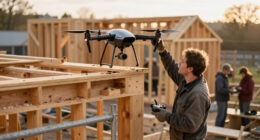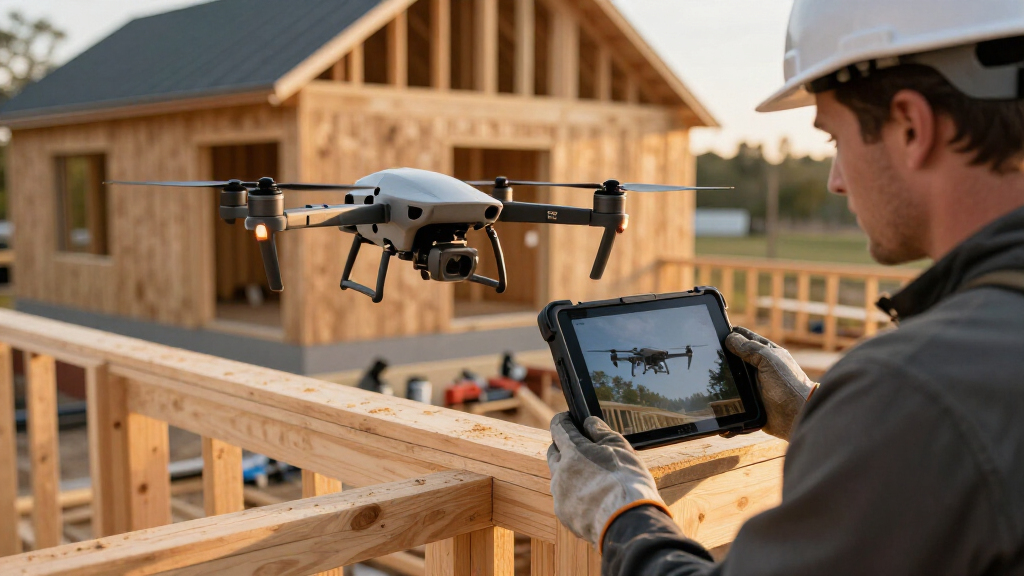

For most site teams, the DJI Air 3S Fly More Combo is my best overall pick for jobsite inspection because its capable camera system and flight kit suit repeat progress checks. The DJI Mavic 4 Pro is the premium choice when image detail and flexible camera coverage matter most, while the DJI Mini 4K offers a simpler entry point for basic aerial documentation. The main tradeoffs are camera capability, portability, flight time, and how much complexity your crew can manage. A small consumer drone can record useful context, but it may not fit every mapping, measurement, or compliance workflow. Read on for how these eight options compare and which one best fits your site.

Get business pricing on tools and workshop supplies
- Business-only prices and quantity discounts
- Tax-exempt purchasing
- Multiple users, one account, clear invoices
Complete the kit


Key Takeaways
- The Air 3S Fly More Combo is my strongest all-around fit for recurring inspections because it balances camera capability, field readiness, and a manageable footprint.
- The Mavic 4 Pro sits at the premium end of this lineup; its more advanced camera system makes most sense when image flexibility matters more than compact carry.
- The Mini 4K and Mini 3 favor simpler, lighter documentation work, but buyers should not mistake portability for survey-grade mapping capability.
- The Mini 5 Pro and Air 3S versions offer different routes to capable DJI imaging: compactness matters more with the Mini, while broader site coverage favors the Air.
- The SKYROVER X1 and Oddire HK11 emphasize accessible controls or basic flight features, but teams should verify support, image consistency, and workflow fit before relying on them for project records.
| DJI Air 3S Drone with RC 2 Fly More Combo and 128GB Memory Card |  | Best Overall for Routine Site Inspections | Wide-angle camera: 1-inch CMOS, 24mm, 50MP | Medium telephoto camera: 1/1.3-inch CMOS, 70mm, 48MP | Video recording: 4K/60fps HDR | VIEW LATEST PRICE | See Our Full Breakdown |
| DJI Mini 4K Camera Drone Combo with 2 Batteries |  | Best for New Drone Operators | Weight: Under 249 g | Camera: 4K UHD | Stabilization: 3-axis gimbal | VIEW LATEST PRICE | See Our Full Breakdown |
| DJI Mavic 4 Pro Fly More Combo with DJI RC 2 | 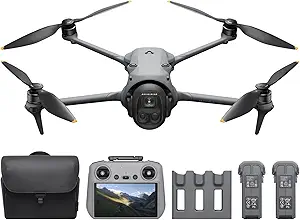 | Best Premium Imaging | Main camera: 100MP Hasselblad | Video: 6K/60fps HDR | Tele cameras: Dual | VIEW LATEST PRICE | See Our Full Breakdown |
| DJI Mini 3 Drone with DJI RC, 3-Axis Gimbal |  | Best Compact Screen Controller | Weight: Under 249 g with standard battery | Camera: 4K HDR video | Gimbal: 3-axis mechanical | VIEW LATEST PRICE | See Our Full Breakdown |
| DJI Air 3S Fly More Combo with RC 2 Remote Controller |  | Best Field Kit for Repeat Inspections | Primary camera: 1-inch CMOS | Video recording: 4K/60fps HDR | Dynamic range: Up to 14 stops | VIEW LATEST PRICE | See Our Full Breakdown |
| SKYROVER X1 Drone with Camera, Screen Controller, 4K Video, Obstacle Avoidance, and 3 Batteries |  | Best for Phone-Free Field Monitoring | Video: 4K/60fps HDR; 4K/100fps slow motion | Photo resolution: 48 MP | Image sensor: 1/1.32-inch CMOS | VIEW LATEST PRICE | See Our Full Breakdown |
| DJI Mini 5 Pro Fly More Combo Plus with DJI RC 2 |  | Best Compact Inspection Drone | Image sensor: 1-inch CMOS | Video: 4K/60fps HDR | Gimbal rotation: 225 degrees | VIEW LATEST PRICE | See Our Full Breakdown |
| Oddire HK11 GPS Drone with 4K Camera, Brushless Motor, and Two Batteries |  | Best for Basic GPS-Assisted Site Overviews | Photo resolution: 4096×3072 pixels; 12 MP effective still resolution | Video resolution: 2048×1088P | Lens: F2.15; 110-degree wide angle; adjustable within 90 degrees | VIEW LATEST PRICE | See Our Full Breakdown |
| jobsite drone for site inspection | Obstacle sensing | Weight | Maximum flight time |
|---|---|---|---|
| DJI Air 3S Drone with RC 2 Fly | Omnidirectional, with forward-facing LiDAR | — | Up to 45 minutes |
| DJI Mini 4K Camera Drone Combo | — | Under 249 g | Up to 62 minutes with 2 batteries |
| DJI Mavic 4 Pro Fly More Combo | 0.1-Lux Nightscape Omnidirectional | — | — |
| DJI Mini 3 Drone with DJI RC | — | Under 249 g with standard battery | — |
| DJI Air 3S Fly More Combo with | Omnidirectional sensing with forward-facing LiDAR | — | 45 minutes |
| SKYROVER X1 Drone with Camera | 360-degree sensing | Under 249 g | — |
| DJI Mini 5 Pro Fly More Combo | Omnidirectional, with forward-facing LiDAR and vision sensors | Approximately 249.9 g ± 4 g | Up to 52 minutes per battery |
| Oddire HK11 GPS Drone with 4K | — | 249 g | — |
More Details on Our Top Picks
DJI Air 3S Drone with RC 2 Fly More Combo and 128GB Memory Card
For a site manager who needs both broad progress views and closer looks at rooflines or equipment, I’d put the DJI Air 3S first. Its 50MP wide camera and 48MP medium telephoto camera make it more adaptable to changing inspection distances than the single-camera DJI Mini 3. Up to 45 minutes of flight time and three included batteries can help cover more of a site per outing, while the screen-equipped RC 2 keeps the live view ready without a separate phone.
Omnidirectional sensing and forward-facing LiDAR add support for obstacle awareness and nighttime return-to-home, though they do not remove the need to plan flights around visibility and site conditions. This combo’s filters, bags, card, and charging hub are useful for a field kit, but add bulk. Choose it for a flexible visual inspection workflow; skip it if you need specialized surveying data or the lightest possible setup.
Pros:- Wide and medium telephoto cameras provide different inspection perspectives without changing aircraft.
- Up to 45 minutes of flight time and three batteries support longer inspection sessions.
- Omnidirectional obstacle sensing and forward-facing LiDAR support situational awareness and return-to-home.
- RC 2 has a built-in screen, and the bundle includes a 128GB card and field accessories.
Cons:- The accessory-heavy bundle takes more space and effort to carry than a basic drone kit.
- Obstacle sensing and nighttime return depend on operating conditions and do not replace careful flight planning.
Best for: Site managers who need one portable aircraft for wide progress documentation and closer visual checks of structures or equipment.
Not ideal for: Survey teams that need dedicated mapping or measurement sensors, or inspectors who want a minimal, lightweight kit.
- Wide-angle camera:1-inch CMOS, 24mm, 50MP
- Medium telephoto camera:1/1.3-inch CMOS, 70mm, 48MP
- Video recording:4K/60fps HDR
- Maximum flight time:Up to 45 minutes
- Obstacle sensing:Omnidirectional, with forward-facing LiDAR
- Live video transmission:1080p/60fps, up to 20 km
- Remote controller:DJI RC 2 with screen
- Included batteries:3 Intelligent Flight Batteries
- Included memory card:128GB microSD
Our verdict“Choose the Air 3S combo for a versatile visual inspection kit with two camera perspectives and multiple batteries.”
DJI Mini 4K Camera Drone Combo with 2 Batteries
If aerial inspection is occasional and you are learning to fly, the DJI Mini 4K offers a simpler entry point than the larger, more camera-flexible DJI Air 3S. Its under-249 g weight makes it easy to carry between work areas, and the 3-axis gimbal helps keep 4K footage stable enough for progress records. GPS Return to Home and beginner-friendly controls give new operators practical help when returning from a pass over a site.
The two-battery bundle is listed for up to 62 minutes of combined flight time, giving a small team room for multiple short checks. That does not make it a specialist inspection platform: there is no tele camera listed for tighter views, and its transmission reach is shorter than the Air 3S’s. QuickShots are more useful for repeatable presentation footage than close examination. I’d choose it for basic visual documentation, not detailed inspection work.
Pros:- Under-249 g weight makes the drone easy to carry between jobsite locations.
- 3-axis gimbal stabilization supports smoother 4K UHD footage.
- GPS Return to Home and beginner-friendly controls help newer operators manage basic flights.
- Two batteries are listed for up to 62 minutes of flight time in total.
Cons:- A single listed camera offers less framing flexibility than the dual-camera Air 3S.
- The DJI Fly app must be downloaded from DJI’s website rather than Google Play.
- Maximum flight time and transmission range vary with conditions.
Best for: Small contractors or facilities staff learning to capture occasional 4K progress footage across modest job sites.
Not ideal for: Inspectors who need telephoto detail, advanced obstacle sensing, or a camera setup tailored to close visual checks.
- Weight:Under 249 g
- Camera:4K UHD
- Stabilization:3-axis gimbal
- Maximum video transmission:10 km (32,800 ft)
- Wind resistance:38 kph (Level 5)
- Maximum flight time:Up to 62 minutes with 2 batteries
- Takeoff altitude:Up to 4,000 m
- Included accessories:2 batteries, DJI RC-N1C remote controller, shoulder bag, propeller holder, spare propellers
Our verdict“Pick the Mini 4K for portable, straightforward progress footage when detailed inspection views are not the priority.”
DJI Mavic 4 Pro Fly More Combo with DJI RC 2
For inspection teams that need the most camera detail in this group, the DJI Mavic 4 Pro is the premium choice. Its 100MP Hasselblad main camera, dual tele cameras, and 6K/60fps HDR video give more room to frame and review visual records than the DJI Mini 4K. The 360° Infinity Gimbal also supports more flexible camera orientation, while up to 51 minutes of flight time can reduce battery changes during larger site visits.
Low-light omnidirectional sensing and up to 30 km O4+ transmission add capability for demanding operations, but neither replaces site-specific risk controls or local flight rules. This is a more involved option than the Air 3S, and its imaging capabilities may be unnecessary for teams that only need routine progress photos. I’d reserve it for professionals who can put the additional camera flexibility and high-resolution capture to work.
Pros:- 100MP Hasselblad main camera and 6K HDR video offer substantial image detail.
- Dual tele cameras provide more framing options than the single-camera Mini 4K.
- Up to 51 minutes of flight time can support longer inspection sessions.
- Combo includes three batteries, a charging hub, and DJI RC 2.
Cons:- Its advanced imaging capabilities may be more than routine visual progress checks require.
- Low-light sensing and long-range transmission remain dependent on operating conditions.
- DJI Fly must be downloaded from DJI’s website rather than Google Play.
Best for: Construction documentation teams and inspection professionals who need high-resolution imagery, multiple tele views, and longer flight sessions.
Not ideal for: Small crews seeking a simple, portable drone for occasional overview footage without a need for premium camera flexibility.
- Main camera:100MP Hasselblad
- Video:6K/60fps HDR
- Tele cameras:Dual
- Gimbal:360° Infinity Gimbal
- Obstacle sensing:0.1-Lux Nightscape Omnidirectional
- Flight time:Up to 51 minutes
- Video transmission range:Up to 30 km (18.6 mi), O4+
- Included:DJI Mavic 4 Pro, DJI RC 2, three batteries, charging hub, and accessories
Our verdict“Choose the Mavic 4 Pro when premium imaging and multiple camera perspectives justify a more capable inspection kit.”
DJI Mini 3 Drone with DJI RC, 3-Axis Gimbal
The DJI Mini 3 suits inspectors who value a light aircraft and a controller that is ready to fly without relying on a phone. The built-in 5.5-inch display on the DJI RC gives a clear, self-contained setup, while the under-249 g weight with the standard battery helps keep the kit compact. Its 4K HDR camera and 3-axis mechanical gimbal can produce stable site records; vertical video, Panorama, and QuickShots also help when teams need varied progress updates.
Compared with the DJI Mini 4K, the Mini 3 adds a screen-equipped controller and vertical capture, but its standard battery is listed for up to 38 minutes. The longer-lasting Plus battery is sold separately and pushes the aircraft above 249 g, so it changes the portability tradeoff. This is a capable compact documentation tool, though neither model is a substitute for a dedicated inspection sensor.
Pros:- Under-249 g weight with the standard battery supports a compact carry setup.
- DJI RC includes a built-in 5.5-inch HD display and pre-installed DJI Fly app.
- 3-axis mechanical gimbal supports stable 4K HDR footage.
- Vertical video, Panorama, and QuickShots add options for progress documentation.
Cons:- Standard battery flight time is listed at up to 38 minutes.
- The Intelligent Flight Battery Plus is sold separately and takes the drone above 249 g.
- Battery charger is sold separately.
Best for: Solo site supervisors who want a light drone, stable 4K HDR footage, and a controller with its own display.
Not ideal for: Teams needing long flights on the standard battery, dual camera perspectives, or close-range inspection sensors.
- Weight:Under 249 g with standard battery
- Camera:4K HDR video
- Gimbal:3-axis mechanical
- Standard battery flight time:Up to 38 minutes
- Intelligent Flight Battery Plus flight time:Up to 51 minutes; sold separately
- Maximum video transmission range:Up to 10 km (FCC conditions)
- Wind resistance:Level 5; up to 38 kph
- Controller:DJI RC with built-in 5.5-inch HD display
- QuickTransfer speed:Up to 25 Mb/s
Our verdict“Pick the Mini 3 for compact site documentation when a screen-equipped controller and vertical footage matter more than extended battery life.”
DJI Air 3S Fly More Combo with RC 2 Remote Controller
For teams repeating the same site checks, the DJI Air 3S Fly More Combo brings together a screen-equipped RC 2, three batteries, a charging hub, and ND filters. Its 1-inch CMOS primary camera and 4K/60fps HDR video give it stronger stated imaging credentials than the DJI Mini 3, while omnidirectional sensing with forward-facing LiDAR adds support when moving around obstacles. Up to 45 minutes of flight time is useful for covering multiple areas before a battery change.
The bundle makes practical sense for fieldwork, but this listing says the charger is sold separately despite including a charging hub, so check what charging equipment is actually supplied before planning a full kit. Its 20 km transmission range is a stated maximum, not a guarantee on a busy or obstructed site. Choose it for recurring visual documentation; the Mavic 4 Pro offers dual tele cameras and 6K video for teams needing more imaging flexibility.
Pros:- 1-inch CMOS primary camera and 4K/60fps HDR suit detailed visual documentation.
- Three batteries and a charging hub support repeated field flights.
- RC 2 has a built-in screen, avoiding reliance on a phone for the live view.
- Forward-facing LiDAR and omnidirectional sensing support obstacle awareness.
Cons:- The listing states that the charger is sold separately, so charging needs should be checked before field use.
- Its camera setup is less flexible than the Mavic 4 Pro’s main and dual tele cameras.
- Maximum transmission range and sensing performance depend on site conditions.
Best for: Site teams that make recurring visual inspection visits and want multiple batteries, filters, and an onboard-screen controller.
Not ideal for: Buyers who need dual tele cameras or 6K capture, or crews expecting the listed bundle to include a charger.
- Primary camera:1-inch CMOS
- Video recording:4K/60fps HDR
- Dynamic range:Up to 14 stops
- Maximum flight time:45 minutes
- Video transmission range:20 km
- Obstacle sensing:Omnidirectional sensing with forward-facing LiDAR
- Remote controller:DJI RC 2 with built-in screen
- Included accessories:Three Intelligent Flight Batteries, battery charging hub, ND filter set
- Charger:Sold separately
Our verdict“Choose this Air 3S combo for repeat site visits when a multi-battery field kit matters more than premium multi-camera imaging.”
SKYROVER X1 Drone with Camera, Screen Controller, 4K Video, Obstacle Avoidance, and 3 Batteries
The SKYROVER X1 suits inspectors who want a dedicated screen and steady aerial footage without relying on a phone. Its 5.5-inch, 700-nit touchscreen controller is useful on bright jobsites, while the 3-axis gimbal helps keep rooflines and exterior walls clear in recorded 4K footage. Compared with the Oddire HK11, it offers substantially higher stated video and photo resolution, plus 360-degree obstacle sensing; those features make it the more capable option for documenting a site. The three included batteries allow up to 96 minutes in total, but that figure spans multiple battery swaps rather than one continuous flight. Obstacle sensing and the claimed transmission range can vary with conditions, so I would not treat either as a substitute for careful flight planning.
Pros:- 4K/60fps HDR video and 48 MP photos provide detailed site documentation.
- Bright 5.5-inch touchscreen controller works without a phone.
- Three-axis gimbal stabilizes footage of roofs and facades.
- Three batteries provide up to 96 minutes of combined flight time.
Cons:- The stated 96 minutes requires using all three batteries and changing them between flights.
- Obstacle sensing and transmission range depend on flying conditions.
Best for: Site inspectors who want a bright, dedicated controller display and high-resolution footage for documenting building exteriors.
Not ideal for: Crews that need uninterrupted long-duration coverage in a single flight, since the 96-minute claim requires three batteries and swaps.
- Video:4K/60fps HDR; 4K/100fps slow motion
- Photo resolution:48 MP
- Image sensor:1/1.32-inch CMOS
- Gimbal:3-axis
- Controller display:5.5-inch HD touchscreen; 700 nits; 60 Hz
- Obstacle sensing:360-degree sensing
- Live view:1080p/60fps
- Flight time:Up to 96 minutes with three batteries
- Weight:Under 249 g
Our verdict“Choose the SKYROVER X1 if a bright phone-free controller and detailed stabilized footage matter more than single-flight endurance.”
DJI Mini 5 Pro Fly More Combo Plus with DJI RC 2
For inspectors moving between buildings or carrying gear up ladders, the foldable DJI Mini 5 Pro combines a compact format with a 1-inch sensor and 4K/60fps HDR recording. Its omnidirectional obstacle sensing, forward-facing LiDAR and vision sensors add useful support when maneuvering around structures, while ActiveTrack 360° can keep a moving subject in frame. Against the larger DJI Air 3S Fly More Combo with RC 2 Remote Controller, this Mini is easier to pack and its included three batteries support repeated short survey flights. The tradeoff is that its weight is listed at approximately 249.9 g ± 4 g, so it is not reliably below 249 g. Inspectors should also account for DJI Fly needing to be downloaded from DJI’s website rather than Google Play.
Pros:- Foldable design packs easily for multi-building site visits.
- 1-inch CMOS sensor records 4K/60fps HDR video.
- Omnidirectional obstacle sensing includes forward-facing LiDAR and vision sensors.
- Three included batteries and a charging hub support multiple inspection flights.
Cons:- Listed weight is approximately 249.9 g ± 4 g, rather than reliably under 249 g.
- DJI Fly must be downloaded from DJI’s website instead of Google Play.
- Night flights may require permits depending on local regulations.
Best for: Mobile inspectors who carry their drone between multiple buildings and want obstacle sensing, tracking, and HDR footage in a foldable package.
Not ideal for: Buyers who require a drone that is consistently under 249 g or want to install DJI Fly through Google Play.
- Image sensor:1-inch CMOS
- Video:4K/60fps HDR
- Gimbal rotation:225 degrees
- Obstacle sensing:Omnidirectional, with forward-facing LiDAR and vision sensors
- Tracking:ActiveTrack 360°
- Internal storage:42 GB
- Maximum flight time:Up to 52 minutes per battery
- Weight:Approximately 249.9 g ± 4 g
- Included accessories:DJI RC 2, three batteries, spare propellers, charging hub, ND filters
Our verdict“Pick the Mini 5 Pro for portable inspections that benefit from HDR capture and obstacle sensing, provided its listed weight and app installation fit your needs.”
Oddire HK11 GPS Drone with 4K Camera, Brushless Motor, and Two Batteries
The Oddire HK11 is aimed at buyers who want GPS-assisted flight modes for simple site overviews, such as orbiting a building or following a planned route. Auto return and waypoint flight can help structure a basic inspection, and its foldable 249 g design is easy to carry between locations. Its main limitation for jobsite documentation is image detail: despite “4K” in the title, the listed video resolution is 2048×1088P, with 12 MP stills. That puts it well behind the SKYROVER X1 for recording fine exterior detail. Two batteries are listed for up to 48 minutes combined, not per flight, and the 1,640-foot transmission range may vary with conditions. The SD card needed for local storage is not included.
Pros:- GPS auto return is designed to activate on low battery or lost connection.
- Waypoint, follow, and orbit modes support repeatable basic overviews.
- Two batteries provide up to 48 minutes of combined flight time.
- Foldable 249 g body is portable between sites.
Cons:- Listed video resolution is 2048×1088P despite the 4K title claim.
- SD card is not included.
- The stated 1,640-foot transmission range may depend on conditions.
Best for: Beginner or intermediate inspectors who need GPS-assisted routes and broad site overviews, rather than detailed evidence footage.
Not ideal for: Inspectors documenting small cracks, surface defects, or other fine details who need higher-resolution video and still images.
- Photo resolution:4096×3072 pixels; 12 MP effective still resolution
- Video resolution:2048×1088P
- Lens:F2.15; 110-degree wide angle; adjustable within 90 degrees
- Batteries:Two 7.7 V 1800 mAh lithium polymer batteries
- Combined flight time:Up to 48 minutes
- Maximum transmission range:1,640 feet (500 meters)
- Weight:249 g
- Flight features:GPS auto return, follow, waypoint flight, orbit, gesture control, 3D flip, one-key takeoff and landing
- Storage:SD card or mobile device; SD card not included
Our verdict“Choose the HK11 for portable GPS-assisted overviews when route modes matter more than detailed image capture.”

How We Picked
I ranked these drones for the realities of jobsite inspection: capturing repeatable visual records, covering a site efficiently, and being practical for a crew to carry and operate. Camera flexibility, stabilization, obstacle awareness, controller usability, battery options, portability, and the likely learning curve all shaped the comparison. I also considered how well each model appears suited to recurring work rather than occasional recreational flights.
The order reflects the balance of those needs. The Air 3S package leads as a versatile inspection tool; the Mavic 4 Pro ranks higher for demanding imaging but is more drone than many sites need. Compact DJI options follow for lighter documentation and easier carry, while the SKYROVER and Oddire picks are better treated as simpler entry-level choices whose support and documentation workflows deserve extra scrutiny. None of these models should be assumed to produce survey-grade measurements without a validated mapping workflow.
Factors to Consider When Choosing Best Jobsite Drone For Site Inspection
Before choosing a drone, I would define the inspection job and the record the project team needs to keep. The right aircraft depends on whether you need quick visual checks, repeatable progress images, close inspection detail, or data that feeds a measurement workflow.
Decide Whether You Need Images or Measurements
Aerial photos can document roof condition, material staging, access routes, and visible progress, but they do not automatically provide reliable dimensions. If a project needs measured areas, volumes, or elevation comparisons, check that the drone and software support the required mapping method and accuracy controls. Ground control, camera calibration, overlap, and processing can matter as much as the aircraft. A common mistake is buying a sharper camera and expecting it to solve a measurement problem. I would ask the project lead what decisions the data must support before choosing equipment. For visual records, an easy-to-deploy camera drone may be enough; for defensible measurements, plan the full workflow first.
Plan for Repeat Flights and Comparable Views
Inspection records gain value when teams can compare the same areas over time. That calls for consistent routes, altitude, framing, and capture intervals, even if the drone does not automate every step. Before purchase, decide who will define the flight plan and where images will be stored, labeled, and shared. A wide camera view can help establish context, while a telephoto view can reveal details from farther away; neither replaces safe positioning or a clear capture protocol. Teams often focus on a single impressive image and overlook the repeatability needed for weekly reporting. Choose a system your crew can operate consistently across shifts and changing site conditions.
Match Portability to Site Coverage
A compact drone is easier to carry between buildings and store with other inspection gear, which can encourage more frequent documentation. Larger or more capable models may offer greater camera flexibility, but they take more planning and can feel excessive for short walk-around checks. Think about the distance from the launch area to the farthest inspection point, the number of locations visited each day, and whether the aircraft must fit into a small vehicle kit. Do not choose solely by the smallest folded size if it leaves the team without the camera coverage it needs. Likewise, added capability has little value if crews leave the aircraft behind because setup is cumbersome. The best fit is the one that can cover the real site routinely.
Treat Batteries and Downtime as Part of the Workflow
Battery count affects how much of a site a crew can document before returning to recharge, but actual flight time varies with wind, temperature, payload, and flight style. A multi-battery bundle can reduce interruptions, though it also means charging, labeling, and rotating more equipment. Consider whether the crew has a safe charging location and enough time between flights to manage batteries properly. One frequent mistake is planning around advertised maximum flight time rather than a conservative working session. For spread-out jobs, spare batteries and a clear charging routine may matter more than a marginal camera upgrade. Check what is included in the exact package, since bundles for similarly named drones can differ.
Check the Site Rules Before Buying
Construction sites can sit near airports, roads, neighboring properties, or restricted airspace, and the applicable rules depend on location and operation. Confirm who is legally allowed to fly, what training or registration applies, and whether the project requires insurance or client approval. Also set rules for keeping people clear of takeoff and landing areas and for protecting imagery that may include workers or nearby properties. Obstacle sensing can help with awareness, but it does not make tight, cluttered sites safe to fly automatically. A drone that is suitable on an open site may be a poor choice among cranes, cables, and active lifting operations. Build the operating procedure around the environment before making the equipment decision.
Budget for the Whole Data Path
The aircraft is only one part of an inspection system. Teams may also need compatible storage, charging gear, image transfer, backup, cloud access, mapping software, and a process for linking images to dates or locations. A low-friction controller can help occasional pilots, while a sophisticated imaging platform may add complexity that requires a designated operator. Ask whether the project team can retrieve the original files and keep them for the required retention period. Avoid assuming that a drone’s camera app will meet every client’s reporting or security needs. Compare the ongoing handling and processing work, not only the feature list, when deciding how much capability to buy.
Frequently Asked Questions
Can these drones produce measurements I can use for a construction survey?
They can capture imagery that may support mapping, but a camera drone alone does not guarantee survey-quality measurements. You need a suitable mapping workflow, adequate image overlap, controlled capture, appropriate processing, and accuracy checks for the task. Some projects also require ground control or another validation method. Ask the survey lead to specify the required accuracy and deliverable before selecting a drone. For visual inspection and progress records, the requirements are usually different from those for engineering measurements.
Is a compact Mini drone enough for weekly progress photos?
For broad visual updates and repeat photos from planned viewpoints, a compact Mini model may be sufficient and easier for a crew to carry. The main question is whether its camera coverage and flight workflow match the site, not simply whether it is small. Large sites, distant details, or a need for multiple focal lengths may favor an Air or Mavic option. Establish fixed viewpoints and naming conventions so images remain useful from one week to the next. If measurements are part of the report, confirm the mapping requirements separately.
Should I choose the Mavic 4 Pro over the Air 3S for inspection work?
I would choose the Mavic 4 Pro when the inspection team has a clear need for its higher-end camera flexibility and can support its more involved field kit. The Air 3S is the more balanced fit when the priority is routine site coverage without buying beyond the likely task. Consider how often inspectors must capture detail from different distances and whether those views change decisions. If the work is mostly repeat progress imagery, the premium camera capability may sit unused. Check the exact configuration and required accessories before comparing the two packages.
What should I verify before using a drone near cranes or active crews?
Confirm local flight rules, site authorization, operator qualifications, and any client or contractor restrictions before flying. Establish a controlled takeoff and landing area away from workers, vehicles, lifting operations, cables, and other hazards. Assign one person to operate and another to keep awareness on site activity when conditions call for it. Obstacle sensing can miss thin wires or changing objects, so it should not replace separation and active piloting. If the site cannot provide a safe flight window, postpone the inspection or use another capture method.
What matters more for a small contractor: extra batteries or a more capable camera?
That depends on whether missed coverage comes from downtime or from images that do not show enough detail. If one battery session already covers the planned route, extra camera capability may be more useful. If crews regularly pause before finishing a site, additional batteries and charging capacity can improve the working routine. Test the planned route with conservative flight-time assumptions and account for wind and return reserve. A camera upgrade will not fix inadequate coverage time, and extra batteries will not make distant inspection details clearer.
Conclusion
For a balanced jobsite inspection setup, I recommend the DJI Air 3S Fly More Combo as the best overall choice. The DJI Mini 4K is my value-oriented pick for straightforward visual records, while the DJI Mavic 4 Pro suits teams with a real need for premium camera flexibility. Beginners who want a compact, simpler kit can start with the DJI Mini 3; choose the DJI Mini 5 Pro when compact carry and more advanced imaging matter together. The SKYROVER X1 may appeal to buyers who prioritize a screen controller and approachable setup, while the Oddire HK11 is best kept to basic, low-stakes documentation. For any specific measurement need, decide on the mapping workflow before settling on a drone.
Fall yard work Picks
leaf blowers
As an affiliate, we earn on qualifying purchases.