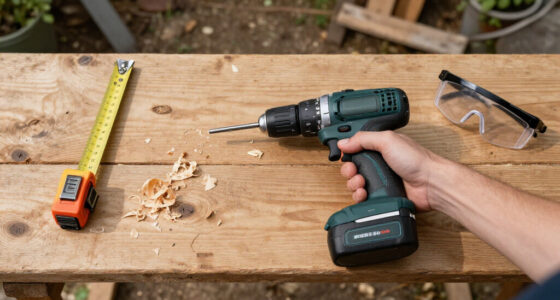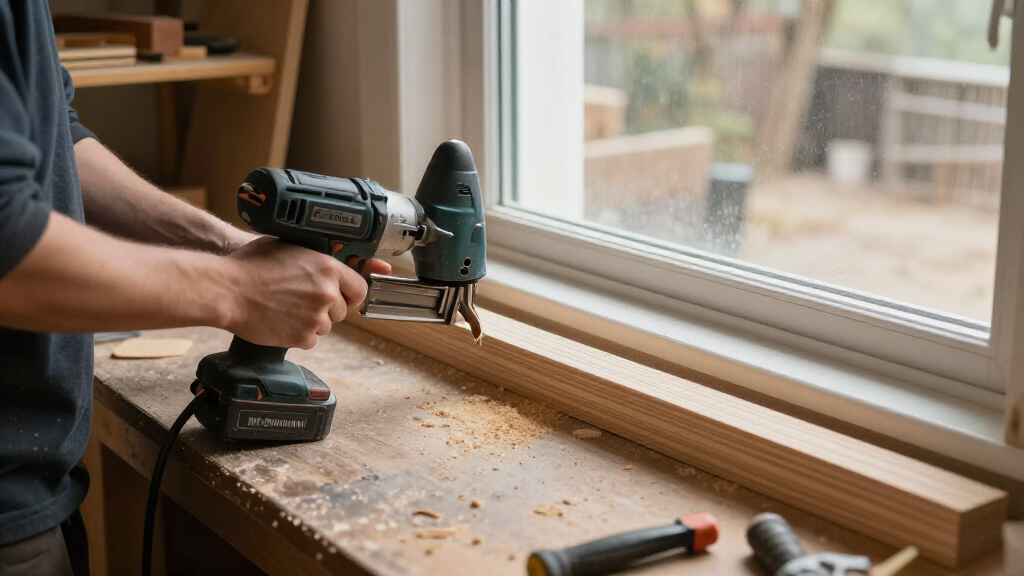

For trim jobs where a compressor and hose get in the way, a cordless finish nailer can make setup simpler and movement around a room less restricted. My strongest all-around pick is the DEWALT DCN650: its 15-gauge angled nails suit substantial trim, while its brushless motor and tool-free controls add flexibility. The DEWALT DCN660B is the better fit for buyers who want a 16-gauge nailer on the 20V MAX platform, and the Ryobi P326 puts access into tight spots first with its compact nose.

Get business pricing on tools and workshop supplies
- Business-only prices and quantity discounts
- Tax-exempt purchasing
- Multiple users, one account, clear invoices
The choice is not simply about which tool is cordless. 15-gauge nails offer more holding power for heavier trim, while 16-gauge nails leave a smaller hole for many casing and baseboard tasks. The Ryobi’s adjustable pressure dial and narrow nose are useful distinctions, but its listed weight is higher than the DCN650’s. All three are tool-only models, so battery compatibility and any battery or charger you still need belong in the decision.
Complete the kit


Key Takeaways
- The DEWALT DCN650 is the clearest choice for heavier trim when 15-gauge angled nails and tool-free controls matter more than a smaller nail hole.
- The DEWALT DCN660B gives 16-gauge buyers an angled nailer with a brushless motor and compatibility with DEWALT 20V MAX batteries.
- The Ryobi P326 is the standout for tight access thanks to its compact nose, but its listed 7.15-pound weight may feel less appealing during extended overhead work.
- All three models operate without a compressor or gas cartridge, and all are sold without a battery and charger.
- Pick by nail gauge and the battery platform already in your kit; shared cordless convenience does not make these tools interchangeable for every trim job.
| DEWALT 20V MAX XR Lithium-Ion Cordless 15-Gauge Angled Finish Nailer |  | Best Overall — for substantial trim and broad finish-work flexibility | Voltage: 20V MAX | Nail gauge: 15 gauge | Nail length: 1¼–2½ inches | VIEW LATEST PRICE | See Our Full Breakdown |
| Ryobi ONE+ 18V 16-Gauge Cordless AirStrike Finish Nailer – Tool Only, P326, Green |  | Best for Tight Access — compact nose and adjustable drive pressure | Voltage: 18V ONE+ | Nail gauge: 16 gauge | Maximum nail length: Up to 2½ inches | VIEW LATEST PRICE | See Our Full Breakdown |
| DEWALT 20V MAX Cordless Angled Finish Nailer (DCN660B), 16 Gauge, Tool Only |  | Best 16-Gauge Platform Pick — for DEWALT battery owners | Voltage: 20V MAX | Nail gauge: 16 gauge | Nail length: 1¼–2½ inches | VIEW LATEST PRICE | See Our Full Breakdown |
| cordless finish nailer | Voltage | Nail gauge | Nail length | Motor |
|---|---|---|---|---|
| DEWALT 20V MAX XR Lithium-Ion | 20V MAX | 15 gauge | 1¼–2½ inches | Brushless |
| Ryobi ONE+ 18V 16-Gauge Cordle | 18V ONE+ | 16 gauge | — | — |
| DEWALT 20V MAX Cordless Angled | 20V MAX | 16 gauge | 1¼–2½ inches | Brushless |
More Details on Our Top Picks
DEWALT 20V MAX XR Lithium-Ion Cordless 15-Gauge Angled Finish Nailer
I rank the DEWALT DCN650 first because it combines a useful heavy-trim role with a well-rounded set of adjustments. Its 15-gauge angled nails, from 1¼ to 2½ inches, make more sense for crown molding, baseboards, and other work where a sturdier fastener is useful than a smaller 16-gauge nail. Compared with the DCN660B, this model favors holding power over the slightly finer hole associated with 16-gauge nails; the right choice depends on the trim and finish requirements, not on a blanket claim that one gauge is better.
The tool-free depth adjustment helps match nail placement to the material, while sequential and contact trigger modes let the operator choose between deliberate placement and a faster rhythm for repetitive work. An integrated LED helps illuminate the fastening area, and the tool-free jam release can make a stoppage less disruptive. A stated weight of 6.6 pounds gives this pick a more favorable handling figure than the Ryobi’s 7.15 pounds, although battery weight and the job position still affect fatigue.
Its angled magazine can be helpful around corners and in confined trim layouts, but the DCN650 is not the choice for someone who specifically needs 16-gauge fasteners or wants the Ryobi’s compact-nose emphasis. It also costs the buyer a separate battery and charger if neither is already on hand. Among these three, I see it as the most versatile recommendation for heavier finish work, not a universal substitute for a brad nailer or a narrower-gauge nailer.
Pros:- 15-gauge angled nails suit heavier trim and a range of finish applications.
- Brushless motor and 20V MAX platform support cordless use without a compressor or gas cartridge.
- Tool-free depth and jam adjustments reduce interruption when setup or clearing is needed.
- LED work light and selectable trigger modes support placement and pace control.
Cons:- Tool-only package requires a compatible battery and charger.
- 15-gauge nails leave a larger hole than the 16-gauge options in this lineup.
- Its 6.6-pound stated tool weight may still feel substantial during overhead or extended work.
Best for: Trim carpenters and serious DIY users who need 15-gauge fastening for crown molding, baseboards, hardwood flooring, or other substantial finish work.
Not ideal for: Buyers whose projects call for a finer 16-gauge hole, anyone needing a battery-and-charger kit, or users who prioritize the narrowest possible nose over a heavier fastener.
- Voltage:20V MAX
- Nail gauge:15 gauge
- Nail length:1¼–2½ inches
- Motor:Brushless
- Stated weight:6.6 pounds
- Magazine:Inline
- Trigger modes:Sequential and contact
- Adjustments:Tool-free depth adjustment and jam release
Our verdict“I recommend the DCN650 as the most balanced pick here when 15-gauge holding power and practical on-tool adjustments take priority.”
Ryobi ONE+ 18V 16-Gauge Cordless AirStrike Finish Nailer – Tool Only, P326, Green
The Ryobi P326 earns its place for a different reason than either DEWALT: the compact nose is described as 78% smaller, giving this 16-gauge nailer an access-focused role around narrow trim and restricted fastening points. That distinction can matter when a wider nose obstructs the sightline or will not sit comfortably in the available space. Unlike the DCN650’s 15-gauge format, the Ryobi is aimed at buyers who prefer a smaller 16-gauge fastener for casing, baseboards, and similar finish tasks.
Its adjustable pressure dial offers a direct way to tune driving behavior for the material, a feature that contrasts with the DEWALT models’ emphasis on tool-free depth and jam adjustments. Ryobi states that the P326 can drive nails up to 2½ inches in hardwoods and up to 1,000 nails per charge. Those figures are useful reference points, but actual output depends on the battery and conditions; I would not choose it on a per-charge number alone.
The tradeoff is handling. At a stated 7.15 pounds, it is the heaviest of the tools with a clearly supplied weight in this comparison, so a compact nose does not automatically make the whole tool easy to hold aloft. It is also tool-only, and the supplied information gives a limited 30-day warranty period, which may matter to buyers who put warranty coverage high on their list. Compared with the DCN660B, the Ryobi’s distinctive case is tight access and pressure adjustment rather than DEWALT 20V battery compatibility.
Pros:- Compact nose is designed to reach tight spots more easily.
- Adjustable pressure dial gives the user a direct drive-control adjustment.
- 18V cordless AirStrike operation removes the need for a compressor or gas cartridges.
- Rated for nails up to 2½ inches, with a stated capacity of up to 1,000 nails per charge.
Cons:- Tool-only package does not include a battery or charger.
- Stated weight of 7.15 pounds makes it a less appealing choice for long overhead sessions.
- Supplied product information lists a 30-day warranty period.
Best for: Ryobi ONE+ users who need a 16-gauge finish nailer for trim work with restricted access and want a pressure dial for drive adjustment.
Not ideal for: People who want the lightest stated option for prolonged overhead work, buyers already invested in DEWALT 20V MAX batteries, or anyone who needs a complete kit or longer stated warranty coverage.
- Voltage:18V ONE+
- Nail gauge:16 gauge
- Maximum nail length:Up to 2½ inches
- Stated weight:7.15 pounds
- Nose:Compact; described as 78% smaller
- Drive adjustment:Adjustable pressure dial
- Stated capacity:Up to 1,000 nails per charge
- Package:Tool only; battery and charger not included
Our verdict“I would choose the P326 over the DEWALT 16-gauge option when tight access and its pressure dial matter more than stated weight or platform continuity.”
DEWALT 20V MAX Cordless Angled Finish Nailer (DCN660B), 16 Gauge, Tool Only
The DEWALT DCN660B is the lineup’s direct choice for users who want a 16-gauge angled nailer on the 20V MAX battery platform. It drives 1¼- to 2½-inch nails and shares the DCN650’s brushless-motor approach and cordless convenience, but its narrower gauge makes it more suitable when a smaller nail hole is preferred. Against the DCN650, the tradeoff is clear: the DCN660B gives up the 15-gauge fastener’s heavier-duty role in favor of a finer fastener for casing, baseboards, and related trim.
Its tool-free depth adjustment, jam clearing, and stall release help with routine setup and interruptions. Sequential and contact actuation modes also give the operator a choice between controlled single placement and a quicker pace for repetitive fastening. For a buyer already using DEWALT 20V MAX batteries, that platform match can make this a more natural addition than the Ryobi P326, even though the Ryobi emphasizes compact-nose access and an adjustable pressure dial.
I would be cautious about the listed 16-ounce weight. It may describe packaging or a component rather than the complete nailer, so it cannot support a fair handling comparison with the DCN650’s 6.6-pound or the Ryobi’s 7.15-pound stated figures. The listing also excludes the battery and charger. That leaves the DCN660B as a focused, capable 16-gauge choice rather than an obvious pick for people who lack DEWALT batteries or need confidence in a stated tool weight before purchasing.
Pros:- 16-gauge angled fastening suits trim work where a smaller hole is preferred.
- Brushless motor and compatibility with DEWALT 20V MAX batteries fit an existing tool platform.
- Tool-free depth, jam, and stall adjustments support setup and recovery.
- Sequential and contact actuation modes allow a choice of placement control or faster repetition.
Cons:- Tool-only package does not include a battery or charger.
- 16-gauge nails are not the best match when the job calls for the more substantial 15-gauge fastener.
- The listed 16-ounce weight may not represent the complete tool, making handling comparisons unreliable.
Best for: DEWALT 20V MAX owners who want an angled 16-gauge nailer for casing, baseboards, and finish work where a smaller nail hole is preferred.
Not ideal for: Buyers who need 15-gauge holding power, want the compact-nose feature highlighted on the Ryobi, or need a battery-and-charger package or reliable published total-tool weight.
- Voltage:20V MAX
- Nail gauge:16 gauge
- Nail length:1¼–2½ inches
- Motor:Brushless
- Magazine capacity:800 fasteners
- Actuation modes:Sequential and contact
- Adjustments:Tool-free depth, jam clearing, and stall release
- Package:Tool only; battery and charger not included
Our verdict“I recommend the DCN660B to existing DEWALT 20V MAX users who want 16-gauge capability and can disregard the ambiguous weight listing.”

How We Picked
I ranked these three nailers around the decisions that matter for finish work: nail gauge and length, access to the work area, control over nail depth, and the practical cost of entering a battery platform. Since each tool removes the need for a compressor or gas cartridge, cordless operation is a shared benefit rather than a reason to rank one above the others.
The DCN650 takes the lead because its 15-gauge format gives it a distinct role for substantial trim, and its brushless motor, tool-free jam release, adjustable depth, and two trigger modes give buyers useful control. The DCN660B ranks next for people who prefer 16-gauge fasteners and already use DEWALT 20V MAX batteries. The Ryobi earns a separate place for its compact nose and pressure dial, features that can help when access and drive adjustment matter more than lighter stated weight.
I also treated the supplied specifications cautiously. The DCN660B’s listed weight of 16 ounces is not a credible basis for comparing complete-tool handling, so I do not use it to claim that the nailer is unusually light. Likewise, the Ryobi’s stated capacity of up to 1,000 nails per charge is a supplied claim, not a promise that every battery, material, or work pattern will produce the same result. Battery and charger are excluded on all three; I give no advantage to a tool-only listing as though it were a complete kit.
| cordless finish nailer | Adjustments |
|---|---|
| DEWALT 20V MAX XR Lithium-Ion | Tool-free depth adjustment and jam release |
| Ryobi ONE+ 18V 16-Gauge Cordle | — |
| DEWALT 20V MAX Cordless Angled | Tool-free depth, jam clearing, and stall release |
Factors to Consider When Choosing Cordless Finish Nailers
I would choose a cordless finish nailer by starting with the fastener and the work surface, then checking access, platform, and package contents. Those choices explain more than the shared promise of leaving a compressor behind.
Match the gauge to the trim
The biggest difference in this group is 15 gauge versus 16 gauge. The DCN650’s 15-gauge nail is the heavier option here, making it the more natural fit for substantial trim where fastening strength is a priority. The DCN660B and Ryobi P326 use 16-gauge nails, which suit many casing and baseboard jobs when a smaller hole is preferable. The larger nail is not automatically right for every molding: visible hole size, material thickness, and the project’s fastening requirements all matter.
Before buying, check the nail gauge and length specified for the job and confirm that the tool accepts those exact fasteners. All three listings cover nail lengths up to 2½ inches, but a shared maximum length does not make their gauges interchangeable. I would not pick the DCN650 solely because 15 gauge sounds stronger if the project needs a finer fastener.
Think about access, not just tool size
The Ryobi’s compact nose is its clearest distinction. It is designed to improve access in tight spots, which may help when trim geometry leaves little room to position the tool. That is different from the DEWALT models’ angled format, which can also be useful around corners and awkward placements. A compact nose does not settle every access question, so I would compare the tool’s shape with the actual work area when possible.
Weight deserves a separate check. Ryobi lists the P326 at 7.15 pounds and the DCN650 at 6.6 pounds. Those figures suggest the Ryobi is heavier, a potential drawback during extended overhead work. The DCN660B listing says 16 ounces, but that may not be the complete tool weight; I would not treat it as lighter than the others without confirming the figure from reliable product documentation.
Compare depth and drive controls
Depth control helps prevent nails from sitting proud or sinking too far into the workpiece. The DCN650 and DCN660B specify tool-free depth adjustment, and both DEWALT models also list tool-free jam-related controls. The DCN660B adds a stall-release adjustment, while the DCN650 includes an integrated LED and left- or right-side belt-hook adjustment.
The Ryobi uses an adjustable pressure dial, which gives its setup a different feel from the stated DEWALT adjustments. Its listed capability does not guarantee an identical result across different woods, nail batches, or battery conditions. Follow the tool instructions and test on scrap from the same material before fastening visible trim. A short test can help set the drive without relying on guesswork once the workpiece is in place.
Choose around the battery platform
Each pick is tool only: none includes a battery or charger in the supplied product details. The two DEWALT models use the 20V MAX platform, while the Ryobi uses ONE+ 18V. If you already own compatible batteries, platform fit may reduce the number of new accessories you need and make the tool a more convenient addition to your kit.
If you do not own either platform, compare the battery and charger requirements before treating the nailer listing as a complete purchase. Battery capacity also affects handling and runtime. Ryobi gives a stated figure of up to 1,000 nails per charge, but actual results depend on the battery and work conditions. For any model, plan around the battery you will use rather than assuming all packs provide the same balance or working time.
Decide whether cordless convenience outweighs other needs
All three tools remove the need for a compressor, hose, and gas cartridge, simplifying movement from room to room and reducing setup equipment. That shared benefit does not mean a cordless finish nailer is the best tool for every fastening task. A finish nailer is aimed at trim work; if the project calls for another fastener size or type, choose a tool designed for that job instead of forcing a finish nailer to cover it.
For a mixed trim workload, the DCN650’s 15-gauge format and broad adjustments give it the strongest all-around case in this trio. Choose the DCN660B when 16 gauge and DEWALT battery compatibility are the priorities. Pick the Ryobi when its compact nose and pressure dial solve a specific access or drive-control need, and be comfortable with its higher stated weight and separate battery purchase.
Frequently Asked Questions
Which of these cordless finish nailers is best for crown molding?
For substantial crown molding, I would start with the DEWALT DCN650 because it drives 15-gauge nails and includes depth adjustment and selectable trigger modes. The right nail length and gauge still depend on the molding and installation requirements. If a smaller nail hole is the priority, the 16-gauge DEWALT DCN660B may be a better match; I would choose based on the material and fastening specification rather than the tool’s overall ranking.
Should I choose a 15-gauge or 16-gauge finish nailer?
In this comparison, the 15-gauge DCN650 is the heavier-fastener option, while the DCN660B and Ryobi P326 use 16-gauge nails. A 16-gauge nail may be preferable when a smaller hole is desired for casing or similar trim; a 15-gauge nail may better fit jobs that call for a more substantial fastener. Check the project requirements, trim thickness, and finish expectations before choosing, since the gauge is not interchangeable between these models.
Do these nailers include a battery and charger?
No. All three are described as tool-only models, so the battery and charger must be supplied separately. The DEWALT DCN650 and DCN660B use the 20V MAX platform, and the Ryobi P326 uses ONE+ 18V. I would check which compatible batteries you already own and confirm what the complete setup requires before deciding between platforms.
Is the Ryobi P326 the lightest choice for tight spaces?
The Ryobi’s main access advantage is its compact nose, not its weight: its stated weight is 7.15 pounds, compared with 6.6 pounds for the DCN650. The DCN660B’s supplied 16-ounce figure may not describe the complete tool, so it is not a dependable comparison. If reaching a confined fastening point matters most, the Ryobi may be appealing; if long overhead use matters, look carefully at handling and verify total tool weight before choosing.
Can I use these nailers without an air compressor?
Yes. All three are cordless models designed to operate without a compressor, hose, or gas cartridge. That makes them easier to move around a work area than a pneumatic setup, but they still need a compatible battery, which is not included with these tool-only listings. The specific battery platform differs: DEWALT 20V MAX for the two DEWALT models and Ryobi ONE+ 18V for the P326.
Conclusion
My overall recommendation is the DEWALT DCN650 for buyers doing substantial trim work who want a 15-gauge angled nailer with tool-free adjustments and a brushless motor. If you mainly install casing or baseboards and prefer 16-gauge nails, choose the DCN660B when you already have DEWALT 20V MAX batteries. For Ryobi ONE+ owners who face tight fastening spots, the P326’s compact nose and pressure dial make the most sense, provided its higher stated weight is acceptable.
Before ordering, verify the gauge and length needed for your project, check battery compatibility, and account for the separate battery and charger. These picks share cordless convenience, but the best one for you comes down to fastener size, access, and platform—not a single feature or ranking alone.