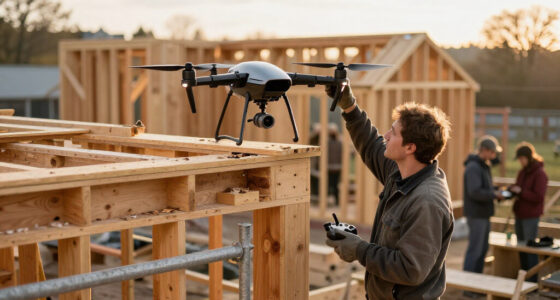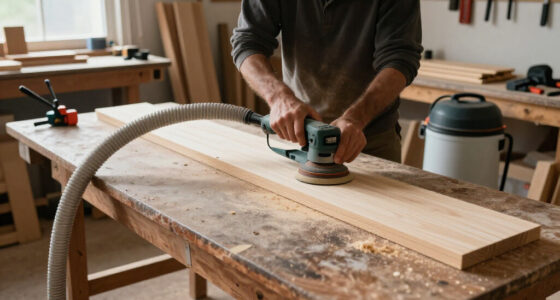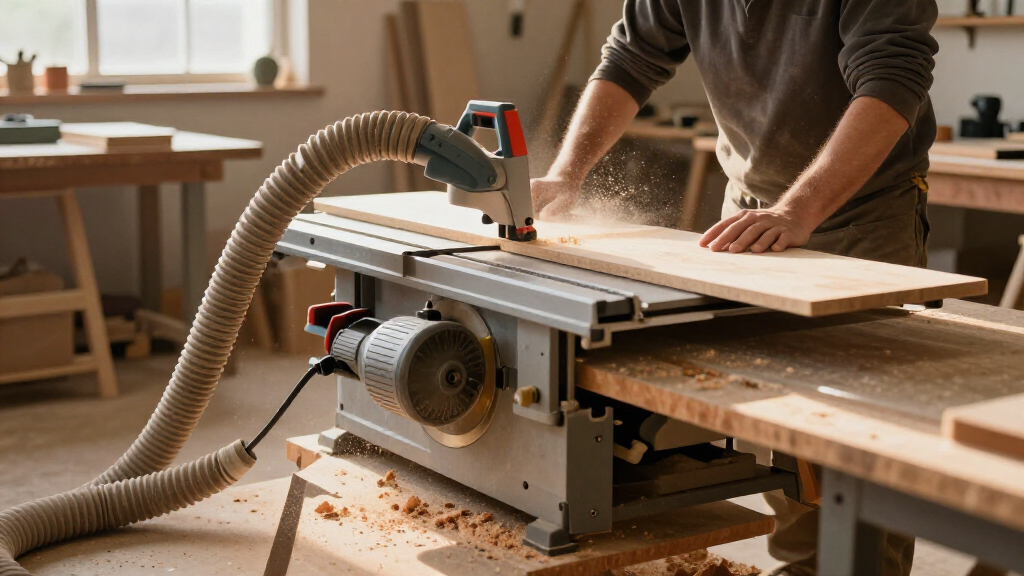

For most workshops, I’d start with the WEN DC1300: its 1,300 CFM rating and mobile base suit a larger shop that needs to collect chips and dust from stationary tools. The Shop Fox W1666 is a stronger fit for buyers prioritizing a 2 HP collector, while the POWERTEC DC5371 offers a wall-mounted setup with a 1-micron filter bag for shops short on floor space. The main tradeoff is between a dedicated collector’s airflow and capacity, a separator’s ability to protect a shop vacuum, and an air filtration unit’s role in capturing airborne particles. Hose size, duct layout, filter performance, and available space can matter as much as the advertised airflow. Read on for my full comparison and advice on matching a system to your tools and shop.

Get business pricing on tools and workshop supplies
- Business-only prices and quantity discounts
- Tax-exempt purchasing
- Multiple users, one account, clear invoices
Complete the kit


Key Takeaways
- The WEN DC1300 leads for larger shops because its stated 1,300 CFM and mobile base offer a more capable starting point for collecting chips from stationary tools than the smaller portable and wall-mounted options.
- Shop Fox W1666 is the power-focused alternative with a 2 HP motor, while the 1 HP wall-mounted models trade some flexibility for a smaller floor-space footprint.
- Separators solve a different problem from dust collectors: the Happy Tree, stainless-steel-tank, DEWALT, and Dustopper PRO options help intercept debris before it reaches a shop vacuum.
- Air filtration is a complement, not a substitute for tool-connected collection; the WEN 3410 circulates room air, while a hose-connected collector captures material at the source.
- Filter details and system layout shape real usefulness. The JET’s 2-micron canister and POWERTEC’s 1-micron bag provide stated filtration distinctions, but duct restrictions, leaks, and filter upkeep still affect performance.
| WEN DC1300 1,300 CFM Woodworking Dust Collector with 50-Gallon Collection Bag and Mobile Base |  | Best for Two-Tool Workshops | Airflow: Up to 1,300 CFM | Motor: 14 amp | Impeller: 10-inch steel; up to 3,450 RPM | VIEW LATEST PRICE | See Our Full Breakdown |
| Shop Fox W1666 2 HP Dust Collector |  | Best for High Airflow | Model: W1666 | Motor power: 2 HP | Airflow: Up to 1,550 CFM | VIEW LATEST PRICE | See Our Full Breakdown |
| Happy Tree Low-Profile Cyclone Dust Separator for 2.5″ Hose |  | Best Compact Separator | Hose compatibility: 2.5 inches | Bucket compatibility: Standard US 5-gallon buckets | Design: Low-profile | VIEW LATEST PRICE | See Our Full Breakdown |
| WEN DC3474 15-Gallon Woodworking Dust Collector |  | Best for Small Workshops | Motor: 7.4-amp induction motor | Impeller: 9 inches | Airflow: Up to 600 CFM | VIEW LATEST PRICE | See Our Full Breakdown |
| Dust Separator with 10-Gallon Stainless Steel Tank | 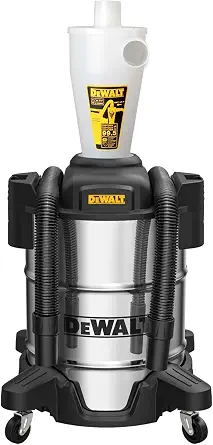 | Best for Durable Bulk Collection | Tank capacity: 10 gallons | Tank material: Stainless steel | VIEW LATEST PRICE | See Our Full Breakdown | |
| WEN DC3401 12-Gallon Woodworking Dust Collector |  | Best Compact Mobile Collector | Motor: 5.7-amp brushed | Airflow: Up to 660 CFM | Dust port: 4 inches | VIEW LATEST PRICE | See Our Full Breakdown |
| VEVOR Wall-Mount Dust Collector, 1 HP, 560 CFM |  | Best Wall-Mount Bag Capacity | Airflow: 560 CFM | Motor: 1 HP induction motor | Filtration: 2.5 microns | VIEW LATEST PRICE | See Our Full Breakdown |
| DEWALT 6-Gallon Dust Separator for Wet/Dry Shop Vacuums |  | Best Shop-Vac Pre-Separator | Capacity: 6 gallons | Compatible port sizes: 1-7/8 inches or 2-1/2 inches | Included hose: 1-7/8 inches | VIEW LATEST PRICE | See Our Full Breakdown |
| WEN 3410 3-Speed Remote-Controlled Air Filtration System, 300/350/400 CFM | 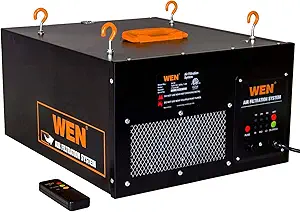 | Best Overhead Air Cleaner | Airflow: 300/350/400 CFM | Filters: 1-micron inner filter and 5-micron pre-filter | Room coverage: Up to 400 sq ft | VIEW LATEST PRICE | See Our Full Breakdown |
| Bucktool DC50 1.2 HP Auto-Start Dust Collector, 750 CFM |  | Best Higher-Airflow Mobile Collector | Motor: 1.2 HP, 120 V, 3450 RPM | Airflow: 750 CFM | Full load current: 6.5 A | VIEW LATEST PRICE | See Our Full Breakdown |
| JET DC-650CK Dust Collector with 2-Micron Canister Filter, 1 HP |  | Best for Fine-Dust Filtration | Motor: 1 HP | Voltage: 115/230V, single-phase | Airflow: 650 CFM | VIEW LATEST PRICE | See Our Full Breakdown |
| Dayton 3/4 HP Two-Stage Portable Dust Collector |  | Best for a Ready-to-Hose Portable Setup | Model: 3AA31A | Type: Two-stage portable dust collector | Motor power: 3/4 HP | VIEW LATEST PRICE | See Our Full Breakdown |
| Dustopper PRO Low-Profile Dust Separator Kit |  | Best Compact Shop-Vac Separator | Material: Anti-static resin | Dimensions: 13 x 13 inches | Length: 7 inches | VIEW LATEST PRICE | See Our Full Breakdown |
| POWERTEC 1 HP Wall-Mount Dust Collector, 560 CFM, with 1-Micron Filter Bag (DC5371) |  | Best for Saving Floor Space | Model: DC5371 | Motor: 1 HP induction motor | Voltage: 120V/240V | VIEW LATEST PRICE | See Our Full Breakdown |
| dust collection systems for workshop | Airflow | Motor | Weight |
|---|---|---|---|
| WEN DC1300 1,300 CFM Woodworki | Up to 1,300 CFM | 14 amp | — |
| Shop Fox W1666 2 HP Dust Colle | Up to 1,550 CFM | — | 94.8 pounds |
| Happy Tree Low-Profile Cyclone | — | — | — |
| WEN DC3474 15-Gallon Woodworki | Up to 600 CFM | 7.4-amp induction motor | 41.1 pounds |
| Dust Separator with 10-Gallon | — | — | — |
| WEN DC3401 12-Gallon Woodworki | Up to 660 CFM | 5.7-amp brushed | 17 pounds |
| VEVOR Wall-Mount Dust Collecto | 560 CFM | 1 HP induction motor | 24 lbs |
| DEWALT 6-Gallon Dust Separator | — | — | — |
| WEN 3410 3-Speed Remote-Contro | 300/350/400 CFM | 1/6 HP | 31 lb |
| Bucktool DC50 1.2 HP Auto-Star | 750 CFM | 1.2 HP, 120 V, 3450 RPM | — |
| JET DC-650CK Dust Collector wi | 650 CFM | 1 HP | 70 pounds |
| Dayton 3/4 HP Two-Stage Portab | — | — | — |
| Dustopper PRO Low-Profile Dust | — | — | 1.63 kg |
| POWERTEC 1 HP Wall-Mount Dust | — | 1 HP induction motor | — |
More Details on Our Top Picks
WEN DC1300 1,300 CFM Woodworking Dust Collector with 50-Gallon Collection Bag and Mobile Base
The WEN DC1300 is the strongest fit here for a workshop that needs a full-size collector with room to serve more than one machine. Its 1,300 CFM airflow, two 4-inch inlets, and 50-gallon bag support a larger setup than the single-port WEN DC3474, while swivel casters make it easier to move between work areas. The dual inlets offer connection flexibility, but they do not establish how much airflow each tool receives when both run at once, so I would not treat this as proof of simultaneous full-capacity collection. Its 5-micron bag filtration is also a limitation for fine dust; buyers prioritizing finer filtration should compare it with the JET DC-650CK and its 2-micron canister filter. The large bag reduces interruptions, but this collector takes more space than compact separator setups.
Pros:- Two 4-inch inlets provide connection options for a multi-machine workshop.
- 50-gallon collection bag means less frequent emptying than the WEN DC3474’s 15-gallon bag.
- Up to 1,300 CFM airflow suits a larger setup better than compact shop-vac separators.
- Four swivel casters make the collector easier to reposition.
Cons:- 5-micron bag filtration is less suited to capturing finer airborne dust than a finer-filtered collector.
- The product information does not specify airflow available to each inlet when both are connected.
- A 50-gallon bag and mobile base require more workshop space than a bucket-style separator.
Best for: Woodworkers with several stationary machines, 4-inch ducting, and enough floor space for a mobile collector with a large collection bag.
Not ideal for: Small shops or buyers focused on fine-dust filtration, since its 5-micron bag and larger footprint may not suit those priorities.
- Airflow:Up to 1,300 CFM
- Motor:14 amp
- Impeller:10-inch steel; up to 3,450 RPM
- Air inlets:Two 4-inch inlets
- Collection bag capacity:50 gallons
- Filtration:5 micron
- Base:Mobile base with four swivel casters
Our verdict“Choose the DC1300 for a roomy workshop that needs high stated airflow and a large bag, but look elsewhere if fine-dust filtration is the priority.”
Shop Fox W1666 2 HP Dust Collector
For buyers who put airflow capacity ahead of portability, the Shop Fox W1666 is the most powerful full-size collector in this group by its stated CFM: up to 1,550, compared with 1,300 for the WEN DC1300. Its 2 HP motor and 12-inch impeller make it the better match for a fixed workshop system where a larger collector can serve demanding machines. That performance comes with a clear cost in flexibility: at 94.8 pounds, it is substantially less convenient to move than the mobile WEN DC3474, and the supplied information does not list a mobile base. The description includes a collection bag but gives no filtration rating or bag capacity, so I would not choose it over the DC1300 for a known large-capacity bag or over a finer-filtered option based on filtration. The listed dimensions also appear unusually large, so verify fit before planning an installation.
Pros:- Highest stated airflow in this five-product group at up to 1,550 CFM.
- 2 HP motor is suited to a more demanding fixed workshop setup than the WEN DC3474.
- Heavy-duty 12-inch impeller supports its high stated airflow.
- Powder-coated finish and included collection bag are specified.
Cons:- At 94.8 pounds, it is less practical to move than the wheeled WEN DC1300 and DC3474.
- The supplied product details do not state a filtration rating or collection-bag capacity.
- Listed dimensions appear unusually large and should be checked before allocating floor space.
Best for: Woodworkers building a largely stationary, high-airflow collection setup around machines that benefit from a 2 HP collector.
Not ideal for: Small or frequently rearranged workshops, and buyers who need confirmed filtration details or a clearly documented compact footprint.
- Model:W1666
- Motor power:2 HP
- Airflow:Up to 1,550 CFM
- Impeller:12 inches
- Weight:94.8 pounds
- Voltage:220 volts
- Sound level:80 dB
- Finish:Powder coating
Our verdict“Pick the W1666 when stated airflow and a fixed installation matter more than portability, known filtration details, or a compact footprint.”
Happy Tree Low-Profile Cyclone Dust Separator for 2.5″ Hose
The Happy Tree separator takes a different approach from the WEN DC1300 and Shop Fox W1666: it is a pre-separator for a wet/dry vacuum, not a standalone high-airflow collector. By directing debris into a separate bucket before it reaches the vacuum, it is designed to reduce filter clogging and preserve suction during cleanup. Its low-profile lid, 2.5-inch hose compatibility, and included 43-inch hose and elbow make it easier to fit under a bench than a full-size collector. It also needs a separate vacuum and bucket, and the bucket must be thick-walled or nested to resist suction; neither is included. The claimed capture efficiency is not a substitute for a stated fine-particle filtration rating. Compared with the WEN DC3474, this kit is more compact and suited to cleanup or portable tools, but it does not offer the same dedicated collector airflow for stationary machines.
Pros:- Low-profile design can fit beneath workbenches where full-size collectors cannot.
- Separates debris before it reaches the vacuum, helping limit filter clogging.
- Includes a 43-inch flexible hose and 90-degree elbow.
- Fits standard 5-gallon buckets and 2.5-inch vacuum hoses.
Cons:- A wet/dry vacuum and bucket are required but not included.
- Strong suction may collapse ordinary buckets; thick-walled or nested buckets are recommended.
- It is a vacuum accessory, not a replacement for a dedicated collector like the WEN DC3474.
Best for: DIY woodworkers and renovators who already own a compatible wet/dry vacuum and want a compact separator for portable-tool cleanup.
Not ideal for: Shops seeking a standalone dust collector for stationary machines, or buyers unwilling to source a sturdy 5-gallon bucket and compatible vacuum.
- Hose compatibility:2.5 inches
- Bucket compatibility:Standard US 5-gallon buckets
- Design:Low-profile
- Included components:Lid separator, 43-inch flexible hose, 90-degree elbow
- Seal features:Anti-static, leak-proof and airtight seal
- Recommended vacuum power:5.0 hp or greater
- Claimed capture:Up to 99.9% of dust and debris
Our verdict“Choose this separator for compact vacuum-based cleanup, not as the main dust-collection system for a stationary-machine workshop.”
WEN DC3474 15-Gallon Woodworking Dust Collector
The WEN DC3474 is the practical choice for a small shop with one 4-inch machine connection and limited room for a larger collector. Its up-to-600-CFM rating is well below the WEN DC1300’s 1,300 CFM and the Shop Fox W1666’s 1,550 CFM, but its 41.1-pound body, swivel casters, and carrying handle make repositioning easier. The 15-gallon zippered bag is also much smaller than the DC1300’s 50-gallon bag, so it will need emptying more often. A 5-micron filtration rating is specified, which helps buyers compare it directly with other systems, though it is not the choice here for finer filtration. Optional wall mounting can free floor space, but the collector still needs a 4-inch connection and is not a hose-based separator for quick cleanup. Its two-year warranty adds a defined support period.
Pros:- Smaller and lighter than the WEN DC1300 and Shop Fox W1666, at 41.1 pounds.
- Swivel casters and carrying handle support repositioning around a compact shop.
- Optional wall mounting can free up floor space.
- Two-year warranty is specified.
Cons:- Up to 600 CFM is substantially less than the WEN DC1300 and Shop Fox W1666.
- 15-gallon bag requires more frequent emptying than the DC1300’s 50-gallon bag.
- 5-micron filtration is not suited to buyers prioritizing finer dust capture.
Best for: Hobbyist woodworkers with one 4-inch machine port who want a movable collector or the option to mount it on a shop wall.
Not ideal for: High-demand multi-machine shops or buyers who want a larger collection bag or finer filtration than 5 microns.
- Motor:7.4-amp induction motor
- Impeller:9 inches
- Airflow:Up to 600 CFM
- Dust port:4 inches
- Collection bag:15 gallons, 5-micron, zippered
- Dimensions:43.3 x 17.7 x 20.1 inches
- Weight:41.1 pounds
- Mounting and warranty:Mobile base or optional wall mount; two years
Our verdict“The DC3474 suits a compact, single-machine shop that values mobility and wall-mount flexibility over high airflow and bag capacity.”
Dust Separator with 10-Gallon Stainless Steel Tank
This separator’s clearest distinction is its 10-gallon stainless steel tank, which offers a defined collection vessel and a more durable material than the plastic bucket used with the Happy Tree low-profile separator. That makes it a possible fit for buyers who want a reusable tank for gathering workshop debris rather than adding a full-size collector like the WEN DC3474. The available product information is very limited, though: it does not identify hose dimensions, vacuum compatibility, airflow, filtration, fittings, mobility, or whether a vacuum is included. I would not assume it can connect directly to a particular machine or that it provides the same pre-separation performance as the Happy Tree, whose hose and bucket compatibility are specified. The tank capacity and material are useful starting points, but buyers should confirm connection details before choosing it as part of a workshop system.
Pros:- 10-gallon capacity provides a defined collection volume.
- Stainless steel tank is a durable alternative to the bucket used by the Happy Tree separator.
- A separate tank-based format may suit buyers who do not want a standard 5-gallon bucket.
Cons:- Product details do not specify hose size, fittings, or vacuum compatibility.
- No airflow or filtration information is provided for comparison with dedicated collectors.
- The available information does not clarify which additional components are included.
Best for: Workshop owners who specifically want a 10-gallon stainless steel collection tank and can verify that its connections match their existing equipment.
Not ideal for: Buyers who need a ready-to-connect system, published airflow or filtration details, or documented compatibility with a particular vacuum.
- Tank capacity:10 gallons
- Tank material:Stainless steel
Our verdict“Consider this separator only if the stainless steel tank is your priority and the seller confirms its connections and included components suit your setup.”
WEN DC3401 12-Gallon Woodworking Dust Collector
The WEN DC3401 suits a small workshop where one machine at a time needs source capture and floor space is limited. Its up-to-660 CFM airflow, four-inch port, and 17-pound body make it easier to move between tools than a larger collector such as the Bucktool DC50, which offers more airflow and included reducers but takes up more space. The lockable casters help keep the unit in place during use, while the optional wall mount can free up floor area when the collector is parked.
The tradeoff is a single four-inch connection and a 12-gallon bag, so it is better suited to modest dust loads than long sessions with several machines. Its five-micron bag filtration also gives less fine-particle filtration than the VEVOR wall-mount model’s 2.5-micron rating. I’d choose it for portability and flexible storage, not as the main system for a larger production shop.
Pros:- Up to 660 CFM suits source collection at a single small-shop machine.
- Lightweight body and four lockable swivel casters make repositioning straightforward.
- Optional wall mount can preserve floor space between jobs.
- Two-year warranty.
Cons:- Single four-inch dust port limits connection options and multi-machine use.
- 12-gallon collection bag needs attention sooner under heavy dust loads.
- Five-micron bag filtration is less fine than the VEVOR model’s 2.5-micron rating.
Best for: Owners of compact home workshops who move a collector between individual four-inch woodworking machines and value the option to wall-mount it.
Not ideal for: Woodworkers running several machines, producing heavy dust loads, or seeking finer bag filtration; its single port, 12-gallon bag, and five-micron filtration limit that use.
- Motor:5.7-amp brushed
- Airflow:Up to 660 CFM
- Dust port:4 inches
- Collection bag capacity:12 gallons
- Bag filtration:5 microns
- Dimensions:34.25 x 13 x 14.2 inches
- Weight:17 pounds
- Mobility and mounting:Four lockable swivel casters; optional wall mount
- Warranty:Two years
Our verdict“Choose the DC3401 for mobile, single-machine dust collection in a compact shop, but step up to a larger-capacity collector for sustained heavy work.”
VEVOR Wall-Mount Dust Collector, 1 HP, 560 CFM
The VEVOR wall-mount collector is a practical fit for a small or medium shop that wants a larger bag without giving a collector its own floor footprint. Its 21-gallon capacity is substantially larger than the WEN DC3401’s 12-gallon bag, so it can go longer between emptying during routine work. The 2.5-micron filtration rating is also finer than the DC3401’s five-micron bag rating, which gives VEVOR the stronger case for collecting sanding dust as well as ordinary sawdust.
That wall-mounted format trades mobility for storage efficiency: this is not the pick to wheel among distant machines. The 560 CFM airflow is below the DC3401’s stated maximum and well below the Bucktool DC50’s 750 CFM, and the unit is described for small and medium projects rather than demanding shop-wide extraction. Its noise rating of up to 90 dB is another tradeoff. I’d favor it when bag capacity and a fixed installation matter more than moving the collector around.
Pros:- 21-gallon bag provides more capacity than the WEN DC3401’s 12-gallon bag.
- 2.5-micron filtration is finer than the DC3401’s five-micron bag rating.
- Wall mounting keeps the collector off the workshop floor.
- Bottom zipper simplifies emptying the collection bag.
Cons:- Wall-mounted design is less convenient to reposition between tools.
- 560 CFM is lower than the DC3401’s stated maximum and the Bucktool DC50’s 750 CFM.
- Noise is rated at up to 90 dB.
Best for: Small- and medium-shop woodworkers with a dedicated machine area who want wall-mounted collection, a larger bag, and finer filtration than the WEN DC3401 offers.
Not ideal for: Buyers who need a mobile collector, higher airflow for demanding extraction, or a quieter unit; this model is fixed-mount, rated at 560 CFM, and up to 90 dB.
- Airflow:560 CFM
- Motor:1 HP induction motor
- Filtration:2.5 microns
- Collection bag capacity:21 gallons (80 L)
- Noise level:Up to 90 dB
- Voltage:120 V
- Mounting:Wall mount
- Weight:24 lbs
- Dimensions:40.94 x 13.78 x 15.75 inches
Our verdict“Pick VEVOR when a fixed wall installation and a large, finer-filtering bag matter more than portability or maximum airflow.”
DEWALT 6-Gallon Dust Separator for Wet/Dry Shop Vacuums
The DEWALT 6-gallon separator fills a different role from the WEN DC3401 and VEVOR collectors: it sits between a shop vacuum and the tool, catching debris before it reaches the vacuum’s filter. That makes it a useful add-on for a buyer who already owns a wet/dry vacuum and wants to reduce filter clogging and dust-bag changes, rather than a standalone system that moves air through a workshop. Its four-caster base also makes the bucket easier to bring alongside a portable tool.
The capacity is smaller than VEVOR’s 21-gallon bag, and the DEWALT relies on the vacuum behind it for airflow and filtration. It includes a 1-7/8-inch hose and accepts compatible 1-7/8-inch or 2-1/2-inch ports, but buyers should check their vacuum connections before setup. Since the vacuum is not included, this pick makes little sense as a first dust-collection purchase. I’d choose it to supplement an existing vacuum, not replace a dedicated collector.
Pros:- Captures debris before it reaches the shop-vac filter.
- May reduce filter clogging and dust-bag replacement.
- Four-caster base helps move the bucket around a work area.
- Ports support compatible 1-7/8-inch or 2-1/2-inch vacuum connections.
Cons:- Wet/dry vacuum is not included.
- Included hose is 1-7/8 inches, which may not match every setup without adaptation.
- Six-gallon capacity is smaller than the VEVOR collector’s 21-gallon bag.
Best for: Woodworkers who already own a compatible wet/dry shop vacuum and want a mobile separator to catch debris before it clogs the vacuum filter.
Not ideal for: Buyers seeking a complete dust collector or workshop air-filtration system; the vacuum is sold separately, and the separator depends on it for suction.
- Capacity:6 gallons
- Compatible port sizes:1-7/8 inches or 2-1/2 inches
- Included hose:1-7/8 inches
- Base:Four casters
- Vacuum included:No
- Warranty:Three-year limited warranty
Our verdict“Choose this separator to extend a compatible shop vacuum’s usefulness, not as a standalone workshop dust collector.”
WEN 3410 3-Speed Remote-Controlled Air Filtration System, 300/350/400 CFM
The WEN 3410 addresses airborne dust that a tool-connected collector may not catch; it circulates room air through a five-micron pre-filter and one-micron inner filter rather than pulling chips directly from a machine. That makes it a useful companion to the WEN DC3401 or Bucktool DC50, not a substitute for either. Its three airflow settings let a buyer choose among 300, 350, and 400 CFM, while the remote and programmable shutoff timer make overhead operation easier when the unit is mounted out of reach.
The stated coverage is up to 400 square feet, so larger workshops should look beyond this model or plan on more than one air cleaner. Its 50–60 dB operating noise may also be noticeable during quiet tasks. Compared with the VEVOR wall-mount collector, the WEN is focused on circulating and filtering room air, not collecting sawdust in a bag. I’d add it for lingering airborne dust after source extraction, while keeping a dedicated collector at the machine.
Pros:- Three airflow settings provide 300, 350, or 400 CFM circulation.
- One-micron inner filter and five-micron pre-filter target airborne dust.
- Remote works from up to 26 feet, including without direct line of sight.
- Programmable shutoff timer and mounting hardware are included.
Cons:- Designed for rooms up to 400 square feet.
- Does not replace a source-connected collector such as the WEN DC3401.
- Operating noise reaches 60 dB.
Best for: Woodworkers with a workshop up to 400 square feet who already use source extraction and want an overhead air cleaner with remote controls and timed shutoff.
Not ideal for: Owners of larger shops or anyone needing direct collection from a saw, sander, or other tool; this unit filters room air rather than capturing dust at its source.
- Airflow:300/350/400 CFM
- Filters:1-micron inner filter and 5-micron pre-filter
- Room coverage:Up to 400 sq ft
- Motor:1/6 HP
- Noise level:50–60 dB
- Dimensions:17 x 20.5 x 10 inches
- Weight:31 lb
- Remote range:Up to 26 ft
- Power requirements:120 V, 60 Hz, 1 A
Our verdict“Choose the WEN 3410 as a supplemental air cleaner for a workshop within its coverage range, not as the shop’s primary dust collector.”
Bucktool DC50 1.2 HP Auto-Start Dust Collector, 750 CFM
The Bucktool DC50 is the strongest fit here for buyers who want more airflow and tool-ready accessories in a mobile bag collector. Its 750 CFM rating exceeds the WEN DC3401’s up-to-660 CFM and VEVOR’s 560 CFM, while the included reducer set and flexible hose help adapt the collector to different tool outlets. Auto-start can switch the unit on with a connected tool drawing up to 7A, reducing the need to operate the collector separately for compatible machines.
That extra capability comes with limits: the auto-start is capped at 7A, so it will not suit every tool, and the upper bag is rated to 2.5 microns rather than HEPA filtration. Its 5.4-cubic-foot bag capacity is substantial, but the cloth filtration setup is not a substitute for the WEN 3410’s one-micron room-air filter. I’d rank it ahead of the smaller collectors for airflow and accessories, while reserving it for shops comfortable with bag filtration and tool-current limits.
Pros:- 750 CFM rating is higher than the WEN DC3401 and VEVOR collectors in this group.
- Auto-start can operate with connected tools drawing up to 7A.
- Four caster wheels support mobile or stationary placement.
- Includes three bags, a five-piece reducer set, and a flexible extraction hose.
Cons:- Auto-start supports connected tools only up to 7A.
- Upper cloth bag is rated to 2.5 microns, not HEPA.
- Bag-based collection does not perform the room-air filtration role of the WEN 3410.
Best for: Woodworkers seeking a mobile, higher-airflow collector with included reducers and hose for connecting compatible tools that draw no more than 7A.
Not ideal for: Buyers whose tools exceed the 7A auto-start limit or who require HEPA-rated filtration; its upper cloth bag is rated to 2.5 microns.
- Motor:1.2 HP, 120 V, 3450 RPM
- Airflow:750 CFM
- Full load current:6.5 A
- Auto-start tool limit:Up to 7 A
- Bag capacity:5.4 cubic feet
- Upper bag filtration:2.5 microns
- Base dimensions:16-1/2 x 26-3/8 inches
- Wheels:Four
- Included accessories:Three collection bags, five-piece reducer set, and 5 ft x 4 in flexible hose
Our verdict“Choose the DC50 for higher stated airflow and useful connection accessories, provided your tools fit its 7A auto-start limit and cloth filtration meets your needs.”
JET DC-650CK Dust Collector with 2-Micron Canister Filter, 1 HP
The JET DC-650CK pairs 650 CFM airflow with a canister rated to capture 98% of 2-micron particles, making it a stronger fit for fine-dust control than the Dayton’s 5-micron filter bag. Its 1 HP motor and 4-inch port suit a single machine with a compatible dust outlet; the one-port setup is not a substitute for a multi-machine collection network. Four casters and a quick-install collection bag make it easier to move and empty than a fixed installation, while the 70 dB noise rating is lower than the Dayton’s 79 dBA. The tradeoff is its single-stage design and modest 2.1-cubic-foot capacity. I’d choose it over the POWERTEC DC5371 when the stated 2-micron capture performance matters more than wall mounting or a viewing window.
Pros:- Canister filter captures 98% of 2-micron particles and 86% of 1-micron particles, according to the supplied specifications.
- 650 CFM airflow pairs with a 1 HP continuous-duty motor for a single-machine setup.
- Four casters and a quick-install collection bag simplify repositioning and emptying.
- 70 dB noise rating is below the Dayton 3/4 HP collector’s stated 79 dBA.
Cons:- Single-stage design limits its suitability as a larger multi-machine collection system.
- One 4-inch dust port connects to one machine at a time.
- The 2.1-cubic-foot capacity may require frequent emptying in high-dust work.
Best for: Woodworkers connecting one 4-inch-port machine who want a mobile collector with stated fine-particle capture performance.
Not ideal for: Shops that need simultaneous collection from several machines or a large-capacity central system; this model has one 4-inch port and a 2.1-cubic-foot collection capacity.
- Motor:1 HP
- Voltage:115/230V, single-phase
- Airflow:650 CFM
- Dust port:4 inches
- Filter:2-micron canister
- Particle capture:86% at 1 micron; 98% at 2 microns
- Capacity:2.1 cubic feet
- Noise level:70 dB
- Weight:70 pounds
Our verdict“Choose the JET if fine-particle filtration and mobility matter more than multi-machine coverage or a larger collection capacity.”
Dayton 3/4 HP Two-Stage Portable Dust Collector
The Dayton’s practical advantage is its included 5-foot inlet hose, clamps, and power cord: a buyer can start with the connection hardware in the box, unlike the Dustopper PRO, which needs a separate shop vacuum and bucket. Its two-stage design and airflow up to 600 CFM make it a portable option for a single 4-inch connection, though its 5-micron filter bag is less fine than the JET DC-650CK’s 2-micron canister. At 57 pounds, it is lighter than the JET, but its stated 79 dBA noise level is higher. The biggest catch is that the collection drum is not included, so the included hose does not make this a complete collection setup. I’d shortlist it for buyers who value portability and supplied hookup parts over finer filtration.
Pros:- Two-stage design and airflow up to 600 CFM suit portable collection through a 4-inch hose.
- Includes a 5-foot wire-reinforced PVC inlet hose and clamps.
- Includes an 8-foot power cord and supports 115/230 V.
- At 57 pounds, it is lighter than the 70-pound JET DC-650CK.
Cons:- Collection drum is not included, adding a required part to the setup.
- The 5-micron filter bag offers coarser stated filtration than the JET DC-650CK’s 2-micron canister.
- 79 dBA noise rating may be intrusive in a small or shared workshop.
Best for: Small-shop woodworkers who want a portable two-stage collector with an inlet hose and clamps included and can supply a compatible collection drum.
Not ideal for: Buyers who need a ready-to-run setup with a collection drum included, quieter operation, or finer filtration than a 5-micron bag.
- Model:3AA31A
- Type:Two-stage portable dust collector
- Motor power:3/4 HP
- Maximum airflow:600 CFM
- Voltage:115/230 V
- Hose diameter:4 inches
- Filter:5-micron filter bag
- Included accessories:5-foot wire-reinforced PVC inlet hose with clamps; 8-foot power cord
- Drum:Not included
Our verdict“Pick the Dayton for a portable two-stage collector with hose hardware included if you are prepared to provide the collection drum.”
Dustopper PRO Low-Profile Dust Separator Kit
The Dustopper PRO is a separator for an existing shop vacuum, not a standalone dust collector like the JET DC-650CK or POWERTEC DC5371. It intercepts debris before it reaches the vacuum filter, which can help preserve airflow and reduce filter cleaning, while the low-profile body sits on a standard 5-gallon bucket. Two included high-flow 90-degree sweep elbows give buyers more flexibility when routing a compact hose setup. That makes it a sensible choice for handheld tools and small-space work where a full collector would take up room. Its limits are just as clear: the bucket and shop vacuum are separate purchases, and the supplied specs do not give an airflow or particle-capture rating. I’d skip it for stationary machines that need a dedicated collector and choose one of the powered systems instead.
Pros:- Separates dust and debris before it reaches the shop vacuum filter, helping reduce filter cleaning and replacement.
- Low-profile design fits a standard 5-gallon bucket.
- Includes two high-flow 90-degree sweep elbows for flexible routing.
- Compact 13-by-13-inch footprint and 7-inch length suit tight work areas.
Cons:- Requires a separate standard 5-gallon bucket and shop vacuum.
- It is a separator, not a standalone powered dust collection system.
- Supplied product data does not state airflow or particle-capture performance.
Best for: DIY woodworkers using a shop vacuum with handheld tools who want to separate debris before it reaches the vacuum filter and have limited space.
Not ideal for: Owners of stationary woodworking machines who need a powered dust collector, a standalone system, or published airflow and particle-capture figures.
- Material:Anti-static resin
- Dimensions:13 x 13 inches
- Length:7 inches
- Weight:1.63 kg
- Outside diameter:2.25 inches
- Nominal wall thickness:0.5 inches
- Bucket compatibility:Standard 5-gallon bucket
- Included components:Dust separator and two high-flow 90-degree sweep elbows
- Country of manufacture:USA
Our verdict“Choose the Dustopper PRO to extend a shop-vac setup in a compact workspace, not as a replacement for a dedicated machine collector.”
POWERTEC 1 HP Wall-Mount Dust Collector, 560 CFM, with 1-Micron Filter Bag (DC5371)
The POWERTEC DC5371 earns its place for workshops where floor space is scarce: it can mount to a wall or workbench, unlike the wheeled JET DC-650CK. Its 1 HP motor moves up to 560 CFM through a 4-inch inlet, making it a single-machine collector rather than a system for several connected tools. A reusable 1-micron filter bag provides finer stated filtration than the Dayton’s 5-micron bag, and its viewing window and bottom zipper make fill checks and emptying more straightforward. The compromises are practical: its 80 dB rating is the loudest among these four, and the inlet grate may collect debris and need regular cleaning. I’d favor the JET when higher airflow and its lower stated noise level matter more; the POWERTEC makes more sense when mounting flexibility takes priority.
Pros:- Wall, workbench, or floor mounting provides flexible placement in a compact shop.
- Reusable 1-micron cloth bag has a viewing window and bottom zipper for checking and emptying dust.
- 1 HP induction motor delivers up to 560 CFM through a 4-inch inlet.
- Includes a mounting bracket and hardware.
Cons:- 80 dB noise rating is higher than the JET DC-650CK’s stated 70 dB.
- The 4-inch inlet grate can collect debris and may need regular cleaning.
- Single 4-inch inlet and one-speed operation limit its role in a multi-machine system.
Best for: Woodworkers with limited floor space who want a 1-micron bag collector mounted near one compatible 4-inch-port machine.
Not ideal for: Buyers seeking a quieter collector, higher airflow than 560 CFM, or a system designed to serve multiple machines at once.
- Model:DC5371
- Motor:1 HP induction motor
- Voltage:120V/240V
- Airflow capacity:560 CFM
- Inlet size:4 inches
- Filter:Reusable 1-micron cloth bag
- Noise level:80 dB
- Motor speed:3450 RPM
- Mounting options:Wall, workbench, or floor
Our verdict“Choose the POWERTEC when mounting flexibility and a reusable 1-micron bag matter more than quieter operation or the JET’s higher airflow.”

How We Picked
I ranked these systems by how well their design fits common workshop jobs: collecting chips at stationary tools, supporting a portable shop vacuum, reducing floor-space demands, or filtering airborne dust. I weighed stated airflow, motor power, collection capacity, filtration details, portability, mounting style, and the likely maintenance burden. I treated separators and room air filtration as distinct solutions rather than direct substitutes for a dedicated dust collector.
The order favors options that can serve a wider range of workshop needs, then distinguishes specialized picks by their strongest use case. The WEN DC1300 ranks first for its stated airflow and mobile design; the Shop Fox W1666 follows for buyers who prioritize a 2 HP collector. Compact separators and wall-mounted units rank lower as all-purpose systems, not because they lack value, but because they address narrower setups. Since listed CFM alone does not describe performance through a complete duct system, I also considered hose compatibility, filter type, and whether the product is best used at the tool or in the room.
Factors to Consider When Choosing Dust Collection Systems For Workshops
Before choosing a system, I’d map the dust problem rather than shop by motor size alone. A planer producing heavy chips, a sander producing fine dust, and an open shop with lingering airborne particles place different demands on collection. These factors help distinguish a collector, separator, and air filtration unit—and avoid buying equipment that cannot serve the tools or layout you have.
Match the System to the Dust Source
Start by listing the machines you want to connect and the kind of debris each produces. Stationary tools that eject chips usually call for a dedicated collector, while a separator paired with a shop vacuum can suit a small tool or cleanup hose. Air filtration units address particles already circulating in the room, so they do not replace a hood or hose at the machine. A common mistake is buying one room filter and expecting it to capture dust before it spreads. If your tools have different ports, check the adapters and hose sizes you’ll need before selecting a collector. The right setup often combines source capture with room filtration rather than asking one unit to do both jobs.
Treat CFM as a Starting Point, Not a Guarantee
Advertised airflow figures are useful for comparing products, but they do not describe the airflow a system will deliver through every hose, fitting, filter, and duct run. Long runs, sharp bends, narrow hoses, and leaks can all limit what reaches the tool. A larger stated CFM rating may not make a poorly routed system effective. Plan the route from collector to machine and keep it as direct as your shop allows. Check the tool’s port size and the collector’s connection before assuming they will work together. For several machines, think through whether you’ll connect one at a time or build ducting around the shop.
Choose Capacity Around Your Work Rhythm
Collection capacity affects how often you stop to empty a bag or tank, but a bigger container also takes up more room and can be harder to handle when full. A large collector makes more sense when tools generate substantial chips or see frequent use. A smaller collector or separator can be easier to store in a compact shop, especially when work sessions are brief. Think about the material you make: bulky chips fill a container faster than fine dust by volume, while fine dust can call for closer attention to filter condition. Check how the container is accessed and emptied, not only its stated capacity. If emptying is awkward, routine maintenance may become less frequent than the system needs.
Read Filter Claims Alongside Maintenance Needs
Filter descriptions can distinguish systems, but a finer stated rating does not by itself tell you how well a collector will work in your room. A filter must suit the dust being produced, remain in good condition, and be cleaned or replaced as directed. A clogged filter can reduce airflow, undermining collection at the tool. Before buying, check whether replacement filters are available and how much access is needed for cleaning. Bag and canister designs also affect how the unit fits your space and how you handle collected dust. Do not treat a room air filter as a substitute for collecting dust at its source.
Balance Mobility, Mounting, and Shop Layout
A mobile collector is useful when machines move or share limited floor space, while a wall-mounted model can keep the floor clearer in a fixed layout. That convenience comes with tradeoffs: a wall unit needs a suitable mounting location, and a mobile base still needs clear routes around benches and stored materials. Measure the installed footprint, including hose bends and access for emptying the collection bag. Think about where power is available and whether noise will affect nearby work areas. A compact separator can be stored more easily, but it still needs a compatible vacuum and workable hose connections. Choose around the layout you can maintain, not a hypothetical future shop arrangement.
Spend More Only When It Solves a Real Limitation
Paying for more motor power or a larger collector makes sense when your current setup cannot keep up with the tools you use. It is less useful when the real problem is an undersized hose, a leaky connection, or an inconvenient layout. For a single tool and occasional cleanup, a separator may add more practical value than a large stationary collector. If fine dust remains in the room after source collection, a separate air filtration unit may address that gap. Compare the full setup cost, including ducting, adapters, filters, and the space required. Prioritize the limitation you can identify now instead of buying capacity that your tools and layout cannot use.
Frequently Asked Questions
Can a shop-vac separator replace a dedicated dust collector?
Usually, no: a separator is designed to intercept debris in a shop-vacuum setup, not to serve as a full collector for multiple stationary woodworking machines. It can make sense for portable tools, cleanup, or a small shop where a vacuum is already part of the workflow. A dedicated collector is generally a better match for chip-producing machines and a more permanent hose setup. Check the separator’s hose connections and tank capacity against your vacuum and the work you do. If you need both cleanup and stationary-tool collection, treat them as separate jobs rather than expecting one setup to cover everything.
Is a higher CFM rating enough to choose a dust collector?
No. A stated CFM figure is only one comparison point, since hose diameter, duct length, fittings, filter condition, and leaks affect airflow at the tool. A collector with a larger published figure can still disappoint if the connection is restrictive or the duct path is poorly planned. Compare the motor and airflow claims alongside the tool ports and the layout you intend to build. For a one-machine setup, a direct, compatible connection may matter more than a large number on a specification sheet. Also check whether the system is intended for chips, fine dust, or room-air filtration.
Should I buy a wall-mounted collector or a mobile model?
Choose based on whether your tools and collection points stay in one place. A wall-mounted unit can free floor space when a shop has a stable layout and a suitable mounting spot. A mobile model is more flexible if machines move, the collector must serve different areas, or permanent ducting is not practical. Account for hose routing and access to the collection bag before deciding; a wall unit still needs a usable connection path, and a mobile base still needs room to travel. If your shop changes often, mobility is usually the safer fit; if the layout is fixed, wall mounting can keep the floor clearer.
Do I need an air filtration unit if I already have a dust collector?
It can help with a different part of the problem. A tool-connected collector is meant to capture material at the machine, while an air filtration unit circulates room air to address airborne particles that remain. Neither should be treated as a complete substitute for the other. Prioritize effective source capture first, including suitable hoods and connections, then consider room filtration if dust continues to linger. Check the filtration unit’s placement and airflow rating for your room, and follow its filter maintenance instructions. The WEN 3410 in this lineup is a room-air option, not a collector for a tool hose.
What should I check before connecting a collector to several machines?
Confirm each machine’s dust port, the collector’s hose diameter, and the adapters needed to connect them. Decide whether you’ll use one machine at a time or run multiple branches, since that changes the ducting and airflow demands. Measure the route and limit unnecessary length and tight turns where possible. Plan how unused branches will be closed and how you’ll reach filters and collection bags for maintenance. A collector’s advertised airflow does not guarantee that every machine will receive enough airflow through a complex network. If the setup is a single shared hose, check that its connections can move between tools without repeated leaks or awkward fitting changes.
Conclusion
For a broad workshop setup, I’d choose the WEN DC1300 as the best overall because its stated 1,300 CFM and mobile base make it the most flexible large-collector pick here. The best premium-style choice for power is the Shop Fox W1666, suited to buyers who want a 2 HP collector and can accommodate a larger unit. For best value in a compact setup, I’d look at the WEN DC3401 or a separator such as the DEWALT 6-Gallon, depending on whether you need a collector or a shop-vac accessory. Beginners with a small shop can start with a separator and compatible vacuum before committing to ducting. For specific needs, choose the WEN 3410 for room-air filtration, the POWERTEC DC5371 for wall mounting and its stated 1-micron bag, or the JET DC-650CK for its 2-micron canister. Match the product to the dust source and layout first; that choice matters more than picking the largest specification.