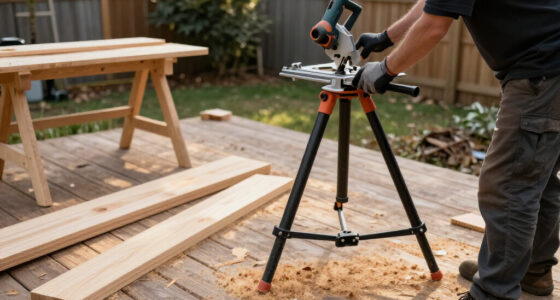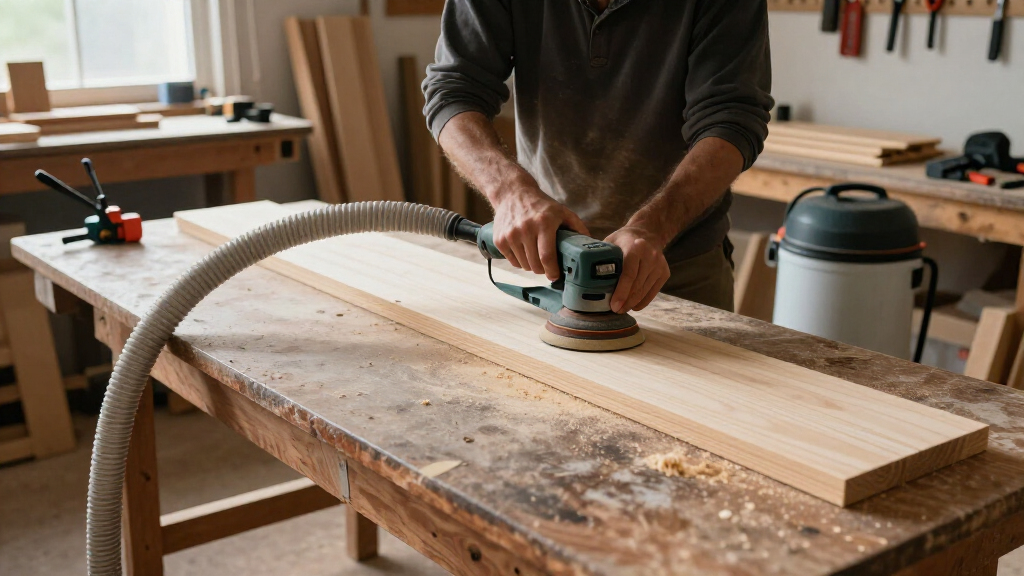

Portable dust collectors for woodworking range from tool-connected collectors that capture chips at the source to air filtration units that clean suspended dust. My best overall pick is the Powertec DC5372, a wheeled 1 HP collector with a 1-micron filter bag that offers a practical balance for shop machines. The WEN DC3401 is a compact alternative for smaller workshops, while the ALORAIR 2-Stage 580/780 CFM system suits buyers focused on filtering airborne dust. The main tradeoff is choosing between source collection, which catches debris as it is made, and room filtration, which addresses particles already in the air. Read on for the full breakdown, buying advice, and recommendations by shop size and task.

Get tools and workshop supplies delivered free — and shop member deals
- Fast, free delivery on millions of items
- Access to Prime Big Deal Days deals on October 6–7
- Prime Video, Amazon Music and more included
Complete the kit


Key Takeaways
Source capture and air filtration solve different problems: the Powertec, WEN DC3401, and other bag-and-hose collectors target debris at a machine, while the ALORAIR, Abestorm, OUKEETO, and Purisystems filtration units circulate shop air.
The Powertec DC5372 is the strongest all-around fit among the portable machine collectors: its 1 HP motor, stated 560 CFM airflow, and 1-micron bag make it a more balanced shop-machine choice than tabletop or hanging air cleaners.
Small-space buyers have distinct choices: the WEN DC3401 prioritizes a compact mobile collector, while OUKEETO and the Abestorm tabletop models offer localized air cleaning rather than hose-based extraction.
Higher airflow claims do not replace a good capture setup: the 1,100-to-1,350 CFM room-filter options can circulate air, but placement, room layout, filter condition, and the dust source all affect results.
Large-capacity machines trade footprint for fewer collection interruptions: the WEN DC1300’s 50-gallon bag suits sustained shop use better than a small portable unit, but its size makes it a less natural choice for tight or frequently rearranged spaces.
| OUKEETO Portable Tabletop Air Filtration System for Woodworking |  | Best Compact Benchtop Pick | Model: FJ180 | Airflow: 580 or 780 CFM | Particle filtration: Described as 99.5% of particles as small as 0.3 μm | VIEW LATEST PRICE | See Our Full Breakdown |
| ALORAIR 2-Stage 270° Intake Air Filtration System with Built-in Ionizer and Remote Control (580/780 CFM) |  | Best for Remote-Controlled Air Circulation | Airflow: 580/780 CFM | Intake design: 270° | Coverage area: Up to 800 sq. ft. | VIEW LATEST PRICE | See Our Full Breakdown |
| Powertec 1 HP 560 CFM Portable Dust Collector with 1 Micron Filter Bag (DC5372) |  | Best for Moving Between Machines | Motor power: 1 HP | Airflow capacity: 560 CFM | Voltage: 120 V/240 V | VIEW LATEST PRICE | See Our Full Breakdown |
| DYNAVEX 10 Amp Portable Woodworking Dust Extractor with 12-Gallon Tank |  | Best for Tool-Linked Fine-Dust Pickup | Motor power: 1.5 HP | Amperage: 10 A | Airflow: 142 CFM | VIEW LATEST PRICE | See Our Full Breakdown |
| ALORAIR Purecare 1350IG 360-Degree Air Filtration System with Ionizer |  | Best for Large Workshops | Model: Purecare 1350IG | Airflow: 1050/1350 CFM | Coverage area: Up to 1,700 sq. ft. | VIEW LATEST PRICE | See Our Full Breakdown |
| ALORAIR Purecare 1080IG Hanging Air Filtration System with Ionizer and Remote Control |  | Best for Broad Workshop Coverage | Airflow: 780/1,080 CFM | Coverage area: Up to 1,100 sq. ft. | Filter: MERV 11; captures 90% of particles from 3–10 microns | VIEW LATEST PRICE | See Our Full Breakdown |
| Abestorm DecDust 1350IG 360-Degree Air Filtration System with Ionizer |  | Best for High-Airflow Shop Coverage | Airflow: 1,050–1,350 CFM | Coverage area: Up to 1,700 sq. ft. | Filter: MERV 11; listed for 1-micron particle retention | VIEW LATEST PRICE | See Our Full Breakdown |
| Abestorm Tabletop Dust Collector with Timer for Woodworking Shops |  | Best Compact MERV-13 Pick | Airflow settings: 580 CFM and 780 CFM | Filter: MERV 13 | Timer: Up to 120 minutes | VIEW LATEST PRICE | See Our Full Breakdown |
| Abestorm Tabletop Dust Collector with Ionizer |  | Best for Higher-Flow Benchtop Filtration | Model: DecDust 1050IG | Airflow settings: 850 CFM and 1,050 CFM | Filter: MERV 13; lasts up to six months | VIEW LATEST PRICE | See Our Full Breakdown |
| Purisystems PuriCare 1100 3-Speed Remote Air Filtration System – Hanging Air Filter for Woodworking and Garage (up to 1100 CFM, 1100 sq ft) |  | Best for Adjustable Overhead Filtration | Airflow: Up to 1,100 CFM | Coverage area: Up to 1,100 sq. ft. | Fan speeds: 3 | VIEW LATEST PRICE | See Our Full Breakdown |
| WEN DC3401 Woodworking Dust Collector |  | Best Compact Collector | Motor: 5.7-amp brushed | Impeller: 6 inches | Airflow: Up to 660 CFM | VIEW LATEST PRICE | See Our Full Breakdown |
| ALORAIR 580/780 CFM 2-Stage Air Filtration System for Woodworking |  | Best for Workshop Air Filtration | Airflow: Title: 580/780 CFM; specifications: 850/1050 CFM | Coverage: Up to 800 square feet | Filter: MERV 13; captures 90% of 3–10 micron particles | VIEW LATEST PRICE | See Our Full Breakdown |
| WEN 7.4-Amp Woodworking Dust Collector with 15-Gallon Bag |  | Best for Longer Collection Runs | Motor: 7.4-amp induction motor | Impeller: 9 inches | Airflow: Up to 600 CFM | VIEW LATEST PRICE | See Our Full Breakdown |
| WEN DC1300 1,300 CFM Dust Collector with 50-Gallon Bag |  | Best for High-Capacity Shop Collection | Model: DC1300 | Airflow: 1,300 CFM | Motor: 14 amps | VIEW LATEST PRICE | See Our Full Breakdown |
| portable dust collectors for woodworking | Airflow | Dimensions | Weight | Filter |
|---|---|---|---|---|
| OUKEETO Portable Tabletop Air | 580 or 780 CFM | 14.1 × 7.1 × 10.2 in stated; technical details also list 1 × 1 × 1 in | 15.89 lb | HEPA high-performance carbon deodorization net |
| ALORAIR 2-Stage 270° Intake Ai | 580/780 CFM | 18.35 × 18.35 × 8.82 in | — | — |
| Powertec 1 HP 560 CFM Portable | — | — | 43.6 lb | Reusable 1-micron bag with viewing window and zippered bottom |
| DYNAVEX 10 Amp Portable Woodwo | 142 CFM | — | — | — |
| ALORAIR Purecare 1350IG 360-De | 1050/1350 CFM | 20.5 × 20.5 × 9.8 in | — | — |
| ALORAIR Purecare 1080IG Hangin | 780/1,080 CFM | 19.4 × 19.4 × 9.6 in. | 22 lb. | MERV 11; captures 90% of particles from 3–10 microns |
| Abestorm DecDust 1350IG 360-De | 1,050–1,350 CFM | 20.5 × 20.5 × 9.8 in. | 27 lb. | MERV 11; listed for 1-micron particle retention |
| Abestorm Tabletop Dust Collect | — | 14.57 × 9.45 × 11.81 in. | — | MERV 13 |
| Abestorm Tabletop Dust Collect | — | 11.81 × 11.81 × 13.78 in. | 21.2 lb. | MERV 13; lasts up to six months |
| Purisystems PuriCare 1100 3-Sp | Up to 1,100 CFM | — | — | — |
| WEN DC3401 Woodworking Dust Co | Up to 660 CFM | 34.25 × 13 × 14.2 inches | 17 pounds | — |
| ALORAIR 580/780 CFM 2-Stage Ai | Title: 580/780 CFM; specifications: 850/1050 CFM | 14.57 × 9.45 × 11.81 inches | 17.4 pounds | MERV 13; captures 90% of 3–10 micron particles |
| WEN 7.4-Amp Woodworking Dust C | Up to 600 CFM | 43.3 × 17.7 × 20.1 inches | 41.1 pounds | — |
| WEN DC1300 1,300 CFM Dust Coll | 1,300 CFM | — | — | — |
More Details on Our Top Picks
OUKEETO Portable Tabletop Air Filtration System for Woodworking
The OUKEETO is the most compact choice here for drawing airborne dust through a benchtop filter rather than collecting chips at a machine. Its 580/780 CFM settings let you choose between quieter, lower-flow operation and stronger circulation, while the handle and 15.89-pound weight make it easier to reposition than the floor-standing Powertec DC5372. The maker describes the filter as capturing 99.5% of particles down to 0.3 μm, a finer stated particle threshold than the ALORAIR 2-Stage 270° system’s 1-micron specification. That does not make it a substitute for source-capture dust collection: it is better suited to supplementing cleanup around a bench. The glass baffle is a useful woodworking-specific inclusion, but the recommended roughly four-month filter replacement adds upkeep. I’d also verify the dimensions before ordering, since the listed technical details conflict with the stated measurements.
Pros:- Compact benchtop format with a handle and 15.89-pound listed weight.
- Two airflow settings of 580 and 780 CFM.
- Filter is described as capturing 99.5% of particles as small as 0.3 μm.
- Includes a glass baffle intended for woodworking.
Cons:- Filter replacement is recommended approximately every four months.
- Conflicting listed dimensions make fit and placement harder to confirm.
- Air filtration supplements, rather than replaces, dust collection at the tool.
Best for: Woodworkers with a small bench area who want a movable air-filtration unit to supplement a machine’s dust collection.
Not ideal for: Buyers seeking a floor-standing collector for direct connection to several machines, or anyone who needs unambiguous product dimensions before purchase.
- Model:FJ180
- Airflow:580 or 780 CFM
- Particle filtration:Described as 99.5% of particles as small as 0.3 μm
- Filter:HEPA high-performance carbon deodorization net
- Voltage and frequency:115 V, 60 Hz
- Dimensions:14.1 × 7.1 × 10.2 in stated; technical details also list 1 × 1 × 1 in
- Weight:15.89 lb
- Included accessory:Glass baffle
- Filter replacement interval:Approximately every four months
Our verdict“Choose the OUKEETO if portability and fine-particle air filtration at a workbench matter more than direct machine collection or long filter intervals.”
ALORAIR 2-Stage 270° Intake Air Filtration System with Built-in Ionizer and Remote Control (580/780 CFM)
The ALORAIR 2-Stage is for shop owners who want broad overhead or room-level air circulation without walking over to the unit for every adjustment. Its 270° intake, 580/780 CFM airflow, remote, and 1–9-hour timer make it more convenient to run during a woodworking session than the benchtop OUKEETO, which is easier to place close to a work area but lacks a listed remote. The MEVR 11 filter is specified for particles down to 1 micron; the product data also describes retention of up to 90% of 3–10 μm particles. That is a different filtration claim from the OUKEETO’s finer stated 0.3 μm threshold, so buyers should compare the published specs rather than assume they are equivalent. An ionizer and coverage listed up to 800 sq. ft. add room-scale appeal, but this is not a tool-connected extractor. California shipping restrictions and audible operation also narrow its fit.
Pros:- 270° intake and up to 780 CFM airflow for room-level circulation.
- Remote control includes a programmable 1–9-hour timer.
- MEVR 11 filter is specified for particles as small as 1 micron.
- Built-in ionizer and coverage listed up to 800 sq. ft.
Cons:- Cannot be shipped to or used in California, according to the supplied product information.
- Noise level is listed at up to 50 dBA and may be noticeable in quiet rooms.
- Air filtration does not capture dust at the tool like a connected extractor.
Best for: Woodworkers with a garage or workshop up to the listed 800 sq. ft. who want remote operation and timed air circulation.
Not ideal for: California buyers, users who need a hose-connected extractor at the tool, or people working in a very quiet space.
- Airflow:580/780 CFM
- Intake design:270°
- Coverage area:Up to 800 sq. ft.
- Filter class:MEVR 11
- Particle retention:Specified to 1 micron; up to 90% of 3–10 μm particles stated
- Controls:Remote control with 1–9-hour timer
- Electrical requirements:115 V, 60 Hz, 0.6 A; 62 watts
- Noise level:≤50 dBA
- Dimensions:18.35 × 18.35 × 8.82 in
Our verdict“Pick this ALORAIR for remote-timed workshop air circulation, but skip it if you need direct dust pickup or are in California.”
Powertec 1 HP 560 CFM Portable Dust Collector with 1 Micron Filter Bag (DC5372)
Unlike the OUKEETO and both ALORAIR air-filtration systems in this group, the Powertec DC5372 is a source-capture collector: its 4-inch inlet is intended to connect to woodworking equipment, pulling dust into a reusable bag rather than relying on room circulation. That makes it the stronger fit for a hobby shop where a collector can be rolled between machines. The 560 CFM airflow, 1 HP motor, and casters suit a compact setup, while the bag’s viewing window helps you check fill level and its zippered bottom simplifies emptying. The stated 1-micron filtration is useful for routine collection, but it is not the same fine-particle claim as the OUKEETO’s stated 0.3 μm filtration. Its main limitations are practical: the 4-inch inlet can restrict connection options, and no hose is included. The 43.6-pound unit is movable, not something I’d choose for frequent lifting or carrying.
Pros:- Wheeled design makes it practical to move between machines.
- Reusable 1-micron filter bag has a viewing window and zippered disposal.
- Dual-voltage motor supports 120 V or 240 V setups.
- Vortex Base design is described as improving dust-removal efficiency by up to 10%.
Cons:- The 4-inch inlet may not suit larger ports or hose systems.
- A dust-collection hose is not included.
- At 43.6 pounds, it is portable on casters but cumbersome to carry.
Best for: Hobby woodworkers who need a wheeled collector to connect to one machine at a time and can supply compatible 4-inch hose.
Not ideal for: Shops needing a supplied hose, larger-diameter connections, or an overhead air cleaner for airborne dust throughout the room.
- Motor power:1 HP
- Airflow capacity:560 CFM
- Voltage:120 V/240 V
- Current:12 A at 120 V; 6 A at 240 V
- Motor speed:3450 RPM
- Intake size:4 in
- Filter:Reusable 1-micron bag with viewing window and zippered bottom
- Weight:43.6 lb
Our verdict“Choose the Powertec when you want a wheeled, machine-connected collector for a small shop and already have compatible hose.”
DYNAVEX 10 Amp Portable Woodworking Dust Extractor with 12-Gallon Tank
The DYNAVEX is the most task-focused option in this batch for capturing dust at a compatible power tool. Its auto-start linked switch turns the extractor on with the tool, reducing the chance of running a saw or sander while leaving collection off; its 0.5-micron HEPA filtration also has a finer stated cutoff than the Powertec DC5372’s 1-micron bag. The tradeoff is airflow: at 142 CFM, it is an extractor for a hose-connected tool, not a high-volume collector for large machines or a substitute for the 580–780 CFM room-filtration units from ALORAIR. A 12-gallon tank means less frequent emptying than a small container, and the supplied 4-inch by 6.5-foot hose gives it a ready-to-connect setup. However, the linked switch is limited to 550 watts, continuous use is capped at one hour, and the wheels require optional installation.
Pros:- Auto-start linked switch coordinates extraction with compatible power tools.
- 0.5-micron HEPA filtration targets fine dust.
- 12-gallon tank reduces how often collection needs emptying.
- Includes a 4-inch by 6.5-foot hose.
Cons:- Linked switch supports a maximum load of 550 watts.
- Continuous use is limited to one hour.
- Wheels require optional installation.
Best for: Woodworkers using compatible portable tools who want automatic tool-linked extraction and fine-particle filtration in a mobile tank unit.
Not ideal for: Users seeking continuous all-day extraction, higher airflow for large stationary machines, or an automatic switch for a tool setup exceeding 550 watts.
- Motor power:1.5 HP
- Amperage:10 A
- Airflow:142 CFM
- Tank capacity:12 gallons
- Filtration:0.5-micron HEPA
- Hose:4 in. × 6.5 ft.
- Linked switch limit:550 watts
- Continuous-use limit:One hour
- Portability:Mobile wheels; optional installation
Our verdict“Choose the DYNAVEX for timed-with-tool, fine-dust pickup on compatible portable equipment, not for high-airflow or uninterrupted shop collection.”
ALORAIR Purecare 1350IG 360-Degree Air Filtration System with Ionizer
For a large shop where airborne dust can linger well beyond the immediate work area, the Purecare 1350IG offers the highest listed airflow in this batch: up to 1,350 CFM, with coverage specified for spaces up to 1,700 sq. ft. Its 360-degree intake, hanging chain, timer, and IR remote make it better suited to overhead room circulation than the benchtop OUKEETO, while the ALORAIR 2-Stage 270° model is a smaller-coverage alternative with lower maximum airflow. The Purecare’s MEVR 11 filter is described as capturing 90% of 3–10 μm particles and 85% of 1 μm particles, so I would treat it as a broad air-cleaning complement to source extraction, not a HEPA tool extractor. The added capacity comes with a clear compromise: noise is listed at 60–69 dB, louder than the 2-Stage model’s stated ceiling, and California shipping is restricted.
Pros:- Airflow reaches 1,350 CFM, the highest listed in this batch.
- Coverage is specified for spaces up to 1,700 sq. ft.
- 360-degree intake supports room-wide circulation.
- Includes an IR remote, timer, and hanging chain.
Cons:- Listed noise level of 60–69 dB may disrupt quieter work areas.
- Not available for shipment to California, according to the supplied data.
- Room filtration does not replace dust capture at a machine.
Best for: Owners of large woodworking shops or garages who want high-capacity overhead air circulation with remote and timer control.
Not ideal for: California buyers, small-shop users with limited overhead space, or anyone who needs quiet operation or direct hose-connected collection.
- Model:Purecare 1350IG
- Airflow:1050/1350 CFM
- Coverage area:Up to 1,700 sq. ft.
- Intake:360-degree
- Filter efficiency:MEVR 11; 90% of 3–10 μm particles and 85% of 1 μm particles
- Noise level:60–69 dB
- Dimensions:20.5 × 20.5 × 9.8 in
- Electrical requirements:115 V, 60 Hz, 1.5 A
- Controls and mounting:IR remote, timer, hanging chain
Our verdict“Pick the Purecare 1350IG for large-shop air circulation if its noise and California shipping restriction fit your situation.”
ALORAIR Purecare 1080IG Hanging Air Filtration System with Ionizer and Remote Control
The Purecare 1080IG is a strong fit for woodworkers who want ceiling-level air cleaning across a larger shared work area rather than dust collection at a single tool. Its 270° intake and 780/1080 CFM settings give it more reach than the Abestorm tabletop models, while a remote and timer make it easier to run without climbing to the unit. The MERV 11 filter is specified to capture 90% of particles from 3–10 microns, so this is aimed at airborne dust control, not fine-dust capture at the source. The built-in ionizer adds odor treatment, but the unit still needs filter maintenance and a suitable hanging position. At 22 pounds, installation takes more thought than placing a benchtop unit; it also cannot ship to California.
Pros:- 270° intake is suited to collecting airborne dust from more than one direction.
- Two airflow settings provide up to 1,080 CFM for larger workshop spaces.
- Remote control and timer allow operation without reaching the ceiling-mounted unit.
- MERV 11 filter is specified to capture 90% of particles between 3 and 10 microns.
Cons:- Cannot be shipped to California.
- At 22 pounds, it needs secure support and is less convenient to reposition than a tabletop collector.
- MERV 11 filtration targets general airborne dust rather than the finer particles addressed by the MERV-13 Abestorm tabletop units.
Best for: Woodworkers with a medium-to-large garage or shop who want remote-operated, overhead air filtration for general airborne sawdust.
Not ideal for: California buyers, people who need a tool-connected dust extractor, or anyone unable to securely hang a 22-pound unit.
- Airflow:780/1,080 CFM
- Coverage area:Up to 1,100 sq. ft.
- Filter:MERV 11; captures 90% of particles from 3–10 microns
- Intake design:270°
- Dimensions:19.4 × 19.4 × 9.6 in.
- Weight:22 lb.
- Power:115 V, 151 W
- Noise level:Less than 60 dBA
Our verdict“Choose the Purecare 1080IG for remote-controlled, broad-area air filtration in a shop where a hanging unit can be mounted securely.”
Abestorm DecDust 1350IG 360-Degree Air Filtration System with Ionizer
For a larger workshop that needs more airflow than the Purecare 1080IG, the DecDust 1350IG offers up to 1,350 CFM and a stated coverage area of 1,700 square feet. Its 360-degree intake and three placement options—ceiling-hung, ceiling-mounted, or workbench—give it more setup flexibility than a hanging-only approach. The MERV-11 filter is listed for 1-micron particle retention, though that rating does not make this a substitute for collecting dust at a saw or sander. Four replacement filters are included, which helps with initial upkeep, but the stated replacement interval of every two to four months means ongoing maintenance is part of ownership. It is also heavier and louder than the Purecare 1080IG, and California shipping is unavailable.
Pros:- Airflow reaches 1,350 CFM, exceeding the Purecare 1080IG’s maximum.
- 360-degree intake supports air circulation from all sides.
- Can be ceiling-hung, ceiling-mounted, or placed on a workbench.
- Includes four replaceable MERV-11 filters and both touch-panel and remote controls.
Cons:- Cannot be shipped to California.
- At 27 pounds and up to 69 dBA, it is heavier and potentially louder than the Purecare 1080IG.
- Filters are specified for replacement every two to four months.
Best for: Woodworkers with a large shop who want high airflow, multiple placement choices, and included replacement filters.
Not ideal for: Small-shop owners seeking a quiet, lightweight unit, California buyers, or users who need dust extraction directly from a tool.
- Airflow:1,050–1,350 CFM
- Coverage area:Up to 1,700 sq. ft.
- Filter:MERV 11; listed for 1-micron particle retention
- Intake design:360°
- Installation options:Ceiling-hung, ceiling-mounted, or workbench placement
- Dimensions:20.5 × 20.5 × 9.8 in.
- Weight:27 lb.
- Power requirements:115 V, 60 Hz, 1.5 A
- Noise level:60–69 dBA
Our verdict“Pick the DecDust 1350IG when high airflow and flexible installation matter more than low weight, lower noise, or infrequent filter changes.”
Abestorm Tabletop Dust Collector with Timer for Woodworking Shops
This Abestorm tabletop unit makes the most sense for a bench where portability and MERV-13 filtration matter more than sweeping a whole shop. At 580 or 780 CFM, it offers less airflow than the Abestorm DecDust 1050IG, but its metal housing, handle, and cord wrap make it a practical unit to carry between carving or sanding stations. A 120-minute timer can keep it running after a short task without requiring a separate switch-off routine, and the auxiliary outlet allows another compatible collector to be chained in. That added flexibility does not erase its limits: two speeds give less adjustment, and the listed airflow is modest beside the larger hanging systems. The filter is specified to last up to six months, so replacement remains part of routine upkeep.
Pros:- Compact metal housing, carry handle, and cord wrap support moving it between workstations.
- MERV-13 filter offers finer filtration than the MERV-11 filters in the hanging models listed here.
- Two airflow settings and a timer of up to 120 minutes suit short, varied tasks.
- Auxiliary outlet allows compatible units to be chained.
Cons:- Maximum airflow of 780 CFM is lower than the Abestorm DecDust 1050IG and the hanging high-airflow options.
- Only two speed settings limit how finely airflow can be adjusted.
- Filter is specified to last up to six months, requiring periodic replacement.
Best for: Carvers and hobby woodworkers who move between benches and want a compact MERV-13 air cleaner with a timer.
Not ideal for: Owners of large workshops or users handling heavy dust loads who need more airflow than 780 CFM.
- Airflow settings:580 CFM and 780 CFM
- Filter:MERV 13
- Timer:Up to 120 minutes
- Dimensions:14.57 × 9.45 × 11.81 in.
- Power:115 V, 0.9 A
- Cord length:11.5 ft.
- Housing:Metal
- Auxiliary outlet:Included
Our verdict“Choose this tabletop Abestorm for movable bench-level air cleaning and MERV-13 filtration, not for covering a large shop.”
Abestorm Tabletop Dust Collector with Ionizer
The DecDust 1050IG is the stronger choice over Abestorm’s 580/780 CFM tabletop model when a portable bench unit needs more airflow: its two settings reach 1,050 CFM, while retaining a MERV-13 filter and a timer of up to two hours. Its 21.2-pound weight and handle make it movable, but this is not a featherweight accessory to shift constantly between rooms. The built-in ionizer and safety circuit breaker add functions absent from the other Abestorm tabletop listing, while the 11.5-foot cord and cord wrap help with setup. Like the smaller tabletop model, it remains a corded air-filtration unit, not a tool-connected extractor. Its filtration coverage area is not provided, so I would choose it for a specific work zone rather than assume it can clean a large shop.
Pros:- Airflow reaches 1,050 CFM, above the other Abestorm tabletop model’s 780 CFM maximum.
- MERV-13 filter and built-in ionizer support fine-particle and odor treatment.
- Timer runs for up to 120 minutes, with a circuit breaker listed as a safety feature.
- Handle and cord wrap make positioning and cord storage more manageable.
Cons:- At 21.2 pounds, it is less convenient to carry frequently than its tabletop label may suggest.
- Requires a corded electrical connection and cannot operate away from an outlet.
- No coverage-area figure is supplied, making whole-shop suitability harder to judge.
Best for: Woodworkers who need a portable benchtop air cleaner with more airflow than a 780-CFM tabletop model and value MERV-13 filtration.
Not ideal for: Buyers who need a lightweight unit for frequent carrying, cordless operation, or verified whole-shop coverage.
- Model:DecDust 1050IG
- Airflow settings:850 CFM and 1,050 CFM
- Filter:MERV 13; lasts up to six months
- Timer:Up to 120 minutes
- Dimensions:11.81 × 11.81 × 13.78 in.
- Weight:21.2 lb.
- Power requirements:115 V, 0.59 A
- Cord length:11.5 ft.
- Safety feature:Circuit breaker
Our verdict“Pick the DecDust 1050IG for higher-flow, MERV-13 benchtop filtration when you can keep it near a power outlet.”
Purisystems PuriCare 1100 3-Speed Remote Air Filtration System – Hanging Air Filter for Woodworking and Garage (up to 1100 CFM, 1100 sq ft)
The PuriCare 1100 is the flexible hanging option for buyers who want three fan speeds and a long programmable timer rather than the two-speed setup on the ALORAIR Purecare 1080IG. Its listed 1,100 CFM airflow and 1,100-square-foot coverage put it in a similar broad-area role, while the two-stage filter system gives buyers replaceable filtration stages instead of a single stated MERV-11 filter. An RF remote rated to 26 feet and timers from one to 12 hours suit a unit that may be mounted above a work area. Carrying handles and rubber feet also allow benchtop placement, a useful alternative to permanent hanging. The tradeoff is that the available data gives no noise or weight figure, and the unit cannot ship to California; it also cleans ambient air rather than capturing dust at the tool.
Pros:- Three fan speeds offer more airflow adjustment than the two-speed Purecare 1080IG.
- Two-stage replaceable filtration is suited to routine filter servicing.
- RF remote works up to 26 feet, with programmable timers from one to 12 hours.
- Handles and rubber feet allow placement on a bench as well as hanging installation.
Cons:- Cannot be shipped to California.
- No weight or noise-level figure is provided in the product data.
- Like the other hanging air cleaners, it filters room air rather than collecting dust directly from a woodworking tool.
Best for: Woodworkers who want a hanging air cleaner with three speed choices, extended timer settings, and the option of benchtop placement.
Not ideal for: California buyers, shoppers who need published noise and weight figures before choosing, or users seeking direct tool dust extraction.
- Airflow:Up to 1,100 CFM
- Coverage area:Up to 1,100 sq. ft.
- Fan speeds:3
- Filtration:Two-stage, replaceable filter system
- Remote range:Up to 26 ft.
- Timer:1–12 hours
- Placement features:Carrying handles and rubber feet
Our verdict“Choose the PuriCare 1100 if adjustable overhead airflow, two-stage filtration, and long timer settings matter more than California availability.”
WEN DC3401 Woodworking Dust Collector
The WEN DC3401 makes the most sense when floor space and easy repositioning matter more than a large collection capacity. At 17 pounds and just over 34 inches long, it is easier to move or store than the 41.1-pound WEN 7.4-Amp Woodworking Dust Collector. Its stated airflow reaches 660 CFM, slightly above that larger model’s 600 CFM, but the DC3401 pairs that airflow with a smaller 12-gallon bag, so expect more frequent emptying during extended work. The 4-inch port suits tools with matching connections; it is not a substitute for a shop air-filtration unit like the ALORAIR 580/780 CFM system, which treats room air instead of connecting directly to a tool. Locking casters help with shop positioning, while optional wall mounting can free floor space. The tradeoff is that wall mounting is not built into the standard mobile setup.
Pros:- Light 17-pound design is easier to reposition than the larger WEN 7.4-Amp model.
- Up to 660 CFM of airflow for a compact collector.
- Lockable swivel casters support mobile use around a small shop.
- Optional wall mounting offers another way to save floor space.
Cons:- The 12-gallon bag needs more frequent emptying than the larger WEN models’ bags.
- The 4-inch dust port requires a compatible tool connection.
- Wall mounting is optional rather than part of the standard mobile configuration.
Best for: Woodworkers with a small shop who need a lightweight collector to move between compatible 4-inch-port machines.
Not ideal for: High-volume shops or users collecting dust from several tools for long sessions; its 12-gallon bag fills sooner than the 15- and 50-gallon options in this group.
- Motor:5.7-amp brushed
- Impeller:6 inches
- Airflow:Up to 660 CFM
- Dust port:4 inches
- Collection bag:12 gallons, 5 microns, zippered
- Dimensions:34.25 × 13 × 14.2 inches
- Weight:17 pounds
- Mobility and mounting:Lockable swivel casters; optional wall mount
- Warranty:2 years
Our verdict“Choose the DC3401 if you want a lightweight, movable collector for one compatible machine and can work with its smaller bag.”
ALORAIR 580/780 CFM 2-Stage Air Filtration System for Woodworking
The ALORAIR air filtration system fills a different role from the WEN DC3401 and WEN 7.4-Amp collectors: it filters suspended workshop particles rather than collecting chips and dust through a machine’s 4-inch port. Its MERV 13 filter is specified to capture 90% of particles sized 3–10 microns, making it a useful companion for general shop cleanup, not a replacement for source capture at a saw or planer. At 17.4 pounds, with a top handle and compact footprint, it is easy to reposition where airborne dust tends to linger. The two-speed fan gives some control over airflow, though the product information conflicts: the title says 580/780 CFM while the specs list 850/1050 CFM. I would not choose it based on a precise airflow target until that discrepancy is clarified. Its timer is also limited to one- or two-hour settings.
Pros:- MERV 13 filtration is specified to capture 90% of 3–10 micron particles.
- Two fan speeds allow a choice between airflow settings.
- Portable 17.4-pound body has a top handle and rubber feet.
- Extra power socket and timer add useful shop-side controls.
Cons:- Airflow figures conflict between the product title and specifications.
- The one- to two-hour timer offers limited scheduling flexibility.
- It filters room air but does not collect chips through a tool dust port.
Best for: Woodworkers who already capture dust at their tools and want a portable filter to address airborne particles in a workshop up to 800 square feet.
Not ideal for: Buyers seeking a dust collector that connects to a machine, or anyone who needs a verified airflow figure or longer timer settings.
- Airflow:Title: 580/780 CFM; specifications: 850/1050 CFM
- Coverage:Up to 800 square feet
- Filter:MERV 13; captures 90% of 3–10 micron particles
- Dimensions:14.57 × 9.45 × 11.81 inches
- Weight:17.4 pounds
- Noise level:Under 58 dBA
- Timer:1–2 hours
- Controls and outlets:Two fan speeds; extra power socket
Our verdict“Pick the ALORAIR if you need portable room-air filtration alongside a separate tool-connected collector, but verify its airflow rating first.”
WEN 7.4-Amp Woodworking Dust Collector with 15-Gallon Bag
For buyers who want more bag capacity than the compact DC3401 without stepping up to the much larger DC1300, this WEN 7.4-Amp collector is the middle-ground choice. Its 15-gallon, 5-micron bag holds more than the DC3401’s 12-gallon bag, reducing interruptions to empty it, while the 41.1-pound body and 43.3-inch height make it less convenient to lift or tuck away. The 9-inch impeller and stated airflow of up to 600 CFM suit a single connected machine with a compatible 4-inch port; the higher stated airflow of the smaller DC3401 may appeal more to buyers prioritizing that figure over capacity. Swivel casters and an optional wall-mount arrangement provide placement choices, but moving this unit is a different proposition from carrying the 17-pound DC3401. It is a practical stationary-shop pick, not a genuinely light portable unit.
Pros:- 15-gallon bag provides more capacity than the WEN DC3401’s 12-gallon bag.
- 9-inch impeller and stated airflow up to 600 CFM suit a connected woodworking machine.
- Swivel casters make it movable around a shop floor.
- Optional wall mounting can reduce the floor space it occupies.
Cons:- At 41.1 pounds, it is substantially less portable than the WEN DC3401.
- The 4-inch port requires a compatible tool connection.
- Its 600 CFM stated airflow is lower than the DC3401’s 660 CFM figure.
Best for: Home-shop woodworkers who keep a collector near one machine and want a larger bag than the compact WEN DC3401 provides.
Not ideal for: Anyone who regularly carries equipment between work areas or needs a high-capacity collector for multiple tools; this unit weighs 41.1 pounds and has one 4-inch port.
- Motor:7.4-amp induction motor
- Impeller:9 inches
- Airflow:Up to 600 CFM
- Dust port:4 inches
- Collection bag:15 gallons, 5 microns, zippered
- Dimensions:43.3 × 17.7 × 20.1 inches
- Weight:41.1 pounds
- Mounting and mobility:Mobile base with swivel casters; optional wall mount
- Warranty:2 years
Our verdict“Choose this WEN if you want a larger bag for a mostly stationary machine setup and do not need a lightweight collector.”
WEN DC1300 1,300 CFM Dust Collector with 50-Gallon Bag
The WEN DC1300 is the capacity-first choice here, aimed at a workshop where a small bag would interrupt work too often. Its 50-gallon collection bag dwarfs the 12-gallon DC3401 and 15-gallon WEN 7.4-Amp model, while the stated 1,300 CFM and two 4-inch inlets allow connections to as many as two tools. That makes it a stronger fit for a fixed shop layout than for carrying between work areas. The four swivel casters help with floor-level repositioning, but the product data does not give a weight or dimensions, so I would not assume it is easy to lift or store. Unlike the ALORAIR filtration system, the DC1300 collects at connected tools rather than filtering general room air. Its single power level also means less flexibility in adjusting operation, and it is specified for indoor use only.
Pros:- 50-gallon bag offers far more capacity than the other WEN collectors in this group.
- Stated airflow reaches 1,300 CFM.
- Two 4-inch inlets can connect up to two tools.
- Four swivel casters support repositioning around the shop.
Cons:- Single speed limits control over operation.
- Specified for indoor use only.
- The large-capacity design is less suited to buyers seeking a compact portable collector.
Best for: Woodworkers with a dedicated indoor shop who want a large collection bag and the option to connect two compatible 4-inch tools.
Not ideal for: Small-shop users who need a compact, carryable collector, or anyone who needs variable speeds or outdoor operation.
- Model:DC1300
- Airflow:1,300 CFM
- Motor:14 amps
- Impeller:10-inch steel; up to 3,450 RPM
- Inlets:Two 4-inch
- Bag capacity:50 gallons
- Wheels:Four swivel casters
- Power levels:1
- Intended use:Indoor garage, home, or workshop
Our verdict“Choose the DC1300 for a dedicated indoor shop that values a large bag and dual tool connections over compact portability and speed control.”
How We Picked
I grouped these 14 products by the job they perform rather than treating every machine as interchangeable. Tool-connected collectors were judged on stated airflow, motor and container capacity, mobility, and suitability for capturing chips and dust near a machine. Air filtration units were compared by stated airflow, intake design, controls, mounting style, and whether their format fits a bench, floor, or overhead position. These distinctions matter: a room air cleaner cannot stand in for a dust collector attached to a saw, and a chip collector does not clean the whole room by itself.
The ranking favors usefulness to a broad range of woodworking shops, then gives dedicated roles to compact, beginner-friendly, high-capacity, and airborne-dust options. I also weighed setup demands, space needs, and likely maintenance, while treating advertised CFM and room coverage as specifications rather than proof of performance in every layout. Products with similar airflow claims rank differently when their form factor or controls serve different buyers. Since the lineup includes several filtration units and fewer true machine collectors, the leading all-around picks prioritize practical source collection, while filtration models rank for the separate job they are built to do.
Factors to Consider When Choosing Portable Dust Collectors For Woodworking
Before choosing among portable dust collectors for woodworking, decide what dust problem you want to solve. The right match depends on whether you need to catch chips at a machine, reduce fine dust left in the room, or address both with separate equipment. These broader choices can prevent a common mistake: buying a high-airflow air cleaner and expecting it to capture debris at a tool.
Choose Source Collection or Room Filtration
Start by identifying where the dust escapes. A hose-connected collector draws chips and dust from a tool port, while a room filtration unit pulls suspended particles through a filter after they disperse. If your main problem is sawdust piling up near a planer or table saw, prioritize source capture and check that the machine’s dust port can connect to the collector. If chips are already controlled but fine dust lingers, an overhead or tabletop air cleaner may add useful room circulation. Some shops need both approaches, but buying one type as a substitute for the other leaves a gap. For fine-dust protection, collection equipment should complement suitable respiratory protection and safe work practices.
Match Airflow and Port Size to the Tool
A collector’s stated CFM is only one part of its performance at a machine. Hose diameter, hose length, bends, leaks, and the tool’s port design can all reduce airflow where it is needed. Small hoses may fit a sander or compact tool but can restrict the chip volume from larger machines. Before buying, check the tool manual for its dust-port size and any airflow guidance, then plan the shortest practical hose route. Avoid assuming that a larger CFM number automatically means better capture if the unit cannot connect cleanly to the tool. For several machines, consider how often you will move the hose or change fittings.
Treat Air Filtration Claims as Room-Dependent
Air cleaners are often labeled with CFM or room-coverage figures, but real circulation depends on ceiling height, furniture, machine placement, and the path air can take through the shop. A unit mounted where it can draw from and return to open space may circulate air more effectively than one boxed in by shelving or ductwork. Think about where fine dust travels and whether a ceiling-mounted, hanging, or tabletop format can sit near that flow without blocking work. A timer or remote can make it easier to run filtration during and after a session, but convenience does not replace regular filter checks. Do not compare a room-coverage figure directly with a dust collector’s machine-port airflow; the measurements describe different jobs.
Balance Mobility Against Capacity and Footprint
Portable can mean a wheeled machine that moves between tools, a compact unit that stores under a bench, or a hanging filter that stays in one place. Decide how often the equipment must move before favoring the smallest footprint. A smaller bag or tank takes less room but may need more frequent emptying, while a larger bag reduces interruptions and can be awkward in a cramped shop. Check the full operating footprint, including room to change bags, reach controls, and route hoses. If your workspace is shared or rearranged often, maneuverability may matter more than maximum capacity. In a fixed shop that runs larger machines, capacity may be worth giving up some floor space.
Plan for Filters, Emptying, and Dust Disposal
Maintenance affects both convenience and collection quality, so check how the filter is accessed and what needs routine cleaning or replacement. Fine filters can help capture smaller particles, but they still need care as dust accumulates and airflow can change. Bag and tank capacity also shape how often work stops for emptying; choose a container that suits your typical session rather than an occasional maximum load. Consider where collected dust will go and whether the bag or tank can be removed without spilling debris back into the shop. A tabletop air cleaner may need less handling of bulk chips, yet its filters still require attention. If upkeep is inconvenient, even a capable collector may be used less consistently.
Spend More Only for a Clear Shop Need
Paying for greater capacity, more airflow, or added controls makes sense when those features address a real constraint in your shop. A larger collector can suit long sessions or machines that produce substantial chips, while a remote and timer may help when an air cleaner is mounted overhead. For a small bench setup, a compact unit may be easier to place and maintain than a larger system whose capacity goes unused. Do not choose on motor power or airflow alone: connection compatibility, collection style, filter access, and storage needs shape day-to-day fit. A buyer with several large tools may value a more substantial source collector, while someone seeking cleaner ambient air may put room circulation and mounting options first. Match the upgrade to your tools and routine, not to a spec sheet in isolation.
Frequently Asked Questions
Can an overhead air filtration system replace a dust collector connected to my saw?
No. An overhead filtration system is designed to circulate room air and capture airborne dust, not to pull chips directly from a saw’s dust port. A connected collector intercepts debris closer to where it is made, which can reduce the amount that reaches the floor or becomes airborne. If your saw produces a substantial stream of chips, source collection should come first. Room filtration can serve as a separate layer for dust that escapes. Choose based on the type of dust your current setup fails to control.
Is the Powertec DC5372 a better fit than the WEN DC3401 for a small shop?
The choice depends on whether your priority is a more capable machine collector or a smaller footprint. The Powertec lists a 1 HP motor, 560 CFM airflow, and a 1-micron filter bag, making it the more balanced pick for a range of shop machines. The WEN DC3401 is positioned as a compact woodworking collector, which can suit a tight workspace or a buyer who needs a more space-conscious unit. Check your tools’ port sizes and the room available for the collector before deciding. Neither should be confused with a room air filtration unit.
Should I choose a higher-CFM air cleaner or a collector with a larger bag?
These specifications answer different questions, so choose based on your dust problem rather than comparing the numbers directly. Air-cleaner CFM describes circulation through a filtration unit, while a bag’s capacity indicates how much collected material it can hold before emptying. If debris escapes into the room, prioritize the right source-collection connection; if airborne dust remains after tool collection, room filtration may help. Larger bags can reduce interruptions during chip-heavy work but do not guarantee better capture at the tool. For many shops, the two specifications matter at different stages of dust control.
Are tabletop dust collectors enough for woodworking?
Tabletop units are best treated as localized air-cleaning options, not full substitutes for tool-connected collection. They may suit a small bench area or a workspace where compact placement is the main need, but their position limits how much of a larger shop they can influence. They also do not directly pull chips from a saw, planer, or router table. Before choosing one, consider the dust volume your work creates and whether the unit can sit near the area without obstructing the bench. Pair it with source collection when your tools produce significant debris.
When does a larger collector like the WEN DC1300 make more sense than a portable compact unit?
A higher-capacity machine makes more sense when you regularly run larger dust-producing tools or want fewer stops to empty the collection bag. The WEN DC1300 is listed with 1,300 CFM and a 50-gallon bag, a combination aimed at more sustained collection than compact shop units. Its size is a real tradeoff for a small workshop, especially if the collector must move between crowded tools or be stored after use. Confirm that its connections suit your machines and that you have room to position and service it. For occasional bench work, a smaller collector may be easier to live with.
Conclusion
For the broadest mix of portable machine collection needs, my best overall choice is the Powertec DC5372, with its stated 560 CFM, 1 HP motor, and 1-micron bag. The best value-style fit for a compact shop is the WEN DC3401, especially when space and mobility matter more than large-bag capacity. For beginners who need a straightforward way to collect dust at a machine, start by checking the WEN DC3401 against your tool ports; choose the Powertec if your machines and floor space call for a more substantial collector. For premium airborne-dust filtration, compare the ALORAIR 1350IG or Purisystems PuriCare 1100 with the ALORAIR 580/780 CFM models based on room size, mounting, and controls. For specific needs, the WEN DC1300 suits larger-capacity collection, while OUKEETO and the Abestorm tabletop units fit localized air cleaning; none of those air cleaners replaces source capture at a dusty tool.
Halloween Picks
halloween
As an affiliate, we earn on qualifying purchases.