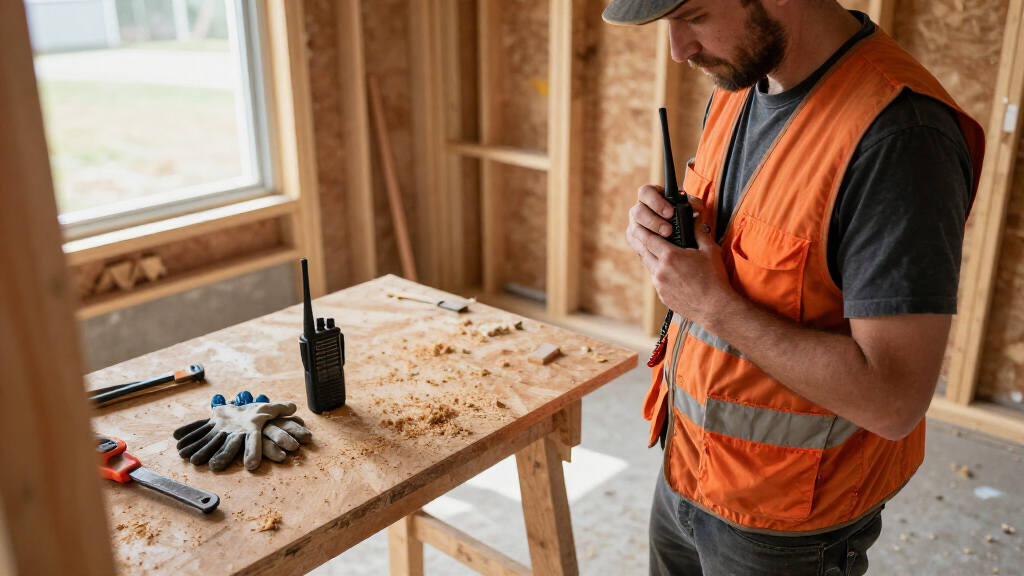

For most construction crews, I’d start with the Retevis RB48 Heavy Duty 4-Pack for its rugged site-focused design, while the SAMCOM FPCN30A 6-Pack stands out for its six-way charger and 5W power. The Retevis RT48 is another strong choice when water resistance matters more than a compact body. The main tradeoffs are how many radios you need, how well the set suits a noisy or wet jobsite, and whether its charger keeps up with shift routines. A larger pack can simplify crew coverage, but it may add cost and require more storage and charging space. Read on for the full breakdown and help matching a kit to your crew.

Get tools and workshop supplies delivered free — and shop member deals
- Fast, free delivery on millions of items
- Access to Prime Big Deal Days deals on October 6–7
- Prime Video, Amazon Music and more included
Complete the kit

Key Takeaways
- The RB48 kits lead with a jobsite-oriented design, but the 4-pack with earpieces and the 10-pack solve different crew-size and communication needs.
- The SAMCOM FPCN30A bundles a six-way charger with 5W radios, making it a standout for crews that want centralized charging and commercial-style power in one kit.
- The RT48 focuses on waterproofing, while the RT86 also includes a six-way charger; choose based on whether wet-site resilience or charging logistics is the bigger concern.
- Pack size changes the buying decision as much as radio features: the 2-pack pxton is suited to a small team, while the 10- and 16-radio kits serve larger operations.
- Accessories can improve day-to-day usability but add complexity: earpieces and shoulder microphones support hands-free communication, while compatibility and crew preferences deserve a check before ordering.


| construction site walkie talkies with charger | Pack size | Channels | Charging | Battery |
|---|---|---|---|---|
| Retevis RB48 Heavy Duty Two-Wa | 4 radios | 22 | USB-C; dual charging bases | 2000mAh lithium-ion; approximately 20 hours under stated standby-heavy use |
| Retevis RB48 Construction Two- | 10 radios | 22 | USB-C and 10-way charging dock | 2000mAh lithium-ion per radio; about 18 hours average stated |
| SAMCOM FPCN30A Commercial Two- | 6 radios | 20 | Six-way multi-charger | 1500mAh; 8+ hours stated talk time |
| Retevis RT22 Rechargeable FRS | 6 radios | 16 | USB; six-way multi-charger included | 1000mAh lithium-ion |
| pxton Rechargeable UHF Two-Way | 2 radios | 16 | — | 3.7V lithium-ion |
| Retevis MateTalk B4 Walkie Tal | 4 radios | 22 | USB-C | — |
| DEWALT DXFRS300 FRS Two-Way Ra | 6 radios | 22 | Six-port gang charger with AC adapter | — |
| pxton PX-888S Rechargeable Two | 4 radios | 16 | — | — |
| Retevis RT86 Two-Way Radios wi | 6 radios | 16 | Six-way charger | — |
| Retevis RT48 Waterproof Two-Wa | 6 radios | 16 | Six-way charger | — |
More Details on Our Top Picks
Retevis RB48 Heavy Duty Two-Way Radios (4-Pack) with Earpieces
For a small crew that needs radios built for rough site conditions, the Retevis RB48 4-pack combines IP67 water and dust resistance with MIL-STD-810H durability and a dual USB-C charging base. Four included earpieces help workers coordinate without holding a radio, while the 2000mAh batteries are rated for about 20 hours under mostly standby use. That makes this a more rugged choice than the compact Retevis RT22, though the RT22’s six-way dock suits crews that need to charge more units together. The RB48’s claimed coverage of up to 25 floors or 300,000 square feet is not a guarantee through concrete, steel, or other obstructions. It is also an FRS set, so buyers should check local rules and compatibility before mixing it with other radios.
Pros:- IP67 water and dust resistance paired with MIL-STD-810H durability
- Dual USB-C charging base helps manage the four included radios
- Earpieces and belt clips are included for hands-free site communication
- 2000mAh batteries and a stated range suited to multi-story work areas
Cons:- The roughly 20-hour battery figure assumes mostly standby use and can fall with heavier transmission
- FRS operation limits frequency flexibility and may not match radios already used by a crew
Best for: Small construction crews that want rugged, water- and dust-resistant FRS radios, included earpieces, and USB-C dock charging.
Not ideal for: Larger teams that need to charge six or more radios together, or buyers who need programmable commercial UHF frequencies.
- Pack size:4 radios
- Radio type:FRS
- Channels:22
- Durability:IP67; MIL-STD-810H; rated for 2-meter drops
- Battery:2000mAh lithium-ion; approximately 20 hours under stated standby-heavy use
- Charging:USB-C; dual charging bases
- Stated coverage:Up to 300,000 sq. ft. or 25 floors
- Warranty:5 years for radio body; 1 year for accessories
Our verdict“Choose this four-radio set for a small crew prioritizing rugged construction and convenient charging over a larger dock capacity.”
Retevis RB48 Construction Two-Way Radios, 10-Pack
When a site needs radios for multiple crews, the 10-pack RB48 stands out for pairing IP67 protection and MIL-STD-810H construction with a 10-way charging dock. Charging a full set in one place can simplify shift changes and reduce scattered cables. Like the four-pack RB48, it includes 2000mAh batteries and FRS channels, but this version adds a bigger charging station and site-use features such as vibration alerts, VOX, an emergency alarm, and NOAA weather alerts. Those extras give it a broader team-management fit than the simpler Retevis RT22 six-pack. The tradeoff is that ten radios call for more storage and charging space, and the stated 18-to-20-hour battery life varies with use. FRS channel and code settings also need to match other radios on site.
Pros:- Ten radios and a 10-way dock support coordinated charging for a large crew
- IP67 water and dust resistance with MIL-STD-810H durability and a stated 2-meter drop rating
- VOX, vibration alert, emergency alarm, and NOAA weather alerts add communication options
- USB-C charging support offers an alternative to the multi-radio dock
Cons:- The 10-radio set and dock take more storage and charging space than smaller kits
- Battery-life claims vary between about 18 and 20 hours and depend on use
- FRS channel and privacy-code settings must be compatible with the crew’s other radios
Best for: Construction supervisors outfitting several work groups who want a single dock for ten rugged radios and built-in alert features.
Not ideal for: Small crews with limited storage or buyers seeking commercial UHF frequency programming rather than FRS operation.
- Pack size:10 radios
- Radio type:FRS two-way radio
- Channels:22
- Durability:IP67; MIL-STD-810H; rated for 2-meter drops
- Battery:2000mAh lithium-ion per radio; about 18 hours average stated
- Charging:USB-C and 10-way charging dock
- Additional features:VOX, vibration alert, emergency alarm, NOAA weather alerts
- Operating temperature:-20 to 40 °C
Our verdict“Pick this kit when ten rugged FRS radios and one shared charging dock matter more than compact storage or programmable UHF operation.”
SAMCOM FPCN30A Commercial Two-Way Radios, 6-Pack with Six-Way Charger, 5W
The SAMCOM FPCN30A is the pick for crews that need commercial UHF radios rather than a license-free FRS set. Its 5W output, programmable frequencies, and dual PTT with group calling give supervisors more ways to coordinate teams than the fixed-channel Retevis RB48 sets. The included six-way charger, earpieces, antennas, and clips make it a ready-to-issue kit, and the stated talk time is over eight hours. That lower talk-time figure is a meaningful tradeoff against the RB48’s standby-heavy battery claim, especially for long shifts with frequent radio traffic. This set also requires an FCC Part 90 license, and programming software is not compatible with Mac. Its stated range depends heavily on site layout and conditions.
Pros:- 5W UHF radios with programmable frequencies for licensed commercial use
- Dual PTT and group calling support coordination between teams
- Six-way charger charges the full radio set together
- Six earpieces, batteries, antennas, and clips are included
Cons:- FCC Part 90 operation requires a license
- Stated talk time is 8+ hours, less than the RB48’s standby-heavy battery-life claim
- Programming software is not compatible with Mac, and range varies with conditions
Best for: Licensed construction firms that need programmable UHF frequencies, group calling, and a shared charger for six radios.
Not ideal for: Teams seeking license-free FRS radios, Mac-based programming, or a kit with a longer stated talk time.
- Pack size:6 radios
- Frequency range:406.1–470 MHz UHF
- Power:5 W
- Channels:20
- Battery:1500mAh; 8+ hours stated talk time
- Charging:Six-way multi-charger
- Licensing:FCC Part 90 license required
- Stated maximum range:Up to 5 miles in open areas
Our verdict“Choose this six-pack if your company can handle the licensing and wants programmable UHF group communication with shared charging.”
Retevis RT22 Rechargeable FRS Two-Way Radios, 6-Pack
The Retevis RT22 six-pack favors easy handling and straightforward shared charging over the heavy-duty protection of the RB48. Each radio weighs a stated 108g and has a compact body, so workers can carry one comfortably through a shift; the six-way charger keeps the whole set together between shifts. FRS operation is license-free, making setup simpler than with the commercial UHF SAMCOM FPCN30A, which requires a license. The tradeoff is a shorter stated maximum range of two miles and less demanding water-resistance claims than the RB48’s IP67 rating. Battery-life information also differs between the description and specifications, giving buyers less certainty for long workdays. I’d choose these for lighter-duty site coordination, not the most exposed or roughest jobs.
Pros:- Compact 108g radios are easier to carry than heavier-duty options
- Six-way charger handles all six radios together
- License-free FRS operation simplifies basic crew setup
- USB charging and rechargeable batteries are included
Cons:- Two-mile maximum stated range is more limited than the RB48’s broader coverage claim
- Water resistance is not specified as an IP67 rating
- Battery-life figures differ between the description and specifications
Best for: Small contractors and site teams that want compact, license-free radios and one dock to charge all six between shifts.
Not ideal for: Crews working in heavy rain, dust, or high-impact conditions, or teams that need longer stated range and ruggedized protection.
- Pack size:6 radios
- Radio type:FRS
- Channels:16
- Battery:1000mAh lithium-ion
- Charging:USB; six-way multi-charger included
- Weight:108g per radio
- Maximum stated range:2 miles
- Battery-life claim:Up to 10 hours in description; 12 hours average in specifications
Our verdict“Choose the RT22 for a lightweight, license-free six-radio kit when compact carry and shared charging matter more than rugged protection or range.”
pxton Rechargeable UHF Two-Way Radios with Earpieces, Flashlights, Batteries, and Chargers, 2 Pack
For a foreman and a single partner, the pxton PX-888S two-pack supplies two radios with individual chargers, earpieces, belt clips, and hand straps, avoiding the larger shared dock that comes with the Retevis RT22 six-pack. Its UHF setup includes 16 preset channels, programmable audio codes, scanning, VOX, and a flashlight, giving a small pair useful options without buying radios for a full crew. The stated maximum range is two miles, but buildings and site obstructions can reduce actual coverage. This set is also less suited to rough exposure than the IP67-rated Retevis RB48: its IP54 rating offers a more limited level of protection. Battery claims span up to 96 hours and 8–12 hours of continuous use, so the longer figure should not be treated as a full-shift talk-time estimate.
Pros:- Two radios each include a charger, earpiece, belt clip, and hand strap
- VOX, scanning, programmable audio codes, and a flashlight add practical functions
- IP54 water resistance offers some protection for everyday site conditions
- Individual chargers suit a pair that does not need a group charging dock
Cons:- Two-radio pack does not meet the needs of a full crew without buying more units
- IP54 protection is less robust than the RB48’s IP67 rating
- Battery-life claims vary, and actual range can fall around buildings and other obstructions
Best for: A two-person construction team that wants individual chargers, earpieces, and basic UHF features without purchasing a larger multi-radio kit.
Not ideal for: Large crews needing a shared multi-radio dock, or workers who need IP67-level protection against dust and water.
- Pack size:2 radios
- Model:PX-888S
- Frequency:UHF
- Channels:16
- Battery:3.7V lithium-ion
- Charging time:3–4 hours
- Water resistance:IP54
- Maximum stated range:2 miles
Our verdict“Pick this pair for two workers who value included individual chargers and earpieces over a large dock or heavy-duty weather protection.”
Retevis MateTalk B4 Walkie Talkies with Shoulder Microphones, 4-Pack
The MateTalk B4 is the most communication-focused pick here: its shoulder microphones have stated noise reduction, giving workers a way to speak without lifting a radio to their mouths. VOX hands-free operation and USB-C charging also suit crews who want fewer charging-cable hassles and hands available for tools. Its listed battery capacity is 1,200 mAh, with runtime figures that vary across the supplied product information, so I would not plan a full shift around the longest claim without a backup. Unlike the DEWALT DXFRS300, these radios are listed as not water resistant, even though the shoulder microphone is IP54-rated. I’d choose the B4 for loud, mostly dry indoor work, not exposed sites where the radio itself may face rain, dust, or splashes.
Pros:- Shoulder microphones have noise reduction designed for loud work environments
- VOX and shoulder microphones support hands-free communication
- USB-C charging
- Compact 140 g radio design
Cons:- The radios are not water resistant, unlike the IP67-rated DEWALT DXFRS300 and Retevis RT48
- Battery-life information conflicts, making shift planning less certain
Best for: Small crews working in loud, dry indoor areas who want shoulder microphones and USB-C charging.
Not ideal for: Outdoor construction crews exposed to rain, mud, or washdown, because the radios themselves are not listed as water resistant.
- Pack size:4 radios
- Frequency:FRS
- Channels:22
- Battery capacity:1,200 mAh
- Battery life:Up to 26 hours of use; up to 30 hours standby
- Charging:USB-C
- Microphone water resistance:IP54
- Radio water resistance:Not water resistant
- Weight:140 g (0.31 lb)
Our verdict“Choose the MateTalk B4 for loud, dry jobs where shoulder-mic communication matters more than radio water protection.”
DEWALT DXFRS300 FRS Two-Way Radios, 6-Pack with Gang Charger
The DEWALT DXFRS300 earns its place by pairing six radios with a six-port gang charger, batteries, and holsters, so a crew can charge and carry a full set without assembling accessories separately. Its IP67 rating and stated two-meter drop protection make it a stronger fit for rough, wet work than the Retevis MateTalk B4, whose radios are not water resistant. The 22 channels, 121 privacy codes, and VOX add useful coordination options, but the published range claims need context: the specs list a one-mile maximum talking range alongside coverage claims of up to 250,000 square feet or 20 floors. Battery life is also inconsistent, listed as both 12 and 18 hours. I’d favor this kit for crews prioritizing protection and centralized charging, while teams needing clearer runtime expectations may prefer a simpler set.
Pros:- Six radios and a six-port gang charger are included
- IP67-rated radios with stated drop protection up to 2 meters
- 22 channels and 121 privacy codes
- VOX hands-free operation and included holsters
Cons:- Battery life is listed as both 12 and 18 hours in the supplied information
- Range information mixes a one-mile maximum with broader area and floor coverage claims
Best for: Six-person construction and maintenance crews that need a shared charger, included holsters, and dust-and-water protection.
Not ideal for: Teams that need a dependable, clearly specified full-shift runtime or want range claims that map neatly to a single distance.
- Pack size:6 radios
- Radio type:FRS two-way radio
- Channels:22
- Privacy codes:121
- Water resistance:IP67
- Drop protection:Up to 2 meters
- Charging:Six-port gang charger with AC adapter
- Battery life:12 hours in description; 18 hours in product information
- Included accessories:6 batteries, 6 holsters, six-port gang charger, AC adapter
Our verdict“Pick this DEWALT set when a six-radio charging station and rugged protection matter more than unambiguous runtime specifications.”
pxton PX-888S Rechargeable Two-Way Radios with Earpieces, 16 Channels, Flashlights, and Chargers, 4-Pack
The pxton PX-888S makes sense for a small team that wants earpieces and individual charging stations in the same package. Its 165 privacy codes, scanning, low-battery alarm, and flashlight provide more built-in utility than the Retevis RT48, which focuses more squarely on waterproofing and a six-way charger. The pxton’s listed continuous-use time is only 8–12 hours, though, so its much longer stated standby figure should not be mistaken for a full workday of active radio use. The product is described as water resistant, but the supplied information gives no IP rating; I would not treat that as equivalent to the RT48’s IP67 protection. Range also depends on terrain and obstructions. For crews wanting earpieces and per-radio docks, this is a practical bundle; for wet sites or longer shifts, I’d look elsewhere.
Pros:- Four radios come with earpieces and charging stations
- 165 privacy codes, scanning, and VOX voice control
- Built-in flashlight and low-battery alarm
- Water-resistant shell is listed
Cons:- Continuous-use battery life is listed at 8–12 hours
- No specific water-resistance rating is provided, unlike the IP67 Retevis RT48
- Actual range can fall with buildings and other obstructions
Best for: Small crews that want earpieces, individual charging stations, and useful extras such as scanning and a flashlight.
Not ideal for: Teams working in wet or muddy conditions that need a defined waterproof rating, or crews relying on continuous radio use beyond the listed 8–12 hours.
- Pack size:4 radios
- Frequency range:UHF
- Channels:16
- Privacy codes:165
- Battery capacity:1,500 mAh
- Battery life:Up to 96 hours; 8–12 hours continuous use
- Charging time:3–4 hours
- Water resistance:Water resistant; no IP rating specified
- Included accessories:Earpieces, batteries, charging stations, belt clips, hand straps
Our verdict“Choose the PX-888S for a four-person team that values included earpieces and charging stations over proven wet-weather protection.”
Retevis RT86 Two-Way Radios with Six-Way Charger, 6-Pack
For a six-person operation that wants to charge every handset together, the Retevis RT86 combines a six-way charger with 2,600 mAh batteries, emergency alarms, and IP54-rated housing. That higher stated capacity gives it a stronger battery specification than the Retevis RT48, whose 1,200 mAh batteries and IP67 rating instead favor a smaller, more weather-protected radio. The RT86 also lists wireless cloning and CHIRP programming, features that can help when setting up several radios, though they may be more than a small crew needs. Its claimed five-mile range and 700,000-square-foot coverage should not be treated as guaranteed jobsite reach; buildings and site layout affect communication. The charger does not support QC or USB-C PD adapters, which limits power-supply flexibility. I’d pick it for larger teams that value capacity and shared charging.
Pros:- Six-way charger charges all six radios at once
- 2,600 mAh rechargeable batteries
- IP54 protection and stated one-meter drop resistance
- Emergency alarms, VOX, wireless cloning, and CHIRP programming
Cons:- IP54 protection is less suited to immersion than the Retevis RT48’s IP67 rating
- Charger does not support QC or USB-C PD power adapters
- Claimed range and coverage may not reflect performance inside buildings
Best for: Larger warehouse or construction crews that want six radios charged together, higher-capacity batteries, and programming options.
Not ideal for: Crews needing IP67 immersion protection or a charger compatible with QC and USB-C PD power adapters.
- Pack size:6 radios
- Channels:16
- Battery capacity:2,600 mAh
- Battery life:Up to 17 hours continuous use; 130 hours standby
- Charging:Six-way charger
- Water resistance:IP54
- Drop resistance:1 meter
- Maximum claimed coverage:700,000 square feet / 50 floors
- Features:Emergency alarms, VOX, wireless cloning, CHIRP programming, CTCSS/DCS
Our verdict“Choose the RT86 for a larger crew that values high-capacity batteries and centralized charging over immersion-rated protection.”
Retevis RT48 Waterproof Two-Way Radios with Six-Way Charger
The Retevis RT48 is the clearest choice in this group for crews who expect rain, dust, or accidental submersion: its IP67 rating is specified for immersion up to one meter for 30 minutes. A six-way charger keeps all six radios together between shifts, while VOX and an emergency alarm support hands-free use and urgent signaling. Compared with the Retevis RT86, the RT48 has a smaller 1,200 mAh battery and less stated continuous runtime, but its stronger water-protection rating makes the tradeoff worthwhile on exposed sites. The two-mile maximum range is a more modest claim than the RT86’s five miles, and actual reach will depend on site conditions. Its listed operating temperature also stops at 40°C, narrower than the RT86’s upper limit. I’d prioritize this model when water resistance matters more than battery capacity or extended range claims.
Pros:- IP67-rated dustproof and waterproof design, with immersion specified up to 1 meter for 30 minutes
- Six-way charger included
- VOX hands-free operation and emergency alarm
- Up to 12 hours of continuous operation is listed
Cons:- 1,200 mAh battery is smaller than the Retevis RT86’s 2,600 mAh battery
- Maximum stated range is 2 miles
- Listed operating temperature ends at 40°C
Best for: Six-person outdoor crews working in wet, dusty conditions who need an immersion-rated radio set and a shared charger.
Not ideal for: Teams seeking the largest battery capacity, longer stated continuous runtime, or a wider listed operating-temperature range.
- Pack size:6 radios
- Frequency band:FRS
- Channels:16
- Water resistance:IP67; up to 1 meter for 30 minutes
- Battery capacity:1,200 mAh
- Battery life:Up to 12 hours continuous operation; 60 hours standby
- Maximum range:2 miles
- Charging:Six-way charger
- Operating temperature:-10 to 40 °C
Our verdict“Choose the RT48 when six radios need to withstand wet, dusty site conditions and battery capacity is secondary.”
How We Picked
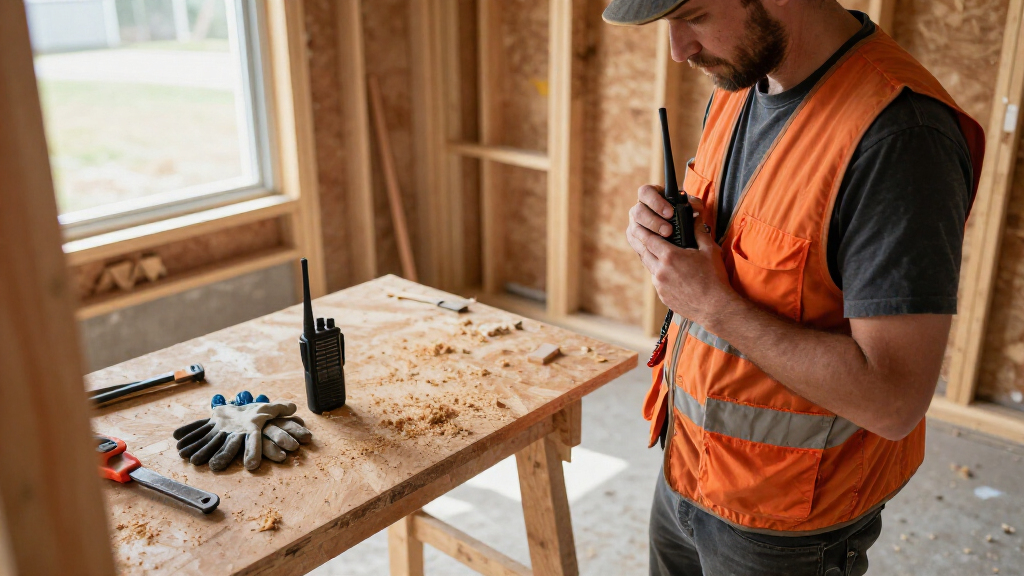
I compared these kits around the demands that separate a construction radio from a casual-use set: jobsite durability, charging convenience, usable crew size, and communication options. A radio’s power or channel count matters only when it fits the site’s layout, radio rules, and team workflow, so I also weighed whether each package appears suited to a small crew, a larger group, or a centralized charging routine. Included accessories such as earpieces and shoulder microphones count as practical advantages when they address hands-free use, but they do not outweigh a mismatch in pack size or site conditions.
The ranking favors kits that combine construction-relevant durability with a useful charger and a clear role for a crew. The RB48 4-pack ranks first as a balanced, rugged starting point; the SAMCOM and larger RB48 kit follow for buyers who prioritize charging capacity, power, or headcount. More specialized or smaller kits rank lower for this roundup, not because they cannot work, but because their best fit depends on specific needs such as waterproofing, compact handling, or a small team. Where product details do not establish a feature, I avoid treating it as a proven advantage.
| construction site walkie talkies with charger | Water resistance |
|---|---|
| Retevis RB48 Heavy Duty Two-Wa | — |
| Retevis RB48 Construction Two- | — |
| SAMCOM FPCN30A Commercial Two- | — |
| Retevis RT22 Rechargeable FRS | — |
| pxton Rechargeable UHF Two-Way | IP54 |
| Retevis MateTalk B4 Walkie Tal | — |
| DEWALT DXFRS300 FRS Two-Way Ra | IP67 |
| pxton PX-888S Rechargeable Two | Water resistant; no IP rating specified |
| Retevis RT86 Two-Way Radios wi | IP54 |
| Retevis RT48 Waterproof Two-Wa | IP67; up to 1 meter for 30 minutes |
Factors to Consider When Choosing Best Construction Site Walkie Talkies With Charger
Before choosing a kit, I’d match the radios to the site’s actual communication plan rather than buy by pack size or advertised range alone. The charger, battery routine, radio compatibility, and work environment can make a bigger difference over a shift than an extra feature on the spec sheet. These checks help narrow down which tradeoffs matter for your crew.
Match the Radio Type to Your Site Rules
Do not assume every radio in this roundup can communicate with every other model, even when two products advertise multiple channels. Check the radio service and frequency details, then confirm that they align with the devices your crew already uses and the rules that apply to your location. FRS models such as the RT22 and DEWALT DXFRS300 may suit users who want a familiar consumer-radio format, while commercial-style kits may fit teams with a more coordinated radio setup. Mixing models can work only when their frequencies, channel settings, and privacy codes are configured compatibly. A common mistake is buying a replacement set based on brand or channel count alone. If your crew already has radios, confirm interoperability before selecting a new charger bundle.
Plan Charging Around Shift Changes
A multi-unit charger can reduce clutter and make handoffs easier, but only if its charging slots and placement fit your routine. Count how many radios need a full charge at once, including spares, rather than counting only the workers on a single shift. A six-way charger is useful for centralized charging, yet it can become a bottleneck if several crews return radios at different times or batteries need to be charged separately. Ask whether the package charges radios in the configuration your crew will actually use, and check whether spare batteries are part of the plan. Keep chargers in a dry, accessible area with a clear system for charged and depleted units. That simple workflow can matter more than adding another radio to the kit.
Choose Durability for the Actual Hazards
Construction sites vary: a covered interior renovation creates different risks from outdoor work exposed to rain, dust, and frequent drops. If water exposure is a regular concern, a waterproof model such as the RT48 deserves closer attention, but waterproofing does not automatically mean protection from every kind of impact or debris. Look for clearly stated protection ratings and read what the rating covers before treating a radio as jobsite-proof. A heavy-duty label is useful context, not a substitute for specific protection information. Consider how radios will be carried, stored, and handled by workers wearing gloves. Paying for a tougher model makes most sense when the site conditions create a real risk of downtime or replacement.
Prioritize Clear Use Over Spec-Sheet Range
Advertised range figures can be a poor guide to performance between concrete walls, floors, machinery, and steel structures. Site layout, obstructions, antenna placement, and radio settings all shape whether workers can reach each other. Before outfitting a full crew, identify dead zones such as basements, stairwells, and areas behind large equipment, then check communication where the team will work. Higher power can help in some settings, but it does not remove physical barriers or guarantee clear audio. A quick radio check at the start of a shift is more useful than relying on a maximum-range claim. If a site has persistent blind spots, plan a relay or alternate communication method rather than expecting a different pack alone to solve the problem.
Decide Whether Hands-Free Accessories Fit the Crew
Earpieces and shoulder microphones can make communication easier when workers need both hands free, but they are not automatically better for every role. Ear protection, hard hats, safety rules, and personal comfort may affect which accessory workers can use. A shoulder microphone can keep the radio accessible without requiring it to be held, while an earpiece may help in louder areas where listening through the speaker is difficult. Check connector compatibility and whether accessories are included for every radio, not just one unit. Also consider cleaning, replacement, and storage, since shared accessories need a clear hygiene routine. If most workers prefer speaker audio, a kit with extra accessories may add clutter instead of value.
Buy for Crew Size, Then Leave Room for Spares
Choose enough radios for the people who need direct contact, but avoid assuming every worker needs an assigned handset. Foremen, equipment operators, spotters, and safety staff may need reliable communication more than workers who stay within shouting distance. A larger pack can reduce the need for piecemeal purchases, though it also means more charging space, accessories, and radio management. A small two-radio set may be a sensible fit for a compact crew but can leave no spare when a unit is lost or damaged. Think about shift overlap and subcontractors before settling on the count. One or two shared spares can keep a radio system usable when headcount changes.
Frequently Asked Questions
Can I use radios from different brands together on the same construction site?
Sometimes, but matching brands is not the deciding factor. The radios need compatible frequencies, channel settings, and any privacy-code settings, and their service types must be suitable for the same communication plan. Check the manuals for each model and test a pair before relying on them during work. A channel number on one radio does not necessarily map to the same frequency on another. If you are replacing or expanding an existing fleet, confirm compatibility before buying a full multi-pack.
Is a six-way charger worth choosing over individual chargers?
A six-way charger is useful when several radios return to one location together and the crew can store them there between shifts. It can simplify organization and reduce the number of separate chargers to manage. Individual chargers may be easier when workers take radios home, teams work staggered shifts, or charging locations are spread across a site. Check whether the bundle charges the radios as supplied and whether you need additional charging capacity for spare batteries. The better option is the one that fits your handoff routine, not simply the one with more charging slots.
Will a higher-wattage radio guarantee communication across a large jobsite?
No. Higher power can support communication in some conditions, but buildings, floors, steel, terrain, and interference can still block or weaken a signal. Range claims are usually a poor predictor of what a radio will do inside a busy construction site. Test the radios in the areas where workers need them, including basements and behind major obstructions. Also check whether the radio’s service and operating rules fit your location. For persistent dead zones, a communication plan or relay point may help more than relying on wattage alone.
Should I choose waterproofing or a heavy-duty design for outdoor construction?
Choose based on the hazard your radios are most likely to face. Frequent rain, washdown, or wet handling makes a clearly specified water-protection rating relevant, while repeated drops and rough transport call for evidence of impact resistance. A product label such as waterproof or heavy-duty does not describe every kind of protection, so check the stated rating and its limits. If both hazards are common, avoid assuming one feature covers the other. A protective carry setup and a dry charging area can also reduce failures without changing the radio model.
How many radios should I order for a crew that changes size by shift?
Start with the workers who need direct communication at the same time, including supervisors, spotters, and equipment operators. Then account for shift overlap, visitors or subcontractors who need temporary access, and at least one spare if a radio going missing would disrupt work. Do not count radios only by total employee headcount if teams work at different times. For a changing crew, a larger pack may simplify allocation, but it also requires enough charging capacity and a way to track devices. A brief site communication plan can help determine which roles need radios and where shared units make sense.
Conclusion
For a balanced construction-ready kit, I’d choose the Retevis RB48 Heavy Duty 4-Pack as the best overall starting point. The pxton 2-Pack is the best value fit for a small crew that wants a compact set with earpieces, while the SAMCOM FPCN30A is my premium pick for buyers who prioritize 5W radios and a six-way charger. Beginners outfitting a modest team can start with the Retevis RT22 6-Pack and focus on straightforward crew setup. For specific needs, choose the RT48 when water resistance is the priority, the RB48 10-Pack for a larger crew, or the MateTalk B4 when shoulder microphones suit the work better. Before ordering, verify radio compatibility, charging workflow, and the protection level your site actually requires.
Evergreen bestsellers Picks
bestsellers
As an affiliate, we earn on qualifying purchases.