
TL;DR

Get tools and workshop supplies delivered free — and shop member deals
- Fast, free delivery on millions of items
- Access to Prime Big Deal Days deals on October 6–7
- Prime Video, Amazon Music and more included
A Hunker report describes fiber cement siding as an alternative to wood that resists moisture damage, rot and pests and can require less routine upkeep. It may cost more upfront—reported at $7 to $18 per square foot in some areas—and the long-term savings depend on local prices, product choice and maintenance costs.
Fiber cement siding can offer homeowners a more moisture- and pest-resistant alternative to wood, with less frequent upkeep, according to a report by Hunker. The material may cost more to install—reported at $7 to $18 per square foot in some areas—so whether it is cheaper over time depends on local prices, product selection and the cost of maintaining wood siding.
Fiber cement is made from a composite of Portland cement, sand and cellulose fibers. It is designed to resemble wood while avoiding some common vulnerabilities of natural wood siding, including warping and rot from moisture and damage from pests such as termites. Hunker also says fiber cement is less flammable than wood; the supplied report does not provide comparative test results or specify product ratings.
Some fiber cement products come with a factory-applied, baked-on finish. Hunker reports that some manufacturers offer warranties against fading lasting 15 or 25 years. Those terms are manufacturer-specific, not a guarantee that every product will retain its appearance for that period. The report says upkeep may be limited to occasional washing or spot cleaning, though it does not set out a maintenance schedule for individual products.
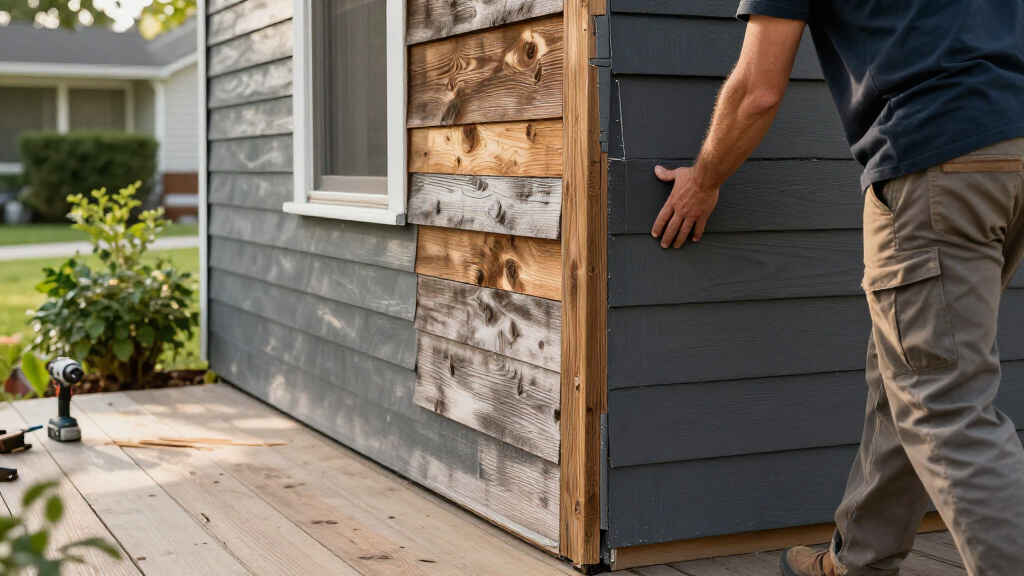
Homeowners can choose among horizontal lap boards, vertical panels and shingle-style panels. Pre-primed boards can be painted after installation, while factory-finished options come in selected colors. Hunker notes that fiber cement is heavier and more brittle than wood, and recommends professional installation rather than a do-it-yourself approach.
The Cost Trade-Off Over Time
The choice is a trade-off between initial expense and recurring maintenance. Wood siding can need repainting or restaining, and damage from moisture or pests may require repairs. Fiber cement may reduce those demands, but the report’s claim that it can be cheaper in the long run is not backed by a specific cost comparison, lifespan calculation or regional price survey in the supplied material.
For a homeowner weighing materials, the relevant comparison is not just the purchase price. It also includes installation, finishing, future repainting, cleaning and repairs over the period the home will use the siding. Those costs vary by climate, labor market, product and the condition of existing walls. A higher initial quote does not, by itself, establish that one material will cost less over the full ownership period.
The installation recommendation also affects the budget: fiber cement’s weight and brittleness can make handling more demanding than wood. Readers should compare written quotes for the complete job, including removal of old siding if needed, finishing and any necessary repairs, rather than relying on a material price alone.
As an affiliate, we earn on qualifying purchases.
Wood Siding’s Maintenance Demands
Hunker describes wood’s appeal as its rustic appearance, associated in the report with coastal cottages and mountain cabins. It also identifies recurring concerns: moisture can contribute to warping and rot, sunlight can fade stains, and pests can damage the material. The frequency and severity of those problems depend on the building and local conditions; the report does not quantify typical repair or repainting intervals.
Fiber cement offers several surface styles intended to approximate familiar wood profiles. Its factory-finished versions may reduce the need for repainting compared with conventional paint, while pre-primed boards leave color selection to the homeowner. Hunker’s reported warranty examples—15 and 25 years against fading—apply only where a manufacturer provides those terms. Buyers would need to check the specific product warranty, including its conditions and exclusions.
“Fiber cement siding is generally made with a factory-applied, baked-on finish.”
— Hunker report
As an affiliate, we earn on qualifying purchases.
Costs and Product Terms Vary
The supplied report does not identify the regions behind its $7-to-$18-per-square-foot range, say whether that figure covers materials or installation, or give a publication date. It also does not compare the total lifetime costs of wood and fiber cement using matched products, labor rates and maintenance assumptions. The assertion that fiber cement can be cheaper over time should therefore be treated as a possibility, not a guaranteed saving.
Performance and warranty coverage can differ by manufacturer and product. The report does not name specific brands or provide the conditions attached to the cited fading warranties. It also gives no detailed fire-performance ratings or project-specific advice about local building requirements.
As an affiliate, we earn on qualifying purchases.
Compare Installed Quotes and Warranties
Homeowners considering a replacement can request itemized local quotes for both wood and fiber cement. Quotes should distinguish materials from labor and list finishing, removal, repairs and other project costs. A comparison over the expected ownership period can then account for likely repainting, cleaning and repair needs without assuming a particular outcome.
Before choosing fiber cement, buyers should review the manufacturer’s warranty and care instructions and ask prospective installers about handling, installation methods and experience with the product. A qualified professional can assess the building and local requirements. The supplied report gives no announced policy change or scheduled industry milestone; the next step for an individual project is a product-specific estimate and installation plan.
As an affiliate, we earn on qualifying purchases.
Key Questions
Is fiber cement siding always cheaper than wood?
No. The report says it may be cheaper over time because of reduced upkeep, but provides no full cost comparison. Upfront and long-term costs vary by region, product, labor and maintenance.
How much does fiber cement siding cost?
Hunker cites a range of $7 to $18 per square foot in some areas. The supplied report does not specify which locations the range covers or whether it includes installation.
Does fiber cement siding need to be painted?
Some products are pre-primed and can be painted, while others have factory-applied finishes in selected colors. Care and repainting needs depend on the specific product; check its instructions and warranty.
Can homeowners install fiber cement siding themselves?
Hunker recommends professional installation because fiber cement is heavier and more brittle than wood. Ask installers for a project-specific quote and confirm applicable local requirements.
Source: rss
Fall yard work Picks
leaf blowers
As an affiliate, we earn on qualifying purchases.