TL;DR

Get tools and workshop supplies delivered free — and shop member deals
- Fast, free delivery on millions of items
- Access to Prime Big Deal Days deals on October 6–7
- Prime Video, Amazon Music and more included
Choose durable work boots by matching the exact safety protection your site requires to the hazards you encounter, then check fit, traction, and weather needs. Try boots on with your work socks, inspect them regularly, and replace them when tread, protective parts, or construction are compromised.
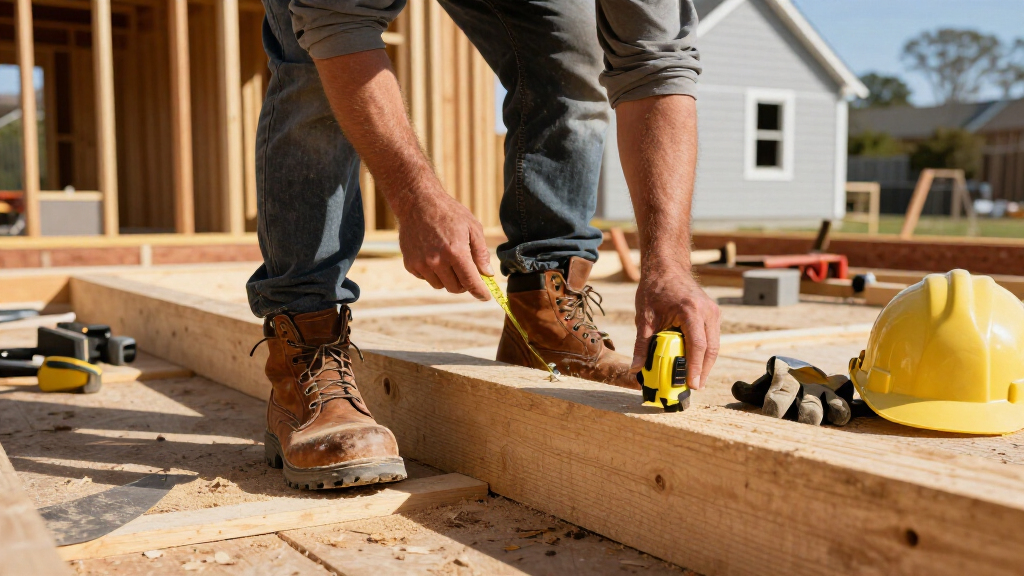
A foreman can walk miles without leaving the jobsite. You check a muddy excavation, climb a ladder, cross wet concrete, then spend the afternoon moving between job sites. By the time you park the truck, a poor-fitting boot can leave your heels hot and your toes sore.
Durable work boots help you stay comfortable and protected through those changing demands, but durability alone does not make a boot right for your work. The best choice depends on the hazards you face, the surfaces underfoot, and how the boot fits your foot.
This guide shows you how to check required protection, judge fit and traction, weigh waterproofing and weight, and spot wear before it compromises a boot. You will leave with a practical way to make your next pair work for your shift, not just look tough on the shelf.
Start with the hazards on your sites and verify the exact boot’s required certification.
Try boots on with work socks; check heel security, midfoot hold, and toe room while standing and walking.
Choose tread for the surfaces on your route, and remember that mud and worn soles can reduce grip.
Weigh waterproofing, insulation, boot height, and weight against your climate and daily duties.
Inspect tread, seams, soles, and protective parts regularly; replace boots when protection or construction is compromised.
Start With the Hazards You Actually Face
Durable work boots for foremen should match the hazards present on the sites you visit, because a job title does not tell you what protection your feet need. Check the employer’s footwear rules and the applicable safety standard, then identify risks such as falling objects, sharp debris, electrical exposure, or chemicals. A supervisory role does not erase those risks.
For example, a foreman walking a rebar deck may need toe protection and puncture resistance, while someone inspecting finish work indoors may face different demands. Toe protection can help where objects may fall or roll onto your foot. Other boots offer features such as metatarsal guards, electrical hazard protection, puncture-resistant plates, or chemical-resistant materials, but each feature addresses a particular risk.
No single boot protects against every hazard. Verify that the exact boot is certified for the protection claimed, and follow site requirements even if another pair feels more comfortable. A label or sales pitch is not a substitute for checking the rating and your employer’s rules.
Before a new assignment, walk the route you will inspect if you can. A muddy trench edge, a shop floor slick with dust, and a roof access ladder call for different traction and protection. For electrical, structural, or roof work, follow site safety procedures and use qualified professionals where required; boots do not replace safe work practices or required permits.
durable safety work boots for construction
As an affiliate, we earn on qualifying purchases.
As an affiliate, we earn on qualifying purchases.
Get a Fit That Still Feels Right Late in the Shift
Durable work boots for foremen need a secure heel, steady midfoot, and enough toe room to keep your foot from rubbing during a long day. A boot that pinches in the store will not become a good fit simply because its leather looks rugged. Try it on with the socks you wear at work, and walk around while standing and moving naturally.
Feet can swell over the course of a day, so trying boots on later can reveal pressure you miss in the morning. Your toes should move without striking the front of the boot, while your heel should stay reasonably secure instead of lifting with every step. If your forefoot spreads against the sides when you stand, check the width rather than hoping the boot will stretch enough.
Picture a foreman making a quick lap from the trailer to a gravel staging area, then climbing stairs to inspect framing. A loose heel rubs; a cramped toe box turns each downhill step into a jab. Either problem can distract you from work and leave you tired before the shift ends.
Fit varies by person, brand, and boot design. Break-in time depends on the materials and construction, but break-in should not mean pushing through sharp pain or numbness. Check how the boots feel with your work socks, and make sure an insole does not crowd your toes or lift your heel into the collar.
As an affiliate, we earn on qualifying purchases.
Match the Outsole to Mud, Gravel, and Concrete
Durable work boots for foremen need outsoles suited to the surfaces you cross most, because traction changes with the ground and the condition of the tread. Mud, loose gravel, wet concrete, and smooth indoor floors do not grip the same way. Look for a sole designed for your regular work conditions, then keep in mind that no tread eliminates every slip.
Imagine walking from a rain-soaked parking area onto smooth concrete inside a building. A lugged outsole may bite into soft ground, yet mud packed between the lugs can make the sole slick once you reach the slab. On a clean indoor floor, a different tread pattern may feel steadier. Your route between job sites can change what works over a single day.
Inspect tread depth and wear patterns. Smooth spots, rounded edges, or a sole that has started separating from the upper can reduce reliable contact with the ground. If one heel wears down faster than the other, that can also affect how your foot lands. Clean packed mud and debris from the tread when the manufacturer’s care instructions allow it.
Do not treat a “slip-resistant” label as a promise that you can walk carelessly. Slow down on wet surfaces, use handrails where available, and avoid carrying a load that blocks your view of your footing. Traction is one layer of protection, and your pace and attention are part of the system.
puncture resistant work boots for foremen
As an affiliate, we earn on qualifying purchases.
As an affiliate, we earn on qualifying purchases.
Compare Toe Protection, Weight, and Weather Features
Durable work boots for foremen balance required protection with comfort, but steel toe and composite toe are not universal winners. Compare the certification, weight, fit, temperature needs, and site rules for the specific boot. The label matters more than the material name by itself.
For example, a foreman walking a large site may appreciate a lighter boot, while another worker may prefer a different design for the conditions they encounter. Composite toes are often chosen for lower weight or reduced heat transfer, while steel toes may suit other preferences and requirements. Check the exact boot’s rating and try it on; materials alone do not tell you how it will feel after eight hours.
Weather features bring their own tradeoffs. Waterproofing can help when you cross wet grass, stand in rain, or work around washdowns, but a waterproof membrane may feel warmer and less breathable in hot weather. Insulation can keep feet more comfortable in cold conditions and feel stifling when temperatures rise.
Choose for the conditions you actually face. If you spend most of your shift indoors and only make brief trips outside, a heavily insulated, waterproof boot may create more heat than comfort. If your route regularly crosses wet ground, waterproofing may be worth that tradeoff. Check care instructions, certification, and employer rules for the precise model rather than assuming a feature guarantees performance.
As an affiliate, we earn on qualifying purchases.
Use This Five-Step Check Before You Buy
Durable work boots for foremen are easier to choose when you check hazards, fit, traction, and weather in order. Use this five-step process before you buy or issue a new pair, and bring your work socks. A quick try-on becomes more useful when you test the boot the way you will actually wear it.
- List the hazards. Note falling objects, sharp debris, electrical exposure, chemicals, and other site risks, then confirm the required safety rating with your employer.
- Match the surfaces. Think through your usual route: mud, gravel, wet concrete, ladders, or smooth interior floors.
- Try the fit. Wear your work socks. Stand, walk, and check that your heel stays secure while your toes have room to move.
- Weigh the tradeoffs. Decide whether waterproofing, insulation, boot height, or a lighter build suits the climate and duties you have.
- Confirm the details. Check the exact boot’s certification, care directions, insole compatibility, and employer requirements.
A foreman moving between a cold outdoor slab and a heated building should pay attention to both warmth and breathability. Another foreman working around scattered nails may put puncture protection higher on the list. The process gives both workers a clear way to compare boots without treating one feature as the answer to every problem.
Make comfort part of the safety check. If a boot has the required protection but creates pressure or unstable footing, keep looking for a fit that works. An insole may help, but only if it fits correctly and does not remove or interfere with required components.
Keep Boots Working With Simple Upkeep
Durable work boots last longer when you clean and dry them as the manufacturer directs, but every pair has a service life. Mud, grit, standing water, heat, and repeated bending can wear down materials and seams. A quick check at the end of a shift can catch damage before you count on the boot for another week.
After a wet day, remove surface dirt and let the boots dry according to the care instructions. If they are soaked, rotating between pairs can give each set more time to dry. Avoid using a heat source unless the manufacturer says it is safe, since excessive heat can damage some materials or adhesives.
Look for separated soles, loose stitching, worn tread, cracks, or a damaged toe cap. If a puncture-resistant plate or another protective part is compromised, the boot may no longer provide the protection you rely on. A foreman who spots a split sole before the morning walk-through can replace the pair before water and grit get inside.
There is no fixed replacement interval for everyone. Work conditions, care, hours on foot, and construction all affect wear. Inspect regularly and replace boots when their protective parts, support, traction, or structural integrity no longer seem reliable. Follow employer rules for damaged footwear, and check whether the specific model can be repaired without affecting its certified protection.
Frequently Asked Questions
What features should a foreman look for in work boots?
Start with your site hazards and employer requirements, then check the boot’s exact safety rating, fit, traction, and weather features. A foreman who walks gravel, wet concrete, and ladders may need a different combination than one who spends most of the day inside a finished building.
Are steel-toe boots better than composite-toe boots?
Neither is always better. Compare the specific boot’s certification, weight, fit, temperature needs, and workplace rules. Try both types if you can, since comfort depends on how the whole boot fits your foot.
How should work boots fit?
Your heel and midfoot should feel secure, and your toes should have room to move without rubbing. Try boots with your work socks, stand and walk in them, and check fit later in the day if you can, when feet may be more swollen.
Are waterproof work boots worth it?
They can help when your work regularly takes you through rain, wet ground, or washdowns. Waterproof boots may feel warmer and less breathable, so weigh that tradeoff against your climate and how often your feet get wet. Follow the care instructions after wet shifts.
How often should I replace work boots?
There is no single replacement schedule that fits every worker. Inspect boots regularly and replace them when tread is worn, soles separate, protective parts are damaged, or the boot no longer offers reliable support and construction.
Can insoles make work boots more comfortable?
Sometimes, if the insole fits the boot and does not crowd your foot or cause new pressure. Check compatibility with the boot and your employer’s requirements, and do not remove required protective components to make room.
Conclusion
Choose your boots by walking through the hazards, surfaces, and weather you face, then test fit with the socks you wear on site. Confirm the required protection and replace a pair when its tread, protective parts, or construction can no longer be trusted.
Comfort and safety should carry you through the last walk across the site, when the light is fading and the concrete still shines from the rain.
Halloween Picks
halloween
As an affiliate, we earn on qualifying purchases.