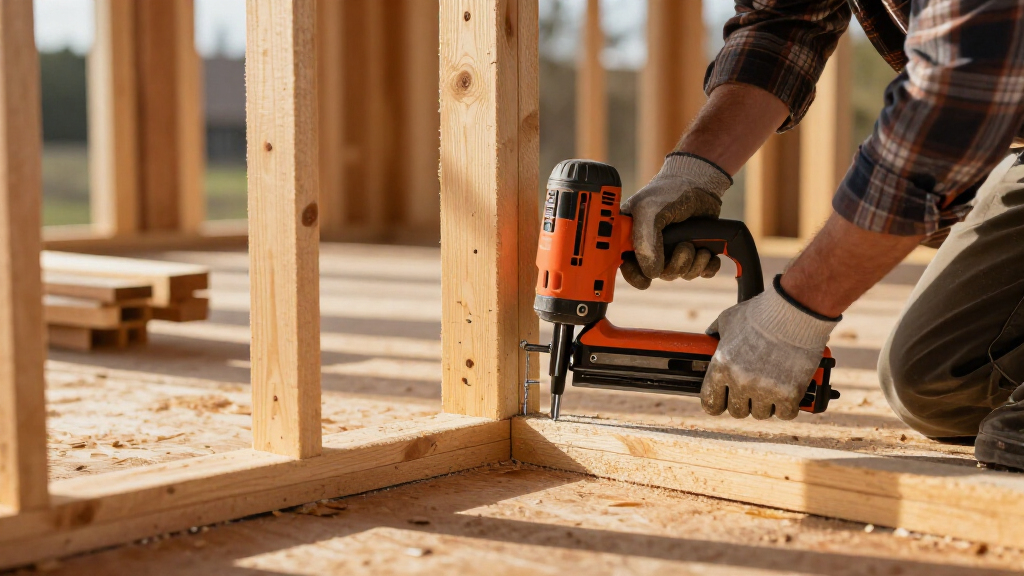
Cordless framing nailers have largely closed the gap with pneumatic guns, and the field in 2026 splits cleanly into pro-grade brushless models and lighter homeowner options. The Milwaukee M18 FUEL 21-Degree Framing Nailer stands out as the best overall pick for full-speed framing work, while the Ryobi ONE+ HP AirStrike 30° makes far more sense for occasional DIY projects, and the Metabo HPT NR1890DRA kit wins on out-of-the-box readiness with batteries and a charger included. The main tradeoffs you’ll face are weight versus power, battery platform lock-in, and whether a renewed tool is worth the savings. Angle choice (21° versus 30°) also affects nail availability and cost in your area. Keep reading for the full breakdown of all eight models.

Get business pricing on tools and workshop supplies
- Business-only prices and quantity discounts
- Tax-exempt purchasing
- Multiple users, one account, clear invoices
Complete the kit



Key Takeaways
- The Milwaukee M18 FUEL and the 20V 21° brushless models separate themselves through sustained driving power in dense engineered lumber, while budget options like the CRAFTSMAN V20 slow noticeably in LVL and wet framing.
- Only the Metabo HPT NR1890DRA ships as a complete kit — every other model here is tool-only, so budget for batteries and a charger unless you already own the platform.
- The two Renewed tools (DEWALT 20V MAX XR and CRAFTSMAN CMCN621PLB) offer the lowest entry cost but carry warranty uncertainty, making them a calculated gamble best suited to backup-gun duty.
- 30° nailers (the two 30° models here) accept paper-tape nails that drive cleaner and leave less plastic debris, while 21° plastic-collated nails are cheaper and stocked at nearly every job-site supply house.
- The Ryobi ONE+ HP AirStrike is the lightest path into cordless framing and the only pick that makes sense for homeowners already on the ONE+ battery system.


| cordless framing nailer | Nail angle | Voltage | Maximum nail length |
|---|---|---|---|
| 20-Volt 30° Cordless Framing N | 30° | 20V | — |
| Metabo HPT NR1890DRA 18V Cordl | 21° | — | 3-1/2 in. |
| 20-Volt 21° Cordless Framing N | — | 20V | — |
| ONE+ HP Brushless 18V Cordless | 30° | 18V (ONE+) | 3-1/2 in. |
| Milwaukee M18 FUEL 21-Degree F | — | 18V (M18) | — |
| CRAFTSMAN V20 21-Degree Cordle | 21 degrees | — | 3-1/4 inches |
| DEWALT 20V MAX XR Brushless Co | 21 degrees | 20V | — |
| Craftsman V20 Cordless 21-Degr | 21 degrees | — | 3-1/4 inches |
More Details on Our Top Picks
20-Volt 30° Cordless Framing Nailer (Tool-Only)
For anyone already invested in a 20-volt battery platform, this bare-tool framing nailer makes the most sense as a low-commitment expansion — you’re paying for the tool, not a battery ecosystem you already own. The 30° nail angle accepts the paper-tape collated nails favored by most modern cordless nailers, including the Ryobi AirStrike below, which means fastener availability won’t be a headache. Where it differs from the Metabo HPT NR1890DRA is spec transparency: there’s no stated drive energy or nails-per-charge figure, so heavy daily framing is a gamble. Compared with the Milwaukee M18 FUEL, it also lacks stated dry-fire lockout and jam-clearance features. The real tradeoff here is buying into a platform sight-unseen on performance data.
Pros:- Inexpensive entry point since it’s tool-only
- 30° nail angle accepts widely available paper-tape collated fasteners
- Cordless design eliminates compressor and hose setup
- Light on accessory costs if you already own 20V batteries
Cons:- No published drive energy, runtime, or nails-per-charge specs
- Battery and charger not included, adding hidden cost for first-time buyers
Best for: DIYers or tradespeople already owning this 20V battery system who want a cheap framing-capable add-on
Not ideal for: Professional framers who need documented drive power and published runtime specs for daily production work
- Voltage:20V
- Nail angle:30°
- Power source:Cordless battery
- Package contents:Tool only
- Best suited for:Existing 20V battery platform owners
Our verdict“A sensible budget add-on for existing 20V platform owners, but spec-conscious buyers should step up to the Milwaukee or Metabo HPT.”
Metabo HPT NR1890DRA 18V Cordless 21° Framing Nailer Kit
This is the only pick in the batch that arrives as a complete kit with battery included, and its air spring drive system delivers a standout 120 joules of drive energy with no ramp-up time — meaning full power on the very first nail, even into engineered lumber and LVL. That puts it ahead of the Milwaukee M18 FUEL for raw punch, though Milwaukee counters with a slightly lower working weight and 750 nails per charge versus Metabo’s 500. The tool-less depth adjustment and dual firing modes match what pros expect from pneumatic tools. Tradeoffs are real: at 8.4 pounds before the battery, it’s heavy overhead, and 500 nails per charge means budgeting for a second battery on full framing days.
Pros:- 120 joules of drive energy with zero ramp-up time on the first nail
- Full kit includes a 4.0Ah battery so it works immediately
- Tool-less depth adjustment plus bump and sequential firing modes
- Lifetime tool body warranty backs the investment
Cons:- 8.4 lbs before adding the battery — one of the heavier options here
- 500 nails per charge trails the Ryobi and Milwaukee runtime figures
Best for: Professional framers who regularly sink 3-1/2-inch nails into dense engineered lumber and want a ready-to-work kit out of the box
Not ideal for: All-day overhead work like framing roofs or tall walls, where the weight plus battery becomes fatiguing
- Model:NR1890DRA
- Power:18V
- Nail angle:21°
- Maximum nail length:3-1/2 in.
- Drive energy:120 joules
- Drive system:Air spring, brushless motor
- Firing modes:Bump and sequential
- Battery / nails per charge:4.0Ah lithium-ion / up to 500
- Warranty:Lifetime tool body warranty
Our verdict“The hardest-hitting, most complete package here for pros driving into tough material, at the cost of weight and runtime.”
20-Volt 21° Cordless Framing Nailer (Tool-Only)
What separates this tool-only model from its 30° sibling (Product 1) is the 21° nail angle, which takes plastic collated full round head nails — the same fastener class as the Metabo HPT NR1890DRA and Milwaukee M18 FUEL. That makes it a value-oriented path into code-familiar full round head framing for owners of this 20V platform, without paying pro-tool money. The catch mirrors the 30° version: no drive specs are published, and unlike the Ryobi AirStrike, there’s no stated brushless motor or nails-per-charge figure to help you plan a workday. For occasional deck repairs, shed builds, or sheathing jobs, that ambiguity matters less. For anyone framing on a schedule, the Milwaukee’s documented performance makes it the safer bet despite the higher entry cost.
Pros:- 21° angle accepts plastic collated full round head nails
- Tool-only pricing keeps upfront cost low
- Shares batteries with other 20V tools on the same platform
- No compressor, hose, or gas cartridge maintenance
Cons:- Battery and charger compatibility is not clearly specified
- No published drive energy, motor type, or runtime figures
Best for: Weekend builders on this 20V platform who want full round head nails for structural work at a lower price
Not ideal for: Buyers without any existing 20V batteries, or anyone who needs verified drive performance for engineered lumber
- Voltage:20V
- Nailer angle:21°
- Power source:Cordless battery
- Fastener type:21° plastic collated nails
- Included items:Tool only
Our verdict“An affordable full-round-head option for existing platform owners, but buyers needing verified performance should look to the pro-grade picks.”
ONE+ HP Brushless 18V Cordless AirStrike 30° Framing Nailer (Tool Only)
The AirStrike system here is defined by simplicity: no compressor, no hoses, no gas cartridges — just load nails and pull the trigger. Ryobi’s ONE+ platform is the broadest consumer battery ecosystem in this lineup, so if you already own a ONE+ drill or impact driver, the battery math works in your favor. Its 750 nails per charge with a 4.0Ah battery actually edges out the Metabo HPT kit’s 500, which matters for long DIY sessions. The rafter hook and on-board air fill valve are thoughtful touches the budget 30° tool above doesn’t offer. Compared with the Milwaukee M18 FUEL, though, it trades some driving authority and pro-grade durability for accessibility — sustained production framing into dense lumber is where the gap shows up.
Pros:- Up to 750 nails per charge with a 4.0Ah battery — strong runtime for the price class
- Brushless motor with tool-free depth adjustment
- Rafter hook and on-board air fill valve add jobsite convenience
- Compatible with the enormous Ryobi ONE+ battery lineup
Cons:- Battery sold separately, offsetting some of the value
- Less driving authority than pro models like the Metabo HPT in very hard materials
Best for: Homeowners and serious DIYers already in the Ryobi ONE+ ecosystem tackling decks, sheds, and room additions
Not ideal for: Production framers who need the drive power and durability of the Milwaukee or Metabo HPT day in and day out
- Voltage:18V (ONE+)
- Motor:Brushless
- Nail angle:30°
- Maximum nail length:3-1/2 in.
- Drive modes:Single sequential and contact actuation
- Depth adjustment:Tool-free
- Nails per charge:Up to 750 with 4.0Ah battery
- Features:Rafter hook, on-board air fill valve
Our verdict“The easiest cordless framing nailer for ONE+ owners to own and run — ideal for projects, not production framing.”
Milwaukee M18 FUEL 21-Degree Framing Nailer (Tool Only)
This is the pick I’d put at the top of the list for anyone framing for a living. Milwaukee’s sealed nitrogen gas mechanism is oil-free and requires no gas cartridges, while delivering no ramp-up time and up to three nails per second in bump-fire — pacing that rivals pneumatic tools. Its 750 nails per charge on an XC 5.0Ah battery beats the Metabo HPT kit by 50%, and dry-fire lockout plus tool-free jam clearance are quality-of-life features the budget 20V picks simply don’t document. The tradeoffs: at 9.6 pounds it’s the heaviest tool here before the battery, and like the Ryobi, it ships bare-tool only. The optional extended-capacity magazine costs extra, which stings on an already premium purchase. For M18 owners, though, nothing else in this batch balances power, speed, and features as well.
Pros:- Up to 3 nails per second in bump-fire with no ramp-up delay
- 750 nails per charge on an XC 5.0Ah battery — best-in-lineup runtime
- Oil-free sealed nitrogen mechanism needs no gas cartridges or oiling
- Dry-fire lockout, tool-free jam clearance, and no-mar tip included
Cons:- 9.6 lbs tool weight, the heaviest in this batch
- Battery, charger, and extended magazine all sold separately
Best for: Professional framers and remodelers on the M18 platform who need pneumatic-level speed without a compressor
Not ideal for: Budget-focused DIYers or buyers outside the Milwaukee ecosystem facing battery, charger, and magazine add-on costs
- Model:2744-20
- Voltage:18V (M18)
- Motor:Brushless
- Fastener type:21° full round head, 2–3-1/2 in.
- Firing modes:Sequential and contact actuation
- Nails per charge:Up to 750 (XC 5.0Ah battery)
- Mechanism:Oil-free sealed compressed nitrogen gas
- Weight:9.6 lbs.
- Accessories:No-mar tip; battery/charger sold separately
Our verdict“The most complete cordless framing package for pros who can absorb the bare-tool price and battery costs.”
CRAFTSMAN V20 21-Degree Cordless Framing Nailer (Bare Tool, CMCN621PLB)
For anyone already sitting on Craftsman V20 batteries, this is the cheapest legitimate path into cordless framing. It shares the same 21-degree round-head format as the Milwaukee M18 FUEL and Metabo HPT NR1890DRA, but it strips away the premium internals — and the premium ask. What survives the cost cutting is what matters most on a jobsite: 3-1/4-inch nail capacity into LVL, tool-free depth adjustment, and a rafter hook, so it handles real framing rather than just fencing and sheathing.
The tradeoff is straightforward. Compared with the Milwaukee, this model gives up sustained fire rate and drive consistency in dense engineered lumber, so production framers will feel the gap on big wall stacks. For occasional framing, decks, and sheds, though, the difference rarely justifies spending roughly double.
Pros:- Runs on the affordable, widely shared Craftsman V20 battery platform
- Drives round-head nails up to 3-1/4 inches into laminated veneer lumber
- Tool-free depth adjustment makes countersink changes quick on the fly
- Rafter hook included for hands-free work up high
Cons:- Battery and charger sold separately, which adds real cost if you’re starting from zero
- No battery included means first-time buyers may undersize the pack and get weak drives
- VERSATRACK clip and accessories cost extra
Best for: Weekend builders and DIYers who already own Craftsman V20 batteries and need a no-compressor framing tool for decks, sheds, and repairs
Not ideal for: Production framers running walls all day — the drive power and fire rate lag well behind the Milwaukee M18 FUEL for continuous heavy use
- Brand:CRAFTSMAN
- Series:V20
- Tool type:Cordless framing nailer
- Nail angle:21 degrees
- Maximum nail length:3-1/4 inches
- Depth adjustment:Tool-free
- Included:Framing nailer, rafter hook
- Battery and charger:Sold separately
- VERSATRACK compatible:Yes; clip and accessories sold separately
Our verdict“Buy this if you’re already invested in the V20 ecosystem and frame occasionally; skip it if framing is your daily trade.”
DEWALT 20V MAX XR Brushless Cordless Framing Nailer, 21-Degree, Plastic Collated, Tool Only (Renewed)
This is the brushless DEWALT framing platform — the same family of tool that competes head-to-head with the Milwaukee M18 FUEL — offered as a renewed unit, which softens the usual flagship price. The brushless motor is the story here: compared with the Craftsman V20 model, it delivers steadier drives across a full battery, and the runtime figures back that up — up to 530 square feet of subflooring or 100 feet of wall framing per charge. That’s production-framing territory.
The magnesium magazine keeps weight to a reasonable 8.65 pounds tool-only, and the toe-nailing nose design bites at aggressive angles where cheaper guns bounce or double-fire. Drawbacks are real: it’s tool-only with no battery or charger specified, and the TOOL CONNECT tracking chip is a separate purchase. Buying renewed also means cosmetic wear and shorter warranty coverage than new.
Pros:- Brushless motor delivers consistent driving power through the full battery cycle
- Excellent runtime — up to 530 sq. ft. of subflooring per charge
- Lightweight magnesium magazine keeps the tool at 8.65 lbs. tool-only
- Toe-nailing nose design secures aggressive-angle shots reliably
Cons:- Battery and charger not included, so factor that into the true cost
- Renewed condition means variable cosmetic wear and reduced warranty protection
- TOOL CONNECT chip must be purchased separately
Best for: Professional framers and serious remodelers who want Milwaukee-class performance while spending less by going renewed and reusing DEWALT 20V batteries
Not ideal for: Buyers who want a full kit in the box or pristine tools with full warranty coverage — the renewed status and missing battery make this a gamble for them
- Voltage:20V
- Motor:Brushless
- Nail angle:21 degrees
- Collation:Plastic collated
- Weight:8.65 lbs. (tool only)
- Magazine material:High-strength magnesium
- Subflooring per charge:Up to 530 sq. ft.
- Wall framing per charge:Up to 100 ft.
- Tool condition:Renewed
Our verdict“The smart pick for a DEWALT-ecosystem pro who accepts renewed trade-offs in exchange for near-flagship framing performance at a lower price.”
Craftsman V20 Cordless 21-Degree Framing Nailer, Bare Tool (CMCN621PLB) (Renewed)
This is the same Craftsman CMCN621PLB tool reviewed earlier in this roundup, just in renewed condition — and that’s the entire pitch. If the new version is the budget entry point, this one pushes the savings further for buyers comfortable with a pre-owned tool. Functionally you get identical capability: 3-1/4-inch nails into LVL, tool-free depth adjustment, the rafter hook, and freedom from compressors, hoses, and gas cartridges.
Where it differs from the renewed DEWALT is performance class, not condition. The DEWALT’s brushless motor and superior runtime make it the choice for daily framing; this Craftsman is for the person who frames a few weekends a year and wants the absolute lowest outlay. Both arrive bare, and both require battery patience — the V20 platform is the cheaper of the two to feed.
Pros:- Lowest-cost route into cordless framing among the tools in this roundup
- Same 3-1/4-inch nail capacity and LVL capability as the new version
- Tool-free depth adjustment and included rafter hook carry over
- No compressor, hose, or gas cartridge required
Cons:- Renewed condition carries reduced warranty protection and unknown wear history
- Battery and charger sold separately, which can erase savings for first-time buyers
- Underpowered for dense engineered lumber compared with brushless rivals like the DEWALT
Best for: Cost-focused DIYers and hobby builders who want a genuine framing nailer for occasional projects at the lowest possible entry price
Not ideal for: Anyone needing warranty peace of mind or a daily-driver work tool — renewed condition and modest drive performance don’t suit professional framing schedules
- Type:Cordless framing nailer
- Platform:Craftsman V20
- Nail angle:21 degrees
- Maximum nail length:3-1/4 inches
- Depth adjustment:Tool-free
- Included:Framing nailer and rafter hook
- Battery and charger:Sold separately
- Condition:Renewed
Our verdict“Grab it if price is the deciding factor and you frame infrequently; anyone framing for a living should step up to the renewed DEWALT instead.”
How We Picked
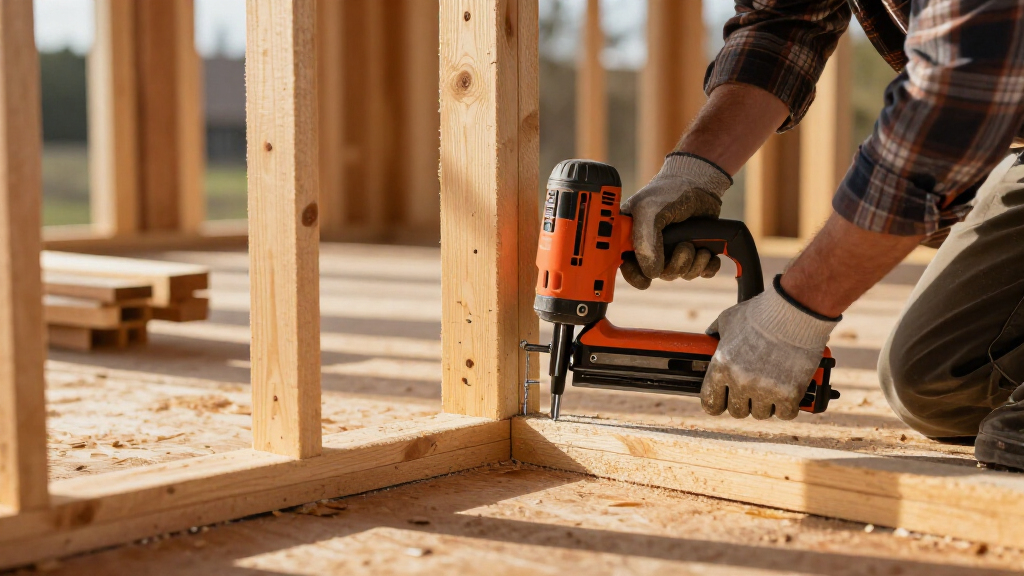
My ranking logic starts with driving performance: a framing nailer has to sink nails flush consistently in engineered lumber, not just SPF studs, because stalls and double-taps cost real time on a deck or addition. From there I weighed weight and balance, since a gun you can swing overhead all day beats a slightly more powerful one that exhausts your wrist. Battery platform played a large role too — a tool-only nailer is only as good as the batteries you already own or are willing to buy.
I also judged nail angle and collation compatibility, because angle determines which fasteners you can actually find locally, and depth-of-drive adjustment and jam clearance, which separate smooth operators from frustrating ones. Finally, I factored in kit versus bare-tool value and condition — the renewed units were evaluated on the same performance criteria but flagged for warranty risk, which kept them out of the top slots despite their pricing appeal.
Factors to Consider When Choosing Cordless Framing Nailers
Before you commit to a specific nailer, a few category-wide decisions will narrow your choices faster than any spec sheet. These are the factors that actually change how a cordless framing nailer performs over years of use.Nail Angle and Collation Type
The degree rating isn’t arbitrary — it dictates which nails fit the magazine. 21° nailers fire plastic-collated nails, which are inexpensive and available at every lumberyard, but they shed plastic slivers that litter a job site and can jam when cold. 30° nailers use paper-tape collation, which drives cleaner, leaves almost no debris, and tends to feed more reliably, though the nails themselves can cost more and are harder to find in some regions. A common mistake is buying the nailer first and discovering afterward that local fastener stock favors the other angle. Check what your nearest suppliers carry in full-round-head nails before you choose, because shipping heavy nails gets expensive fast. If you frame professionally, the paper-tape cleanliness advantage compounds over thousands of shots.
Battery Platform Lock-In
Almost every cordless framing nailer in this class is sold bare, which means your real decision is which battery ecosystem you’re joining. Milwaukee M18, DeWalt 20V MAX, Metabo HPT MultiVolt, and Ryobi ONE+ all power dozens of other tools, so a nailer purchase often justifies — or gets justified by — the rest of a kit. If you already own batteries from one brand, that platform almost always wins regardless of minor spec differences. A high-output battery matters more than people expect: framing nailers draw huge instantaneous current, and a small pack will cause misfires and sluggish drives long before it runs flat. Budget for at least one 5Ah-or-larger battery if the tool will see daily use. Buying into a platform you don’t own, solely for one nailer, rarely makes financial sense.
Weight, Balance, and All-Day Use
Cordless framing nailers run heavier than pneumatic guns because they carry a motor, flywheel, and battery where an air hose used to do the work. The difference between a tool at the lighter end of this category and the heaviest can be well over a pound — and mounted high on the handle, that weight multiplies fatigue during overhead sheathing or joist work. Balance matters as much as raw weight: a nose-heavy gun tips your wrist forward all day even if the scale number looks reasonable. Pros who frame full-time often accept extra mass for driving power, while part-time builders should prioritize the lighter end. If most of your work is occasional deck repairs or fencing, a heavy pro gun is a penalty you’ll pay every time you pick it up. Handle the tool in-store if you can, or check the listed weight with battery installed, not bare.
New Versus Renewed Tools
Factory-reconditioned nailers can cut the entry cost meaningfully, but the warranty is the whole story. A renewed tool typically carries a short or limited guarantee compared with the multi-year coverage on new units, and framing nailers are full of wear parts — driver blades, O-rings, magazine springs — that fail over time regardless of brand. A renewed pro-grade nailer as a backup gun is a reasonable play; a renewed unit as your only tool on a deadline job is a risk. Inspect the seller’s return window before purchasing, because a nailer that misfires out of the box needs a fast path back. Also confirm which battery generation a renewed model uses, since older versions sometimes lack the electronics to pair with a brand’s newest packs. For light-duty users, the savings may be worth it; for daily framers, new-with-warranty usually wins.
Driving Power and Depth Control
Manufacturer claims about nail size capacity only tell part of the story. What separates a good cordless nailer from a frustrating one is whether it sinks a full 3-1/2 inch nail flush into LVL beams, glue-laminated headers, and wet pressure-treated lumber without a second tap. Look for tool-free depth-of-drive adjustment — a thumbwheel you can dial mid-task — because switching between soft sheathing and hard engineered lumber happens constantly on real jobs. Also check how the tool behaves when it does stall: quick, tool-free jam clearance turns a five-minute fix into a thirty-second one. Beginners often fixate on shots-per-charge numbers, but consistent flush drives matter far more than battery runtime in this category.
Matching the Tool to Your Actual Workload
The most expensive mistake in this category is buying pro capability you’ll never use — or homeowner-grade capability for professional demands. If you frame houses, add rooms, or build decks commercially, you need the sustained power and durability of the top-tier brushless models, and anything less will frustrate you within weeks. If your projects are sheds, fences, playsets, and the occasional repair wall, a lighter DIY-platform nailer does the same job at lower cost and weight, with batteries that also run your drill and saw. A honest audit of your annual nail volume is the single best predictor of which tier to buy. Occasional users should also consider whether a nailer is even the right tool — for under a hundred fasteners a year, renting or borrowing still makes sense.
Frequently Asked Questions
Can a cordless framing nailer really replace a pneumatic one?
For most framing tasks, yes — the current generation of brushless cordless nailers drives full-head nails into engineered lumber as reliably as air tools, without a compressor, hose, or generator. The tradeoffs are weight, since cordless guns run heavier than pneumatic equivalents, and sustained-fire rate, because a production framer nailing off sheathing all day may still prefer air for pure speed. Cost is another factor: a cordless nailer plus batteries often exceeds the price of a compressor-and-gun setup. Where cordless wins decisively is portability and setup time — you walk to the job and start shooting. For remodelers, deck builders, and anyone working far from power, cordless has effectively already replaced pneumatic.
What’s the difference between 21-degree and 30-degree framing nailers?
The angle refers to the collation of the nails the magazine accepts, and it determines what fasteners you can buy. 21° guns fire plastic-collated nails — cheap, everywhere, but they shed plastic shards that pile up around your feet and occasionally jam. 30° guns fire paper-tape collated nails, which feed more smoothly, leave almost no debris, and are the preference of many production framers, though they can be pricier and less available in rural areas. Neither angle is inherently more powerful; the drive mechanism, not the collation, determines that. Your best guide is what your local suppliers stock in full-round-head nails, because being locked into a nail you have to order online gets old fast.
Are renewed or reconditioned cordless nailers worth buying?
They can be, if you match the purchase to the right role. A renewed pro-grade nailer at a meaningful discount makes sense as a second or backup gun, or for a homeowner whose usage is light enough that even a shortened warranty outlasts the tool’s realistic wear period. The risk is warranty coverage: renewed units typically carry far shorter guarantees than new tools, and framing nailers contain wear components that fail with use regardless of brand reputation. Before buying, confirm the seller’s return policy and which battery generation the tool accepts, since older reconditioned models sometimes lack compatibility with a brand’s newest high-output packs. As your only tool on paid, deadline work, a renewed nailer is a gamble I’d hesitate to take.
Do I need a brushless motor in a framing nailer?
For regular use, brushless is worth the premium, and most of the top performers here use it. A brushless motor delivers more driving force per battery charge, runs cooler during long nailing sessions, and has no brushes to wear out — which matters in a tool whose motor spins up a flywheel for every single shot. The difference shows up most in dense engineered lumber, where brushed motors can bog down and require double-taps. That said, a homeowner firing a few hundred nails a year into soft lumber will get acceptable results from a well-designed brushed tool. If your work includes LVL headers, wet pressure-treated lumber, or daily use, brushless isn’t optional — it’s the difference between a tool that lasts and one that frustrates.
Which battery should I use with a cordless framing nailer?
Go as large as your platform offers, within reason — a 5Ah or higher pack is the sweet spot for framing duty. Cordless nailers draw enormous instantaneous current to spin their flywheels, and small batteries cause sluggish drives, misfires, and premature pack heating long before runtime becomes the issue. High-output battery lines, where a brand offers them, are worth the extra cost specifically for nailers because they sustain that current draw better. Cold weather compounds the problem, so winter framers benefit from larger packs kept warm until use. And always have a second charged battery on hand: a nailer that dies mid-wall with no backup converts a two-minute swap into a trip to the charger.
Conclusion
The right pick here depends less on specs and more on who you are as a buyer. For the best overall choice, the Milwaukee M18 FUEL 21-Degree stands out as the tool most likely to satisfy a working framer — its sustained driving power and durability justify its price and weight. The best premium route for buyers who want everything included is the Metabo HPT NR1890DRA kit, the only model here that arrives ready to work with batteries and charger. For best value, the 20-Volt 21° cordless option delivers dependable pro-grade performance without the flagship price, while the renewed DEWALT 20V MAX XR is the calculated gamble for budget-limited buyers who accept warranty risk for major savings. Beginners and homeowners should look squarely at the Ryobi ONE+ HP AirStrike — it’s lighter, cheaper to enter if you own ONE+ batteries, and far more tool than a first-timer needs to outgrow. For light-duty budget builds, the CRAFTSMAN V20 (new or renewed) handles occasional framing and repair work capably. Match the tool to your nail volume and battery drawer, and you won’t go wrong with any of the top picks.
Fall yard work Picks
leaf blowers
As an affiliate, we earn on qualifying purchases.