
Carhartt’s work jacket lineup spans everything from the iconic J01 Duck Detroit Jacket — still the benchmark for rugged, unlined durability — to modern Full Swing insulated jackets built for unrestricted movement on the job site. For most buyers, the Firm Duck Active Jac J140 stands out as the best overall pick because it nails the balance between toughness, warmth, and everyday versatility. If you work outdoors in freezing conditions, the Traditional Coat C26 offers more coverage, while the Gilliam Jacket makes far more sense for high-movement jobs in milder weather. The main tradeoff in this category is stiffness versus comfort: firm duck canvas lasts longer but needs a long break-in period, while washed duck and Rugged Flex options feel broken-in from day one but sacrifice some abrasion resistance. Keep reading for the full breakdown of all 15 jackets and which one fits your trade, climate, and budget.

Get business pricing on tools and workshop supplies
- Business-only prices and quantity discounts
- Tax-exempt purchasing
- Multiple users, one account, clear invoices
Complete the kit


Key Takeaways
- Fabric choice did more to separate these jackets than any other factor: firm duck models (J140, J01, Traditional Coat) are the toughest but stiffest, while washed duck (Active Jacket, Bartlett, Sierra) trades abrasion resistance for day-one comfort.
- The Full Swing line (Relaxed Fit Ripstop and Quick Duck) earned high marks for range of motion — the flex pleats genuinely matter for overhead work like framing, wiring, and equipment repair.
- Unlined icons like the J01 Detroit and Monterey only make sense as layering shells; buyers expecting standalone winter warmth from them will be disappointed compared to quilt-flannel or thermal-lined options.
- Specialty needs dominate two picks completely: the HV Sherwood Class 3 for roadside and traffic-adjacent work, and the Flame-Resistant Quick Duck Coat for electrical, welding, and utility trades — no general-purpose jacket can substitute for either.
- The Big-Tall Quilted Flannel Active Jacket proved that fit availability can be the deciding factor; it delivers the same core warmth as standard active jackets for buyers who struggle with typical sizing.
| Carhartt Men’s Full Swing Relaxed Fit Ripstop Insulated Jacket | 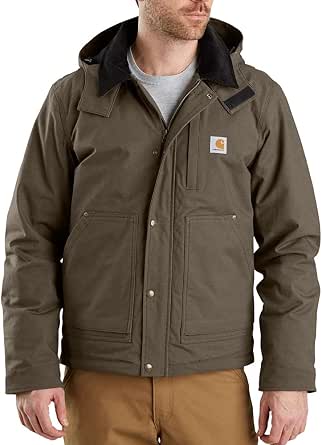 | Best Overall | Fabric: 73% Cotton, 24% Cordura Nylon, 3% Spandex | Fabric weight: 10 oz | Insulation: 80-gram 3M Thinsulate | VIEW LATEST PRICE | See Our Full Breakdown |
| Carhartt Men’s Full Swing Loose Fit Quick Duck Insulated Jacket |  | Best for Everyday Mobility | Fabric: 59% Cotton, 39% Polyester, 2% Spandex | Fabric weight: 8.25 oz | Fit: Loose | VIEW LATEST PRICE | See Our Full Breakdown |
| Carhartt Men’s Big-Tall Quilted Flannel Lined Sandstone Active Jacket |  | Best for Big & Tall Buyers | Fabric: 100% Cotton sandstone duck | Lining: Quilted flannel (body and hood) | Hood: Attached, flannel-lined with drawcord | VIEW LATEST PRICE | See Our Full Breakdown |
| Carhartt Men’s HV Sherwood Class 3 Jacket |  | Best High-Visibility Pick | Fabric: 100% Polyester | Visibility standard: ANSI/ISEA 107 Class 3, Type R | Reflective durability: Maintains performance through 75 home launderings | VIEW LATEST PRICE | See Our Full Breakdown |
| Carhartt Men’s Flame-Resistant Full Swing Relaxed-Fit Quick Duck Insulated Coat |  | Best for Hazardous Work Environments | Fabric: 88% Cotton, 12% Nylon | Fabric weight: 8.5 oz | Insulation: 150-gram 3M Thinsulate Platinum | VIEW LATEST PRICE | See Our Full Breakdown |
| Carhartt Men’s Washed Duck Active Jacket |  | Best Balanced Winter Work Jacket | Fabric: 100% ring-spun cotton washed duck | Fabric weight: 12 ounces | Lining: Quilted nylon | VIEW LATEST PRICE | See Our Full Breakdown |
| Carhartt Men’s Rugged Flex Duck Berwick Jacket |  | Best for Mobility and Storage | Fabric: 99% cotton, 1% spandex duck canvas | Stretch technology: Rugged Flex | Fit: Relaxed | VIEW LATEST PRICE | See Our Full Breakdown |
| Carhartt Men’s Firm Duck Active Jac J140 |  | Best Cold-Weather Insulation | Material: 100% cotton firm duck | Insulation level: Level 3 | Lining: Flannel-lined body | VIEW LATEST PRICE | See Our Full Breakdown |
| Carhartt Men’s Monterey Jacket |  | Best Waterproof Rain Shell | Fabric: 100% nylon | Waterproofing: Storm Defender, 10K/5K rating | Wind resistance: Wind Fighter technology | VIEW LATEST PRICE | See Our Full Breakdown |
| Carhartt Men’s Loose Fit Firm Duck Thermal-Lined Active Jacket |  | Best Classic Workhorse Value | Fabric: 100% cotton firm duck | Lining: Polyester thermal lining | Closure: Zipper | VIEW LATEST PRICE | See Our Full Breakdown |
| Carhartt Men’s Gilliam Jacket |  | Best Lightweight Insulated Option | Shell Fabric: 100% nylon | Insulation: 100-gram polyester | Lining: Nylon | VIEW LATEST PRICE | See Our Full Breakdown |
| Carhartt Men’s Washed Duck Bartlett Jacket |  | Best Hooded Cold-Weather Choice | Shell Fabric: 12-ounce ring-spun washed duck | Shell Material: 100% cotton | Body Lining: Sherpa | VIEW LATEST PRICE | See Our Full Breakdown |
| Carhartt Men’s Iconic J01 Duck Detroit Jacket |  | Best Classic Workwear Icon | Fabric: 100% cotton duck | Fabric Weight: 12 oz | Body Lining: Blanket lining | VIEW LATEST PRICE | See Our Full Breakdown |
| Carhartt Men’s Washed Duck Sierra Jacket |  | Best for Reach-Heavy Work | Fabric: 100% cotton duck | Body Lining: Sherpa | Sleeve Lining: Quilted nylon | VIEW LATEST PRICE | See Our Full Breakdown |
| Carhartt Men’s Firm Duck Traditional Coat |  | Best for Harsh Winter Conditions | Fabric: 100% cotton firm duck | Lining: Quilted nylon | Insulation: Arctic-weight polyester | VIEW LATEST PRICE | See Our Full Breakdown |
| Carhartt work jacket | Care | Fabric | Origin | Pockets |
|---|---|---|---|---|
| Carhartt Men’s Full Swing Rela | Machine wash | 73% Cotton, 24% Cordura Nylon, 3% Spandex | — | — |
| Carhartt Men’s Full Swing Loos | Machine wash | 59% Cotton, 39% Polyester, 2% Spandex | Imported | — |
| Carhartt Men’s Big-Tall Quilte | Machine wash | 100% Cotton sandstone duck | — | Two lower-front, two inside |
| Carhartt Men’s HV Sherwood Cla | Machine wash | 100% Polyester | — | Multiple work pockets including waterproof chest pocket |
| Carhartt Men’s Flame-Resistant | Machine wash (FR-safe practices recommended) | 88% Cotton, 12% Nylon | — | — |
| Carhartt Men’s Washed Duck Act | Machine wash | 100% ring-spun cotton washed duck | — | Lower front pockets with brushed tricot lining, reinforced bottoms, pen stall |
| Carhartt Men’s Rugged Flex Duc | Machine wash | 99% cotton, 1% spandex duck canvas | Imported | 2 snap chest, 2 lower side-entry, 2 interior (hook-and-loop and zip) |
| Carhartt Men’s Firm Duck Activ | Machine wash | — | Imported | 2 large front pockets plus interior pockets |
| Carhartt Men’s Monterey Jacket | Machine wash | 100% nylon | Imported | — |
| Carhartt Men’s Loose Fit Firm | Wash warm, tumble dry medium | 100% cotton firm duck | — | 2 inside pockets, 2 large lower-front pockets |
| Carhartt Men’s Gilliam Jacket | Machine wash | — | Imported | Left-chest map pocket, two lower-front, two inside |
| Carhartt Men’s Washed Duck Bar | Machine wash | — | Imported | — |
| Carhartt Men’s Iconic J01 Duck | Machine wash | 100% cotton duck | Imported | Left-chest pocket with zipper closure |
| Carhartt Men’s Washed Duck Sie | Machine wash | 100% cotton duck | Imported | Two inside, two sherpa-lined lower-front |
| Carhartt Men’s Firm Duck Tradi | Machine wash | 100% cotton firm duck | Imported | — |
More Details on Our Top Picks
Carhartt Men’s Full Swing Relaxed Fit Ripstop Insulated Jacket
This pick makes the most sense for the all-around jobsite jacket slot because it balances durability, warmth, and mobility better than anything else in the lineup. The Cordura-reinforced ripstop shell resists tears from rough contact, while 80-gram Thinsulate keeps it wearable across three seasons without turning into a sauna indoors. Compared with the Full Swing Quick Duck Jacket, the heavier 10-ounce shell trades a little comfort for noticeably better abrasion resistance around rebar, lumber, and equipment. The Full Swing package — bi-swing back, flex elbows, underarm gussets — is what separates it from the classic Washed Duck Active Jacket, which feels stiff across the shoulders during overhead work. The tradeoff is weight and a stiffer break-in period; buyers wanting a light, shoulder-season layer should step down to the Quick Duck instead.
Pros:- Cordura nylon ripstop shell shrugs off snags and abrasion that would shred standard cotton duck
- 80-gram Thinsulate provides solid warmth without heavy bulk
- Full Swing construction keeps overhead reaching and swinging tools unrestricted
- Rain Defender finish beads off light rain and morning dew
Cons:- Heavier and stiffer than quick duck alternatives, with a longer break-in period
- Imported, not made in USA like Carhartt’s firm duck line
Best for: Tradespeople and outdoor workers who need one jacket that handles abrasion, cold mornings, and constant arm movement
Not ideal for: Buyers in mild climates or those doing indoor work — the ripstop shell and Thinsulate will run warm and feel bulky
- Fabric:73% Cotton, 24% Cordura Nylon, 3% Spandex
- Fabric weight:10 oz
- Insulation:80-gram 3M Thinsulate
- Lining:Nylon taffeta
- Water resistance:Rain Defender DWR
- Fit:Relaxed
- Movement features:Mighty Back bi-swing panel, Flex elbows, Freedom underarm gussets
- Care:Machine wash
Our verdict“The best single-jacket choice for serious outdoor work where durability and mobility both matter.”
Carhartt Men’s Full Swing Loose Fit Quick Duck Insulated Jacket
Where the Ripstop Full Swing jacket above it is built for punishment, this model is built for comfort through a full workday. The 8.25-ounce quick duck fabric is about 30% lighter than Carhartt’s sandstone cotton duck while holding up ounce-for-ounce, which means less fatigue during long shifts and easier layering over a hoodie. Rugged Flex stretch woven into the fabric — not just the construction — makes it the most comfortable option here for repetitive bending, climbing, and driving, out-flexing the stiffer Firm Duck Active Jac J140. The bi-swing back recovers instantly instead of binding across the shoulders. The honest tradeoff: it lacks insulation, so it is a shoulder-season jacket, not winter gear, and the lighter shell will show wear sooner than the 10-ounce Cordura model under heavy abrasion.
Pros:- Rugged Flex stretch fabric moves with the body rather than against it
- Roughly 30% lighter than sandstone duck with comparable durability
- Bi-swing back and flexible elbows prevent shoulder binding
- Rain Defender finish handles drizzle and job-site mist
Cons:- Uninsulated, so it needs layered base garments once temperatures drop
- Lighter fabric gives up some abrasion resistance to heavier duck and ripstop options
Best for: Carpenters, warehouse workers, and anyone doing repetitive motion work who values stretch and low weight over maximum armor
Not ideal for: Workers facing freezing temperatures or heavy abrasion — there is no insulation and the lighter shell wears faster than Cordura ripstop
- Fabric:59% Cotton, 39% Polyester, 2% Spandex
- Fabric weight:8.25 oz
- Fit:Loose
- Water repellent:Rain Defender DWR
- Movement features:Rugged Flex stretch, bi-swing back, flexible elbows
- Care:Machine wash
- Origin:Imported
Our verdict“The pick for workers who prioritize movement and all-day comfort over heavy-duty protection.”
Carhartt Men’s Big-Tall Quilted Flannel Lined Sandstone Active Jacket
This jacket earns its spot by solving a problem the rest of the lineup ignores: proportional sizing for bigger frames. With a 30-inch back length in Tall sizing and a roomy cut, it fits tall buyers who find standard active jackets riding up at the waist. The quilted flannel lining delivers classic, quiet warmth that feels different from the Thinsulate in the Ripstop Full Swing — cozier for static work like machine operation or watching a site, less technical for high-exertion tasks. Unlike that model, there is no water-repellent finish, so sustained rain will soak the cotton shell, and the knit cuffs and waistband seal warmth well but are the first parts to wear out. If the sizing fits, this option stands out for value and comfort; if you work in rain, look at the Quick Duck models instead.
Pros:- Big-Tall sizing with 30-inch back length actually fits taller torsos
- Quilted flannel lining provides quiet, comfortable static warmth
- Two outside and two inside pockets give real storage capacity
- Rib-knit cuffs and waistband block drafts effectively
Cons:- No water-repellent treatment, so the cotton shell soaks through in sustained rain
- No stretch or articulation, making it stiff during overhead movement
- Sizing runs close enough that in-between buyers should size up
Best for: Big and tall workers who struggle with standard sizing and want warm, simple cotton-duck comfort for dry cold days
Not ideal for: Anyone working in rain or wet snow — the untreated cotton shell absorbs water, and there is no stretch for overhead work
- Fabric:100% Cotton sandstone duck
- Lining:Quilted flannel (body and hood)
- Hood:Attached, flannel-lined with drawcord
- Closure:Front zip
- Cuffs and waistband:Rib-knit
- Pockets:Two lower-front, two inside
- Back length:28 in (Large Regular) / 30 in (Large Tall)
- Care:Machine wash
Our verdict“The clear choice for big and tall workers in dry, cold climates who want proven flannel-lined warmth.”
Carhartt Men’s HV Sherwood Class 3 Jacket
For road crews, airport ground staff, and utility workers, this is the only jacket in the roundup that satisfies ANSI Class 3, Type R visibility requirements — no other option here makes a safety claim at all. Beyond the hi-vis role, it is also the most weatherproof choice: a waterproof polyester shell with fully taped seams outperforms the Rain Defender-only finishes on the Quick Duck models, which repel drizzle but eventually wet out. The quilted brushed-polyester lining adds warmth, and a waterproof chest pocket protects a phone in real rain. The tradeoffs are real, though. The reflective taping is rated for 75 home launderings, so heavy users will retire the jacket’s safety function before the shell wears out, and the loose fit feels bulky compared with the tailored Ripstop Full Swing model.
Pros:- Certified ANSI/ISEA 107 Class 3, Type R visibility for regulated job sites
- Fully taped waterproof seams keep rain out where DWR-only jackets eventually fail
- Quilted brushed-polyester lining adds genuine cold-weather comfort
- Waterproof chest pocket protects electronics in downpours
Cons:- Reflective performance is only rated through 75 home launderings, limiting service life
- Loose cut feels roomy and bulky next to tailored options like the Full Swing Ripstop
- All-polyester build lacks the breathability and character of cotton duck
Best for: Road construction crews, flaggers, and airport or railway workers legally required to wear Class 3 hi-vis gear in wet weather
Not ideal for: General trades and indoor work — the hi-vis styling is unnecessary, and the loose waterproof shell is bulkier and less breathable than duck alternatives
- Fabric:100% Polyester
- Visibility standard:ANSI/ISEA 107 Class 3, Type R
- Reflective durability:Maintains performance through 75 home launderings
- Water resistance:Rain Defender DWR with fully taped waterproof seams
- Lining:Quilted brushed polyester
- Fit:Loose
- Pockets:Multiple work pockets including waterproof chest pocket
- Care:Machine wash
Our verdict“The pick when visibility compliance and true waterproofing are non-negotiable job requirements.”
Carhartt Men’s Flame-Resistant Full Swing Relaxed-Fit Quick Duck Insulated Coat
This model occupies a specialized slot: it is the safety-rated work coat for electricians, welders, and oil-and-gas crews where flame resistance is mandatory rather than optional. The 150-gram Thinsulate Platinum insulation nearly doubles the warmth of the 80-gram Ripstop Full Swing jacket, making this the warmest Full Swing option in the roundup for deep-winter outdoor hazards. Like its Quick Duck sibling, the 8.5-ounce shell stays lighter than traditional cotton duck, and the bi-swing back and flex elbows preserve reach for overhead electrical and pipeline work. Compared with the Big-Tall Flannel Active Jacket, this coat gives up flannel comfort but adds an FR rating the flannel model simply cannot offer. The drawbacks are cost of care — FR garments demand careful washing to maintain protection — and warmth that is overkill for anything but genuinely cold conditions.
Pros:- Flame-resistant construction meets requirements for electrical and hot-work environments
- 150-gram 3M Thinsulate Platinum insulation is the warmest Full Swing option here
- Bi-swing back and flex elbows keep overhead work unrestricted despite heavy insulation
- Rain Defender finish adds wet-weather utility
Cons:- 150-gram insulation is too warm for mild weather or high-exertion indoor work
- FR garments require careful laundering to preserve their protective rating over time
Best for: Electricians, welders, and utility or pipeline workers who need certified flame resistance in sub-freezing conditions
Not ideal for: General job sites without arc-flash or fire hazards — the FR rating and heavy insulation add cost and warmth most buyers do not need
- Fabric:88% Cotton, 12% Nylon
- Fabric weight:8.5 oz
- Insulation:150-gram 3M Thinsulate Platinum
- Water resistance:Rain Defender DWR
- Fit:Relaxed
- Movement features:Bi-swing back, flex elbows
- Care:Machine wash (FR-safe practices recommended)
Our verdict“The obvious pick for hazardous-environment workers who need flame resistance plus serious winter warmth.”
Carhartt Men’s Washed Duck Active Jacket
Between the insulated active jackets in this lineup, this model strikes the most even balance between warmth, weight, and wearability. The 80g 3M Thinsulate runs through the body, sleeves, and hood, which puts it a step ahead of the Firm Duck Thermal-Lined Active Jacket — that one relies on a polyester thermal lining that’s warm but puffier and slower to dry. Because the cotton duck arrives pre-washed, it skips the stiff break-in period that makes the Firm Duck Active Jac J140 feel like cardboard for the first month.
The tradeoff is durability: washed duck is softer out of the box but also less abrasion-resistant than firm duck over years of rough contact. The brushed tricot pocket lining is a nice cold-morning touch.
Pros:- Thinsulate insulation in body, sleeves, and hood for complete warmth coverage
- Pre-washed duck breaks in immediately with no stiff period
- Reinforced pocket bottoms and brushed tricot lining for durability and comfort
- Attached adjustable hood without bulk
Cons:- Washed duck is softer and less abrasion-resistant than firm duck
- Cotton shell absorbs water and dries slowly in steady rain
Best for: Outdoor workers who want full insulation including sleeves and hood without fighting a stiff shell for weeks
Not ideal for: Anyone dragging against rough surfaces daily — washed duck wears through faster than the firm duck alternatives in this roundup
- Fabric:100% ring-spun cotton washed duck
- Fabric weight:12 ounces
- Lining:Quilted nylon
- Insulation:80g 3M Thinsulate in body, sleeves, and hood
- Hood:Attached with low-profile adjustment at hem
- Pockets:Lower front pockets with brushed tricot lining, reinforced bottoms, pen stall
- Care:Machine wash
Our verdict“This is the pick if you want cold-weather coverage everywhere with zero break-in time and can accept a slightly shorter lifespan than the firm duck options.”
Carhartt Men’s Rugged Flex Duck Berwick Jacket
Most duck jackets in this roundup trade mobility for toughness, but the Berwick flips that with Rugged Flex stretch technology woven into the canvas. If you spend the day climbing ladders, reaching overhead, or crouching, the difference versus the rigid Firm Duck Active Jac J140 is immediately noticeable — there’s no shoulder bind when you swing a hammer or stretch for a pipe wrench.
The six-pocket layout, including a zippered interior pocket for a phone or wallet, beats the standard two-pocket setup on the traditional active jackets here. The snap-adjustable drop-tail hem also seals out drafts when you bend. What you give up is insulation: this is an unlined shell, so compared with the Thinsulate-packed Washed Duck Active Jacket, it’s a three-season piece unless you layer heavily underneath.
Pros:- Rugged Flex stretch makes it the most mobile duck jacket in this lineup
- Six pockets including a secure zippered interior pocket
- Snap-adjustable drop-tail hem blocks drafts and customizes fit
- Unlined design is ideal for layering across seasons
Cons:- No insulation — cold weather requires base layers or a liner
- Relaxed fit runs large and can look boxy on slimmer builds
Best for: Tradespeople and mechanics who need stretch, layered warmth control, and organized pocket storage over built-in insulation
Not ideal for: Anyone expecting a standalone winter jacket — there’s no lining, so cold-weather use demands serious layering
- Fabric:99% cotton, 1% spandex duck canvas
- Stretch technology:Rugged Flex
- Fit:Relaxed
- Hem:Snap-adjustable drop-tail
- Pockets:2 snap chest, 2 lower side-entry, 2 interior (hook-and-loop and zip)
- Care:Machine wash
- Origin:Imported
Our verdict“Choose this when reach and range of motion matter more than built-in warmth, and skip it if you want a one-jacket winter solution.”
Carhartt Men’s Firm Duck Active Jac J140
With a Level 3 insulation rating, the J140 is the warmest option among the active jackets here, pairing a flannel-lined body with a quilted hood that closes tight against wind. Compared with the Thermal-Lined Active Jacket, the flannel body lining feels plusher against a t-shirt and holds heat more evenly across the torso.
The defining trait, though, is firm duck: unwashed, heavier, and genuinely tougher than the washed shells like the Washed Duck Active Jacket — at the cost of a stiff, stiff first few weeks. The loose fit accommodates heavy layers underneath but reads as bulky on anyone with a medium frame, and there’s no stretch, so it moves less freely than the Rugged Flex Berwick.
Pros:- Level 3 insulation and flannel lining deliver the warmest core coverage in this batch
- Firm duck shell is the toughest cotton construction here
- Interior and exterior pockets keep essentials secure
- Machine washable despite the heavy build
Cons:- Firm duck requires a long break-in period before it feels comfortable
- Loose fit feels bulky and oversized on slimmer wearers
Best for: Workers in genuinely cold climates who prioritize maximum insulation and shell toughness over comfort out of the box
Not ideal for: Buyers who want a soft, ready-to-wear jacket or need stretch for physical work — the stiff shell and loose cut work against both
- Material:100% cotton firm duck
- Insulation level:Level 3
- Lining:Flannel-lined body
- Hood:Quilted with draw-cord closure
- Fit:Loose fit
- Pockets:2 large front pockets plus interior pockets
- Care:Machine wash
- Origin:Imported
Our verdict“If warmth and abrasion resistance top your list and you’ll tolerate a rigid break-in, this is the cold-weather workhorse of the group.”
Carhartt Men’s Monterey Jacket
Every other jacket in this roundup is cotton duck, which means every other jacket soaks through in a downpour. The Monterey is the lone fully waterproof option: Storm Defender technology with a 10K/5K rating, fully taped seams, and waterproof zippers. For wet-weather work — utility crews, landscaping, Pacific Northwest job sites — it simply does a job nothing else here can.
The packable design that stuffs into its own pocket makes it a smart truck-cab backup even if you own a duck jacket as your primary. The obvious limitation: no insulation whatsoever. Unlike the insulated Washed Duck Active Jacket, this is a shell, so cold rain demands fleece layers underneath. Wind Fighter technology helps, and the adjustable hood, cuffs, and hem seal out driven rain well.
Pros:- Storm Defender waterproofing with taped seams and waterproof zippers keeps driving rain out
- Packs into its own pocket for easy truck or bag storage
- Adjustable hood, cuffs, and hem customize the weather seal
- Breathable 10K/5K construction reduces sweat buildup during work
Cons:- No insulation — useless in cold weather without serious layering
- Nylon shell lacks the abrasion resistance of cotton duck for rough contact work
Best for: Workers who face regular rain and need a breathable waterproof shell they can pack down when the sky clears
Not ideal for: Cold-climate buyers looking for a single jacket — this shell provides zero warmth on its own
- Fabric:100% nylon
- Waterproofing:Storm Defender, 10K/5K rating
- Wind resistance:Wind Fighter technology
- Seams:Fully taped waterproof seams
- Hood:Adjustable
- Packability:Packs into its own pocket
- Care:Machine wash
- Origin:Imported
Our verdict“Buy this as your rain solution or packable backup, not as a substitute for an insulated duck jacket.”
Carhartt Men’s Loose Fit Firm Duck Thermal-Lined Active Jacket
This is the active jacket most people picture when they hear the word Carhartt: firm duck shell, thermal lining, rib-knit cuffs and waistband, no gimmicks. Compared with the flannel-lined J140, the thermal lining is lighter and leaner, so it’s a better shoulder-season piece for spring and fall rather than deep-winter duty. The rib-knit cuffs and waistband — absent from the drop-tail Berwick — do an excellent job sealing out drafts and keeping the cut clean under the loose fit.
The tradeoffs are familiar ones for this construction: firm duck means a stiff break-in period, and the 100% cotton shell soaks up water and dries slowly, so it’s a poor choice for sustained rain where the nylon Monterey runs circles around it. As a durable, warm-enough, classic-looking work jacket, it’s hard to beat.
Pros:- Firm duck construction delivers long-term abrasion resistance
- Thermal lining and attached lined hood add solid warmth for shoulder seasons
- Rib-knit cuffs and waistband seal out wind and keep the silhouette tidy
- Two inside pockets plus two large front pockets for secure storage
Cons:- Loose fit can feel baggy on slimmer frames
- Cotton exterior absorbs water and dries slowly
- Requires a break-in period like all firm duck shells
Best for: Buyers who want the traditional Carhartt look and ruggedness at a practical price for fall through moderate winter work
Not ideal for: Rainy-climate workers or anyone who wants immediate softness and stretch — cotton duck fails on both counts
- Fabric:100% cotton firm duck
- Lining:Polyester thermal lining
- Closure:Zipper
- Hood:Attached thermal-lined with draw-cord
- Pockets:2 inside pockets, 2 large lower-front pockets
- Cuffs and waistband:Rib-knit
- Fit:Loose fit
- Care:Wash warm, tumble dry medium
Our verdict“The dependable classic — pick it for iconic toughness and moderate warmth, and look elsewhere if rain or stretch is your priority.”
Carhartt Men’s Gilliam Jacket
This option stands out for buyers who want work-jacket warmth without the bulk. The 100-gram polyester insulation and nylon shell make the Gilliam the lightest-feeling pick in this lineup, a sharp contrast to the blanket-lined Detroit or the Sherpa-lined Bartlett, both of which trade mobility for raw warmth. The water-repellent exterior beads off light rain and snow, something the all-cotton Sierra can’t claim since it lists no water resistance at all. Storage is generous, with six pockets including two interior ones for a phone or wallet. The compromises are real, though: there’s no hood listed, and the water repellency is a finish rather than a rated waterproof barrier, so sustained wet weather will eventually soak through.
Pros:- Water-repellent shell sheds light moisture and snow
- Lightweight 100-gram insulation keeps warmth without bulk
- Six interior and exterior pockets for tools and storage
- Machine washable for easy care
Cons:- No hood listed among the features
- Water repellency is a finish, not a rated waterproof barrier
Best for: Workers who move between indoors and outdoors and want warm, light layering with pocket space
Not ideal for: Anyone working in sustained rain or heavy snow — the water-repellent finish is light-duty and there’s no hood
- Shell Fabric:100% nylon
- Insulation:100-gram polyester
- Lining:Nylon
- Collar:Mock-neck
- Pockets:Left-chest map pocket, two lower-front, two inside
- Back Length (Large Regular):29 inches
- Care:Machine wash
- Origin:Imported
Our verdict“This is the pick for workers who want nimble, pocket-heavy insulation on milder cold days rather than a storm-proof shell.”
Carhartt Men’s Washed Duck Bartlett Jacket
Compared with the Detroit J01, the Bartlett covers the one gap that jacket leaves open: head protection. Its attached adjustable hood pairs with a Sherpa-lined body and 12-ounce washed duck shell, making it the warmer, more weather-ready of the two for windy job sites. The washed duck also arrives broken-in from day one, unlike the Firm Duck Traditional Coat, which stays stiff until it’s worked in. Rib-knit inner cuffs tuck under the sleeve hems to seal out drafts, and the quilted sleeve lining makes pulling it on over a base layer easier than a fully Sherpa-lined sleeve would. The tradeoffs: cotton duck is not waterproof, and the Sherpa body adds bulk that can restrict layering under a harness or vest.
Pros:- Attached hood with low-profile adjustment blocks wind and cold
- 12-ounce washed duck feels broken-in immediately
- Sherpa-lined body delivers strong cold-weather warmth
- Cordura-reinforced sleeve hems with rib-knit inner cuffs improve durability and draft sealing
Cons:- Cotton shell offers no real waterproofing
- Sherpa lining can feel bulky when layering
Best for: Outdoor workers in cold, windy conditions who want built-in head coverage and instant broken-in comfort
Not ideal for: Rainy-climate workers or anyone who layers heavily — the cotton shell soaks and the Sherpa adds bulk
- Shell Fabric:12-ounce ring-spun washed duck
- Shell Material:100% cotton
- Body Lining:Sherpa
- Sleeve Lining:Quilted
- Hood:Attached with low-profile adjustment
- Sleeve Hem:Cordura reinforced with inner rib-knit cuff
- Care:Machine wash
- Origin:Imported
Our verdict“If cold wind is your main enemy and you want a hood without carrying a separate one, the Bartlett justifies its place over the hoodless Detroit.”
Carhartt Men’s Iconic J01 Duck Detroit Jacket
The Detroit is the silhouette every other jacket here is measured against, and this version updates it with a blanket-lined body and quilted nylon sleeves, so it layers more comfortably than older blanket-all-over builds. Unlike the Bartlett, there’s no hood attached — but the corduroy-trimmed collar snaps accept an optional hood, giving buyers a choice rather than a mandate. The zippered left-chest pocket secures a phone or wallet better than the open map pockets on the Gilliam. Compared with the Sierra, the Detroit’s shorter, trimmer cut reads more like a jacket than a coat, which suits driving and tool-carry work. Its limits: 12-ounce duck is genuinely heavy and warm, making it overkill for mild shoulder-season days, and it’s imported rather than US-made.
Pros:- 12-ounce ring-spun cotton duck built for years of hard wear
- Blanket-lined body with quilted sleeves layers smoothly
- Corduroy collar with under-collar snaps for an optional hood
- Zippered chest pocket keeps valuables secure
Cons:- Heavy fabric runs too warm for mild weather
- Imported rather than US-made
Best for: Buyers who want the timeless Carhartt silhouette with modular hood compatibility and a secure chest pocket
Not ideal for: Mild-weather workers or anyone wanting a hood included — the heavy duck runs hot and the hood is a separate purchase
- Fabric:100% cotton duck
- Fabric Weight:12 oz
- Body Lining:Blanket lining
- Sleeve Lining:Quilted nylon
- Collar:Corduroy-trimmed with snaps for optional hood
- Pockets:Left-chest pocket with zipper closure
- Care:Machine wash
- Origin:Imported
Our verdict“This is the pick if you want the iconic Carhartt look with sensible modern updates — just plan around its weight in warmer months.”
Carhartt Men’s Washed Duck Sierra Jacket
What separates the Sierra from the similar Bartlett is mobility engineering: pleated elbows, split-back construction, and rib-knit storm cuffs are built for people who swing hammers, climb ladders, and reach overhead all day. The Sherpa-lined body matches the Bartlett’s warmth, and the Sherpa-lined lower-front pockets are a small luxury the Detroit doesn’t offer — warming hands on a cold site matters more than it sounds. With two inside pockets plus two outside, it carries as much as the Gilliam. The downsides mirror its cotton-duck siblings: it’s heavy, the Sherpa overheats on mild days, and no water resistance is specified, so the Gilliam or the Firm Duck Traditional Coat’s storm hardware handle weather better.
Pros:- Pleated elbows and split-back construction improve reach and mobility
- Sherpa-lined body and hand-warmer pockets deliver real cold-weather comfort
- Rib-knit storm cuffs block wind at the wrists
- Four total interior and exterior pockets
Cons:- No water resistance specified on the cotton duck shell
- Sherpa lining is too warm for mild weather
- Fabric weight makes it feel heavy during active work
Best for: Tradespeople doing physical, reach-heavy work who need warmth that moves with them
Not ideal for: Wet-climate workers or anyone in mild weather — the cotton duck has no water resistance and the Sherpa runs hot
- Fabric:100% cotton duck
- Body Lining:Sherpa
- Sleeve Lining:Quilted nylon
- Pockets:Two inside, two sherpa-lined lower-front
- Cuffs:Inner-sleeve rib-knit storm cuffs
- Construction:Pleated elbows, split-back
- Care:Machine wash
- Origin:Imported
Our verdict“If your workday involves constant bending and reaching in the cold, the Sierra’s movement-focused build edges out the warmer-stacked Bartlett.”
Carhartt Men’s Firm Duck Traditional Coat
Where the Detroit and Sierra are jackets, this is a full-length coat built for the worst days on the schedule. Arctic-weight polyester insulation over a quilted nylon lining makes it the warmest option in this batch, and Wind Fighter technology directly addresses the wind penetration that cotton duck alone can’t stop — something no other pick here offers. The two-way brass zipper under a hook-and-loop storm flap lets you vent from the bottom when driving or sitting, a practical detail the shorter jackets lack. Pleated bi-swing back construction keeps the heavy build from fighting your shoulders. The tradeoff is stiffness: firm duck stays rigid until broken in, and all that insulation makes it too hot for anything but genuine cold.
Pros:- Arctic-weight insulation is the warmest option in this lineup
- Wind Fighter technology blocks wind penetration
- Two-way brass zipper with storm flap allows venting and seals weather out
- Pleated bi-swing back supports overhead movement despite heavy build
Cons:- Firm duck fabric is stiff until substantially broken in
- Arctic insulation is overkill in mild or variable weather
Best for: Workers facing frigid, windy job sites who want maximum coverage and maximum insulation
Not ideal for: Mild-climate or indoor-adjacent workers — arctic insulation and stiff firm duck make it miserable above freezing
- Fabric:100% cotton firm duck
- Lining:Quilted nylon
- Insulation:Arctic-weight polyester
- Technology:Wind Fighter windproof technology
- Back Construction:Split-back with pleated bi-swing back
- Closure:Two-way brass zipper with hook-and-loop storm flap
- Care:Machine wash
- Origin:Imported
Our verdict“When the forecast is brutal, this coat’s length, insulation, and wind protection outclass every shorter jacket here — just don’t reach for it in October.”
How We Picked
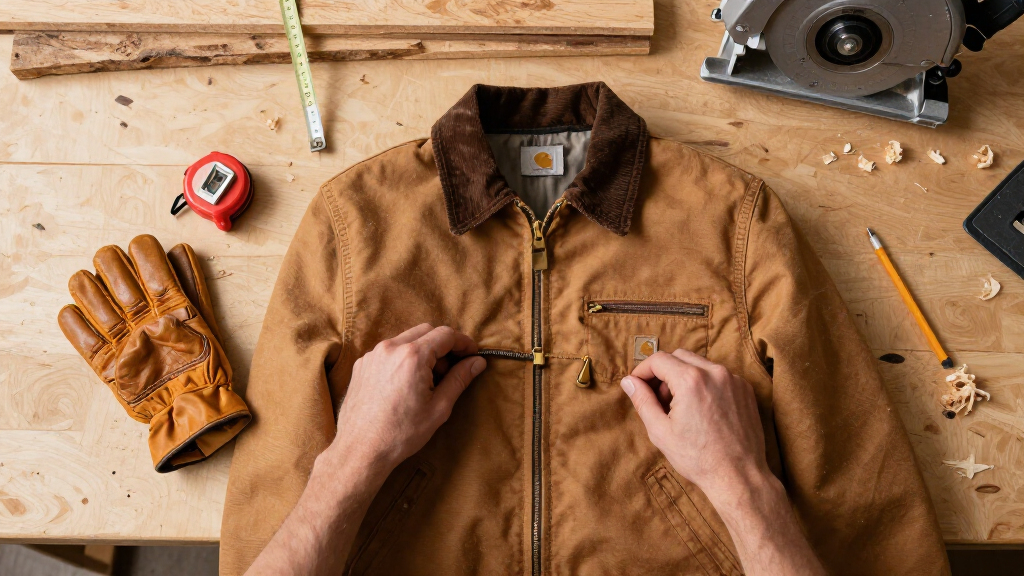
I evaluated each jacket against the criteria that actually drive a purchase decision in this category: durability of the shell fabric, insulation and warmth-to-weight ratio, range of motion, fit accuracy, and job-specific features like high-visibility compliance or flame resistance. Firm duck canvas, washed duck, Quick Duck, ripstop, and Rugged Flex all behave differently on a job site, so I compared them directly rather than treating “Carhartt toughness” as a single standard. Break-in time was treated as a real tradeoff, not a footnote — a jacket that fights you for the first month is a legitimate drawback for some buyers.
Ranking logic followed versatility first, specialization second. Jackets that perform well across trades, climates, and layering systems placed higher than niche models, unless that niche — like FR protection or Class 3 visibility — is non-negotiable for safety, in which case the jacket was judged within its own lane. Value was assessed on longevity and materials rather than sticker price alone, since Carhartt jackets are typically bought once and worn for years.
| Carhartt work jacket | Care |
|---|---|
| Carhartt Men’s Full Swing Rela | Machine wash |
| Carhartt Men’s Full Swing Loos | Machine wash |
| Carhartt Men’s Big-Tall Quilte | Machine wash |
| Carhartt Men’s HV Sherwood Cla | Machine wash |
| Carhartt Men’s Flame-Resistant | Machine wash (FR-safe practices recommended) |
| Carhartt Men’s Washed Duck Act | Machine wash |
| Carhartt Men’s Rugged Flex Duc | Machine wash |
| Carhartt Men’s Firm Duck Activ | Machine wash |
| Carhartt Men’s Monterey Jacket | Machine wash |
| Carhartt Men’s Loose Fit Firm | Wash warm, tumble dry medium |
| Carhartt Men’s Gilliam Jacket | Machine wash |
| Carhartt Men’s Washed Duck Bar | Machine wash |
| Carhartt Men’s Iconic J01 Duck | Machine wash |
| Carhartt Men’s Washed Duck Sie | Machine wash |
| Carhartt Men’s Firm Duck Tradi | Machine wash |
Factors to Consider When Choosing Best Carhartt Work Jackets
Before picking a specific model, it helps to understand how Carhartt organizes its jacket lineup — the differences between fabrics, linings, and fits explain most of the price and performance gaps you’ll see across these 15 options.Firm Duck vs. Washed Duck vs. Quick Duck
Carhartt’s firm duck canvas is the most abrasion-resistant shell the brand offers, which is why the J140, J01 Detroit, and Traditional Coat feel stiff out of the box — that stiffness is structural, not a flaw. Washed duck goes through a garment-wash process that softens the fabric and slightly relaxes the fit, making jackets like the Washed Duck Active Jacket and Bartlett comfortable immediately, at the cost of a small amount of durability. Quick Duck is a lighter canvas blend that sheds weight without giving up much toughness, which is why it shows up in the Full Swing line where mobility matters. The common mistake here is buying firm duck expecting softness, or buying washed duck for heavy-contact trades like steelwork or masonry. Match the fabric to the abuse the jacket will actually take, not to the romantic idea of owning the toughest option available.
Lining Type Determines the Season
An unlined jacket like the Monterey or J01 Detroit is a three-season shell — warm with a hoodie underneath, but not a standalone winter coat. Quilted flannel linings, found in the Big-Tall Active Jacket, sit in the middle: comfortable, quiet, and warm enough for most cold-weather labor. Thermal-lined and insulated options like the Loose Fit Thermal-Lined Active Jacket and the insulated Full Swing models handle genuine cold, while the poly-filled Sierra and Gilliam push into deep-winter territory. Buyers routinely over-buy insulation and then overheat during physical work — if you sweat through a jacket daily, you’ll wear it out faster and be colder when you stop moving. A good rule: the more physical your job, the lighter your lining should be, with layers doing the rest.
Fit System: Relaxed, Loose, and Traditional
Carhartt’s fit names are not marketing fluff — they change how the jacket layers and moves. Relaxed fit allows room for a mid-layer without going boxy, loose fit maximizes layering room for heavy sweatuits underneath, and traditional fits like the J01 run trimmer through the body. The Full Swing construction adds flex pleats at the elbows, shoulders, and back, which is a genuine functional difference for anyone reaching overhead all day. A frequent buying error is sizing up for layering room when the fit already accounts for it, resulting in a jacket that snags on equipment and fits like a tarp. Check the fit designation before choosing a size, and take advantage of the Big-Tall program if standard proportions don’t work for you — it’s the same jacket, cut correctly.
When Specialty Certifications Are Non-Negotiable
If your job involves traffic exposure, electrical work, welding, or flammable environments, no general-purpose jacket is an acceptable substitute for a certified one. The HV Sherwood Class 3 Jacket meets ANSI visibility requirements that roadside crews, surveyors, and airport ground staff are legally required to follow, and the Flame-Resistant Quick Duck Coat carries arc-rated protection that matters for utility and energy trades. These certifications can’t be added later with a vest or layer. The tradeoff is real: certified jackets cost more, come in limited colorways, and their features are useless outside their intended environment. If there’s any chance your work crosses into these hazards, buy the certified jacket first and a general-purpose one second — the reverse order wastes money.
Break-In Period and Long-Term Ownership
Firm duck jackets have a break-in period measured in weeks, not days, and buyers who don’t expect it often return perfectly good jackets. The fabric softens at the crease points — elbows, shoulders, waist — and eventually molds to your body in a way pre-softened jackets never quite match. Washing matters too: Carhartt recommends cold washes and avoiding excessive heat drying, because hot drying shrinks cotton duck and can crack some water-repellent finishes. Expect the water-repellent coating to fade over time on all cotton duck jackets; re-treating with a wax or spray restores it, and many owners consider the patina a feature rather than a defect. Think of a firm duck purchase as a two-year relationship: uncomfortable briefly, excellent for a long time afterward.
Mobility Features Worth Paying For
The Full Swing pleat system and Rugged Flex stretch fabric are the two mobility technologies in this lineup, and they solve different problems. Full Swing uses engineered pleats so the jacket moves with you rather than riding up when you raise your arms — most useful for carpenters, mechanics, and anyone working overhead. Rugged Flex, found in the Berwick Jacket, weaves elastane into the fabric itself for stretch during bending, crouching, and repetitive motion. Both add cost, and both are wasted money if your work is mostly walking, standing, or driving. Don’t pay a mobility premium for a jacket that spends its life on a forklift — put that budget toward insulation or a tougher shell instead.
Frequently Asked Questions
Which Carhartt jacket is warmest for outdoor winter work?
For prolonged outdoor cold, the Washed Duck Sierra Jacket and the Firm Duck Traditional Coat offer the most warmth in this lineup thanks to poly insulation and, in the Traditional Coat’s case, full-length body coverage that protects the hips and thighs. The insulated Full Swing models are close behind but trade a little warmth for mobility, which makes them better if your winter work is physical. The Monterey, J01 Detroit, and other unlined models are not winter coats on their own — they need a heavy layer underneath. If you’re working hard in cold weather rather than standing at a site, a lighter insulated jacket with layering underneath usually beats the heaviest coat, because sweat-soaked insulation stops working the moment you stop moving.
Is firm duck or washed duck the better choice?
It depends entirely on the abuse the jacket will take. Firm duck is more abrasion-resistant and holds its structure against rough surfaces, tools, and repeated contact, which is why the J140 and Traditional Coat dominate heavy trades. Washed duck sacrifices a modest amount of that toughness in exchange for a broken-in feel, softer drape, and a fit that’s forgiving from the first wear. If you work around concrete, steel, or splintered lumber, firm duck pays off despite the break-in period. If your jacket mostly faces weather, general jobsite grime, and occasional scrapes, washed duck is the smarter, more comfortable buy — and most people who buy firm duck for casual use never use its full potential.
Do Carhartt work jackets run big or small?
Most Carhartt work jackets are cut with layering room already built in, especially loose-fit models like the Quick Duck and Thermal-Lined Active Jacket, so your normal shirt size is usually correct. Traditional-fit jackets like the J01 Detroit run a bit trimmer through the torso, but still accommodate a mid-layer. The common mistake is ordering a size up “to be safe,” which produces a boxy jacket that snags on tools and lets wind in through the sleeves. The exception worth knowing: Big-Tall versions, like the Quilted Flannel Sandstone Active Jacket, use the same materials but a proportionally adjusted pattern — taller buyers should choose that route rather than simply sizing up a standard jacket, which just gets wider, not longer.
What’s the difference between the J01 Detroit and the J140 Active Jac?
They look similar but serve different purposes. The J01 Detroit Jacket has a blanket lining in the body, a corduroy collar, and an inside pocket — it’s a heritage piece designed as a layering jacket with a trimmer traditional fit. The J140 Active Jac is unlined, with a simpler work-first design and a fit that runs roomier for layering underneath. In practice, the J01 suits cooler shoulder-season weather and wears well off the clock, while the J140 is the tougher, more flexible choice for active labor where you’re managing your own heat. Both use firm duck and both require the same break-in patience; the real decision is whether you want built-in lining or the freedom to layer as conditions change.
Are the Full Swing jackets actually worth the extra cost?
If your work involves frequent overhead reaching, swinging tools, or working in confined positions, the Full Swing pleat system earns its price — the difference shows up when a jacket stops riding up your back every time you raise your arms, which is a daily frustration in trades like framing, electrical, and mechanic work. If your workday is mostly walking, standing, or operating equipment, the pleats rarely engage and a standard jacket like the J140 or Washed Duck Active Jacket does the same job for less. The Full Swing Quick Duck and Ripstop models also pair that mobility with lighter fabric, so they’re a good middle ground for mild-to-cold weather rather than deep winter. Treat Full Swing as a tool for a specific problem, not a general upgrade — the answer to whether it’s worth it depends on what your arms do all day.
Conclusion
After comparing all 15 jackets, the right pick comes down to what your workday actually demands. For best overall value across trades and seasons, the Firm Duck Active Jac J140 is the pick — maximum durability, layering flexibility, and a fit that works for nearly everyone. The J01 Duck Detroit Jacket is the premium heritage choice, best for buyers who want a jacket that works on site and looks right everywhere else. For beginners and first-time Carhartt buyers, the Washed Duck Active Jacket is the easiest entry point: no break-in period, forgiving fit, and a gentle introduction to the brand’s sizing.
For specific needs: the Full Swing Quick Duck for overhead-heavy trades, the Traditional Coat for maximum cold-weather coverage, the HV Sherwood Class 3 for traffic-exposed work, the Flame-Resistant Quick Duck Coat for electrical and utility trades, the Gilliam for high-movement jobs in milder weather, and the Big-Tall Quilted Flannel Active Jacket for buyers who need extended sizing without giving up warmth. Whatever you choose, buy based on the abuse the jacket will take and the weather it will face — Carhartt’s lineup rewards buyers who match the fabric and lining to the job rather than chasing the toughest-looking option on the rack.
Fall yard work Picks
leaf blowers
As an affiliate, we earn on qualifying purchases.