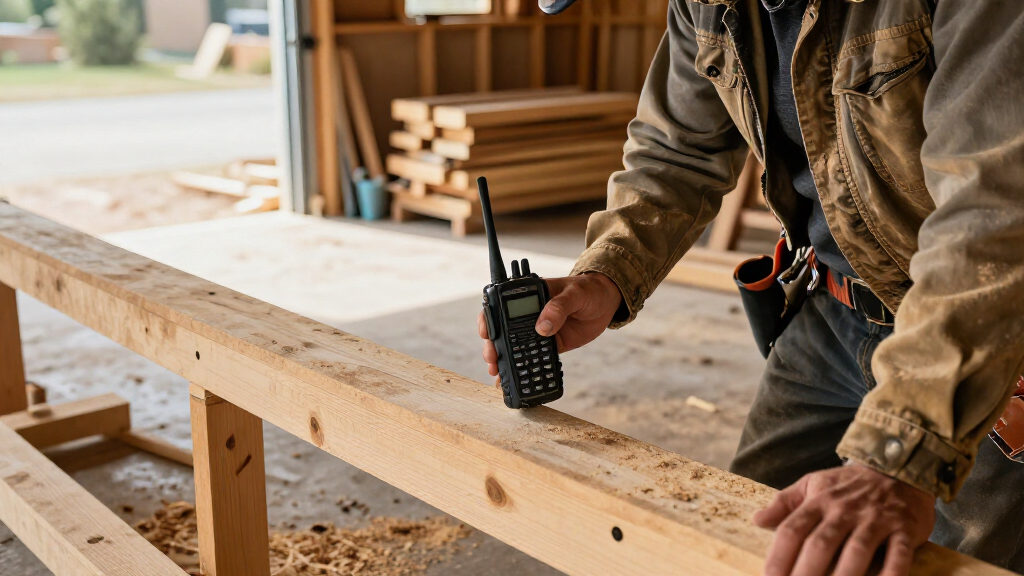

For the best jobsite walkie-talkie with privacy mode, I’d start with the Retevis RB48: its four-radio kit, IP67 protection, and shoulder mics suit crews that need hands-free communication in rough conditions. The DEWALT DXFRS800 is a strong alternative for buyers prioritizing a durable, waterproof two-radio setup, while the Midland LXT630VP3 offers a simpler choice for smaller teams. Privacy codes can reduce interruptions from other users on the same channel, but they do not make conversations private or encrypted. The main tradeoffs are crew size, ruggedness, radio compatibility, and how much setup your team wants to handle. Read on for the full comparison and guidance on matching a radio to your jobsite.

Get business pricing on tools and workshop supplies
- Business-only prices and quantity discounts
- Tax-exempt purchasing
- Multiple users, one account, clear invoices
Complete the kit


Key Takeaways
- Retevis RB48 is the crew-oriented pick: a four-radio pack and IP67 shoulder mics make it better suited to group coordination than the two-radio kits.
- DEWALT DXFRS800 emphasizes ruggedness: its IP67 rating and 2W output stand out for buyers who want a durable pair, though its FRS format limits changes to permitted channels and power.
- Privacy codes are not encryption: the radios may filter unwanted chatter, but other listeners can still hear transmissions on the same channel and code.
- Midland’s options serve different levels of simplicity: LXT630VP3 and LXT600VP4 are straightforward FRS choices, while the T290VP4 uses GMRS and may require a license.
- Pack size changes the real buying decision: four-pack options can equip a small crew at once, while two-pack radios make more sense for pairs or staged expansion.
| Gaswei G2Pro+ IP67 Waterproof Floating Walkie Talkies, Yellow, 4-Pack |  | Best for Two-Team Coordination | Pack size: 4 radios | Channels: 22 | Privacy codes: 121 combinations | VIEW LATEST PRICE | See Our Full Breakdown |
| Retevis RB48 4-Pack Two-Way Radios with IP67 Waterproof Shoulder Mics |  | Best for Glove-Friendly Jobsite Use | Pack size: 4 radios | Channels: 22 | Radio service: FRS | VIEW LATEST PRICE | See Our Full Breakdown |
| Midland T71VP3 X-Talker FRS Two-Way Radios, Black/Silver, 2-Pack |  | Best for Flexible Power Options | Pack size: 2 radios | Channels: 36 | Privacy codes: 121 CTCSS codes | VIEW LATEST PRICE | See Our Full Breakdown |
| Midland LXT630VP3 FRS Two-Way Radios, Yellow, 2-Pack |  | Best for Weather Alerts and Simple Crew Links | Pack size: 2 radios | Channels: 36 FRS channels | Privacy codes: 121 CTCSS codes | VIEW LATEST PRICE | See Our Full Breakdown |
| Midland T51VP3 X-Talker FRS Walkie Talkies, 2-Pack |  | Best Compact Basic Pick | Pack size: 2 radios | Channels: 22 | Privacy codes: 38 CTCSS codes | VIEW LATEST PRICE | See Our Full Breakdown |
| Midland LXT600VP4 FRS Two-Way Radios, 2-Pack |  | Best for Weather Alerts and Flexible Power | Radio type: FRS | Pack size: 2 radios | Channels: 36 | VIEW LATEST PRICE | See Our Full Breakdown |
| Midland T290VP4 GMRS Two-Way Radios |  | Best for GMRS Users Seeking Weather Coverage | Radio type: GMRS | Pack size: 2 radios | Channels: 36 | VIEW LATEST PRICE | See Our Full Breakdown |
| DEWALT DXFRS800 FRS Walkie Talkies, 2W, IP67 Waterproof, 2-Pack |  | Best Rugged Pick for Dusty and Wet Jobsites | Radio type: FRS | Pack size: 2 radios | Power: 2 W | VIEW LATEST PRICE | See Our Full Breakdown |
| jobsite walkie talkie with privacy mode | Pack size | Channels | Privacy codes | Maximum stated range |
|---|---|---|---|---|
| Gaswei G2Pro+ IP67 Waterproof | 4 radios | 22 | 121 combinations | 6 miles |
| Retevis RB48 4-Pack Two-Way Ra | 4 radios | 22 | — | — |
| Midland T71VP3 X-Talker FRS Tw | 2 radios | 36 | 121 CTCSS codes | 38 miles in unobstructed conditions |
| Midland LXT630VP3 FRS Two-Way | 2 radios | 36 FRS channels | 121 CTCSS codes | Up to 30 miles in open areas |
| Midland T51VP3 X-Talker FRS Wa | 2 radios | 22 | 38 CTCSS codes | 28 miles |
| Midland LXT600VP4 FRS Two-Way | 2 radios | 36 | 121 | Up to 30 miles |
| Midland T290VP4 GMRS Two-Way R | 2 radios | 36 | 121 CTCSS | Up to 40 miles in open areas with little or no obstruction |
| DEWALT DXFRS800 FRS Walkie Tal | 2 radios | 22 | 121 | — |
More Details on Our Top Picks
Gaswei G2Pro+ IP67 Waterproof Floating Walkie Talkies, Yellow, 4-Pack
The G2Pro+ is the most coordination-focused choice here: its dual PTT buttons and dual-channel monitoring let a worker keep tabs on two groups without relying on a single shared conversation. Its 121 privacy-code combinations help separate routine traffic from other users on the same channel, though they do not make conversations private or encrypted. For wet or water-adjacent jobs, the IP67 floating design is a stronger fit than the non-water-resistant Midland T51VP3 or T71VP3. NOAA alerts, SOS transmission, whisper mode, and vibration reminders add useful communication options. The tradeoff is power: it uses nonstandard batteries, unlike Midland’s models with more flexible battery choices. Its six-mile stated maximum range is also not a guarantee in obstructed jobsite conditions.
Pros:- Dual PTT buttons and dual-channel monitoring support coordination across two groups.
- IP67 waterproof and floating design suits wet work areas.
- 121 privacy-code combinations help reduce interference from other users sharing a channel.
- NOAA alerts, SOS transmission, whisper mode, and vibration reminders add communication options.
Cons:- Requires nonstandard batteries, limiting replacement options.
- Six-mile maximum range is stated and may be reduced by buildings, terrain, and other obstructions.
Best for: Four-person crews that split into two work groups and need waterproof radios with separate channel monitoring.
Not ideal for: Crews that want to replace batteries with common AAA cells or need a stated range beyond six miles.
- Pack size:4 radios
- Channels:22
- Privacy codes:121 combinations
- Maximum stated range:6 miles
- Water resistance:IP67 waterproof; floating
- Battery:4 included nonstandard batteries
- Radio service:FRS, UHF
- Warranty:3 years
Our verdict“Choose the G2Pro+ for a four-person crew that needs water protection and two-group monitoring, but skip it if common replacement batteries matter most.”
Retevis RB48 4-Pack Two-Way Radios with IP67 Waterproof Shoulder Mics
The RB48 is the strongest fit in this group for crews who need radios they can operate while wearing work gloves. Its large push-to-talk button and included waterproof shoulder microphones move the controls closer to the worker, while IP67 protection and a stated MIL-STD-810H durability standard suit harsher conditions. Compared with the Gaswei G2Pro+, the RB48 emphasizes rugged controls and a longer listed battery runtime rather than dual-channel monitoring. It also comes as a four-radio set with charging accessories, NOAA alerts, vibration alerts, and noise reduction. The privacy-mode limitation is that the supplied data does not specify a number of privacy codes, so buyers should confirm channel and code compatibility with their existing radios. Listed battery runtime varies between 18 and up to 20 hours.
Pros:- Large push-to-talk button is designed for glove-friendly operation.
- IP67 waterproof shoulder microphones help keep controls accessible in wet conditions.
- Four radios and a broad set of charging accessories are included.
- NOAA alerts, vibration alerts, emergency alarm, and noise reduction support jobsite communication.
Cons:- The supplied specifications do not state a privacy-code count.
- Battery runtime is described as both 18 hours and up to 20 hours.
- Compatibility with other FRS radios depends on matching channels and privacy codes.
Best for: Jobsite crews that wear gloves, want shoulder-mic controls, and need a four-radio set with waterproof microphones.
Not ideal for: Buyers who need clearly specified privacy-code options or confirmed interoperability with a particular radio fleet.
- Pack size:4 radios
- Channels:22
- Radio service:FRS
- Battery capacity:2000mAh per radio
- Battery life:Listed as 18 hours and up to 20 hours
- Water resistance:IP67 waterproof shoulder microphones
- Durability standard:MIL-STD-810H
- Operating temperature:-20 to +60 °C
- Warranty:5 years for radios; 1 year for accessories
Our verdict“Pick the RB48 for glove-heavy, wet jobsite work where rugged shoulder-mic operation matters more than a clearly documented privacy-code selection.”
Midland T71VP3 X-Talker FRS Two-Way Radios, Black/Silver, 2-Pack
The T71VP3 suits a two-person team that wants 36 channels and 121 privacy codes alongside a choice of rechargeable packs or alkaline batteries. That flexibility can help when a charging outlet is not available, and the included charging accessories make it more job-ready than the T51VP3, which has fewer privacy codes and a shorter listed maximum range. Like the T51VP3, however, the T71VP3 is not water resistant, so it is a poor match for exposed wet work. Its 38-mile maximum is specified for unobstructed conditions, not a promise of coverage between buildings or through jobsite structures. Privacy codes help reduce unwanted shared-channel traffic, but they do not encrypt conversations. For crews needing waterproofing, the Gaswei G2Pro+ is a better fit.
Pros:- 36 channels and 121 privacy codes provide many shared-channel filtering combinations.
- Can run on included rechargeable battery packs or alkaline batteries.
- Charging accessories and belt clips are included.
- NOAA weather scan and alerts provide weather updates.
Cons:- Not water resistant, unlike the Gaswei G2Pro+ and Retevis RB48.
- The 38-mile maximum range applies to unobstructed conditions and may not reflect jobsite coverage.
- Listed battery life is 10 hours.
Best for: Two-person teams that value rechargeable operation with alkaline-battery backup and need many channel and privacy-code choices.
Not ideal for: Workers on wet or dusty outdoor sites who need water-resistant radios or reliable coverage through obstructions.
- Pack size:2 radios
- Channels:36
- Privacy codes:121 CTCSS codes
- Maximum stated range:38 miles in unobstructed conditions
- Power options:Alkaline batteries or included rechargeable battery packs
- Battery life:10 hours
- Water resistance:Not water resistant
- Warranty:3 years
Our verdict“Choose the T71VP3 for a two-person crew that wants battery flexibility and privacy-code options, provided the radios can stay dry.”
Midland LXT630VP3 FRS Two-Way Radios, Yellow, 2-Pack
The LXT630VP3 is a straightforward two-radio option for buyers who want 36 FRS channels, 121 privacy codes, and NOAA alerts without moving to a larger four-radio kit. Its privacy-code count matches the T71VP3, but the LXT630VP3 offers a shorter listed battery life of six hours and a less flexible kit profile; the T71VP3 lists 10 hours and includes rechargeable packs plus alkaline-battery support. The LXT630VP3 does offer a rechargeable pack and can also use three AAA batteries, which may help when spare cells are easier to source. Its water-resistant IP65 listing gives it an advantage over the non-water-resistant T51VP3 and T71VP3, though it is not the same protection level as the IP67 Gaswei G2Pro+. The 30-mile claim applies to open areas.
Pros:- 36 FRS channels and 121 CTCSS privacy codes.
- NOAA weather scan and alert features.
- Can use the included rechargeable battery pack or three AAA batteries.
- IP65 water-resistance listing offers more protection than the non-water-resistant Midland T51VP3 and T71VP3.
Cons:- Listed battery life is six hours.
- The 30-mile maximum range applies to open areas with little or no obstruction.
- AAA batteries are not included.
Best for: Small crews that want NOAA weather alerts, privacy-code choices, and a water-resistant two-radio set for moderate shifts.
Not ideal for: Long-shift teams that need more than six hours of listed battery life or crews working in conditions requiring IP67 protection.
- Pack size:2 radios
- Channels:36 FRS channels
- Privacy codes:121 CTCSS codes
- Maximum stated range:Up to 30 miles in open areas
- Water resistance:Water resistant; IP65 rating listed
- Power options:Three AAA batteries (not included) or included rechargeable battery pack
- Battery life:6 hours
- Dimensions:1 x 2 x 7 inches
Our verdict“Pick the LXT630VP3 for a small crew that wants weather alerts and some water resistance, but choose the T71VP3 for longer listed battery life.”
Midland T51VP3 X-Talker FRS Walkie Talkies, 2-Pack
The T51VP3 is the simplest fit for a pair of workers who want compact FRS radios with hands-free calling, but its privacy setup is more limited than the other Midland models here: 38 privacy codes versus 121 on the LXT630VP3 and T71VP3. Those codes can help filter other users on a shared channel, but do not make a conversation confidential. Hands-free eVOX, channel scanning, NOAA alerts, and belt clips cover practical basics without the extra coordination features found on the Gaswei G2Pro+. The listed 10-hour battery life is longer than the LXT630VP3’s six hours, and one AAA battery per radio is included. Its key jobsite drawback is no water resistance, which rules it out for rain or washdown exposure. Product color details also conflict, so buyers should not rely on the listed color.
Pros:- Compact design with belt clips for carrying between work areas.
- Hands-free eVOX offers three sensitivity levels.
- NOAA weather scan and alerts are included.
- One AAA battery per radio is included, with listed battery life of 10 hours.
Cons:- Only 38 privacy codes, fewer than the Midland LXT630VP3 and T71VP3.
- Not water resistant.
- Listed color is inconsistent between the title and product details.
Best for: Two workers seeking compact, basic FRS radios for dry indoor or covered jobsites with occasional hands-free communication.
Not ideal for: Crews needing extensive privacy-code selection, water protection, or radios for exposed outdoor work.
- Pack size:2 radios
- Channels:22
- Privacy codes:38 CTCSS codes
- Maximum stated range:28 miles
- Battery:1 AAA battery per radio, included
- Battery life:10 hours
- Water resistance:Not water resistant
- Dimensions:1.3 × 2.2 × 6.1 inches
- Radio service:FRS
Our verdict“Choose the T51VP3 for basic hands-free communication on a dry, covered site, but look to the LXT630VP3 or T71VP3 for more privacy-code choices.”
Midland LXT600VP4 FRS Two-Way Radios, 2-Pack
The Midland LXT600VP4 suits crews who want privacy codes and a weather check without moving to the T290VP4’s GMRS format. Its 121 privacy codes help reduce interruptions from other users on the same channel, but they do not encrypt conversations or create a private frequency. NOAA scan and alerts add a practical warning option for outdoor crews, while the included rechargeable pack avoids making disposable batteries the only power choice. Hands-free voice activation can help when both hands are occupied, although background noise may affect when a radio transmits. The claimed 30-mile range is a maximum, not a dependable jobsite expectation; buildings and terrain can cut reach sharply. Compared with DEWALT’s DXFRS800, this pair lacks an IP67 rating and longer listed battery life, but offers 36 channels and AAA backup support.
Pros:- 121 privacy codes help limit interruptions from users on the same channel
- Rechargeable battery pack is included
- NOAA weather scan and alert features
- Hands-free voice activation and AAA battery backup option
Cons:- AAA batteries are not included
- The 30-mile maximum range should not be treated as typical jobsite coverage
- Product information conflicts on whether the radios are silver or black
Best for: Small outdoor crews who want NOAA alerts, privacy codes, and a choice between rechargeable power and AAA batteries.
Not ideal for: Crews working in heavy rain, dust, or demanding indoor sites who need a clearly stated IP67 protection rating or a long listed runtime.
- Radio type:FRS
- Pack size:2 radios
- Channels:36
- Privacy codes:121
- Maximum stated range:Up to 30 miles
- Weather features:NOAA Weather Scan and Alert
- Power options:Included rechargeable battery pack or 3 AAA batteries per radio; AAA batteries not included
- Listed battery life:12 hours
Our verdict“Choose the LXT600VP4 if weather alerts and flexible battery options matter more than ruggedized waterproofing or extended runtime.”
Midland T290VP4 GMRS Two-Way Radios
The Midland T290VP4 is the choice here for buyers specifically seeking a GMRS radio set with privacy codes and weather monitoring. Like the LXT600VP4, it offers 36 channels and 121 privacy codes, but its stated range reaches 40 miles only in open areas with few obstructions. That figure does not make it a reliable long-distance choice across a built-up jobsite, and GMRS operation has different licensing requirements from FRS, so buyers should check the rules that apply to them. NOAA scan and alerts, eVOX hands-free operation, and water resistance add useful field features; however, the listed IPX4 rating is described as estimated, not a firm certification. Compared with the DEWALT DXFRS800, this Midland set supplies more channels and included AAA batteries, while DEWALT offers a defined IP67 rating and a longer stated battery life.
Pros:- 36 channels and 121 CTCSS privacy codes
- NOAA weather scan and alert features
- eVOX hands-free operation
- Two radios and six AAA batteries are included
Cons:- The 40-mile range claim applies to open areas with few or no obstructions
- The IPX4 rating is listed as estimated
- GMRS use may involve licensing requirements
Best for: Crews already using GMRS radios who want a two-radio set with NOAA alerts, hands-free eVOX, and included AAA batteries.
Not ideal for: Buyers who need an FRS-only option, a confirmed high-grade ingress-protection rating, or predictable range through buildings and obstructions.
- Radio type:GMRS
- Pack size:2 radios
- Channels:36
- Privacy codes:121 CTCSS
- Maximum stated range:Up to 40 miles in open areas with little or no obstruction
- Weather features:NOAA weather scan and alert
- Hands-free operation:eVOX
- Power:Six AAA batteries included
- Warranty:3 years
Our verdict“Pick the T290VP4 if your crew wants GMRS with weather alerts and accepts the licensing check and uncertain water-rating detail.”
DEWALT DXFRS800 FRS Walkie Talkies, 2W, IP67 Waterproof, 2-Pack
For a demanding jobsite, the DEWALT DXFRS800 makes the strongest case for physical protection: its IP67 rating addresses dust and water exposure more directly than the water-resistant Midland LXT600VP4 or the T290VP4’s estimated IPX4 rating. Its 121 privacy codes can help separate conversations from other users sharing a channel, though they are not encryption. The tradeoff is a smaller selection of 22 channels, versus 36 on both Midland sets. DEWALT lists 18 hours of battery life, VOX hands-free operation, vibration alerts, and a dual-port charger, making the package appealing when radios need to stay ready across a long shift. Its stated coverage of 300,000 square feet or 25 floors is condition-dependent, while the listed maximum talking range is two miles. This is the ruggedness-first choice, not the one to buy for the longest range claim.
Pros:- IP67-rated protection against water and dust
- 121 privacy codes across 22 FRS channels
- Listed 18-hour lithium-polymer battery life with VOX hands-free operation
- Includes holsters and a dual-port charger
Cons:- Listed maximum talking range is two miles
- Coverage claims can vary with site layout and obstructions
- Offers fewer channels than the Midland LXT600VP4 and T290VP4
Best for: Construction and maintenance crews exposed to dust, rain, or splashes who value IP67 protection and a long listed battery life.
Not ideal for: Crews prioritizing the widest channel selection, NOAA weather alerts, or a stated range beyond the listed two-mile maximum.
- Radio type:FRS
- Pack size:2 radios
- Power:2 W
- Channels:22
- Privacy codes:121
- Ingress protection:IP67
- Listed battery life:18 hours
- Maximum talking range:2 miles
- Stated coverage:Up to 300,000 sq ft or 25 floors
Our verdict“Choose the DXFRS800 when jobsite durability and long listed runtime matter more than channel count or extended range claims.”

How We Picked
I compared the eight radios against the needs behind this search: dependable crew communication, usable privacy-code features, jobsite toughness, and manageable setup. I gave weight to radio type and channel compatibility, pack size, water and dust protection, hands-free accessories, and whether the controls appear suited to straightforward team use. Privacy mode is treated as a channel-and-code filtering feature, not a promise of secure or confidential communication.
The ranking favors models that combine practical jobsite protection with a clear use case and less friction for a crew. The Retevis RB48 leads for its four-radio configuration and IP67 shoulder mics; the DEWALT DXFRS800 stands out for rugged protection in a two-pack. The Midland models follow according to their intended balance of simplicity, features, and radio format. A GMRS model can suit buyers who need that system, but licensing and compatibility make it a less universal recommendation.
| jobsite walkie talkie with privacy mode | Water resistance |
|---|---|
| Gaswei G2Pro+ IP67 Waterproof | IP67 waterproof; floating |
| Retevis RB48 4-Pack Two-Way Ra | IP67 waterproof shoulder microphones |
| Midland T71VP3 X-Talker FRS Tw | Not water resistant |
| Midland LXT630VP3 FRS Two-Way | Water resistant; IP65 rating listed |
| Midland T51VP3 X-Talker FRS Wa | Not water resistant |
| Midland LXT600VP4 FRS Two-Way | — |
| Midland T290VP4 GMRS Two-Way R | — |
| DEWALT DXFRS800 FRS Walkie Tal | — |
Factors to Consider When Choosing Best Jobsite Walkie Talkie With Privacy Mode
Choosing a radio for a jobsite is less about the longest advertised range and more about whether the crew can use the same channels, hear messages through work noise, and keep the radios working through daily wear. These broader checks can prevent a mismatch that a feature list alone may not reveal.
Know What Privacy Mode Can—and Cannot—Do
On consumer two-way radios, privacy codes generally let a radio ignore transmissions that do not use its selected code on the same channel. They do not stop another compatible radio from monitoring your channel, and they do not encrypt speech. A common mistake is treating a code setting like a private conversation, especially when discussing schedules or sensitive site details. For confidential communication, use a system with genuine encryption and verify that it meets your workplace requirements. For ordinary coordination, assign one channel and code to the crew, then document the settings so replacements can join without guesswork.
Check FRS and GMRS Rules Before Buying
FRS and GMRS radios do not have identical rules or operating requirements, so check the radio’s classification before equipping a team. GMRS operation in the United States generally requires an FCC license; FRS does not. Radios on different services may not share every channel or operating setting, even when their menus look similar. Avoid mixing models based only on matching brand names or channel numbers: confirm compatibility in the manuals. If several workers need to communicate, one incompatible radio can split the crew into separate groups.
Treat Range Claims as Best-Case Figures
Manufacturers’ range figures are not a dependable forecast for a working site. Concrete, steel framing, equipment, terrain, and the position of the radio can all reduce usable distance. Before buying for a spread-out crew, think about the farthest routine communication point and whether workers need direct radio-to-radio contact or a different communications system. A quick site check with the radios set to the planned channel is more informative than relying on an open-terrain figure. If reception is unreliable around structures, changing the crew’s check-in points may help, but it cannot overcome every coverage limit.
Match Durability to the Actual Work
Waterproof ratings can matter on exposed, wet, or dusty sites, but they are not a substitute for checking the manufacturer’s care instructions. Look at the rating for the radio and any included microphone separately; accessories may have different protection. Shoulder microphones can keep a handset accessible while workers wear gloves or carry tools, though they add another cable and connection to inspect. A rugged model may be a sensible premium when radios face frequent drops or weather, while indoor crews may get more value from simpler controls and a spare battery plan. Consider how the radios will be stored and charged at the end of each shift.
Buy for the Crew, Not Just the First Pair
A two-pack can be a good fit for a supervisor and one worker, but a growing crew may need several more radios quickly. Compare the number of included units with the team’s actual communication pattern, including backup radios and visitors who need to stay in contact. A four-pack reduces the chance of setting up mixed equipment, but it may be wasteful if only two people need radios. Before adding units later, check whether the same model remains available and whether replacement batteries, chargers, and accessories match. Assigning a radio to each role and labeling its channel settings can reduce confusion during handoffs.
Frequently Asked Questions
Do privacy codes stop other people from listening to my jobsite radio?
No. Privacy codes usually filter which transmissions your radio plays through its speaker; they do not prevent other radios from receiving your signal. Anyone monitoring the same channel may still hear the conversation, even if their code is different. Use them to reduce unwanted chatter, not to share confidential information. If your work requires secure communication, choose a system with verified encryption and follow your organization’s rules.
Can I use the Midland FRS models with the GMRS Midland T290VP4?
Do not assume compatibility from the Midland name or a matching channel number. The T290VP4 is a GMRS radio, while the LXT and T-series options listed here are FRS models, and service rules and channel settings can differ. Check both manuals for channels and features that are explicitly compatible before buying radios for one crew. GMRS use in the United States generally requires an FCC license. If simplicity across the whole team matters most, choosing one radio service and matching models is the safer approach.
Is a four-pack worth choosing over a two-pack for a small contractor?
A four-pack makes sense when several people need to coordinate at the same time or when keeping spare radios on hand matters. The Retevis RB48 is the clearest crew-focused option in this roundup because it includes four radios and shoulder mics. A two-pack can be the better fit for a supervisor-worker pair or a small operation that communicates in stages. Think through who needs to talk directly, not just the current headcount. If you expect to add radios later, verify accessory and model compatibility before settling on a kit.
Should I pay more attention to waterproofing or advertised range?
For wet or exposed work, a clearly stated protection rating may be more useful than a maximum range claim that assumes favorable conditions. Range can fall sharply around buildings, machinery, and other obstructions, while a waterproof rating describes a specific type of protection under stated test conditions. Check whether the rating applies to the radio, microphone, and other accessories you plan to use. Neither feature guarantees reliable communication in every location. For a large or complex site, test coverage in the places where the crew actually works.
Will privacy mode make two different radio brands work together?
Brand alone does not determine compatibility, and privacy mode cannot bridge incompatible radio services or channel settings. Radios generally need to share an allowed channel and compatible code system for the receiving radio to play the transmission as expected. Code numbering and menu labels can vary between models, so consult the manuals rather than matching numbers by sight. Test all radios together before putting them into service. For a mixed fleet, write down verified channel and code settings and keep that reference with the charging station.
Conclusion
For most crews, I’d choose the Retevis RB48 as the best overall because its four-radio kit and IP67 shoulder mics address group size and jobsite exposure together. For a durable two-radio setup, the DEWALT DXFRS800 is my best premium-style pick, especially when water and dust protection matter more than having four units in the box. For value and straightforward use, I’d compare the Midland LXT630VP3 and LXT600VP4 against the crew’s needs and preferred controls. Beginners should favor a matching FRS set with settings the whole team can learn quickly; the Midland LXT options are simpler starting points than adding a GMRS system. Choose the Midland T290VP4 for a specific GMRS need, after confirming licensing, compatibility, and the rules that apply to your operation.