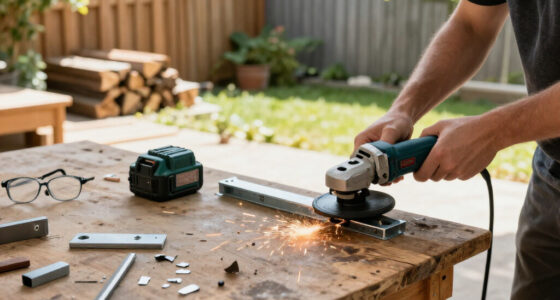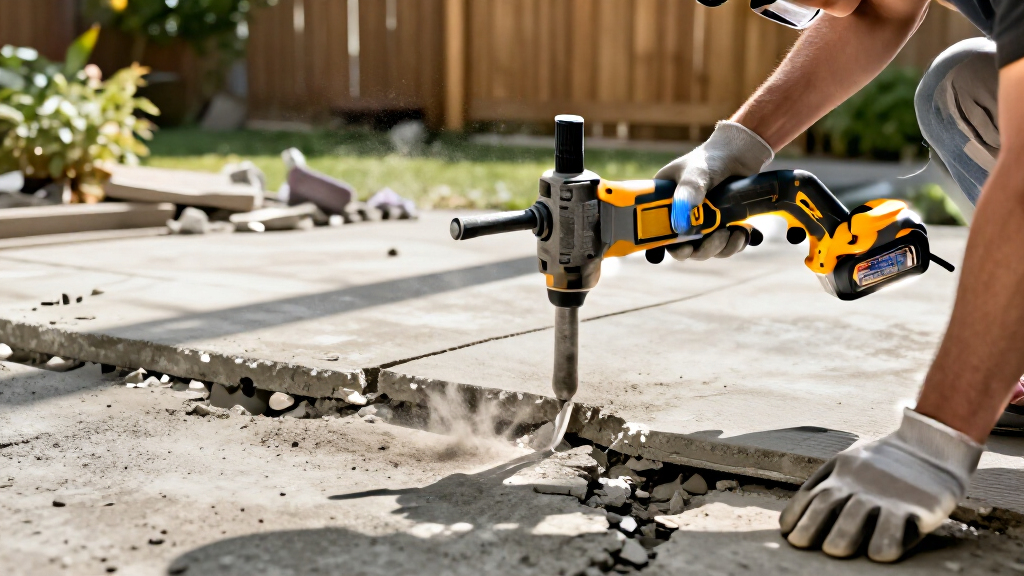

The best cordless demolition hammers in this lineup are SDS-Plus rotary hammers suited to lighter demolition and concrete drilling, not heavy-duty breaker hammers. I rank the DEWALT DCH273B as the best overall for buyers who value a brushless motor and a recognized battery platform, while the Seesii 3.2 J kit stands out for its higher listed impact energy and included batteries. The DEWALT DCH133B is another strong option if you want a simpler bare-tool setup. The main tradeoffs are impact energy, battery runtime, tool weight, and whether you already own compatible batteries. Read on for the full breakdown and advice on matching a hammer to your work.

Get business pricing on tools and workshop supplies
- Business-only prices and quantity discounts
- Tax-exempt purchasing
- Multiple users, one account, clear invoices
Complete the kit


Key Takeaways
- The DEWALT DCH273B leads on platform confidence: its brushless 20V MAX design makes it the most balanced pick for buyers already invested in DEWALT batteries.
- The Seesii 3.2 J kit emphasizes included capacity: two 5.0 Ah batteries make it a practical choice for buyers who need a ready-to-work package, though kit contents alone do not establish durability.
- Impact-energy figures separate the Seesii models: the listed 3.2 J model has more stated energy than the 2.5 J and 2.8 J options, but real suitability also depends on bit choice, work material, and sustained runtime.
- The DCH133B and DCH273B serve different priorities: both are DEWALT SDS-Plus bare tools, so choose between them by checking their exact controls, handling, and feature needs rather than assuming the newer-sounding model is automatically better.
- Battery compatibility is a major dividing line: the MtiolHig is described as compatible with DEWALT 20V batteries, while several alternatives include their own batteries or require platform-specific packs.


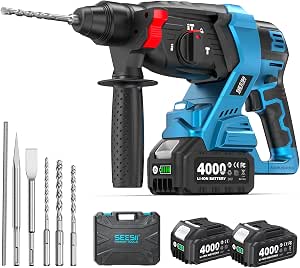


| cordless demolition hammer | Impact energy | Chuck | Motor | Modes |
|---|---|---|---|---|
| MtiolHig 1" SDS-Plus Cordless | 3 J | SDS-Plus, 1-inch maximum chuck size | Brushless | Drill, hammer drill, chisel, chisel adjustment |
| DEWALT 20V MAX Brushless 1-Inc | 2.1 J | SDS rotary hammer; maximum chuck size 20 mm | Brushless | Drill, hammer drill, chip |
| Seesii 1-Inch Cordless SDS-Plu | 2.5 J | SDS-Plus | — | Drill, hammer drill, chisel, chisel angle adjustment |
| Seesii Cordless SDS-Plus Rotar | 2.8 J | SDS-Plus | Brushless | Drill, hammer drill, chisel, chisel positioning |
| DEWALT 20V MAX Brushless SDS P | 2.6 J | — | Brushless | Drill, hammer drill, chip |
| Lovlaugh Cordless SDS Rotary H | — | SDS | Brushless | — |
| Seesii 1-Inch Cordless SDS-Plu | 3.2 J | SDS-Plus | — | — |
More Details on Our Top Picks
MtiolHig 1″ SDS-Plus Cordless Rotary Hammer Drill, 4-Mode, 7-Speed, Compatible with Dewalt 20V Batteries
The MtiolHig makes the most sense for someone who already owns DEWALT 20V batteries and wants a cordless tool for drilling and light chiseling without buying into another battery platform. Its stated 3 joules of impact energy exceeds the DEWALT DCH273B’s 2.1 joules, while four modes and a seven-position speed dial offer more adjustment than that model’s three modes. That flexibility helps when the job shifts between drilling holes and positioning a chisel. The tradeoff is that this is a bare tool, and its plastic housing offers less reassurance for demanding jobsite use than established DEWALT options. I’d choose it for occasional concrete and masonry work with batteries already on hand, but the DEWALT DCH133B is the safer brand-backed alternative for buyers who value a lighter, simpler tool.
Pros:- Compatible with DEWALT 20V batteries, so existing packs can be used
- Four modes cover drilling, hammer drilling, chiseling, and chisel positioning
- Seven-speed dial allows more adjustment than the three-speed DEWALT DCH273B
- Includes five SDS-Plus bits, a depth rod, side handle, and storage case
Cons:- Battery and charger are not included
- Plastic housing may be less suited to rough daily jobsite handling
- Product data does not specify weight, making handling comparisons harder
Best for: DEWALT 20V battery owners who need a versatile rotary hammer for intermittent concrete drilling and chiseling.
Not ideal for: Buyers without compatible batteries, or contractors seeking a metal-bodied tool with a clearly established jobsite track record.
- Battery platform:DEWALT 20V compatible
- Motor:Brushless
- Impact energy:3 J
- No-load speed:1,100 RPM
- Impact rate:4,800 BPM
- Chuck:SDS-Plus, 1-inch maximum chuck size
- Modes:Drill, hammer drill, chisel, chisel adjustment
- Included accessories:Five SDS-Plus bits, depth rod, 360° handle, storage case
Our verdict“Choose the MtiolHig if you own DEWALT 20V batteries and want four-mode versatility, but skip it if you need a battery-included kit or a more established professional tool.”
DEWALT 20V MAX Brushless 1-Inch SDS Rotary Hammer (DCH273B), Bare Tool
The DEWALT DCH273B is the pick here for buyers who put reduced handle vibration and a lighter feel ahead of maximum impact energy. At 6.4 pounds with an active vibration control system, it is better suited than the higher-impact MtiolHig for repeated overhead drilling or mounting work where hand fatigue can build. Its 2.1-joule rating is lower than the DCH133B’s 2.6 joules and several four-mode options in this roundup, so I would not rank it for the hardest chipping tasks. The three modes cover the core jobs—drill, hammer drill, and chip—but there is no chisel-positioning mode. It also arrives as a bare tool; dust-extractor compliance requires a separately paired accessory. For DEWALT users focused on controlled drilling, that is a sensible trade; demolition-first buyers should look at a stronger option.
Pros:- Active vibration control is intended to reduce vibration at the handles
- 6.4-pound listed weight suits overhead and mounting tasks
- Brushless motor and DEWALT 20V battery compatibility
- Three useful modes cover drilling, hammer drilling, and chipping
Cons:- At 2.1 J, it has less stated impact energy than the DCH133B and several other picks
- Battery and charger are not included
- OSHA Table 1 compliance requires a separately paired DWH303DH extractor
Best for: DEWALT 20V users doing frequent overhead drilling, mounting, or lighter chipping who want vibration control and manageable weight.
Not ideal for: Buyers prioritizing high impact energy, four-mode versatility, or a complete kit with battery and dust extractor.
- Battery platform:DEWALT 20V MAX
- Motor:Brushless
- Impact energy:2.1 J
- Weight:6.4 lb
- Maximum rotational speed:1,100 RPM
- Chuck:SDS rotary hammer; maximum chuck size 20 mm
- Modes:Drill, hammer drill, chip
- Dimensions:13 × 4.2 × 8.6 in
- Warranty:3-year limited warranty
Our verdict“Pick the DCH273B for lighter, repetitive work where vibration control matters more than maximum chipping force.”
Seesii 1-Inch Cordless SDS-Plus Rotary Hammer Drill, 2.5 J, Brushless, 4-Mode
Unlike the DEWALT DCH133B, which arrives as a bare tool, this Seesii includes two 4.0 Ah batteries, a charger, bits, and chisels. That makes it the more practical choice for someone starting without a compatible battery platform or wanting a spare pack for work away from an outlet. Its 2.5 J impact energy sits between the DEWALT DCH273B’s 2.1 J and the MtiolHig’s stated 3 J, while four modes add chisel positioning missing from both DEWALT models. A safety clutch, LED light, and forward/reverse controls round out a useful feature set. The tradeoff is that battery runtime is not specified, and the listing’s mention of Makita battery compatibility lacks detail. I’d favor this bundled kit for mixed home and site tasks, not for buyers who need clearly documented battery-platform support.
Pros:- Includes two 4.0 Ah batteries and a charger
- Four modes include chisel angle adjustment
- Safety clutch helps limit sudden torque reaction
- Kit includes drill bits, pointed and flat chisels, depth gauge, and case
Cons:- Battery runtime is not specified
- Claimed Makita 18 V battery compatibility is not explained in detail
- At 2.5 J, it has less stated impact energy than the MtiolHig and Seesii 2.8 J model
Best for: First-time cordless rotary hammer buyers who want batteries, charger, and chiseling accessories included for varied repair or renovation work.
Not ideal for: Buyers who require verified compatibility with an existing battery system or documented runtime for long shifts.
- Impact energy:2.5 J
- Motor power:900 W
- Impact rate:4,800 BPM
- Chuck:SDS-Plus
- Maximum concrete capacity:1 in (26 mm)
- Modes:Drill, hammer drill, chisel, chisel angle adjustment
- Batteries included:Two 4.0 Ah batteries
- Included accessories:Charger, three SDS-Plus bits, pointed and flat chisels, depth gauge, case
- Additional features:Safety clutch, LED work light, forward/reverse
Our verdict“Choose this Seesii when you want a complete four-mode kit from the outset, but not when battery-platform certainty is your main priority.”
Seesii Cordless SDS-Plus Rotary Hammer Drill, 2.8J Brushless Motor
This Seesii is a step up from the 2.5 J Seesii kit for buyers who want more stated impact energy without giving up included batteries and accessories. Its 2.8 J rating and impact rate of up to 5,000 BPM make it the stronger Seesii option on paper for drilling and light-to-moderate chiseling; the DEWALT DCH273B, by comparison, lists 2.1 J and offers vibration control rather than a battery bundle. Two 4.0 Ah packs, a charger, bits, chisels, and a case mean fewer separate items to source. The four modes also include chisel positioning. The main compromise is platform clarity: the listing calls the batteries compatible with “Ma-kita,” without clarifying the system. I’d choose it over the 2.5 J Seesii for the higher output, but not if documented battery compatibility matters more than the bundled setup.
Pros:- 2.8 J impact energy is higher than the 2.5 J Seesii kit
- Two 4.0 Ah batteries and charger are included
- Four modes support drilling, hammer drilling, chiseling, and chisel positioning
- Accessory set includes bits, chisels, depth gauge, and storage case
Cons:- “Ma-kita” battery compatibility is not clearly explained
- Tool weight is not provided in the listed specifications
- No vibration-control feature is specified
Best for: Renovators who want a battery-included SDS-Plus hammer with higher stated impact energy for concrete drilling and occasional chiseling.
Not ideal for: Buyers who need a clearly identified battery platform, a documented tool weight, or established vibration-control details.
- Voltage:18 V
- Motor:Brushless
- Impact energy:2.8 J
- Maximum rotational speed:1,150 RPM
- Impact rate:Up to 5,000 BPM
- Chuck:SDS-Plus
- Modes:Drill, hammer drill, chisel, chisel positioning
- Batteries included:Two 4.0 Ah batteries
- Maximum drilling capacity:Concrete 1 in; wood 1-3/16 in; metal 1/2 in
Our verdict“Choose this model over the 2.5 J Seesii when its higher stated impact energy matters, provided the battery system works for your setup.”
DEWALT 20V MAX Brushless SDS Plus 1-Inch Cordless Rotary Hammer, Bare Tool (DCH133B)
The DCH133B is the lighter DEWALT choice for buyers who want a straightforward cordless hammer for drilling and occasional chipping. At a listed 5 pounds, it is lighter than the DCH273B’s 6.4 pounds, making it the more appealing option when tool weight matters more than the latter model’s active vibration control. Its 2.6 J impact energy also exceeds the DCH273B’s 2.1 J, though the Seesii 2.8 J and MtiolHig 3 J offerings state higher figures and include four modes. The DCH133B keeps things simple with drill, hammer drill, and chip settings, plus a side handle and depth rod. The catch is the bare-tool format: batteries and charger are extra, and there is no chisel-positioning mode. I’d pick it for an existing DEWALT 20V owner who values low weight and a familiar platform.
Pros:- Listed 5-pound weight is lower than the DCH273B’s 6.4 pounds
- 2.6 J impact energy exceeds the DCH273B’s 2.1 J
- Brushless motor and DEWALT 20V battery platform
- Includes a 360° side handle and depth rod
Cons:- Battery and charger are not included
- Three modes omit chisel positioning offered by the four-mode alternatives
- Listed maximum rotational speed and battery-capacity data may not describe the complete tool configuration
Best for: DEWALT 20V battery owners who want a lightweight rotary hammer for drilling, mounting, and occasional concrete chipping.
Not ideal for: Buyers who need a complete battery kit, four operating modes, or the highest stated impact energy in this group.
- Battery platform:DEWALT 20V MAX
- Motor:Brushless
- Impact energy:2.6 J
- Weight:5 lb
- Maximum rotational speed:1,500 RPM
- Modes:Drill, hammer drill, chip
- Drilling capacity:Wood: 0.79 in; metal: 20 mm
- Included components:Rotary hammer, 360° side handle, depth rod
- Warranty:3-year limited warranty
Our verdict“Pick the DCH133B if you already own DEWALT 20V batteries and want a lighter, simple three-mode tool for drilling and occasional chipping.”
Lovlaugh Cordless SDS Rotary Hammer Drill, 20V, Brushless, with Two 4.0Ah Batteries
The Lovlaugh is a compact-workload pick for buyers who need one cordless tool for drilling and occasional chiseling, rather than a dedicated demolition hammer. Its three modes cover standard drilling, hammer drilling, and hammer-only work, while the two 4.0Ah batteries give you a spare for a jobsite rotation. A safety clutch and vibration-reducing handle add useful control during concrete work. Compared with the Seesii 1-Inch 3.2 J, though, Lovlaugh lists a smaller 5/8-inch concrete capacity and provides no impact-energy figure, so I would not choose it for repeated heavy chipping. The listing also describes 18V battery compatibility alongside a 20V rating, and its stated dimensions look implausibly small. Those gaps make it a less certain buy for demanding work.
Pros:- Two included 4.0Ah batteries support longer work between charging breaks
- Three modes cover drilling, hammer drilling, and hammer-only chiseling
- Brushless motor and safety clutch are useful features for controlled concrete work
- Vibration-reducing handle and SDS chuck support handling and bit changes
Cons:- Listed concrete capacity is limited to 5/8 inch, below the Seesii 3.2 J model’s 1-inch rating
- Battery compatibility is unclear because the listing pairs an 18V claim with a 20V tool
- Unusually small listed dimensions make the product information difficult to verify
Best for: DIYers and maintenance workers who need a cordless SDS tool for small concrete holes and occasional light chiseling, with two batteries included.
Not ideal for: Contractors tackling frequent concrete demolition or buyers who need verified battery-platform compatibility and clearly documented performance.
- Voltage:20V
- Motor:Brushless
- Operating modes:Rotary hammer, hammer-only, drill-only
- Chuck:SDS
- Concrete drilling capacity:5/8 in (16 mm)
- Included batteries:Two 4.0Ah lithium-ion batteries
- Battery compatibility:Listing states 18V compatibility
Our verdict“Choose the Lovlaugh for light, intermittent drilling and chiseling with batteries included, but pick a better-documented, higher-capacity model for sustained demolition.”
Seesii 1-Inch Cordless SDS-Plus Rotary Hammer Drill Kit, 3.2 J, with Two 5.0 Ah Batteries
Among these two, the Seesii is the stronger fit for buyers who expect more frequent concrete work: its listed 3.2 J impact energy and 1-inch concrete capacity give it a clearer case for drilling and chiseling than the Lovlaugh, which is rated for 5/8-inch holes and has no impact-energy figure. Four modes, including chisel positioning, make it easier to set up for different tasks, and the kit arrives with two 5.0Ah batteries, bits, chisels, a depth gauge, and a case. That package reduces the need to source basic accessories separately. Still, it remains an SDS-Plus rotary hammer, not a heavy demolition hammer for extended breakup work. The stated Ma-kita platform compatibility also warrants checking against your specific batteries before relying on a shared pack.
Pros:- Listed 3.2 J impact energy and 1-inch concrete capacity exceed the Lovlaugh’s stated drilling capacity
- Four modes include chisel positioning for more flexible setup
- Two 5.0Ah batteries, charger, drill bits, chisels, and case are included
- Safety clutch, adjustable side handle, LED light, and dust protection support jobsite handling
Cons:- SDS-Plus format and rotary-hammer design are not a substitute for a dedicated heavy demolition hammer
- Ma-kita platform compatibility should be confirmed with the specific battery before purchase
Best for: Home renovators and tradespeople who need a cordless SDS-Plus tool for concrete drilling and regular light-to-moderate chiseling, plus a ready-to-work accessory kit.
Not ideal for: Users doing prolonged, heavy concrete breakup or buyers who need guaranteed compatibility with an existing battery system without confirming the platform first.
- Voltage:18V
- Motor and maximum power:Brushless; 850 W
- Impact energy:3.2 J
- Operating modes:Drilling, hammer drilling, chiseling, chisel positioning
- Chuck:SDS-Plus
- Concrete drilling capacity:1 in (26 mm)
- Included batteries:Two 5.0Ah lithium-ion batteries
- Included accessories:Charger, three SDS-Plus drill bits, point chisel, flat chisel, depth gauge, carrying case, user manual
- Maximum impact rate:4450 BPM
Our verdict“Pick the Seesii if you want the more capable, better-equipped cordless option for concrete drilling and moderate chiseling, rather than sustained heavy demolition.”

How We Picked
I compared these seven options by their stated impact energy, motor type, operating modes, battery arrangement, and likely fit for concrete drilling or light chipping. I gave weight to whether a tool offers a coherent setup out of the box, whether its battery platform may suit an existing collection, and how clearly its listed features support a particular buyer. Because the lineup consists of SDS-Plus rotary hammers, I treated them as tools for smaller-scale concrete work rather than substitutes for large demolition breakers.
The ranking favors a useful balance of performance, platform practicality, and buyer clarity over the biggest number on a specification sheet. The DEWALT DCH273B ranks first for its brushless design and established 20V MAX platform; the Seesii 3.2 J kit ranks highly for its stated energy and included batteries. The other Seesii models, the DCH133B, MtiolHig, and Lovlaugh fill narrower roles based on their described features and package details. Where specifications do not establish durability, weight, vibration control, or service support, I treat those as open questions rather than proven advantages.
| cordless demolition hammer | Chuck | Modes |
|---|---|---|
| MtiolHig 1" SDS-Plus Cordless | SDS-Plus, 1-inch maximum chuck size | Drill, hammer drill, chisel, chisel adjustment |
| DEWALT 20V MAX Brushless 1-Inc | SDS rotary hammer; maximum chuck size 20 mm | Drill, hammer drill, chip |
| Seesii 1-Inch Cordless SDS-Plu | SDS-Plus | Drill, hammer drill, chisel, chisel angle adjustment |
| Seesii Cordless SDS-Plus Rotar | SDS-Plus | Drill, hammer drill, chisel, chisel positioning |
| DEWALT 20V MAX Brushless SDS P | — | Drill, hammer drill, chip |
| Lovlaugh Cordless SDS Rotary H | SDS | — |
| Seesii 1-Inch Cordless SDS-Plu | SDS-Plus | — |
Factors to Consider When Choosing Best Cordless Demolition Hammers
Choosing among cordless rotary hammers is less about chasing the highest impact-energy claim and more about matching the tool to the material, workload, and battery system you can support. These broader checks can prevent buying an underpowered drill for repeated chipping or an unnecessarily bulky kit for occasional anchor holes.
Match SDS-Plus to the Work, Not the Label
SDS-Plus tools suit concrete drilling and limited chipping, but they are not the same class as dedicated SDS-Max breakers or demolition hammers. Before choosing, estimate the hole sizes, drilling depth, and amount of tile, mortar, or masonry you expect to remove. A rotary hammer can handle occasional light chiseling, yet repeated slab or thick-wall breaking calls for a heavier tool designed for that workload. Buyers often overestimate what a cordless SDS-Plus unit can do because product names use the word “demolition.” Check the manual for permitted bit sizes and chipping use. If most of your work is drilling, prioritize control and manageable weight over maximum impact energy.
Read Impact Energy Alongside the Rest of the Tool
Impact energy offers a useful comparison point, but it does not tell the whole performance story. The listed Seesii options span 2.5 J, 2.8 J, and 3.2 J, yet those figures do not reveal how comfortably a tool handles extended work or how consistently it performs as the battery drains. Bit sharpness, concrete hardness, motor design, and operator pressure all affect progress. Avoid leaning hard on the hammer to compensate for a dull bit; that can increase fatigue without making the tool work efficiently. For occasional holes, a lower stated figure may be adequate and easier to control. For repeated drilling or light chipping, look for a complete specification set and clear guidance on the tool’s intended duty cycle.
Check the Battery System Before Comparing Kit Contents
A bare tool may be the sensible choice if you already own batteries and a compatible charger, while a kit can reduce setup friction for a new platform. Confirm the exact battery interface rather than relying on broad claims such as “20V compatible,” especially with third-party tools. The MtiolHig is listed as compatible with DEWALT 20V batteries, but buyers should verify fit, protection features, and charger requirements with the manufacturer. Included capacity also changes how practical a kit is across a workday: the Seesii package lists two 5.0 Ah batteries, while the Lovlaugh package lists two 4.0 Ah batteries. Battery capacity does not guarantee runtime, since load and battery condition matter. Compare the cost of adding compatible packs, chargers, and replacements before deciding that a bundled kit is the better value.
Treat Modes and Speed Settings as Control Tools
Extra modes and speed settings matter when they make the hammer easier to adapt, not simply because the count is high. A drill-only setting can help with tasks where hammer action is unwanted, while a chipping mode is useful for limited removal work; confirm the exact mode functions in the manual. The MtiolHig lists four modes and seven speed settings, while several Seesii models also specify four modes. More adjustment can help when moving between delicate tile work and concrete, but added controls do not automatically mean better ergonomics. Check whether mode selection is straightforward and whether the tool allows the bit angle to be adjusted for chiseling. If you mainly drill holes, a simpler layout may be easier to operate consistently.
Account for Weight, Vibration, and Work Position
Published impact figures and battery capacity do not tell you how tiring a hammer will be overhead or during a long drilling session. Tool weight with the battery attached can differ sharply from the bare-tool figure, so compare complete operating weights when available. Vibration control, handle shape, and balance can affect comfort and accuracy as much as raw power. A high-capacity battery may extend useful runtime but can also make the tool heavier at the wrist. If you expect overhead work or frequent ladder use, favor a setup you can control rather than the most powerful option on paper. When specifications omit vibration and loaded weight, seek the manual or manufacturer details before committing.
Choose a Tool You Can Maintain and Support
Concrete dust is hard on tools, and regular use makes service access and replacement parts more important. Check the manual for cleaning instructions, lubrication intervals, bit-care guidance, and any limits on continuous operation. A familiar battery platform can simplify pack replacement, but it does not by itself guarantee repair support for the tool. Before buying a less-established option, confirm warranty terms, service contacts, and availability of compatible batteries and chargers. Keep bits sharp and clear dust from drilled holes to reduce unnecessary strain on both tool and battery. For professional daily use, dependable support may matter more than a small difference in stated impact energy.
Frequently Asked Questions
Are these cordless rotary hammers suitable for breaking up a concrete slab?
They are SDS-Plus rotary hammers, so they are better suited to concrete drilling and limited chipping than broad slab demolition. Breaking a small section or removing a little mortar may fit their role, but sustained slab work can demand a heavier breaker with a larger bit system. Check each manual for chipping limits and compatible accessories before using one as a demolition tool. For a large area, renting or buying a dedicated breaker is usually a better match. The tool’s cordless convenience does not change its class or duty limits.
Should I choose the Seesii 3.2 J kit over a DEWALT bare tool?
Choose the Seesii kit if you need batteries included and its listed 3.2 J impact energy suits your expected work. The DEWALT DCH273B or DCH133B may make more sense if you already own compatible 20V MAX batteries and prefer to stay within that platform. The Seesii package lists two 5.0 Ah batteries, but kit contents do not prove tool longevity or service quality. Compare warranty terms, charger details, tool weight, and the exact work modes before deciding. The right choice depends on whether a complete package or an established battery ecosystem matters more to you.
Can I use DEWALT 20V batteries with the MtiolHig hammer?
The MtiolHig listing describes compatibility with DEWALT 20V batteries, but verify the exact battery models and operating requirements with the seller or manual. Third-party compatibility claims may not cover every pack, charger, or safety feature. Do not assume a battery that physically attaches is approved for every operating condition. Check warranty language as well, since using a third-party tool or pack can affect support terms. If you want the fewest platform uncertainties, a tool made for the battery system you already own is the safer path.
Is a higher impact-energy rating always better for home projects?
No. Higher listed impact energy can help with demanding concrete work, but it may be unnecessary for occasional anchor holes or small repairs. Control, weight, battery runtime, and access to suitable bits can matter more for home use. A more forceful tool can also be tiring or less convenient in confined spaces. Match the rating to your material and workload, and check the manufacturer’s guidance for supported bit sizes. Avoid using extra force or pressure as a substitute for the right bit and technique.
What should I check before buying a bare-tool rotary hammer?
Confirm that you own a compatible battery and charger, then check whether the tool’s battery platform supports the capacity and voltage required by its manual. Look at the complete working weight with a battery attached, not only the bare-tool figure. Verify included accessories, such as a side handle, depth stop, or case, since bare-tool packages can vary. Also review warranty coverage and replacement-part access before relying on the tool for regular work. A bare tool is convenient for an existing platform, but it can become a poor fit if batteries and charging gear must be purchased separately.
Conclusion
For most buyers in this lineup, I recommend the DEWALT DCH273B as the best overall, especially if you already use the 20V MAX platform and want a brushless SDS-Plus tool. The Seesii 3.2 J kit is the best choice for buyers who want batteries included and value its higher listed impact energy; compare its support and handling details before choosing it for frequent work. The DCH133B is a straightforward pick for DEWALT owners seeking a bare tool, while the MtiolHig may suit buyers prioritizing multiple listed modes and speed settings, provided its battery compatibility is verified. For beginners, I would favor a familiar battery platform and manageable handling over the highest specification claim. If your specific need is a ready-to-work package, look at the Seesii kit; if you expect heavy, sustained concrete breaking, choose a dedicated breaker rather than any SDS-Plus option here.