

Among these cordless random orbital sanders, the DEWALT 20V MAX Brushless DCW210B is my best overall pick for its brushless motor and broad fit for common sanding jobs. The Makita XOB01Z stands out for buyers already invested in Makita 18V LXT, while the SKIL PWR CORE 20V kit offers a battery and charger for shoppers starting without compatible gear. The main tradeoffs are whether to prioritize a familiar battery platform, a ready-to-use kit, or extra versatility and included accessories. Dust collection, speed adjustment, and the cost of adding batteries also shape the choice. Read on for the full breakdown and advice on matching a sander to your work.

Get business pricing on tools and workshop supplies
- Business-only prices and quantity discounts
- Tax-exempt purchasing
- Multiple users, one account, clear invoices
Complete the kit


Key Takeaways
- The DEWALT DCW210B is the strongest all-round fit for buyers who want a brushless 5-inch sander and already have, or plan to buy into, the 20V MAX platform; its tool-only format is less convenient for newcomers.
- Battery platform matters as much as the sander. Makita XOB01Z, Milwaukee 2648-20, RYOBI, and CRAFTSMAN make the most sense when their batteries are already in your workshop.
- The SKIL PWR CORE 20V kit removes the battery-and-charger hurdle, while several tool-only models require buyers to budget for compatible power separately.
- Accessory bundles and multi-sander designs trade simplicity for flexibility. The 6-in-1 model and options with sandpaper can suit varied tasks, but buyers should check pad format, replacement supplies, and battery compatibility before choosing.
- Brand-name brushless models and battery-compatible alternatives serve different priorities. Compare platform support, warranty and parts access, and dust-management setup rather than judging by speed claims or included sandpaper alone.


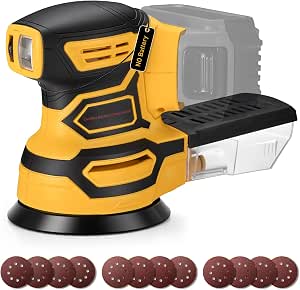
| cordless random orbital sander | Voltage | Weight | Dimensions | Model |
|---|---|---|---|---|
| RYOBI 18V Cordless 5-Inch Rand | 18 volts | 2.7 pounds | 4 x 4 x 6 inches | PCL406B |
| DEWALT 20V MAX Brushless 5-Inc | 20 volts | 2.5 pounds | — | DCW210B |
| Makita XOB01Z 18V LXT Lithium- | 18 volts | — | — | XOB01Z |
| DEWALT 20V MAX XR 5-inch Rando | 20 volts | 3.8 pounds | 9.53 x 7.99 x 5.91 inches | DCW211B |
| SKIL PWR CORE 20V Brushless Ra | 20 volts | — | 4.9 x 6.3 x 5.5 inches | — |
| CRAFTSMAN V20 Orbital Sander | 20 volts | 2.6 pounds | 7.7 x 5.8 x 5.8 inches | CMCW220B |
| 6-in-1 Cordless Multi-Sander w | 21 volts | — | — | — |
| Cordless Random Orbital Sander | 20 volts | 2 pounds | — | — |
| Milwaukee M18 Random Orbit San | — | 2 pounds | 11 x 6 x 7 inches | 2648-20 |
| DEWALT 20V MAX Orbital Sander | 20 volts | 1.95 kg | — | DCW210D1 |
| Brushless Cordless Random Orbi | — | 2.2 lb | 9 x 5 x 4.5 in | — |
| Avid Power 20V Cordless Random | 20 V | 3.3 lb | 5.91 x 5 x 5.91 in | — |
| Cordless Random Orbital Sander | 20 V | 2.7 lb | 6 x 5 x 9 in | — |
More Details on Our Top Picks
RYOBI 18V Cordless 5-Inch Random Orbit Sander (Tool Only)
The RYOBI PCL406B makes the most sense for buyers already invested in the brand’s 18V battery system: using a battery they own keeps the tool portable without adding another charger to the setup. Its 5-inch pad suits common wood, drywall, and composite sanding jobs, while the stated 10,000 rpm ceiling offers a straightforward alternative to the DEWALT DCW210B’s broader 8,000–12,000 OPM speed range. That simpler specification may be enough for general-purpose work, but gives less stated control for adjusting to delicate surfaces. At 2.7 pounds, it is relatively light for moving around a project. The tradeoff is that this is a bare tool, and the supplied data does not describe variable speed or dust-collection compatibility. I’d pick it for existing RYOBI users, not for someone building a cordless sanding setup from scratch.
Pros:- Works with RYOBI’s 18V lithium-ion battery system
- 5-inch circular pad suits common sanding tasks
- 2.7-pound listed weight supports easier handling
- Cordless design is useful in tight spaces and away from outlets
Cons:- Battery and charger are sold separately
- No variable-speed range is provided in the supplied specs
- Dust-collection details are not specified
Best for: RYOBI 18V owners who need a portable 5-inch sander for occasional furniture, drywall, or composite-surface projects.
Not ideal for: Buyers without RYOBI batteries, or anyone who needs documented variable-speed adjustment and specified dust-extractor compatibility.
- Model:PCL406B
- Voltage:18 volts
- Battery type:Lithium-ion
- Disc diameter:5 inches
- Maximum rotational speed:10,000 rpm
- Weight:2.7 pounds
- Dimensions:4 x 4 x 6 inches
- Battery and charger:Sold separately
Our verdict“Choose the RYOBI if you already own its 18V batteries and want a light, straightforward 5-inch cordless sander.”
DEWALT 20V MAX Brushless 5-Inch Random Orbital Sander (DCW210B), Tool Only
The DEWALT DCW210B is my strongest all-around bare-tool pick because it combines a brushless motor, adjustable 8,000–12,000 OPM speed, and a low-profile grip in one well-specified package. That speed range gives the user more room to slow down for controlled finishing or raise the pace for faster stock removal than the RYOBI PCL406B, whose listed speed is a single 10,000 rpm figure. Its 8-hole hook-and-loop pad makes abrasive changes simple, and the included locking dust bag offers a self-contained collection option; compatible DEWALT extractors can serve users who want a hose connection. At 2.5 pounds, it is also the lightest listed option here with a stated weight. The limits are familiar but meaningful: battery and charger are extra, and an extractor setup requires separately purchased equipment.
Pros:- Brushless motor is designed for efficient battery use
- Variable 8,000–12,000 OPM range supports different sanding tasks
- Low-profile design and 2.5-pound listed weight aid control
- Includes a locking dust bag and supports compatible DEWALT extractors
Cons:- Battery and charger are sold separately
- Dust collectors and the universal quick connector are not included
- Requires compatible 8-hole abrasives for the pad
Best for: DEWALT 20V MAX users who want adjustable speed, a light bare tool, and the option to connect a dust extractor.
Not ideal for: First-time cordless-tool buyers who need a battery and charger included, or users seeking a complete extractor setup in the box.
- Model:DCW210B
- Voltage:20 volts
- Motor:Brushless
- Speed range:8,000–12,000 OPM
- Pad size:5 inches
- Sanding pad:8-hole, hook-and-loop
- Weight:2.5 pounds
- Included components:Sander and dust bag
- Battery and charger:Sold separately
Our verdict“Choose this DEWALT for the most versatile bare-tool balance of speed control, low weight, and dust-collection options.”
Makita XOB01Z 18V LXT Lithium-Ion Cordless 5″ Random Orbit Sander, Tool Only
The Makita XOB01Z suits buyers who want a few clear speed choices rather than a continuously adjustable dial. Its three speed settings give more task-specific control than the RYOBI PCL406B’s single listed 10,000 rpm figure, while the 5-inch hook-and-loop abrasive setup keeps disc changes quick. Makita also states up to 40 minutes of runtime per charge, a useful planning figure for smaller jobs, though not a promise of all-day sanding. The large orbit action is intended to combine material removal with a swirl-free finish. Compared with the DEWALT DCW210B, the Makita offers fewer speed steps and does not provide the same detailed dust-bag and extractor information in the supplied data. It is a better match for existing 18V LXT users who value simple speed selection than for buyers needing a fully specified dust-management setup.
Pros:- Three speed settings offer more control than a single stated speed
- 5-inch hook-and-loop abrasive system supports quick disc changes
- Cordless format suits work away from outlets
- Stated runtime is up to 40 minutes per charge
Cons:- Battery is sold separately
- Up to 40 minutes of runtime may limit larger projects
- Supplied specs do not detail dust-bag or extractor compatibility
Best for: Makita 18V LXT owners who prefer three selectable speeds and need a cordless sander for shorter woodworking or refinishing sessions.
Not ideal for: Users who need long uninterrupted sanding sessions, continuous speed adjustment, or clearly documented dust-collection options.
- Model:XOB01Z
- Voltage:18 volts
- Power source:Battery powered
- Disc diameter:5 inches
- Maximum rotational speed:11,000 rpm
- Speed settings:Three
- Runtime:Up to 40 minutes per charge
- Abrasive attachment:Hook-and-loop
Our verdict“Pick the Makita if you own LXT batteries and want simple three-setting control for manageable sanding sessions.”
DEWALT 20V MAX XR 5-inch Random Orbital Sander (DCW211B)
The DEWALT DCW211B is aimed at users who put a premium on comfortable control over longer sanding sessions. Its low-vibration design is the key differentiator in the supplied description, paired with variable speed and dust-collection compatibility for woodworking and detailed work. The stated 12,000 rpm maximum matches the DCW210B’s ceiling, but the DCW210B has a clearly specified 8,000–12,000 OPM range, lighter 2.5-pound weight, and included dust bag. The DCW211B instead lists a 3.8-pound weight and describes compatibility with DEWALT dust extractors, so I’d favor it when vibration control and extractor use matter more than minimizing tool weight. The battery and charger are sold separately, and dust extraction depends on compatible equipment. The supplied information does not identify a motor type or exact speed range.
Pros:- Low-vibration design is intended to reduce fatigue
- Variable speed supports different sanding tasks
- Compatible with DEWALT dust extractors
- 5-inch pad fits common orbital-sanding abrasives
Cons:- Battery and charger are sold separately
- Dust-extractor use requires compatible equipment
- At 3.8 pounds, it is heavier than the listed DCW210B
Best for: Woodworkers and detail-sanding users who value reduced vibration and plan to pair the tool with a compatible DEWALT dust extractor.
Not ideal for: Buyers prioritizing the lightest sander, a complete dust-collection kit, or precise published speed-range and motor details.
- Model:DCW211B
- Voltage:20 volts
- Disc diameter:5 inches
- Maximum rotational speed:12,000 rpm
- Weight:3.8 pounds
- Dimensions:9.53 x 7.99 x 5.91 inches
- Speed control:Variable speed
- Dust collection:Compatible with DEWALT dust extractors
Our verdict“Choose the DCW211B when reduced vibration and extractor compatibility matter more to you than low weight or a complete kit.”
SKIL PWR CORE 20V Brushless Random Orbital Sander Kit Including 2.0Ah Battery and Charger
The SKIL PWR CORE 20V kit is the easiest choice here for someone starting without compatible batteries: it includes a 2.0Ah battery, charger, dust bag, and three sandpapers. That makes it more ready to use than the bare-tool RYOBI PCL406B, DEWALT DCW210B, Makita XOB01Z, or DEWALT DCW211B. Its digital brushless motor and variable speed dial add useful control, while the soft overmold grip and reduced-vibration design are aimed at making furniture refinishing and other hand-held work more comfortable. The stated maximum of 11,000 OPM is below the DEWALT models’ 12,000 maximum, so buyers focused on the highest listed speed may prefer those tools. The supplied specs also give a 22,000 rpm maximum, which differs from the 11,000 OPM description; I would not treat those figures as directly comparable.
Pros:- Kit includes a 2.0Ah battery and charger
- Includes dust bag and three sandpapers
- Digital brushless motor with variable speed dial
- Soft overmold grip and reduced-vibration design support comfortable handling
Cons:- Included 2.0Ah battery may constrain runtime on larger projects
- Supplied speed figures list both 11,000 OPM and 22,000 rpm, making comparisons unclear
- Additional abrasive grits may be needed for tasks beyond the included papers
Best for: New cordless-tool buyers and occasional furniture refinishers who want a sander, battery, charger, dust bag, and starter abrasives together.
Not ideal for: Owners committed to another battery platform, or users planning large jobs that may outlast the included 2.0Ah battery.
- Voltage:20 volts
- Motor:Digital brushless
- Maximum speed:Up to 11,000 OPM
- Listed maximum rotational speed:22,000 rpm
- Speed control:Variable speed dial
- Included battery:2.0Ah
- Included accessories:Charger, dust bag, and three sandpapers
- Dimensions:4.9 x 6.3 x 5.5 inches
Our verdict“Choose the SKIL kit if you want the most complete out-of-box setup and do not need a larger-capacity battery for extended sanding.”
CRAFTSMAN V20 Orbital Sander, Cordless, 12,000 OPM, Bare Tool Only
The CRAFTSMAN V20 suits buyers who already own V20 batteries and want a straightforward 5-inch sander without extra weight. At 2.6 pounds, its compact profile is geared toward controlled surface finishing, while the dust bag and vacuum-hose compatibility offer more cleanup flexibility than a bag-only setup. Its speed reaches 12,000 OPM, matching the maximum listed for the Milwaukee M18 and DEWALT DCW210D1.
The tradeoff is that this CRAFTSMAN is a bare tool: unlike the DEWALT DCW210D1, it does not include a battery or charger. The listed specs also do not mention variable speed, so buyers seeking finer speed adjustment may prefer the DEWALT or Milwaukee. I would choose this for light-to-medium finishing within an existing V20 collection, not as a complete starter kit.
Pros:- Lightweight 2.6-pound body and low-profile dimensions support controlled handling.
- 5-inch pad and maximum 12,000 OPM suit common finishing jobs.
- Dust bag is included, and the sander can connect to vacuum hoses.
- Dust-proof switch is designed to resist workshop debris.
Cons:- Battery and charger are sold separately, adding setup requirements.
- Variable-speed control is not specified, unlike the Milwaukee M18 and DEWALT DCW210D1.
- The listed package includes only 60-, 80-, and 120-grit papers, limiting the supplied grit range.
Best for: V20 tool owners who want a lightweight 5-inch sander for furniture, trim, and general surface finishing.
Not ideal for: First-time cordless-tool buyers who need a battery and charger included, or users who want documented variable-speed adjustment.
- Model:CMCW220B
- Voltage:20 volts
- Maximum speed:12,000 OPM
- Pad size:5 inches
- Weight:2.6 pounds
- Dimensions:7.7 x 5.8 x 5.8 inches
- Included:Dust bag and 60-, 80-, and 120-grit papers
- Power source:Battery powered; battery and charger not included
Our verdict“Choose the CRAFTSMAN V20 if you already own its batteries and value a light, simple finisher over a kit with more speed-control detail.”
6-in-1 Cordless Multi-Sander with 5” Random Orbit, 2 Batteries, 6 Speed Settings
This 6-in-1 cordless multi-sander is the lineup’s choice for buyers who want more than a conventional round-pad random orbital sander. Its multiple sanding modes and plates can suit varied DIY tasks, while six speed settings give the user a way to adapt control to the surface. Two included 4000mAh batteries also make it more ready to work out of the box than the tool-only CRAFTSMAN V20 or Milwaukee M18.
That versatility comes with a tradeoff: buyers focused on ordinary 5-inch sanding may prefer a simpler dedicated tool such as the DEWALT DCW210D1, whose package details and low-profile design are clearer. The supplied description also warns that runtime can fall short on large projects, and the tool may feel heavy during long sessions. I’d pick it for varied home projects, not sustained production sanding.
Pros:- Six sanding modes and multiple plates add flexibility beyond a standard round-pad sander.
- Six speed settings allow adjustment for different materials and tasks.
- Includes two 4000mAh lithium-ion batteries.
- Dust collection bags are included.
Cons:- Battery life may be limited for large projects despite the two included batteries.
- The tool may feel heavy during extended use.
- Additional sandpaper may be needed to get the desired grit selection.
Best for: DIYers refinishing furniture and tackling projects that benefit from several sanding shapes and included batteries.
Not ideal for: Woodworkers who mainly need a dedicated 5-inch random orbital sander for long, uninterrupted sanding sessions.
- Voltage:21 volts
- Maximum speed:12,000 OPM
- Speed settings:6
- Battery:Two 4000mAh lithium-ion batteries
- Sanding modes:6
- Included accessories:Multiple sanding plates and dust collection bags
- Power source:Battery powered
- Listed grit:80
Our verdict“Pick this multi-sander for varied DIY work where its extra modes and included batteries matter more than a simple dedicated 5-inch setup.”
Cordless Random Orbital Sander Compatible with DeWalt 20V MAX Battery – 5″ Brushless Palm Sander, 12,000 OPM, 6 Variable Speeds, Dust Collection, 10 Sandpapers
For someone with compatible batteries already on hand, this brushless 5-inch sander offers a focused feature set: six speeds, up to 12,000 OPM, and a stated weight of just 2 pounds. That makes it a lighter alternative to the CRAFTSMAN V20 and a more adjustable option than its listed specs suggest for the CRAFTSMAN. It also comes with 10 sandpapers, so buyers can start work without sourcing every consumable separately.
Its main limitation is the same one that shapes many tool-only picks: no battery or charger is included, and operation depends on compatible DEWALT 20V MAX batteries. The product description says the dust bag may be less effective during heavy-duty work. Compared with the DEWALT DCW210D1 kit, this option saves buyers from acquiring another battery only if they already own the platform; it offers less certainty for a first-time setup.
Pros:- Brushless motor and six variable speeds provide adjustable operation.
- Listed 2-pound weight supports one-handed handling.
- Compatible with DEWALT 20V MAX batteries.
- Includes 10 sandpapers and a dust collection system.
Cons:- Battery and charger are not included.
- Requires a compatible DEWALT battery to operate.
- Dust collection bag may be less effective during heavy-duty sanding.
Best for: DIYers who already own compatible DEWALT 20V MAX batteries and want a lightweight, speed-adjustable sander.
Not ideal for: Buyers without compatible DEWALT batteries, or those who expect bag-based dust collection to handle heavy-duty sanding.
- Voltage:20 volts
- Battery compatibility:DEWALT 20V MAX
- Pad diameter:5 inches
- Maximum speed:12,000 OPM
- Speed settings:6 variable speeds
- Motor:Brushless
- Weight:2 pounds
- Included:10 sandpapers and dust collection system
Our verdict“Choose this model if you already have a compatible DEWALT battery and want a light brushless sander with speed adjustment without buying another kit.”
Milwaukee M18 Random Orbit Sander 2648-20
The Milwaukee M18 2648-20 makes most sense for buyers already invested in Milwaukee’s battery platform who want a 5-inch cordless sander with a broad speed range. Its variable control spans 7,000 to 12,000 OPM, giving more room to tune sanding pace than the CRAFTSMAN V20’s listed specs provide. The product description also cites up to 35 minutes of runtime, useful context for planning portable jobs, though actual run time depends on the battery used.
At a listed 2 pounds, it is easy to handle, but the package is a tool only; unlike the DEWALT DCW210D1, it does not include a battery or charger. The description’s claim of corded power should not obscure that this remains battery-operated. Its listed grit is 100, so buyers who need a broader supplied abrasive selection will need to source papers separately.
Pros:- Variable speed from 7,000 to 12,000 OPM supports a range of sanding tasks.
- Listed 2-pound weight favors easy handling.
- Runs on Milwaukee REDLITHIUM lithium-ion batteries.
- 5-inch random-orbit format suits general surface sanding.
Cons:- Battery and charger are not included.
- The cited runtime is up to 35 minutes, which may not cover extended work without a spare battery.
- Listed grit information is limited to 100, so additional abrasives may be needed.
Best for: Milwaukee M18 owners who want variable-speed control for portable furniture, trim, and general sanding jobs.
Not ideal for: New cordless-tool buyers who need a complete kit or users planning long sessions without spare batteries.
- Model:2648-20
- Pad diameter:5 inches
- Speed range:7,000–12,000 OPM
- Battery type:REDLITHIUM lithium-ion
- Power source:Cordless
- Weight:2 pounds
- Dimensions:11 x 6 x 7 inches
- Cited runtime:Up to 35 minutes
Our verdict“The M18 is a sensible pick for Milwaukee battery owners who value a wide speed range, but it is not a ready-to-run kit.”
DEWALT 20V MAX Orbital Sander Cordless, 5-Inch, Brushless, Variable Speed, Battery & Charger Included
The DEWALT DCW210D1 earns the complete-kit role because it includes a 2.0Ah battery, charger, storage bag, and dust bag. Buyers can start with one package instead of piecing together the setup required by the Milwaukee M18 or CRAFTSMAN V20. Its brushless motor and variable dial, rated from 8,000 to 12,000 OPM in the description, make it a flexible choice for finishing and general sanding. A low-profile design helps when working close to a surface.
The included battery makes this a more practical first purchase, though the listed 2.0Ah capacity may not suit long sessions without a recharge or spare. Its dust collection is described as improvable, and the supplied grit information is limited to medium/220. At 1.95 kg, it is also heavier by the listed figure than the 2-pound Milwaukee and DEWALT-compatible alternatives.
Pros:- Includes a 2.0Ah battery and charger for a ready-to-use setup.
- Brushless motor and variable-speed dial support adaptable sanding.
- Low-profile body helps with close-to-surface work.
- Storage bag and dust bag are included.
Cons:- The included 2.0Ah battery may require recharging or a spare during extended work.
- Dust collection may not capture all sanding debris.
- Only medium/220 grit is specified in the supplied product data.
Best for: First-time cordless sander buyers who want a brushless 5-inch tool with battery, charger, and basic storage included.
Not ideal for: Owners who already have suitable DEWALT 20V batteries and would rather buy a tool-only sander, or users needing long runtime from one battery.
- Model:DCW210D1
- Voltage:20 volts
- Pad diameter:5 inches
- Speed range:8,000–12,000 OPM
- Motor:Brushless
- Battery included:2.0Ah
- Weight:1.95 kg
- Included components:Sander, charger, battery, storage bag, and dust bag
Our verdict“Choose the DCW210D1 if you want a complete DEWALT cordless sanding kit more than the lowest tool weight or a larger battery.”
Brushless Cordless Random Orbital Sander for Dewalt 20V/60V Batteries, Electric Palm Sander with Dust Collector, 6 Variable Speeds, 20 Pcs Sandpaper (Tool Only)
This model makes the most sense for woodworkers who already own DeWalt 20V Max or FlexVolt 60V Max batteries: the shared battery platform avoids adding another charger and battery system. Its brushless motor and six speed settings offer a useful mix of efficiency and control for furniture repair and general DIY sanding. Compared with the Avid Power 20V Cordless Random Orbital Sander, it weighs less on paper and supports a broader set of compatible DeWalt batteries, but it does not include a battery or charger. The included 20 sanding sheets and dust collector help get a project started, though the listed grit details are limited. I would choose it for platform compatibility, not as a complete kit; buyers without DeWalt batteries should favor a sander that arrives ready to run.
Pros:- Compatible with DeWalt 20V Max and FlexVolt 60V Max lithium-ion batteries
- Brushless motor is designed for efficient operation
- Six speed settings allow adjustment for different sanding tasks
- Includes 20 sanding sheets and a dust collection system
Cons:- Battery and charger are not included
- The stated maximum speed of 12,000 rpm does not clarify the range across its six settings
Best for: DIY woodworkers who already own DeWalt 20V Max or FlexVolt 60V Max batteries and want a lightweight, adjustable sander for furniture repairs.
Not ideal for: First-time cordless tool buyers or anyone without a compatible DeWalt battery, since the tool-only package requires a separate battery and charger.
- Power source:Battery powered
- Compatible batteries:DeWalt 20V Max and FlexVolt 60V Max lithium-ion
- Maximum rotational speed:12,000 rpm
- Speed settings:6 variable speeds
- Motor:Brushless
- Weight:2.2 lb
- Dimensions:9 x 5 x 4.5 in
- Included sanding sheets:20
- Warranty:2 years
Our verdict“Choose this lightweight DeWalt-platform option if you already own compatible batteries; otherwise, the Avid Power kit is more ready to use out of the box.”
Avid Power 20V Cordless Random Orbital Sander, 5″, 6 Variable Speeds
The Avid Power stands apart from the tool-only DeWalt-compatible picks because its box includes a 20V 2.0Ah battery and charger. That makes it a practical starting point for someone who does not already own cordless tools, while the six speeds—from 7,000 to 11,000 rpm—give beginners room to adjust their approach across different materials. The kit also supplies 30 sheets in three grits, so it is better prepared for varied small projects than the DeWalt-compatible model with 20 sheets. Its tradeoff is endurance: the included battery may need recharging during longer sessions, and at 3.3 pounds it is heavier than the 2.2-pound DeWalt-compatible option. I’d pick it for occasional home repairs and one-hand convenience, not for prolonged sanding where weight and battery runtime matter most.
Pros:- Includes a 20V 2.0Ah lithium-ion battery and charger
- Six speed settings cover a 7,000–11,000 rpm range
- Supplies 30 sheets across 60, 80, and 120 grit
- Rubber over-mold grip and removable dust bag support convenient one-hand use
Cons:- The 2.0Ah battery may require recharging during extended work
- At 3.3 pounds, it is heavier than the 2.2-pound DeWalt-compatible option
- Its maximum speed is lower than the 12,000 rpm listed for the DeWalt-compatible models
Best for: First-time cordless tool buyers and DIYers who want a ready-to-use sander with a battery, charger, dust bag, and several grits for home projects.
Not ideal for: Users planning long sanding sessions or large refinishing jobs, because the included 2.0Ah battery may limit runtime and the 3.3-pound weight can tire the hand.
- Voltage:20 V
- Battery:Lithium-ion, 2.0 Ah
- Maximum rotational speed:11,000 rpm
- Speed range:7,000–11,000 rpm across 6 settings
- Weight:3.3 lb
- Dimensions:5.91 x 5 x 5.91 in
- Included sanding sheets:30 sheets: 60, 80, and 120 grit
- Dust collection:Removable dust bag with 8 vacuum holes
Our verdict“Choose the Avid Power if you want a complete starter kit for intermittent DIY sanding and value included accessories over lighter weight or longer-session capacity.”
Cordless Random Orbital Sander for Dewalt 20V Battery, Yellow
For DeWalt 20V owners who want a brushless sander without much added tool weight, this model is a focused alternative to the heavier Avid Power 20V. It weighs 2.7 pounds, offers six adjustable speeds, and lists a maximum of 12,000 rpm, making it suited to varied small sanding jobs rather than a single fixed pace. The included 12 discs are fewer than the Avid Power’s 30 sheets, and the package omits a battery and charger, so it is less complete for a new cordless-tool buyer. Its compatibility is also narrower than the DeWalt 20V/60V model: it is specified for DeWalt 20V batteries only. The dust box may need frequent emptying, another limitation for dusty or extended work. I’d place it as a compact platform option, provided battery ownership is already settled.
Pros:- 2.7-pound listed weight is lower than the Avid Power’s 3.3 pounds
- Brushless motor and six adjustable speeds support controlled sanding
- Maximum speed is listed at 12,000 rpm
- Includes 12 sanding discs
Cons:- Battery and charger are sold separately
- Compatibility is limited to DeWalt 20V batteries, unlike the 20V/60V-compatible model
- The dust collection box may need frequent emptying
Best for: DeWalt 20V battery owners who want a relatively light brushless sander for occasional furniture touch-ups, small repairs, and varied surface work.
Not ideal for: Buyers who need a complete kit, use FlexVolt 60V batteries without a 20V pack, or expect to sand for long periods without emptying the dust box.
- Voltage:20 V
- Compatible battery platform:DeWalt 20V
- Power source:Battery powered
- Maximum rotational speed:12,000 rpm
- Speed settings:6 adjustable speeds
- Motor:Brushless
- Weight:2.7 lb
- Dimensions:6 x 5 x 9 in
- Included components:Random orbital sander, 12 sanding discs, user manual
Our verdict“Choose this if you already own a DeWalt 20V battery and want a lighter brushless option; pick the Avid Power instead if you need a battery, charger, and larger sheet assortment included.”

How We Picked
I compared these 13 cordless random orbital sanders around the factors that change the ownership experience: sanding format, motor design where specified, speed control, battery compatibility, dust collection, included batteries and chargers, and the likely availability of replacement consumables. I gave more weight to clear platform fit and practical setup than to headline speed figures, since battery investment and dust handling can affect everyday usefulness as much as raw output.
The ranking favors versatile, clearly specified models from established battery platforms, then distinguishes kit value, task flexibility, and convenience. Tool-only models rank well when their platform is a good match, but they are a weaker buy for someone starting from scratch. Multi-sander and battery-compatible alternatives can offer useful flexibility or accessories, yet unclear compatibility and support details make them harder to recommend as default choices.
Factors to Consider When Choosing Cordless Random Orbital Sanders
Choosing a cordless sander is not just a question of motor power. I’d start with the work you do most, then check whether the battery system, pad supplies, and dust setup make the tool practical to keep using.
Match the battery platform to your workshop
A bare tool can be a sensible way to expand a battery collection, but it can become a poor-value purchase if you need to buy a charger and batteries just for sanding. Add the cost of the battery system to your comparison rather than comparing tool bodies alone. Check the exact voltage and platform name: tools designed for one brand’s 18V or 20V system are not automatically interchangeable with another, even when the voltage labels look similar. Third-party tools that claim compatibility with a major platform deserve extra checking for fit, protection circuitry, and warranty support. If you own batteries in several systems, choose the platform with the batteries you can spare for longer sanding sessions.
Decide whether a kit or tool-only purchase suits you
A kit is more convenient for a first cordless tool because it supplies the basic power and charging pieces in one purchase. A tool-only sander may be the better choice when you already own compatible batteries and can avoid duplicate chargers. Check the battery capacity included in a kit, not just the fact that one is present; a smaller pack may keep the tool light but need more frequent changes. For extended furniture work or sanding multiple panels, having a second compatible battery can matter more than a long list of included accessories. Avoid choosing a kit solely because it includes sandpaper if the sheets are an uncommon shape or hard to replace.
Choose speed control for the materials you sand
Variable speed is useful when one sander has to work across different materials or finish stages. Lower speeds can help with delicate surfaces and reduce the risk of removing more material than intended, while higher settings can suit quicker stock removal when the abrasive and workpiece allow it. A fixed-speed tool may be straightforward for repeated general-purpose tasks, but it offers less room to adjust when the surface is heat-sensitive or the finish needs a light touch. Do not treat a higher maximum OPM claim as a guarantee of better results: abrasive choice, pressure, pad condition, and steady movement also affect the finish. Match the control range to your projects instead of buying on the highest number alone.
Plan dust collection around your actual workspace
Dust collection affects cleanup, visibility, and comfort, but a built-in bag is not a substitute for checking how the tool connects to your vacuum or extractor. If you sand indoors or work with materials that generate fine dust, confirm the port shape and whether an adapter is needed. A collection system also depends on using abrasives with holes that line up with the pad; mismatched sheets can reduce extraction. Bags can be convenient for small jobs, while a vacuum connection may suit longer sessions and shared shop cleanup. Wear appropriate respiratory protection even when a collector is attached, since no small sander captures every particle.
Check pad size and replacement abrasive supply
A 5-inch pad is a common choice for general sanding because it can cover broad surfaces while remaining manageable for smaller pieces. Before buying, check the hook-and-loop pad format, hole pattern, and whether replacement pads are available for that exact model. An unusual multi-sander format may handle more shapes, but it can narrow your choice of replacement abrasives or add setup steps. The included sheets are useful for getting started, not a reason to assume future supplies will be easy to source. Replacing a worn pad and using fresh abrasive at the right time can make more difference to sanding quality than pressing harder on the tool.
Pay extra for support and fit, not a feature list
A sander is a good candidate for a better-supported brand platform when it will see frequent use, when you rely on the same batteries for other tools, or when replacement parts matter to your shop. A lower-cost or bundled alternative can still fit occasional home projects, but compare its warranty terms, service route, and access to compatible pads before committing. Brushless motors can be appealing for efficiency and durability, yet that feature alone does not settle whether the whole tool suits your hand, work surface, or dust setup. Consider grip comfort, switch placement, and whether the tool’s balance makes it easy to keep flat. Spend for the ownership details you can verify, not a long feature list you may rarely use.
Frequently Asked Questions
Should I buy a tool-only sander or a kit with a battery and charger?
I’d choose tool-only when I already own compatible batteries and a charger, especially if those packs are shared across several tools. A kit is usually simpler for a first purchase because it avoids uncertainty about what else is needed to run the sander. Check the battery included in a kit and whether you may want a second pack for longer jobs. Compare the full setup you need, not just the tool body. That calculation can make a kit the better fit even when you initially planned to buy only the sander.
Can I use a DEWALT-battery-compatible sander with any DEWALT 20V MAX battery?
Do not assume compatibility from a product title alone. Check the maker’s stated battery models, physical fit, and any instructions about battery protection or adapters. A third-party tool may fit a battery but have less clear support or warranty coverage than a tool made for the platform. Confirm the battery and charger guidance before ordering, and avoid improvised connections. If dependable service and parts matter, a model from the battery platform’s established tool lineup is the safer route.
Is a brushless cordless sander worth choosing for occasional home projects?
Brushless construction can be a useful feature, particularly for frequent work or buyers who want to stay within a battery system. For occasional sanding, it may not matter as much as having a compatible battery, a suitable speed setting, and readily available abrasives. Compare the complete tool and support details rather than treating motor type as a standalone quality score. If the brushless option is tool-only and you need a battery system, include that added setup in your decision. For light use, a simpler model that fits your existing gear may be the more practical choice.
Will a cordless random orbital sander replace a corded sander for long sessions?
It can handle many sanding jobs, but session length depends on the battery capacity, workload, and how many charged packs you have available. For extended work, spare batteries and a charger can reduce interruptions, though they add weight and expense to the setup. A corded sander avoids battery changes when you have reliable access to an outlet. Consider where you work and whether moving around without a cord saves enough time to justify managing batteries. For a workshop with long, continuous sanding runs, corded power may remain more convenient.
What should I check before buying a multi-sander or one bundled with sandpaper?
Check the shape and attachment method of every pad, then confirm that replacement abrasives are sold in the formats you need. Included sheets can help with initial projects, but they do not prove that replenishment will be easy. For a multi-sander, ask whether changing configurations is straightforward and whether each shape suits work you actually do. Verify battery compatibility separately from the accessory bundle. If most of your work uses standard 5-inch discs, a conventional random orbital model may be easier to maintain over time.
Conclusion
For most buyers, I’d choose the DEWALT DCW210B as the best overall: it combines a brushless motor with a familiar 20V MAX platform, provided you already have or want compatible batteries. For value and an easier start, the SKIL PWR CORE 20V kit is the clearest choice here because it includes a battery and charger. For a premium battery-platform fit, consider the Makita XOB01Z if your workshop already runs on Makita 18V LXT; Milwaukee and DEWALT platform users should likewise prioritize a sander that works with batteries they own. Beginners should favor a ready-to-run kit over a bare tool, while buyers who need several sanding shapes can look at the 6-in-1 option after checking replacement supplies. If you want a specific brand ecosystem, choose the matching established model; if you want to spend less or try a battery-compatible alternative, verify support and compatibility before committing.