TL;DR

Get tools and workshop supplies delivered free — and shop member deals
- Fast, free delivery on millions of items
- Access to Prime Big Deal Days deals on October 6–7
- Prime Video, Amazon Music and more included
A Hunker report describes crushed granite as a driveway alternative that compacts more firmly than ordinary gravel and may last 20 years or more when properly installed and maintained. The report puts crushed granite at $25 to $50 per cubic yard, but says installation is more involved and local costs and conditions matter.
Crushed granite is a driveway alternative to ordinary gravel that can be compacted into a more stable surface, according to a report by Hunker. The report estimates its material cost at $25 to $50 per cubic yard and says a properly installed and maintained driveway can last 20 years or more, though the project requires more preparation than simply spreading gravel.
Unlike gravel, whose pieces have varied shapes from natural erosion, crushed granite is made by breaking solid granite into uniform, angular pieces. Those pieces fit together more tightly when compacted. Hunker says the surface can still allow water to drain while being less prone than gravel to shifting and rutting. Its durability depends on proper installation and ongoing maintenance, rather than being guaranteed for every driveway.
The report gives an average material price of $25 to $50 per cubic yard for crushed granite, compared with $15 to $75 per cubic yard for gravel. These figures are material-cost ranges, not a complete installed-project estimate. Site preparation, delivery, labor, edging and local availability can affect the final cost; the report does not provide a location-specific quote.
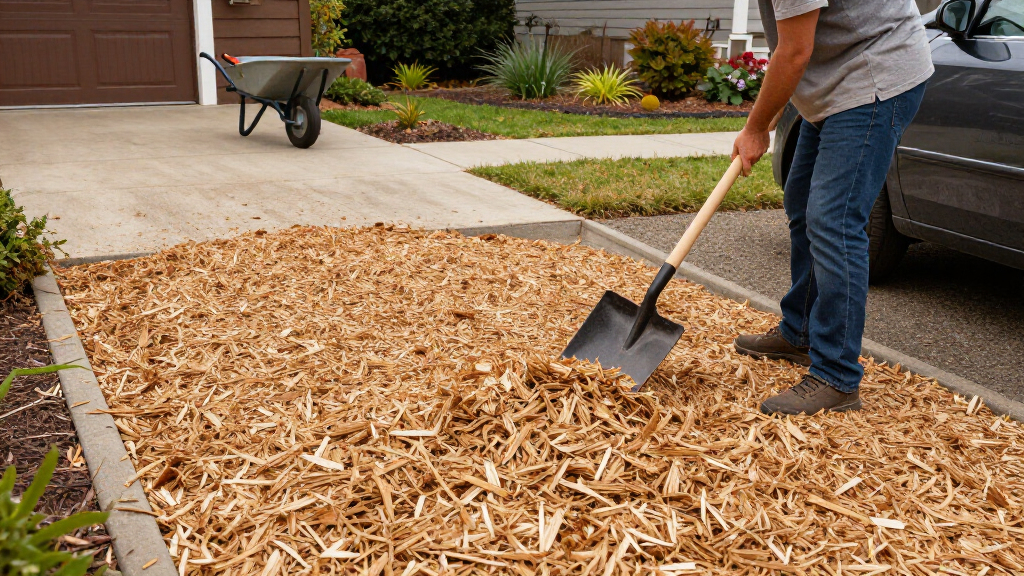
For driveways expecting regular vehicle traffic, the report says installers recommend excavation to a depth of 6 to 8 inches. The base is graded to direct drainage, and landscape fabric may be used to limit the stone sinking into soil. Edge restraints help contain the material. Crushed granite is then placed and compacted in layers of about 2 inches, with water applied to aid compaction; a finer top layer can fill gaps.
A Firmer Surface, With More Preparation
For homeowners who regularly have to rake, level or refill a gravel driveway, a surface that locks together more tightly could mean fewer visible ruts and less movement over time. That may also help a driveway retain a more even appearance. Hunker presents crushed granite as an option for people seeking both a stone look and improved stability, not as a maintenance-free surface.
The cost comparison is not as simple as comparing the two materials’ per-cubic-yard prices. Crushed granite’s stated range overlaps gravel’s, but the deeper base preparation and layered compaction add work. Homeowners should compare estimates that include excavation, drainage, restraints, delivery and installation, and should ask suppliers which grade is appropriate for their site and intended traffic.
crushed granite driveway installation kit
As an affiliate, we earn on qualifying purchases.
As an affiliate, we earn on qualifying purchases.
How Granite Differs From Other Stone
Hunker also distinguishes crushed granite from decomposed granite. Both come from granite, but decomposed granite is much finer, with a sand-like texture. It can be compacted, yet the report says heavy rain and vehicle traffic may cause it to rut or move over time.
Crushed limestone is another option described in the report. It can cost less than crushed granite and its angular pieces compact well, but Hunker says it is more vulnerable to long-term weathering and erosion. The report also notes that limestone erosion may gradually raise soil pH, a possible concern for people growing acid-loving plants. Availability and price in a particular area can shape which stone makes sense.
“A properly installed and maintained crushed granite driveway can last for 20 years or more.”
— Hunker report
As an affiliate, we earn on qualifying purchases.
Costs and Site Conditions Vary
The supplied report does not give a publication date, identify a specific installer, or provide a location-based cost survey. Its price ranges should be treated as general estimates for material, not a current quote for a particular property. It is also unclear how the reported 20-year-or-more lifespan applies across different climates, soil types, driveway slopes, vehicle loads and maintenance schedules.
Drainage needs and the depth of excavation depend on the site. The report describes a typical recommendation for regular vehicle traffic, but does not provide engineering guidance or address local rules. Homeowners should confirm suitable specifications and costs with qualified local contractors before choosing a surface.
edge restraints for gravel driveway
As an affiliate, we earn on qualifying purchases.
As an affiliate, we earn on qualifying purchases.
Compare Local Driveway Estimates
The next practical step for a homeowner considering crushed granite is to obtain local estimates for the full installed project, not just the stone. Quotes can clarify excavation depth, base grading, drainage, fabric, edge restraints, stone grade, compaction and any required upkeep. Comparing those details with a gravel or limestone quote can show whether the material’s potential stability justifies the added preparation at that site.
No new industry announcement or change in building rules is described in the supplied report. The choice remains a property-level decision, shaped by the driveway’s use, local stone supply, weather and the homeowner’s budget.
As an affiliate, we earn on qualifying purchases.
Key Questions
Is crushed granite cheaper than gravel?
Hunker estimates crushed granite at $25 to $50 per cubic yard and gravel at $15 to $75 per cubic yard. These are material ranges, not installed prices, and local costs may differ.
How long can a crushed granite driveway last?
The report says a crushed granite driveway may last 20 years or more when properly installed and maintained. Actual lifespan can vary with site conditions, traffic and upkeep.
What makes crushed granite different from gravel?
Crushed granite consists of more uniform, angular pieces that can fit together under compaction. Gravel has naturally varied shapes and, according to the report, may shift and develop ruts over time.
Is decomposed granite the same as crushed granite?
No. Hunker describes decomposed granite as a much finer, almost sand-like material. It may compact, but heavy rain and vehicle traffic can contribute to rutting or displacement.
What installation details should homeowners compare?
Ask whether the estimate includes excavation, grading for drainage, edge restraints and layered compaction, along with stone, delivery and maintenance. The report describes a 6-to-8-inch excavation recommendation for driveways expecting regular vehicle traffic, but local professionals should assess the site.
Source: rss
Fall yard work Picks
leaf blowers
As an affiliate, we earn on qualifying purchases.