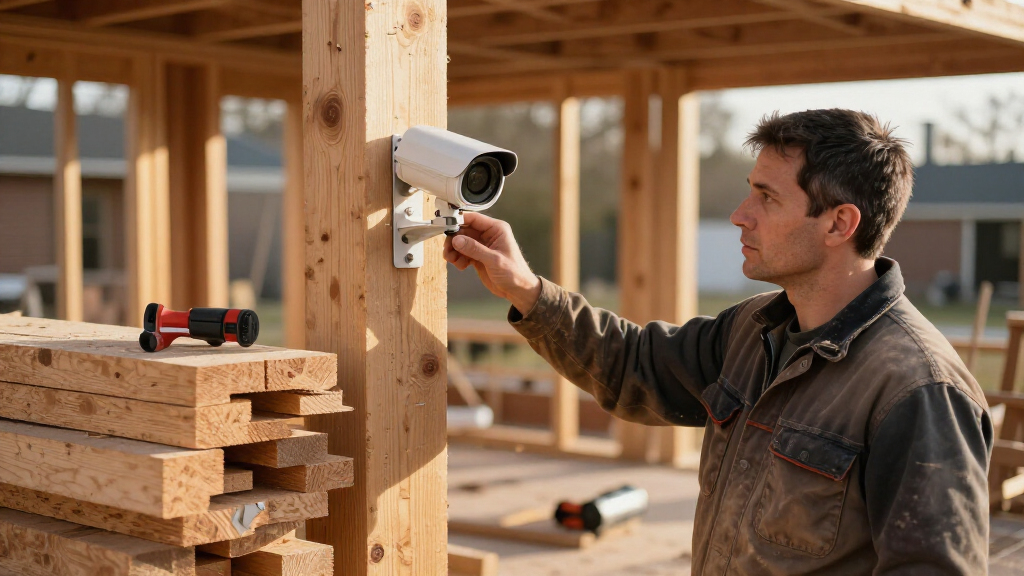

The best jobsite camera security system depends on whether your site has reliable internet and power: for a fixed, Wi-Fi-connected site, the ANNKE 3K Lite wired system is my best overall pick for its eight-camera coverage and local hard-drive recording. For remote locations, the four-camera 4G LTE solar kit stands out for broader coverage, while the Vosker VKX two-pack is a more focused option for cellular monitoring. The main tradeoff is between wired systems with a recorder and cellular solar cameras that are easier to place but may depend on mobile service, solar conditions, and plan terms. I compare those practical differences below so you can match the setup to your site rather than choose by camera count alone. Read on for the full breakdown, buying guidance, and answers to common jobsite security questions.

Get tools and workshop supplies delivered free — and shop member deals
- Fast, free delivery on millions of items
- Access to Prime Big Deal Days deals on October 6–7
- Prime Video, Amazon Music and more included
Complete the kit

Key Takeaways
- ANNKE is the clearest fit for a connected, fixed site: eight wired cameras and a 1TB HDD favor broad coverage with local recording, but installation takes more planning than with wireless units.
- The four-camera cellular solar kit prioritizes remote coverage: its multiple cameras and 25W solar panel suit larger sites without Wi-Fi, though dependable cellular reception and sunlight remain necessary.
- Single-camera and two-camera LTE kits solve a different problem: they can monitor isolated entry points without wiring a recorder, but they do not match an eight-camera system’s coverage.
- Cellular connectivity is not the same as internet independence: LTE cameras still need usable carrier service, and buyers should check SIM, data, and cloud-storage terms before installation.
- Power and placement shape the real choice: solar models reduce cabling, while ANNKE’s wired design better suits a stable layout where installation effort is acceptable.


| jobsite camera security system | Resolution | Connectivity | Power | Pan and tilt |
|---|---|---|---|---|
| ANNKE 3K Lite Wired Security C | 1080p | Wired | Corded electric | — |
| HOSAFE 4G LTE Cellular Securit | 2K HD | 4G LTE with pre-installed SIM; US only | Solar panel and rechargeable battery | 270° pan; 90° tilt |
| 4G LTE Cellular Solar Security | 2560 × 1440 (2K) | 4G LTE; no Wi-Fi required | — | — |
| 4G LTE Cellular Security Camer | 3MP | Pre-installed 4G LTE SIM; US only | Solar and rechargeable battery | 270° pan; 90° tilt |
| Vosker VKX 4G LTE Solar Cellul | 36MP | 4G LTE cellular | Built-in solar panel | — |
| 4G LTE Cellular Security Camer | 2K HD | 4G LTE; no Wi-Fi | 6W solar panel and rechargeable battery | 355° pan, 100° tilt |
More Details on Our Top Picks
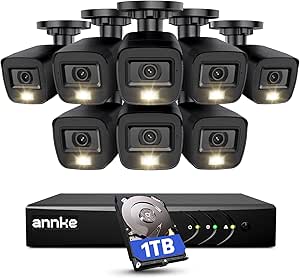
ANNKE 3K Lite Wired Security Camera System – Outdoor, 8 x 2MP Cameras, 1TB HDD
For a jobsite with dependable power and a fixed perimeter, I rank the ANNKE 3K Lite ahead of the cellular kits because its eight-channel DVR can cover several work areas without relying on mobile data. Human and vehicle detection with flexible search areas helps narrow alerts, while the 1TB local drive keeps recordings on site and can be expanded to 10TB. Its dual-light night vision adds color detail at closer range, with IR coverage reaching 100 feet in black and white. The tradeoff is installation: every camera needs a wired connection, so this is less adaptable than the solar-powered HOSAFE or four-camera 4G LTE kit. I’d choose it for a planned, longer-term setup, not a site where cameras must move often.
Pros:- Eight-channel DVR supports coverage across multiple work zones.
- Human and vehicle detection with flexible search areas helps filter and locate relevant events.
- Local 1TB hard drive is expandable to 10TB.
- IP67 weather rating and dual-light night vision suit outdoor monitoring.
Cons:- Wired cameras take more planning and installation work than the solar cellular alternatives.
- The included 1TB storage may need expansion for longer retention or multiple active cameras.
Best for: Construction managers protecting a powered, longer-term jobsite who want several fixed camera views and locally recorded footage.
Not ideal for: Crews on temporary or remote sites without convenient cable routes or power, since all cameras require wired installation.
- Resolution:1080p
- Channels:8
- Included storage:1TB HDD; supports up to 10TB
- Connectivity:Wired
- Power:Corded electric
- Night vision range:100 ft black and white; 66 ft color
- Viewing angle:82.2°
- Detection:AI human and vehicle detection
Our verdict“Choose the ANNKE for a powered jobsite where fixed, multi-camera coverage and expandable local recording matter more than quick installation.”
HOSAFE 4G LTE Cellular Security Camera – 2K Solar Powered, Wire-Free with SIM Card, 360° Live View, Motion Detection, Free Cloud Storage
The HOSAFE makes sense when a jobsite has no Wi-Fi and only one important area needs watching. Its solar power and 4G LTE connection avoid both a power cable and a local network, while the pan-and-tilt controls let one camera inspect more ground than a fixed view. Compared with the ANNKE system, it is much easier to place on a remote or changing site, but it cannot match the ANNKE’s eight-camera coverage or on-site DVR recording. The included microSD card and stated free cloud storage provide recording paths, though cloud access requires an application step and cellular data requires a plan after the trial. I’d pick this for a gate, equipment cluster, or isolated work area—not as a full-perimeter system.
Pros:- Solar panel and rechargeable battery allow wire-free placement.
- 4G LTE connection works without site Wi-Fi.
- 270° pan and 90° tilt let one camera cover a broader area than a fixed camera.
- 2K video, human detection, and two-way audio support remote checks and communication.
Cons:- Cellular data requires a plan after the seven-day trial, and service is limited to US carriers.
- A single camera cannot provide the broad multi-zone coverage of the ANNKE or four-camera LTE kit.
- Free cloud storage requires an application step.
Best for: Small crews monitoring a remote gate, equipment area, or temporary site that lacks Wi-Fi and nearby power.
Not ideal for: Buyers who need several simultaneous fixed views, extensive local recording, or a camera setup that avoids cellular service.
- Resolution:2K HD
- Connectivity:4G LTE with pre-installed SIM; US only
- Power:Solar panel and rechargeable battery
- Pan and tilt:270° pan; 90° tilt
- Digital zoom:4×
- Storage:64GB microSD included; free cloud storage available by application
- Night vision:Color
- Operating temperature:-4°F to 122°F
Our verdict“Choose HOSAFE when you need one flexible, wire-free camera at a US jobsite without Wi-Fi.”
4G LTE Cellular Solar Security Cameras Wireless Outdoor – No WiFi Needed & 25W Solar Panel, 4-Cam Kit, 2K Color Night Vision, Human Tracking, 2-Way Talk – Ideal for Farm, Ranch, Jobsite, Vacation Home
This four-camera kit is my pick for a remote jobsite where running cable is impractical but one view is not enough. Each camera offers 2K PTZ coverage, color night vision, human detection, and two-way audio; the 25W solar panel and large battery hub are designed to support a distributed setup without external power. Compared with the single HOSAFE, the kit covers more locations at once, while the ANNKE remains the stronger fit when a site has power and the priority is wired recording. Here, connectivity depends on 4G LTE service, and the TF card is not included, so buyers must plan for data and local storage separately. Setup may also challenge less technical crews. I’d select it for a spread-out site with cellular coverage and several distinct areas to monitor.
Pros:- Four cameras provide simultaneous views of separate site areas.
- Solar panel, 30,000mAh hub battery, and individual camera batteries support remote placement.
- 2K video, color night vision, and human detection help identify activity after dark.
- PTZ coverage and two-way audio add flexibility at each camera location.
Cons:- Requires a US cellular data plan and suitable coverage at the site.
- TF card storage is limited to 256GB and the card is not included.
- Initial setup may be difficult for non-technical users.
Best for: Farm, ranch, or construction crews monitoring multiple remote zones without Wi-Fi or camera power outlets.
Not ideal for: Teams that need a simple plug-and-play setup, operate outside supported US cellular coverage, or expect storage media to be included.
- Camera count:4
- Resolution:2560 × 1440 (2K)
- Frame rate:1080p at 30fps
- Connectivity:4G LTE; no Wi-Fi required
- Solar panel:25W
- Battery capacity:30,000mAh hub; 7,800mAh per camera
- Storage:Up to 256GB TF card; not included
- Night vision:Color night vision with infrared LEDs
- Warranty:1 year
Our verdict“Choose this kit over the single-camera HOSAFE when a remote jobsite needs four solar-powered views and has reliable US LTE coverage.”
4G LTE Cellular Security Camera – 2K Solar Outdoor Wireless with SIM Card (2-Pack)
This two-pack suits a jobsite where two separated areas need monitoring but a four-camera kit would be more system than the crew needs. Both cameras use solar power and pre-installed 4G LTE SIM cards, with 2K color night vision, human alerts, two-way audio, and broad pan-and-tilt movement. Compared with HOSAFE’s single camera, the pair can watch two locations at once; compared with the four-camera kit, it is a smaller coverage step with fewer cameras to position. The compromise is that recording depends on storage arrangements: a microSD card is required but not included, and free cloud storage requires approval. Cellular service is US-only, so I’d check coverage at both mounting spots before choosing this option.
Pros:- Two solar-powered cameras can monitor separate jobsite areas without wiring.
- Pre-installed 4G LTE SIM cards connect without Wi-Fi.
- 2K color night vision, human alerts, and two-way audio support remote monitoring.
- 270° pan and 90° tilt provide adjustable viewing from each camera.
Cons:- MicroSD cards are required for local storage but are not included.
- Cellular service is limited to US networks.
- Cloud storage requires an application and approval.
Best for: Small jobsite operators who need two independently positioned cameras and have US LTE coverage but no Wi-Fi or convenient power.
Not ideal for: Buyers who need a complete four-zone setup, included local storage, or dependable operation where cellular coverage is weak.
- Pack size:2 cameras
- Resolution:3MP
- Connectivity:Pre-installed 4G LTE SIM; US only
- Power:Solar and rechargeable battery
- Night vision range:50 ft
- Pan and tilt:270° pan; 90° tilt
- Zoom:4× digital
- Operating temperature:-4°F to 122°F
Our verdict“Choose this two-pack when two LTE-connected solar cameras cover your needs better than HOSAFE’s single view, but you do not need a four-camera kit.”
Vosker VKX 4G LTE Solar Cellular Security Camera, Video 2-Pack
The Vosker VKX takes a different approach from the live-view cameras in this roundup: it sends motion-triggered photos and 15-second video clips on demand, rather than streaming footage. For a large property where crews mainly need a record of activity and can accept brief clips, its solar design and stated autonomy of up to six months may reduce routine attention. The included pair also gives more placement options than HOSAFE’s single PTZ camera, but it cannot pan around an area or let an operator inspect a scene live. Compared with the ANNKE, the VKX is easier to place where wiring is impractical, but offers less continuous visibility and depends on a cellular data plan. I’d choose it for remote alerts and snapshots, not active jobsite oversight.
Pros:- Built-in solar power supports up to six months of stated autonomy.
- Two cameras allow monitoring at separate locations.
- Integrated deterrent light and privacy snooze controls add site-specific utility.
- IP65 weather resistance suits outdoor property monitoring.
Cons:- No live streaming; video is limited to 15-second clips on demand.
- A separate cellular data plan is required for transmitting photos and video.
- Motion-only capture may miss context before or after an event.
Best for: Owners of remote construction sites, barns, or equipment yards who want motion-triggered photo and short-clip updates with limited maintenance.
Not ideal for: Site managers who need live streaming, longer event footage, or active pan-and-tilt views of workers and equipment.
- Pack size:2 cameras
- Connectivity:4G LTE cellular
- Power:Built-in solar panel
- Stated battery autonomy:Up to 6 months
- Video request length:15 seconds
- Live streaming:Not available
- Resolution:36MP
- Viewing angle:90°
Our verdict“Choose the Vosker VKX for low-attention motion snapshots at remote sites, but select HOSAFE or the two-pack LTE camera if live viewing matters.”
4G LTE Cellular Security Camera 2-Pack with Solar Panel and SIM Card
For a jobsite without Wi-Fi or nearby power, this two-camera kit combines 4G LTE connectivity with 6W solar panels, so placement can follow the work area rather than the nearest outlet or router. Its 355° pan and 100° tilt let an operator check different approaches remotely, while 2K color night vision can help distinguish activity after dark. Compared with the ANNKE 3K Lite system, this kit is easier to place at a remote site but depends on cellular data rather than a wired recorder and fixed cameras. It also lacks the human tracking listed for the four-camera, 25W solar kit, making it less suited to covering several active zones at once. Budget for ongoing data service; cloud storage also requires a subscription after its trial, though local TF-card storage is available with a separately purchased card.
Pros:- Works over 4G LTE without Wi-Fi, allowing installation at remote sites.
- Two cameras and solar charging offer flexible coverage without running power cables.
- 2K resolution and color night vision support clearer identification in low light.
- Remote pan and tilt help operators inspect changing areas from the app.
Cons:- Cellular data service requires a paid subscription after the seven-day trial.
- Cloud storage requires a subscription after the 30-day trial; a TF card for local recording is not included.
- No auto-tracking, and the 6W panels are less suited to broad, high-demand coverage than the 25W four-camera kit.
Best for: Small construction crews securing two separated areas on a remote site where Wi-Fi and reliable mains power are unavailable.
Not ideal for: Buyers who need a subscription-free setup, automatic subject tracking, or a multi-camera kit for broad coverage across a large jobsite.
- Connectivity:4G LTE; no Wi-Fi
- Supported networks:Verizon, T-Mobile, AT&T
- Resolution:2K HD
- Power:6W solar panel and rechargeable battery
- Night vision:Color, up to 65 ft
- Pan and tilt:355° pan, 100° tilt
- Storage:Cloud subscription or TF card up to 128GB; card not included
- Audio:Two-way audio with microphone and speaker
Our verdict“Choose this kit for two remote jobsite zones that need solar-powered LTE monitoring, but skip it if you need automatic tracking or want to avoid ongoing service costs.”
How We Picked
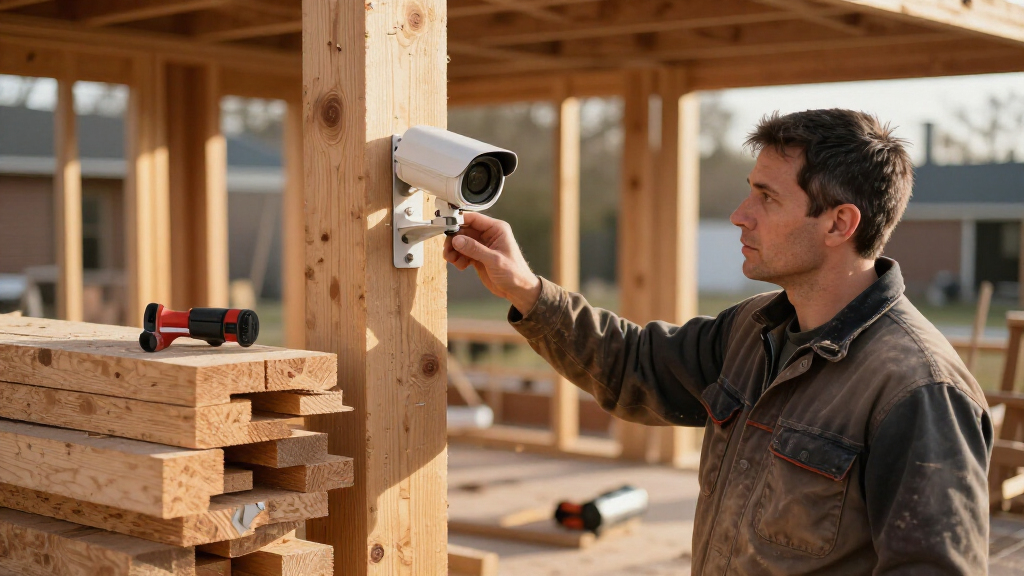
I ranked these systems around jobsite realities: whether they can operate where power or Wi-Fi is limited, how much of a site they can cover, and what recording arrangement they offer. I also weighed setup demands, the practical value of solar or wired power, and the need to verify mobile coverage and service terms. A camera count alone does not make a system a better fit if its connection or power source is unsuitable for the location.
That puts the ANNKE 3K Lite first for a fixed site with power and a local recorder, while the four-camera LTE solar kit leads for broader monitoring in remote areas. The remaining cellular options are more specialized: a solar single camera can suit one isolated view, and two-camera kits add coverage without the wired installation. I treat the Vosker VKX as a cellular-focused alternative, but buyers should compare its operating and service details with their site needs rather than assume every LTE system works the same way.
| jobsite camera security system | Night vision |
|---|---|
| ANNKE 3K Lite Wired Security C | — |
| HOSAFE 4G LTE Cellular Securit | Color |
| 4G LTE Cellular Solar Security | Color night vision with infrared LEDs |
| 4G LTE Cellular Security Camer | — |
| Vosker VKX 4G LTE Solar Cellul | — |
| 4G LTE Cellular Security Camer | Color, up to 65 ft |
Factors to Consider When Choosing Best Jobsite Camera Security System
Before choosing a system, I would map the site and decide what evidence you need: a live view, recorded footage, or both. The best fit often depends less on headline resolution than on coverage gaps, service availability, and how reliably the cameras can stay powered.
Start With Carrier Coverage, Not the Camera Listing
Cellular cameras can work without site Wi-Fi, but they cannot work without a usable mobile signal from their supported carrier. Check reception at the exact mounting points, since a strong signal at the site entrance may not reach a metal-clad building or a low-lying corner. Confirm which carriers and SIM arrangements the system supports before buying; a bundled SIM does not automatically mean every plan or region is covered. Ask how video is delivered and stored, since live viewing, event uploads, and cloud retention can use data differently. If coverage is unreliable, a wired recorder such as the ANNKE system may be a better route where you can provide network access or review footage locally.
Match Camera Count to Sightlines and Risk Areas
Count the views you need, not just the cameras in the box. A small site may need only an entrance and a tool-storage area, while a spread-out jobsite can require views of several access points and equipment zones. Draw a simple map and mark blind spots created by containers, parked machinery, fencing, and temporary structures. A multi-camera wired kit can cover a fixed layout, but moving cameras as the site changes can be labor-intensive. Cellular single- or two-camera setups offer a simpler way to watch selected locations, though they leave more areas unmonitored unless you add units.
Plan for Power Through Bad Weather and Work Changes
Solar power can reduce the need to run cables, which is useful when a jobsite has no permanent electrical service. Its performance still depends on panel exposure, seasonal daylight, shade, and how often the camera records or streams. A camera mounted under an eave or beside a tall structure may not receive enough sun even if the site as a whole is bright. Wired systems avoid solar exposure concerns but require a dependable power path and more installation work. For either type, decide how you will check power status and respond if a camera goes offline during a long work stoppage.
Separate Local Recording From Cloud and Cellular Costs
A local hard drive and cloud storage serve different needs. Local recording can keep footage available without relying on ongoing uploads, while cloud access may make remote review and off-site retention more convenient. Check whether the camera records continuously or mainly saves motion events, and find out how long footage remains available. For LTE systems, verify whether a data plan or subscription is required for the features you expect, including remote live view and saved clips. Avoid assuming that a mention of free cloud storage covers every feature or provides unlimited retention.
Choose Mounting Flexibility for a Changing Site
Jobsites change as equipment, fencing, and work areas move, so camera placement may need to change too. Before committing to a wired layout, plan cable routes that will not cross vehicle paths or conflict with later construction. Wireless cellular cameras are easier to relocate, but each move still requires a suitable view, signal, and—in solar models—panel exposure. Mount cameras high enough to reduce tampering while keeping faces and activity identifiable in the intended coverage area. A fixed perimeter setup and a camera that follows temporary work zones call for different installation priorities.
Budget for the Whole Operating Setup
The camera kit is only one part of the ownership picture. Include possible cellular service, storage needs, mounting hardware, cabling, and installation time when comparing systems. A wired package with several cameras may be more practical when one recorder can serve a stable site, while separate LTE units can make more sense when running cable would be difficult. Confirm what is included in the box and which features depend on an app account or paid service. Paying more can make sense when it reduces uncovered areas or avoids repeated setup work, but extra cameras offer little value if they cannot be powered or connected at their intended locations.
Frequently Asked Questions
Can a cellular jobsite camera work where there is no Wi-Fi?
Yes, an LTE camera can send alerts or footage through a supported cellular network instead of site Wi-Fi. It still needs adequate signal at the exact installation point, and remote features may use mobile data or require a service plan. Check carrier compatibility and coverage before mounting cameras, especially inside metal buildings or behind terrain. If the location has neither Wi-Fi nor usable cellular service, an LTE camera will not provide remote monitoring as expected; consider local recording or another connectivity option.
Is a wired recorder or a solar cellular system better for a construction site?
A wired recorder is generally a stronger fit when the site has dependable power, a stable layout, and a need for several fixed camera views. Solar cellular cameras are more practical when running cables is difficult or the site lacks Wi-Fi and permanent power. The tradeoff is installation effort versus ongoing dependence on sunlight, carrier signal, and potentially cellular service. I would choose based on the site’s infrastructure and how often the camera positions will change, rather than treating one design as universally better.
How many cameras do I need to monitor a jobsite?
There is no useful camera count without a site plan. Start by identifying entry points, equipment storage, material staging, and any area where an incident would be hard to verify from another angle. Then account for obstructions and overlapping views; a camera pointed at a wide open area may still miss faces or activity near a gate. The ANNKE kit offers eight views for a fixed, broader setup, while cellular one- and two-camera kits are better suited to selected locations. Add cameras only where they close a meaningful coverage gap.
What should I check before relying on solar power at a remote site?
Check how much direct sunlight reaches both the camera’s panel and the proposed mounting area across the day and season. Nearby structures, trees, scaffolding, and stored materials can cast shade after installation, and cloudy periods can reduce charging. Also consider how often the system will record or stream, since heavier activity can affect power needs. A larger panel may help, but it cannot fix poor placement or persistent shade. If power continuity is especially important, plan a backup or choose a powered setup where the site allows it.
How do I compare cellular plans and storage before buying?
First, identify which functions require mobile data: alerts, remote live viewing, clip uploads, and cloud playback may have different data demands. Then check the SIM restrictions, plan duration, coverage area, and any recurring fees for each system. For storage, confirm whether footage is held locally or in the cloud, how long clips remain available, and whether recording is continuous or event-based. Do not rely on a general claim of included or free storage without checking its limits. These details can change the practical cost and usefulness of an LTE system after installation.
Conclusion
For a best overall choice on a fixed site with power and a suitable recording location, I would start with the ANNKE 3K Lite: its eight cameras and 1TB HDD prioritize broad, locally recorded coverage. For the best value in remote coverage, the four-camera 4G LTE solar kit is the standout when its carrier signal and panel exposure work for the site. The best premium-leaning cellular alternative is the Vosker VKX two-pack for buyers who want a dedicated LTE setup and have confirmed its service details fit their needs. For beginners monitoring one isolated area, a solar single-camera LTE option keeps the setup narrower than a full wired system; choose a two-pack when two key views matter more. For a specific need—watching a larger off-grid property—I would favor the four-camera kit, while a small, stable site with internet and power is better matched to ANNKE. My final check would be carrier coverage, power availability, and recording terms at the actual mounting locations.
Fall yard work Picks
leaf blowers
As an affiliate, we earn on qualifying purchases.