
For most jobsite teams, the DJI Air 3S Fly More Combo is the best jobsite drone for site inspection because its capable imaging setup and bundled flight accessories suit repeat documentation. The DJI Mavic 4 Pro is the premium choice for teams that need more advanced imaging flexibility, while the DJI Mini 4K offers a simpler route into basic progress photos. The main tradeoffs are image flexibility, portability, ease of operation, and how much inspection work the drone must handle. A lightweight model can be easier to carry between sites, but specialized or frequent surveys may call for stronger imaging tools and a more deliberate workflow. Read on for the ranking, buyer guidance, and the specific situations each model fits best.

Get business pricing on tools and workshop supplies
- Business-only prices and quantity discounts
- Tax-exempt purchasing
- Multiple users, one account, clear invoices
Complete the kit


Key Takeaways
- The Air 3S Fly More Combo ranks first for balancing inspection-ready imaging flexibility with a bundle suited to repeat site visits.
- The Mavic 4 Pro is the premium specialist for teams that place imaging options ahead of compact size and a simpler setup.
- The Mini 4K and Mini 3 favor portability and accessible operation, but they are better fits for visual progress records than demanding survey workflows.
- The two Air 3S bundles differ in what comes in the box; buyers should compare included accessories and storage before choosing between them.
- The SKYROVER X1 and Mini 5 Pro add distinct alternatives: the X1 bundles a screen controller and three batteries, while the Mini 5 Pro targets buyers seeking a more capable compact package.
| DJI Mini 4K Camera Drone Combo with 2 Batteries |  | Best Lightweight Starter for Basic Inspections | Weight: Under 249 g | Camera: 4K UHD | Stabilization: 3-axis gimbal | VIEW LATEST PRICE | See Our Full Breakdown |
| DJI Air 3S Drone with RC 2 Fly More Combo and 128GB Memory Card |  | Best for Detailed, Multi-Angle Inspection | Wide-angle camera: 1-inch CMOS, 24 mm, 50 MP | Medium telephoto camera: 1/1.3-inch CMOS, 70 mm, 48 MP | Video recording: 4K/60fps HDR | VIEW LATEST PRICE | See Our Full Breakdown |
| SKYROVER X1 Drone with Camera, Screen Controller, 4K Video, Obstacle Avoidance, and 3 Batteries |  | Best Extended Flight Time in a Lightweight Kit | Weight: Under 249 g | Sensor: 1/1.32-inch CMOS | Photo resolution: 48 MP | VIEW LATEST PRICE | See Our Full Breakdown |
| DJI Air 3S Fly More Combo with RC 2 Remote Controller |  | Best Premium Image Capture for Site Records | Primary camera: 1-inch CMOS | Video recording: 4K/60fps HDR | Dynamic range: Up to 14 stops | VIEW LATEST PRICE | See Our Full Breakdown |
| DJI Mini 3 Drone with DJI RC, 3-Axis Gimbal |  | Best for Quick, Phone-Free Inspections | Weight: Under 249 g with standard battery | Camera: 4K HDR video | Gimbal: 3-axis mechanical | VIEW LATEST PRICE | See Our Full Breakdown |
| DJI Mavic 4 Pro Fly More Combo with DJI RC 2 | 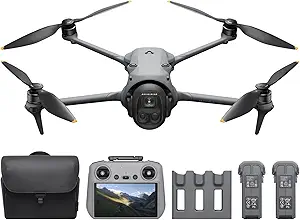 | Best for Detailed Site Documentation | Main camera: 100MP Hasselblad | Video: 6K/60fps HDR | Tele cameras: Dual | VIEW LATEST PRICE | See Our Full Breakdown |
| DJI Mini 5 Pro Fly More Combo Plus with DJI RC 2 |  | Best Compact Jobsite Pick | Image sensor: 1-inch CMOS | Video: 4K/60fps HDR | Gimbal rotation: 225° | VIEW LATEST PRICE | See Our Full Breakdown |
| jobsite drone for site inspection | Weight | Maximum flight time | Obstacle sensing |
|---|---|---|---|
| DJI Mini 4K Camera Drone Combo | Under 249 g | Up to 62 minutes with 2 batteries | — |
| DJI Air 3S Drone with RC 2 Fly | — | Up to 45 minutes | Omnidirectional with forward-facing LiDAR |
| SKYROVER X1 Drone with Camera | Under 249 g | — | — |
| DJI Air 3S Fly More Combo with | — | Up to 45 minutes | Omnidirectional with forward-facing LiDAR |
| DJI Mini 3 Drone with DJI RC | Under 249 g with standard battery | — | — |
| DJI Mavic 4 Pro Fly More Combo | — | — | 0.1-Lux Nightscape Omnidirectional |
| DJI Mini 5 Pro Fly More Combo | Approximately 249.9 g ± 4 g | Up to 52 minutes per battery | Omnidirectional, with forward-facing LiDAR and vision sensors |
More Details on Our Top Picks
DJI Mini 4K Camera Drone Combo with 2 Batteries
The DJI Mini 4K suits crews who need a portable way to document roofs, façades, and open areas without carrying a larger aircraft. Its under-249 g weight and one-tap controls make it approachable for occasional inspection work, while the 3-axis gimbal steadies 4K footage for reviewing visible surface conditions. Two batteries provide up to 62 minutes of listed flight time across the set, though that is not a single continuous flight. Compared with the DJI Mini 3, this combo adds a second battery and carrying accessories; the Air 3S models offer dual cameras and obstacle sensing better suited to complex sites. The Mini 4K has no listed obstacle avoidance, so I would skip it for tight work around structures or crews. Transmission and flight figures also vary with conditions.
Pros:- Under-249 g aircraft is easy to carry between inspection locations
- 3-axis gimbal stabilizes 4K footage for later review
- Two included batteries provide up to 62 minutes of combined listed flight time
- GPS Return to Home and beginner-friendly controls simplify basic operation
Cons:- No obstacle avoidance is listed for close-in site inspection
- The 10 km transmission and flight-time figures vary with conditions
- DJI Fly must be downloaded from DJI’s website rather than Google Play
Best for: Small contractors who need occasional, lightweight visual documentation of accessible roofs and open jobsite areas.
Not ideal for: Inspection teams working close to cranes, structures, or other obstacles that need listed obstacle sensing or telephoto framing.
- Weight:Under 249 g
- Camera:4K UHD
- Stabilization:3-axis gimbal
- Maximum video transmission:10 km (32,800 ft)
- Wind resistance:38 kph (Level 5)
- Maximum flight time:Up to 62 minutes with 2 batteries
- Included controller:DJI RC-N1C
- Included accessories:2 batteries, shoulder bag, propeller holder, spare propellers
Our verdict“Choose the Mini 4K for portable, straightforward documentation in open areas, and look to an Air 3S model for obstacle sensing and more inspection camera options.”
DJI Air 3S Drone with RC 2 Fly More Combo and 128GB Memory Card
For projects where a single viewpoint leaves questions, the DJI Air 3S brings a 50 MP wide camera and a 48 MP medium telephoto camera into one foldable aircraft. That combination lets a crew capture site context and closer detail without flying as near to a façade as a wide-angle-only setup may require. Omnidirectional obstacle sensing and forward-facing LiDAR add support when returning in low light, though sensing still depends on operating conditions and is not a substitute for careful flight planning. Compared with the DJI Mini 4K, this bundle offers more camera choice, a screen controller, and three batteries, but takes more gear to transport. Its up-to-45-minute flight time is per battery; the listed bundle contents support longer work sessions through battery swaps. This is the strongest fit here for varied inspection angles, but a compact Mini is easier to bring for quick checks.
Pros:- Wide and medium telephoto cameras support context and closer detail in one aircraft
- Omnidirectional sensing with forward-facing LiDAR supports obstacle awareness and return-to-home
- RC 2 screen controller works without relying on a phone display
- Three batteries, charging hub, filters, bags, and 128GB card support extended inspection outings
Cons:- The many included accessories make the kit cumbersome to carry
- Obstacle sensing and nighttime return depend on conditions
- The up-to-45-minute flight figure is per battery and may vary in actual use
Best for: Commercial site managers and inspection crews who need wide context plus telephoto views of façades, roofs, and equipment.
Not ideal for: Solo operators who prioritize the smallest carry kit or only need quick, open-area 4K documentation.
- Wide-angle camera:1-inch CMOS, 24 mm, 50 MP
- Medium telephoto camera:1/1.3-inch CMOS, 70 mm, 48 MP
- Video recording:4K/60fps HDR
- Maximum flight time:Up to 45 minutes
- Obstacle sensing:Omnidirectional with forward-facing LiDAR
- Live video transmission:1080p/60fps, up to 20 km
- Remote controller:DJI RC 2 with screen
- Included bundle items:3 batteries and 128GB microSD card
Our verdict“Pick the Air 3S bundle when inspections benefit from switching between wide site views and telephoto detail, and accept a larger equipment load.”
SKYROVER X1 Drone with Camera, Screen Controller, 4K Video, Obstacle Avoidance, and 3 Batteries
The SKYROVER X1 is aimed at crews who want to cover more ground between battery changes while keeping the aircraft under 249 g. Three batteries provide up to 96 minutes of listed flight time across the set, and its 5.5-inch touchscreen controller keeps the live view and controls together without a phone. The 1/1.32-inch sensor, 48 MP photos, and 3-axis gimbal give inspectors useful image detail and stabilized 4K/60fps HDR footage. Compared with the DJI Mini 4K, it adds 360-degree sensing and a built-in screen controller; the Air 3S models still offer a more clearly specified dual-camera setup for framing distant details. The X1’s long-range transmission and obstacle sensing depend on conditions, and its headline flight time requires all three batteries. I would choose it for broad sites, not assume it replaces a dedicated telephoto inspection camera.
Pros:- Three batteries provide up to 96 minutes of listed combined flight time
- 5.5-inch touchscreen controller provides a bright live-view display without a phone
- 48 MP photos and 4K/60fps HDR video with 3-axis gimbal stabilization
- 360-degree obstacle sensing is listed
Cons:- The 96-minute figure requires swapping among all three batteries
- Obstacle sensing and long-range transmission depend on flying conditions
- No telephoto camera is listed for distant detail capture
Best for: Crews surveying broad, open jobsites who value multiple batteries and a bright built-in controller display.
Not ideal for: Inspectors who need a clearly specified telephoto camera for reading distant details or who work in cluttered, constrained spaces.
- Weight:Under 249 g
- Sensor:1/1.32-inch CMOS
- Photo resolution:48 MP
- Video:4K/60fps HDR; 4K/100fps slow motion
- Gimbal:3-axis
- Obstacle avoidance:360° sensing
- Controller display:5.5-inch HD touchscreen, 700 nits, 60 Hz
- Flight time:Up to 96 minutes with 3 batteries
Our verdict“Choose the X1 for extended coverage of open sites with a built-in screen controller, while teams needing telephoto inspection should compare it with the Air 3S.”
DJI Air 3S Fly More Combo with RC 2 Remote Controller
The DJI Air 3S Fly More Combo makes the most sense when inspection footage also needs to serve as a clear visual record across changing light. Its 1-inch CMOS primary camera, dual 4K/60fps HDR cameras, and up to 14 stops of dynamic range are aimed at preserving detail between bright skies and shaded building surfaces. Three batteries and a charging hub support longer outings, while the RC 2’s built-in screen removes the need to mount a phone. Compared with the DJI Mini 3, this is a more capable camera platform with omnidirectional sensing and forward-facing LiDAR; the Mini is lighter and simpler for quick checks. The Air 3S kit is less convenient for crews prioritizing a small carry load, and the charger is sold separately. Its listed 20 km transmission and 45-minute flight time are maximum figures, not guaranteed jobsite results.
Pros:- 1-inch CMOS primary camera and up to 14 stops of dynamic range support detailed site imagery
- Dual 4K/60fps HDR cameras provide more than one inspection viewpoint
- Omnidirectional sensing with forward-facing LiDAR adds obstacle awareness
- Three batteries, charging hub, ND filters, and screen-equipped controller are included
Cons:- Charger is sold separately
- The larger combo is less convenient to carry than the DJI Mini 3
- Maximum transmission and flight figures depend on conditions
Best for: Inspection teams producing detailed photo and video records across bright, shaded, or mixed-light site conditions.
Not ideal for: Crews seeking a lightweight aircraft for fast checks or a complete charging setup without sourcing a separate charger.
- Primary camera:1-inch CMOS
- Video recording:4K/60fps HDR
- Dynamic range:Up to 14 stops
- Maximum flight time:Up to 45 minutes
- Video transmission range:Up to 20 km
- Obstacle sensing:Omnidirectional with forward-facing LiDAR
- Remote controller:DJI RC 2 with built-in screen
- Included accessories:3 intelligent flight batteries, charging hub, ND filter set
Our verdict“Choose this Air 3S combo for high-detail site records and obstacle sensing if you can supply a compatible charger and carry the larger kit.”
DJI Mini 3 Drone with DJI RC, 3-Axis Gimbal
When I need a small drone for repeatable visual checks, the DJI Mini 3 stands out for combining an under-249 g standard-weight setup with the DJI RC built-in display. That screen means an inspector can launch without attaching a phone, and the 3-axis mechanical gimbal steadies 4K HDR footage of roofs or exterior surfaces. GPS return-to-home and precise hovering suit straightforward routes, while vertical capture is handy for portrait-format documentation. Compared with the DJI Mini 4K, the Mini 3 includes a screen controller and vertical video support, but its standard battery flight time is up to 38 minutes; the Mini 4K combo lists up to 62 minutes across two batteries. The longer-lasting Plus battery is sold separately and raises aircraft weight above 249 g. Neither Mini lists obstacle avoidance, so crews inspecting tight structures may prefer an Air 3S.
Pros:- Under-249 g with standard battery
- DJI RC has a built-in 5.5-inch HD display and pre-installed DJI Fly app
- 3-axis gimbal stabilizes 4K HDR footage
- Vertical video, QuickShots, and Panorama support varied documentation
Cons:- Standard battery flight time is up to 38 minutes
- Intelligent Flight Battery Plus is sold separately and raises aircraft weight above 249 g
- Battery charger is sold separately and obstacle avoidance is not listed
Best for: Solo inspectors who want a lightweight aircraft and a built-in controller screen for quick roof and exterior checks.
Not ideal for: Teams needing obstacle avoidance around structures or the longest included flight session without buying another battery.
- Weight:Under 249 g with standard battery
- Camera:4K HDR video
- Gimbal:3-axis mechanical
- Standard battery flight time:Up to 38 minutes
- Intelligent Flight Battery Plus time:Up to 51 minutes; sold separately
- Maximum video transmission:Up to 10 km under FCC conditions
- Controller:DJI RC with built-in 5.5-inch HD display
- Wind resistance:Level 5; up to 38 kph
Our verdict“Pick the Mini 3 for lightweight, phone-free inspection flights and vertical documentation, but choose an Air 3S when obstacle sensing matters.”
DJI Mavic 4 Pro Fly More Combo with DJI RC 2
The 100MP Hasselblad camera and dual tele cameras make this the strongest fit here for teams that need detailed visual records of roofs, structures, or hard-to-reach areas. Compared with the DJI Mini 5 Pro, it offers higher-resolution main-camera capture and more tele-camera options, which can help inspectors frame distant details without bringing the aircraft as close. Its up to 51 minutes of flight time and three included batteries support longer inspection sessions, while the 360° Infinity Gimbal adds flexibility for unusual camera angles. The tradeoff is a more specialized, camera-first package than a compact jobsite choice, and the listed specs do not give it the Mini 5 Pro’s specific forward-facing LiDAR detail. The DJI Fly app also must be downloaded from DJI’s website rather than Google Play.
Pros:- 100MP Hasselblad main camera for highly detailed inspection imagery
- Dual tele cameras offer framing options for distant features
- Up to 51 minutes of flight time and three batteries support extended sessions
- 360° Infinity Gimbal allows flexible camera positioning
Cons:- DJI Fly must be downloaded from DJI’s website rather than Google Play
- Its camera-focused feature set may be more than crews need for routine visual checks
Best for: Inspection teams documenting large sites or distant structural details who can make use of high-resolution and tele-camera capture.
Not ideal for: Crews prioritizing a palm-sized aircraft for quick, compact deployments or those who want to install DJI Fly through Google Play.
- Main camera:100MP Hasselblad
- Video:6K/60fps HDR
- Tele cameras:Dual
- Gimbal:360° Infinity Gimbal
- Obstacle sensing:0.1-Lux Nightscape Omnidirectional
- Flight time:Up to 51 minutes
- Video transmission:Up to 30 km (18.6 mi), O4+
- Included:DJI Mavic 4 Pro, DJI RC 2, three batteries, charging hub, and accessories
Our verdict“Choose the Mavic 4 Pro when detailed, flexible camera capture across a large jobsite matters more than a palm-sized aircraft.”
DJI Mini 5 Pro Fly More Combo Plus with DJI RC 2
The foldable, palm-sized design makes the Mini 5 Pro easier to carry between work areas than the larger DJI Mavic 4 Pro, while its 1-inch CMOS sensor and 4K/60fps HDR video give inspection crews capable image capture in a compact package. Its 225° gimbal rotation supports true vertical filming, useful when crews need a tall view of façades or other vertical surfaces. Omnidirectional obstacle sensing, forward-facing LiDAR and vision sensors, and ActiveTrack 360° add flight and tracking tools for changing site conditions. The compromise is less camera resolution and fewer tele-camera options than the Mavic 4 Pro. Its listed weight is approximately 249.9 g ± 4 g, so buyers should check applicable local rules rather than assume the aircraft is exempt from requirements. DJI Fly also requires a download from DJI’s website.
Pros:- Foldable, palm-sized design is convenient to carry between inspection locations
- 1-inch CMOS sensor records 4K/60fps HDR video
- 225° gimbal rotation supports true vertical filming
- Omnidirectional sensing and ActiveTrack 360° provide obstacle and tracking features
Cons:- Does not match the Mavic 4 Pro’s 100MP camera, 6K video, or dual tele cameras
- DJI Fly must be downloaded from DJI’s website rather than Google Play
- Night flights may require permits depending on local regulations
Best for: Inspectors who move between work areas and want a compact aircraft with obstacle sensing, tracking, and vertical filming.
Not ideal for: Teams that need the Mavic 4 Pro’s 100MP main camera, 6K HDR video, or dual tele cameras for detailed distant subjects.
- Image sensor:1-inch CMOS
- Video:4K/60fps HDR
- Gimbal rotation:225°
- Obstacle sensing:Omnidirectional, with forward-facing LiDAR and vision sensors
- Tracking:ActiveTrack 360°
- Internal storage:42 GB
- Maximum flight time:Up to 52 minutes per battery
- Weight:Approximately 249.9 g ± 4 g
- Included accessories:DJI RC 2, three batteries, spare propellers, charging hub, ND filters
Our verdict“Pick the Mini 5 Pro for portable site checks and vertical views when compact carry matters more than the Mavic 4 Pro’s higher-end camera system.”

How We Picked
I ranked these drones for the practical demands of jobsite inspection: capturing useful views of roofs, facades, work areas, and changing site conditions. I weighed imaging flexibility, flight usability, portability, included batteries and controller features, and how well each package suits repeated documentation. A drone’s listed features matter only when they help an inspection team get a clear, repeatable view or reduce friction during a site visit.
The Air 3S Fly More Combo leads because it balances capable imaging with a bundle oriented toward repeated flights. The Mavic 4 Pro ranks higher for imaging breadth but below it for buyers who value a more manageable everyday setup. Compact and entry-oriented models rank lower for demanding inspection needs, though they can be the better fit for basic visual records, portability, or a first drone. Where two listings describe similar aircraft, I treated bundled accessories and storage as buying differences rather than assuming the core drone is different.
| jobsite drone for site inspection | Weight | Maximum flight time |
|---|---|---|
| DJI Mini 4K Camera Drone Combo | Under 249 g | Up to 62 minutes with 2 batteries |
| DJI Air 3S Drone with RC 2 Fly | — | Up to 45 minutes |
| SKYROVER X1 Drone with Camera | Under 249 g | — |
| DJI Air 3S Fly More Combo with | — | Up to 45 minutes |
| DJI Mini 3 Drone with DJI RC | Under 249 g with standard battery | — |
| DJI Mavic 4 Pro Fly More Combo | — | — |
| DJI Mini 5 Pro Fly More Combo | Approximately 249.9 g ± 4 g | Up to 52 minutes per battery |
Factors to Consider When Choosing Best Jobsite Drone For Site Inspection
Before choosing a drone, I would define the inspection job and the record the team needs to produce. A useful purchase depends on more than camera resolution: site access, repeatability, staff skills, data handling, and local flight rules all shape the right fit.
Decide Whether You Need Visual Checks or Survey Data
Start with the deliverable: are you recording visible progress, checking hard-to-reach areas, or producing measurements and mapped models? A standard camera drone can help document visible conditions, but it does not automatically create survey-grade measurements or prove that a defect is absent. Teams that need orthomosaics, repeatable measurements, or formal engineering records should check the aircraft, mapping software, control points, and workflow as a complete system. A common mistake is buying around the camera specification and only later discovering that the desired reporting process needs separate software or a different capture method. For routine visual checks, repeatable angles and clear site labeling may matter more than advanced mapping features.
Plan for Repeatable Flights Across Changing Sites
Inspection value grows when teams can compare the same roofline, facade, or work zone across multiple dates. Consider how easily pilots can reproduce routes, camera angles, altitude, and naming conventions as staff or site conditions change. Consumer drones may support useful automated or assisted flight features, but buyers should verify that a specific workflow is available and appropriate for their site. Wind, cranes, temporary structures, and changing access restrictions can make a saved route unsafe or unusable. Build a process that includes a human review before each flight instead of assuming a past route remains valid. Consistent capture and file organization can improve comparisons more than an upgrade that no one uses consistently.
Match Portability to the Site Environment
A compact drone is easier to carry between buildings, keep in a vehicle, and deploy for a quick look. That convenience can help teams document several locations in one shift, especially when inspection views are mainly visual. Larger or more elaborate systems may offer imaging advantages, but they add transport and setup considerations that can discourage frequent use. Do not treat a small aircraft as automatically suitable for every outdoor condition: wind, dust, rain, and safe launch areas still shape whether a flight is practical. Think about who carries the kit, where it is stored, and how often it will be moved between locations. Choose portability based on the actual site routine, not just the folded dimensions.
Budget for the Whole Flight and Review Kit
The drone is only one part of a usable inspection setup. Batteries, charging, memory cards, spare propellers, a controller, protective storage, and a way to review and share footage all affect daily readiness. A bundle with extra batteries can reduce interruptions during a long site visit, while bundled storage can help avoid a last-minute accessory purchase. Check whether the specific listing includes the controller and accessories your team expects; similarly named bundles may differ even when the aircraft is the same. Account for the time required to transfer, label, back up, and distribute images. A lower-friction kit often brings more value than a feature-rich aircraft that is rarely ready when the site team needs it.
Set a Safe and Legal Operating Process
Jobsite flights happen around workers, contractors, vehicles, neighboring properties, and sometimes restricted airspace. Before buying, identify who will pilot, what training or qualifications apply, where flights may take place, and how the site will be cleared or cordoned off. Rules depend on location and operation, so verify current local requirements instead of relying on a retailer’s feature list. Obstacle sensing can assist, but it does not replace a pilot’s judgment or account for every wire, moving machine, or temporary structure. Establish a preflight check, a safe landing area, and a plan for stopping work if people enter the flight zone. That operating discipline matters for every model in this roundup.
Frequently Asked Questions
Can a consumer camera drone produce measurements I can use in an inspection report?
It can provide imagery that supports visual documentation, but a camera drone alone does not make measurements reliable or survey-grade. Measurement work may require suitable mapping software, a controlled capture plan, ground control, and qualified review. Check the precision and documentation requirements of the person who will use the report before purchasing. If the goal is to track visible progress, consistent photographs may be enough. If the result will guide engineering or contractual decisions, validate the complete workflow first.
Should I choose a compact drone or a larger premium model for roof inspections?
Choose based on the views and conditions you need, rather than assuming size determines inspection quality. A compact drone can be easier to carry and deploy for routine visual checks, while a premium model may offer imaging flexibility that helps with more varied or detailed work. Consider roof height, distance, wind exposure, launch locations, and whether your team needs multiple camera perspectives. Also account for training and how much gear staff will realistically bring to each site. The best fit is the one that can safely capture the required evidence on a normal workday.
Is an extra-battery bundle worthwhile for site documentation?
Extra batteries are useful when one visit involves several buildings, repeated angles, or long travel between launch points. They also give a team more room to repeat a shot if lighting, access, or site activity changes. They add charging and storage needs, so check that the team can keep them ready and track their condition. For a single brief flight, a larger bundle may add little practical benefit. Estimate flights per visit and the time available on site before choosing between bundles.
Do obstacle avoidance features make a drone safe to fly around cranes and structures?
No. Obstacle sensing can help detect some objects, but wires, thin structures, moving equipment, and changing site conditions may still pose hazards. A pilot must maintain awareness, follow applicable rules, and leave enough clearance from people and machinery. Construction sites change quickly, so a route that worked earlier may no longer be safe. Set clear flight boundaries and pause if workers or equipment enter the operating area. Treat sensing as an aid, not a substitute for a safe operating plan.
Which drone should I buy if my team has never flown one before?
For a new team, prioritize a manageable learning curve, a clear controller setup, and a workflow that starts with simple visual documentation. The DJI Mini 4K and DJI Mini 3 are approachable compact options in this lineup, while the SKYROVER X1 includes a screen controller that may suit buyers who prefer an integrated display. The right choice still depends on who will pilot and what training is needed for your location and use. Practice away from active work areas before documenting a live site. If inspections will be frequent or consequential, plan training and operating procedures as part of the purchase.
Conclusion
For most teams, I recommend the DJI Air 3S Fly More Combo as the best overall jobsite inspection pick because it balances capable imaging and a repeat-flight bundle. The DJI Mini 4K is my best value direction for basic visual records and a lightweight entry point, while the DJI Mini 3 suits beginners who want a compact setup with a screen controller. Choose the DJI Mavic 4 Pro as the premium option when imaging flexibility is the main priority. For a bundled screen controller and three batteries, consider the SKYROVER X1; for a more capable compact package, compare the DJI Mini 5 Pro. If you are choosing between the two Air 3S listings, compare the included storage and accessories against your existing kit before deciding.
Fall Picks
fall essentials
As an affiliate, we earn on qualifying purchases.