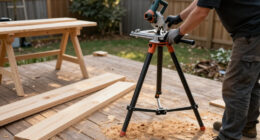

The DEWALT DCS565B is my best overall pick for buyers who want a brushless 6-1/2-inch saw in a familiar battery platform. For a larger blade and demanding cuts, the DEWALT DCS590B stands out; for compact, controlled work, the WORKPRO mini saw is easier to handle. The main tradeoffs are cutting capacity versus maneuverability, and established tool ecosystems versus kits that include batteries. I also weigh motor design, blade size, and what comes in the box, since those details affect the real cost and usefulness of a saw. Read on for the full comparison and help matching each pick to your work.

Get business pricing on tools and workshop supplies
- Business-only prices and quantity discounts
- Tax-exempt purchasing
- Multiple users, one account, clear invoices
Complete the kit


Key Takeaways
- The DCS565B earns the overall spot by pairing a brushless motor with a standard 6-1/2-inch blade size, a practical middle ground for general cutting.
- The DCS590B is the capacity pick: its 7-1/4-inch blade suits deeper cuts, but its larger format is less appealing for small, frequent tasks.
- Brushless models are the step-up choices in this lineup, while the DEKOPRO and WORKPRO kits include batteries that may matter more to buyers starting without a compatible platform.
- Mini saws serve a different job: the WORKPRO and laser-guide model favor compact handling, but their smaller blades limit the range of cuts they can take on.
- Battery compatibility can decide the shortlist: DEWALT, Makita, and Milwaukee bare tools make the most sense when you already own batteries and chargers from that system.


| cordless circular saw | Blade diameter | Voltage | No-load speed | Model |
|---|---|---|---|---|
| DEKOPRO 20V Cordless Circular | 6.5 inches (165 mm) | 20V | 4,500 RPM | — |
| Cordless Mini Circular Saw wit | — | 20V | 3,400 RPM | — |
| DEWALT 20V MAX Cordless Circul | 6-1/2 inches | 20V MAX | — | — |
| Makita XSS02Z 18V LXT Cordless | 6-1/2 inches | 18V | — | XSS02Z |
| WORKPRO 20V 4-1/2-Inch Cordles | 4-1/2 inches | 20V | 4,500 RPM | — |
| DEWALT 20V MAX XR Brushless Co | 7-1/4 inches | 20V MAX | Up to 5,500 RPM | DCS590B |
| DEWALT 20V MAX 6-1/2-Inch Brus | 6-1/2 inches | — | — | DCS565B |
| Makita XSH03Z 18V LXT Brushles | 6-1/2 inches | 18V | Up to 5,000 RPM | XSH03Z |
| Milwaukee M18 Cordless Lithium | 6-1/2 inches | — | — | 2630-20 |
More Details on Our Top Picks
DEKOPRO 20V Cordless Circular Saw, 6.5-Inch Blade, 4500 RPM, with Two Batteries and Charger
The DEKOPRO 20V is a practical entry point for buyers who need a full cordless setup: the kit includes two 4.0Ah batteries and a charger, so a second battery is ready while the first is in use. Its 6.5-inch blade and 4,500 RPM speed suit common wood-cutting jobs, while the laser guide and bevel adjustment add help for lining up and angling cuts. Compared with the DEWALT DCS391B, it offers batteries in the box, while the DEWALT has a faster listed motor and a deeper stated 90-degree cut. The tradeoff is less clarity around runtime and charging time, plus unusually large listed dimensions. This makes most sense for a new cordless-saw buyer who values a ready-to-use kit over a documented cutting capacity.
Pros:- Includes two 4.0Ah batteries and a charger
- 6.5-inch carbide-tipped blade for general wood cutting
- Adjustable bevel supports cuts up to 45 degrees
- Laser guide can help align straight cuts
Cons:- Battery runtime and charging time are not specified
- Listed 20 × 20 × 20-inch dimensions are unusually large for this tool
- Maximum cutting depth is not provided
Best for: DIYers starting without compatible 20V batteries who want a spare battery included for wood projects around the home
Not ideal for: Buyers who need verified runtime, compact storage dimensions, or a stated maximum cutting depth for material planning
- Voltage:20V
- Blade diameter:6.5 inches (165 mm)
- No-load speed:4,500 RPM
- Bevel range:0–45 degrees
- Blade teeth:24
- Batteries included:2 × 4.0Ah
- Item weight:4.29 kg
- Warranty:Limited
Our verdict“Choose the DEKOPRO if you need a complete cordless starter kit and can work within its limited published performance details.”
Cordless Mini Circular Saw with 20V Battery and Laser Guide
At 4 pounds, this mini saw is the easiest fit here for portable, smaller cutting jobs where a full-size circular saw feels cumbersome. Its 4.5-inch blade can cut up to 1-11/16 inches at 90 degrees, and the kit includes blades for wood, soft metal, and plastic. That material range gives it more flexibility for light repair work than the wood-focused DEWALT DCS391B, but the DEWALT’s 6.5-inch blade and 2-1/8-inch stated cut depth are better suited to thicker stock and sheet goods. The mini saw’s single 2.0Ah battery also limits how much continuous work buyers can plan around before recharging or swapping packs. I’d choose it for brief, varied cuts and skip it for framing or repeated deep cuts.
Pros:- Light 4-pound design is easy to carry and handle
- Includes blades intended for wood, soft metal, and plastic
- Laser guide and ruler can aid cut alignment
- Adjustable depth and bevel support varied light-duty cuts
Cons:- 90-degree cutting depth tops out at 1-11/16 inches
- Only one 2.0Ah battery is included
- 3,400 RPM is lower than the listed speeds of the DEKOPRO and WORKPRO saws
Best for: Apartment DIYers and repair hobbyists making occasional shallow cuts in wood, plastic, or soft metal
Not ideal for: Carpenters cutting thick lumber or sheet goods who need greater depth and a larger blade
- Voltage:20V
- Blade size:4-1/2 inches
- No-load speed:3,400 RPM
- Battery:One 2.0Ah battery
- Weight:4 lbs
- Cut depth at 90°:1-11/16 inches
- Cut depth at 45°:1-1/8 inches
- Bevel range:Up to 45°
- Included accessories:HSS and TCT blades, guide ruler, laser guide, dust pipe, charger, Allen wrench, and two button batteries
Our verdict“Pick this mini saw for portable, shallow DIY cuts across several materials, but choose a full-size model for thicker wood.”
DEWALT 20V MAX Cordless Circular Saw, 6-1/2-Inch Blade (DCS391B)
The DEWALT DCS391B earns this spot for buyers who prioritize a fast motor and useful cutting depth in a manageable 6.5-inch format. Its listed 5,150 RPM speed and 2-1/8-inch cut at 90 degrees make it better suited to demanding wood and sheet-good cuts than the smaller 4.5-inch WORKPRO mini saw, which is limited to 1-11/16 inches at 90 degrees. A 50-degree bevel range also allows more angle flexibility than the DEKOPRO’s 45-degree limit. The magnesium shoe helps keep the tool lighter than some full-size options, though its 3.16 kg listed weight still matters during overhead work. This is a bare tool: buyers need a compatible 20V MAX battery and charger, unlike the DEKOPRO kit.
Pros:- 5,150 RPM motor is the highest listed speed among these five saws
- 2-1/8-inch maximum cut depth at 90 degrees
- Bevel capacity reaches 50 degrees
- Magnesium shoe and comfort grip support controlled handling
Cons:- Battery and charger are sold separately
- Heavier than the 4-pound mini circular saw
- Only 18 blade teeth are specified
Best for: Woodworkers already on DEWALT 20V MAX who need a full-size saw for sheet goods, lumber, and angled cuts
Not ideal for: First-time cordless-tool buyers without a compatible battery and charger, or anyone seeking a ready-to-run bundle
- Voltage:20V MAX
- Blade diameter:6-1/2 inches
- Speed:5,150 RPM
- Blade teeth:18
- Maximum cut depth at 90°:2-1/8 inches
- Maximum cut depth at 45°:1-5/8 inches
- Maximum bevel angle:50 degrees
- Weight:3.16 kg
- Warranty:3-year limited warranty
Our verdict“Choose the DCS391B for stronger full-size cutting capacity if you already own DEWALT 20V MAX batteries.”
Makita XSS02Z 18V LXT Cordless 6-1/2-Inch Circular Saw (Tool Only)
The Makita XSS02Z is the straightforward choice for buyers already invested in the 18V LXT platform who want a full-size saw with a durable precision-machined aluminum base. Its stated 2-1/4-inch capacity at 90 degrees is slightly deeper than the DEWALT DCS391B’s 2-1/8 inches, while both offer bevel cuts up to 50 degrees. The Makita’s 3,700 RPM motor is slower on paper than the DEWALT’s 5,150 RPM, so the DEWALT looks better for buyers focused on motor speed. In return, the aluminum base and rubberized handle make this a practical fit for routine cutting where stable support and familiar platform compatibility matter. The battery is not included, and its 7.3-pound weight with battery may feel substantial for overhead or extended one-handed work.
Pros:- 2-1/4-inch cutting capacity at 90 degrees
- Aluminum base is precision machined
- Bevel range extends from 0 to 50 degrees
- Rubberized soft-grip handle supports a secure hold
Cons:- Battery is not included
- 3,700 RPM is slower than the DEWALT DCS391B’s listed 5,150 RPM
- 7.3 pounds with battery is relatively heavy for extended overhead use
Best for: Makita LXT users who need a full-size cordless saw with a robust base for regular lumber and panel cuts
Not ideal for: Buyers who need a complete kit, prioritize the highest listed motor speed, or want a light saw for overhead cuts
- Model:XSS02Z
- Voltage:18V
- Battery platform:Makita LXT
- Motor speed:3,700 RPM
- Blade diameter:6-1/2 inches
- Cutting capacity at 90°:2-1/4 inches
- Bevel capacity:0°–50°
- Weight:7.3 lbs. with battery
- Base material:Aluminum
Our verdict“Pick the XSS02Z if Makita LXT compatibility and a sturdy aluminum base matter more to you than the highest listed speed.”
WORKPRO 20V 4-1/2-Inch Cordless Mini Circular Saw with 4.0Ah Battery
The WORKPRO 20V mini saw gives compact-tool buyers a more complete package than the 4-pound mini saw in this roundup: it includes a 4.0Ah battery, fast charger, three blades, and storage bag. Its 4,500 RPM speed matches the full-size DEKOPRO’s listed speed, and its laser, parallel guide, and dust extraction attachment cover several setup and cleanup needs. The price of that compact format is cutting reach: its 1-11/16-inch depth at 90 degrees trails the DEWALT DCS391B’s 2-1/8 inches, so this is better for trim, panels, tile, plastic, PVC, and soft-metal tasks than thicker lumber. The listed saw weight is 4.36 pounds, but the full item weight is 9.6 pounds, a useful distinction for buyers comparing portability.
Pros:- Includes 4.0Ah battery and fast charger
- Three included blades cover wood, plastic, and tile
- Laser guide, parallel guide, and dust extraction attachment add practical setup features
- Bevel adjustment supports cuts up to 45 degrees
Cons:- Maximum 90-degree cut depth is 1-11/16 inches
- Listed full item weight is 9.6 pounds, more than the saw-only figure
- Compact blade has less reach than the DEWALT DCS391B’s 6.5-inch blade
Best for: DIYers wanting a compact multi-material saw kit for light renovations, trim, tile, and occasional PVC or plastic cuts
Not ideal for: Framers and frequent lumber cutters who need the deeper capacity of a 6.5-inch saw
- Voltage:20V
- Battery capacity:4.0Ah
- Blade diameter:4-1/2 inches
- No-load speed:4,500 RPM
- Cut depth at 90°:1-11/16 inches
- Cut depth at 45°:1-1/8 inches
- Weight:4.36 lbs. saw; 9.6 lbs. listed item weight
- Included blades:24T wood, 60T wood and plastic, diamond tile
- Warranty:Limited lifetime
Our verdict“Choose WORKPRO for a well-equipped compact kit and varied light-duty materials, but use a full-size saw for deep cuts.”
DEWALT 20V MAX XR Brushless Cordless 7-1/4-Inch Circular Saw, Tool Only (DCS590B)
The 7-1/4-inch blade and 2-9/16-inch cut depth at 90° make the DCS590B the strongest fit here for framing work that calls for deeper cuts in one pass. Its brushless motor reaches up to 5,500 RPM, and the electric brake stops the blade after release, a useful control feature when moving between cuts. Compared with the compact DEWALT DCS565B, this saw offers greater stated cutting depth, while the DCS565B is the more compact choice for lighter, easier-to-handle work. The tradeoff is size and setup: this is a tool-only model, so buyers need a compatible battery and charger, and its larger blade may be more saw than occasional trim or small-panel jobs require.
Pros:- Cuts up to 2-9/16 inches deep at 90°
- Brushless motor reaches up to 5,500 RPM
- Electric brake stops the blade after trigger release
Cons:- Battery and charger are not included
- Larger blade may be less convenient for compact or lighter-duty jobs
Best for: DEWALT 20V MAX owners who regularly cut framing lumber and need the extra depth of a 7-1/4-inch blade
Not ideal for: DIYers focused on trim, small panels, or compact handling, who may prefer the 6-1/2-inch DEWALT DCS565B
- Brand:DEWALT
- Model:DCS590B
- Voltage:20V MAX
- Blade diameter:7-1/4 inches
- Motor:Brushless
- No-load speed:Up to 5,500 RPM
- Maximum cut depth at 90°:2-9/16 inches
- Maximum cut depth at 45°:2 inches
- Brake:Automatic electric brake
Our verdict“Choose the DCS590B for deeper framing cuts on the DEWALT 20V MAX platform if you already have a compatible battery.”
DEWALT 20V MAX 6-1/2-Inch Brushless Cordless Circular Saw, Tool Only (DCS565B)
The DCS565B suits buyers who want a compact 6-1/2-inch saw with helpful jobsite details: an LED for cut visibility, a tool-free bevel adjustment from 0° to 50°, and a built-in rafter hook. Its electric brake adds control between cuts. Compared with the larger-blade DEWALT DCS590B, this model prioritizes easier handling over the deeper cut capacity associated with a 7-1/4-inch blade. It also accepts DEWALT 20V MAX and FLEXVOLT batteries, which can make it a practical fit for an existing tool collection. The compromises are that the battery and charger are sold separately, and the dust chute is optional, so dust collection requires an additional accessory.
Pros:- Compact, lightweight design
- LED helps illuminate the cutting area
- Tool-free bevel adjustment from 0° to 50°
- Compatible with DEWALT 20V MAX and FLEXVOLT batteries
Cons:- Battery and charger are not included
- Dust chute is optional
Best for: DEWALT 20V MAX or FLEXVOLT users who want a smaller saw for routine cuts, bevels, and overhead storage
Not ideal for: Framers who need the greater stated cut depth of a 7-1/4-inch saw such as the DEWALT DCS590B
- Brand:DEWALT
- Model:DCS565B
- Blade diameter:6-1/2 inches
- Motor:Brushless
- Bevel capacity:0° to 50°
- Battery compatibility:DEWALT 20V MAX and FLEXVOLT
- Dust chute:Optional; compatible with AirLock or a 35 mm dust extractor
- Included:Tool only
Our verdict“Pick the DCS565B for compact handling and bevel flexibility if you already use DEWALT batteries.”
Makita XSH03Z 18V LXT Brushless Cordless 6-1/2-Inch Circular Saw
Makita’s XSH03Z is the pick for LXT users who value a motor that adapts during the cut. Its Automatic Speed Change technology adjusts speed and torque to the task, while the brushless motor is designed to use battery energy efficiently. The stated 5,000 RPM suits cutting and ripping, giving this 6-1/2-inch saw a clear performance focus compared with the Milwaukee 2630-20, whose listed speed is 3,500 RPM. Those speed figures do not alone determine cut quality, but they show the different motor specifications buyers are choosing between. The XSH03Z is a bare tool, so it makes most sense for someone already invested in Makita’s 18V LXT platform; buyers starting from scratch need to account for the missing battery and charger.
Pros:- Brushless motor reaches up to 5,000 RPM
- Automatic Speed Change adjusts speed and torque during cutting
- Motor is designed for efficient battery use
- Uses the Makita 18V LXT battery platform
Cons:- Battery and charger are not included
- The supplied data does not state maximum cut depth
Best for: Makita 18V LXT owners who want a brushless 6-1/2-inch saw with speed and torque adjustment during cuts
Not ideal for: Buyers without Makita LXT batteries, or those seeking a kit with battery and charger included
- Model:XSH03Z
- Voltage:18V
- Battery platform:LXT Lithium-Ion
- Motor:Brushless
- No-load speed:Up to 5,000 RPM
- Blade diameter:6-1/2 inches
- Power source:Cordless
- Included:Tool only
Our verdict“Choose the XSH03Z if you already own Makita LXT batteries and want adaptive motor control in a 6-1/2-inch saw.”
Milwaukee M18 Cordless Lithium-Ion 6-1/2-Inch Circular Saw, 2630-20 (Bare Tool)
The Milwaukee 2630-20 emphasizes durable construction, pairing magnesium blade guards with an aircraft aluminum shoe. That build may appeal to M18 users who want a sturdy base for guiding cuts and guards made from a lightweight metal. Its listed 3,500 RPM is lower than the Makita XSH03Z’s 5,000 RPM, so the published motor figures make the Makita the more compelling match for buyers focused on higher no-load speed. Milwaukee’s soft-grip handle gives this model a comfort-focused detail, but the supplied information does not state its cut depth, bevel range, or motor type, which makes capability comparisons harder. It is a bare tool, with no battery or charger specified as included, so platform owners are the clearest audience.
Pros:- Magnesium upper and lower blade guards
- Aircraft aluminum shoe
- Soft-grip handle
- Cordless lithium-ion platform
Cons:- Battery and charger are not specified as included
- Listed speed of 3,500 RPM is below the Makita XSH03Z’s 5,000 RPM
- Supplied product data does not state cut depth or bevel capacity
Best for: Milwaukee M18 owners who prioritize metal guards, an aluminum shoe, and a soft-grip handle in a 6-1/2-inch saw
Not ideal for: Buyers who need published cut-depth and bevel specifications to compare capacity, or those seeking a battery-and-charger kit
- Brand:Milwaukee
- Model:2630-20
- Power source:Cordless lithium-ion
- Blade diameter:6-1/2 inches
- Speed:3,500 RPM
- Upper and lower guards:Magnesium
- Shoe:Aircraft aluminum
- Tool configuration:Bare tool
Our verdict“The 2630-20 is a fit for M18 owners who value its stated metal construction and grip, provided its unspecified cutting capacity meets their needs.”

How We Picked
I compared these saws on the factors that most affect buying decisions: blade diameter and resulting cut capacity, motor type, battery platform, handling, and whether the listing includes batteries and a charger. I gave each model a distinct role based on the work its format and stated features best support, rather than treating every saw as a substitute for every other one.
The ranking favors versatility for common cutting tasks, then gives specialized picks credit when a larger blade, compact body, or included battery kit better serves a specific buyer. That puts the brushless 6-1/2-inch DEWALT DCS565B first as a balanced option, while the 7-1/4-inch DCS590B ranks higher for capacity-focused work and the smaller saws rank for portability. Bare tools can be a good fit for existing platform owners, but their value depends on already having compatible batteries and a charger. Product names and listed specifications are the basis for this comparison; I do not claim hands-on testing.
Factors to Consider When Choosing Best Cordless Circular Saw
Choosing a cordless saw starts with the cuts you make most often and the batteries you already own. These broader checks can help narrow the field before you compare individual models.
Choose Blade Size Around Your Deepest Routine Cut
A larger blade can make deeper cuts in a single pass, which matters for thick stock and some framing work. That extra capacity comes with a larger saw profile, so it can feel cumbersome for short, repetitive cuts or work in tight spaces. A 6-1/2-inch format is a common middle ground for general home and jobsite tasks, while mini saws suit narrower roles. Check the stated maximum cut depth at both 90 and 45 degrees before buying; the blade label alone does not tell you how much material the saw can cut at an angle. If your deepest cuts are occasional, you may prefer a more manageable saw and plan those cuts differently. Pick the blade size based on the material you actually expect to cut, not a rare worst-case scenario.
Treat Battery Compatibility as Part of the Purchase
A bare tool only makes financial and practical sense if you own a compatible battery and charger, and battery fit is brand and platform specific. A battery included with a saw kit can make the tool usable right away, but check whether the kit also supplies a charger and whether the battery capacity fits your workload. Higher-capacity batteries can add runtime, though they also add weight to the saw. If you are building a collection, staying within one platform can reduce the number of chargers and battery types you maintain. If you are buying only one saw, compare the complete kit contents instead of judging by the tool name alone. Confirm platform compatibility in the product documentation before ordering.
Understand What Brushless Changes
Brushless motors eliminate motor brushes, which can reduce one source of wear and support efficient power delivery. That can be useful when a saw sees frequent work or when you want a higher-tier tool for a battery platform you already use. It does not automatically make every brushless model the right fit: blade size, ergonomics, and battery availability still shape the experience. A brushed saw may meet occasional DIY needs if its capacity and handling fit the job. Compare the whole tool and kit rather than treating motor type as a guarantee of cutting performance. Also check the manufacturer’s care and maintenance guidance for the specific model.
Match the Saw’s Format to Your Work Area
Compact saws can be easier to carry, position, and control for smaller projects, but their smaller blades restrict cutting depth and the materials they can handle in one pass. A full-size circular saw is more adaptable for sheet goods and broader construction tasks, though it takes more space and may feel less nimble. Think about where you will make cuts: a crowded workshop, a ladder, or a clear bench create different handling demands. A laser guide can help indicate a cut line, but it does not replace careful alignment and a stable workpiece. Before choosing a mini model, list the materials and thicknesses you expect to cut. If those vary widely, flexibility may be more useful than the smallest form factor.
Plan for Safe, Repeatable Cuts
Useful cut quality depends on more than motor speed: a sharp, suitable blade, a supported workpiece, and a steady cutting path all matter. Check what blade comes with the saw and whether the arbor and blade size make replacement blades easy to source. For repeated straight cuts, a compatible guide or straightedge can improve consistency more than an added sighting feature. Read the manual for blade changes, guard operation, and the saw’s supported cutting positions before use. Keep hands clear of the cutting path and secure the material so it cannot shift or pinch the blade. Buyers often focus on included accessories but overlook whether the blade supplied suits their material.
Frequently Asked Questions
Should I buy a bare-tool circular saw or a kit with batteries?
A bare tool is usually the simpler choice when you already own batteries and a charger that match the saw’s platform. If you do not, compare the complete kit contents, since a battery-only bundle may still leave you without a charger. Also consider battery capacity: a small battery can keep the saw lighter but may mean more frequent changes during longer sessions. Avoid assuming that batteries from different brands or product lines will fit. For a first cordless tool, the included battery and charger can matter as much as the saw itself.
Is a 7-1/4-inch cordless saw worth choosing over a 6-1/2-inch model?
Choose the larger blade when your regular work calls for more cut depth or you want a format suited to broader construction tasks. A 6-1/2-inch saw is often easier to manage for general cutting and can be a more comfortable size for home projects. The larger format does not make every cut faster or easier, especially in tight spaces. Check the depth specifications at straight and bevel angles against your materials. If you rarely need the extra depth, the smaller format may be the more useful everyday tool.
Will a mini circular saw replace a full-size saw for home projects?
A mini saw can handle select smaller cuts and may be easier to position for compact work. Its smaller blade limits cutting depth, so it may not cover thicker stock or broader construction tasks as readily as a standard circular saw. Review the model’s cut-depth specifications and compare them with the materials you own before relying on it as your only saw. If your projects include both thin panels and thicker lumber, a full-size model offers more flexibility. Treat compact size as a benefit for a defined set of tasks, not proof that the tool can do everything a larger saw can.
Does brushless matter if I only use a circular saw occasionally?
Brushless construction can be attractive if you expect frequent use or are investing in a platform you plan to expand. For occasional tasks, the fit of the blade size, the saw’s handling, and battery availability may matter more day to day. A brushed model can still suit intermittent DIY work when its stated capacity matches the job. Consider the kind of workload you expect over the life of the tool, rather than choosing by motor label alone. Compare the complete model specifications and included equipment before deciding.
What should I check before using the included blade on my materials?
Confirm that the blade diameter and arbor fit the saw, then check that its type and tooth configuration suit the material and cut you plan to make. A general-purpose blade may not leave the finish you want in every material. Look at the saw’s manual for approved blade specifications and installation steps. Replace a damaged or dull blade rather than forcing the saw through a cut. A compatible guide and secure work support can also improve consistency, but neither can compensate for an unsuitable blade.
Conclusion
For one versatile pick, I recommend the DEWALT DCS565B as best overall, with its brushless motor and 6-1/2-inch format. Buyers seeking best value should compare the DEKOPRO kit’s included batteries and charger with the WORKPRO mini kit, choosing based on whether they need standard or compact cutting capacity. The DEWALT DCS590B is my best premium choice for buyers who need the larger blade format and already use the DEWALT battery system. Beginners with small projects may find the WORKPRO mini saw easier to approach, while buyers with an established Makita or Milwaukee platform should weigh the matching bare-tool options. Choose the mini format for compact tasks, the 7-1/4-inch saw for greater depth, and a standard 6-1/2-inch model for the broadest everyday fit.
Fall yard work Picks
leaf blowers
As an affiliate, we earn on qualifying purchases.