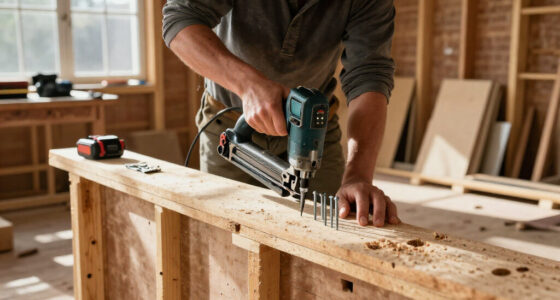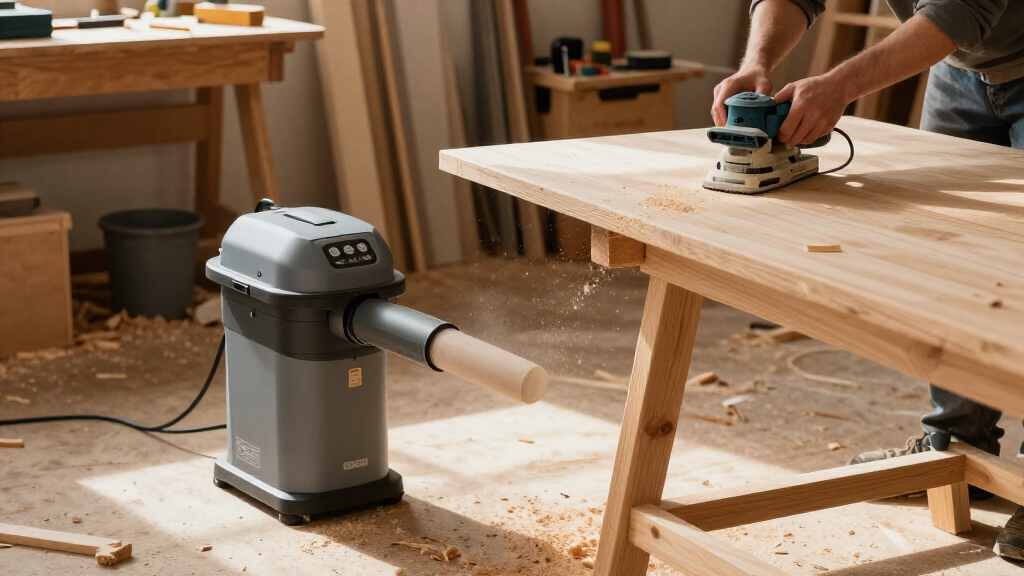
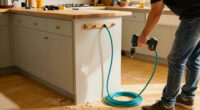
For portable dust extractors for woodworking, my best overall pick is the Festool CT 15 for its HEPA filtration, automatic tool start, and compact extractor format. The WEN DC1300 is a stronger match for moving larger volumes of dust around a shop, while the ECOMAX pairs a HEPA filter with a wet/dry vacuum design and semi-automatic filter cleaning. The main choice is between high-airflow collectors for stationary machines and finer-filtering extractors that connect directly to portable tools. Capacity, mobility, filtration, and the type of dust-producing work you do all shape the right fit. Continue reading for the full breakdown and a guide to matching each design to your workshop.

Get business pricing on tools and workshop supplies
- Business-only prices and quantity discounts
- Tax-exempt purchasing
- Multiple users, one account, clear invoices
Complete the kit



Key Takeaways
- The lineup splits into two designs: the WEN DC1300, WEN DC3474, WEN DC3401, VEVOR, and POWERTEC are dust collectors built around airflow and bags, while Festool, ECOMAX, and DYNAVEX use extractor or shop-vac-style formats.
- Festool CT 15 leads for portable power-tool extraction thanks to HEPA filtration and automatic tool start, but its design is a different fit from a high-capacity collector for several stationary machines.
- WEN DC1300 prioritizes shop-wide capacity: its stated 1,300 CFM and 50-gallon bag make it the clearest choice here for larger dust loads, at the cost of a bigger footprint than compact extractors.
- VEVOR and POWERTEC share a 1 HP, 560 CFM class, but their listed bag filtration differs: VEVOR specifies a 2.5-micron bag, while POWERTEC specifies 1 micron.
- The smaller WEN collectors trade capacity for a more adaptable footprint: DC3474 has a 15-gallon bag and optional wall mount, while DC3401 uses a 12-gallon bag; neither should be mistaken for a HEPA shop vacuum.


| portable dust extractors for woodworking | Motor | Airflow | Collection capacity | Bag filtration |
|---|---|---|---|---|
| WEN Woodworking Dust Collector | 7.4-amp induction motor | Up to 600 CFM | 15 gallons | 5 microns |
| VEVOR Dust Collector | 1 HP induction motor | 560 CFM | 21 gallons (80 L) | 2.5 microns |
| ECOMAX Dust Extractor | — | — | — | — |
| WEN DC1300 1,300 CFM 14-Amp 5- | 14 amps | Up to 1,300 CFM | 50 gallons | — |
| DYNAVEX 10 Amp Woodworking Dus | 10 amps; 1.5 HP | 142 CFM | — | — |
| WEN Woodworking Dust Collector | 5.7-amp brushed motor | — | 12 gallons | 5 microns |
| Festool 578441 CT 15 Dust Extr | — | — | — | — |
| POWERTEC 1 HP | 1 HP induction motor | — | — | 1 micron |
More Details on Our Top Picks
WEN Woodworking Dust Collector, 7.4-Amp Induction Motor with 15-Gallon Bag, Mobile Base, and Optional Wall Mount (DC3474)
I’d choose the WEN DC3474 for a small shop that needs a mobile collector for one tool at a time, without stepping up to a larger floor unit. Its stated 600 CFM airflow and standard 4-inch inlet suit many woodworking machines, while swivel casters and an onboard handle make it easier to reposition than a wall-mounted collector such as the VEVOR 1 HP. The optional wall mount also gives it a useful space-saving setup when the floor is tight.
The tradeoff is its 5-micron bag filtration: it collects chips and coarser dust, but buyers focused on finer airborne dust may prefer the VEVOR’s stated 2.5-micron bag or a HEPA shop-vac extractor such as the ECOMAX. Its 15-gallon capacity is also smaller than the VEVOR’s 21 gallons, so expect more frequent emptying during heavy work.
Pros:- Up to 600 CFM airflow suits general collection from many woodworking tools.
- Swivel casters and an onboard handle support moving it around a small shop.
- Optional wall mount offers a way to free floor space.
- 15-gallon zippered bag is larger than a small shop-vac canister.
Cons:- The 5-micron bag is less suited to fine airborne dust than the VEVOR’s stated 2.5-micron bag.
- One 4-inch inlet limits it to a single tool connection at a time.
- Its 15-gallon capacity is below the VEVOR’s 21-gallon bag and the WEN DC1300’s 50-gallon bag.
Best for: Woodworkers with a compact garage shop who need a movable collector for a single 4-inch-port machine and may want to reclaim floor space with wall mounting.
Not ideal for: Woodworkers prioritizing finer dust filtration, long runs between emptying, or simultaneous collection from multiple machines.
- Motor:7.4-amp induction motor
- Airflow:Up to 600 CFM
- Impeller:9 inches
- Dust port:4 inches
- Collection capacity:15 gallons
- Bag filtration:5 microns
- Dimensions:43.3 x 17.7 x 20.1 inches
- Weight:41.1 pounds
- Warranty:Two years
Our verdict“Pick the DC3474 if you want a mobile, wall-mountable collector for one woodworking machine and can accept 5-micron filtration.”
VEVOR Dust Collector, Wall Mount Dust Collector 1 HP, 560 CFM Woodworking Dust Collector with 2.5 Micron Collection Bag
The VEVOR wall-mount collector makes the most sense when floor space matters more than easy repositioning. Its 21-gallon bag holds more than the WEN DC3474’s 15-gallon bag, and the stated 2.5-micron filtration is finer than the WEN’s 5-micron rating. That pairing gives a small or medium shop a practical fixed collection point with less frequent bag emptying and better stated filtration for routine woodworking dust.
Its 560 CFM airflow is slightly below the DC3474’s 600 CFM, and the wall-mounted format is less flexible if machines move around the shop. This is a bag-style collector, not a HEPA power-tool extractor like the ECOMAX; buyers seeking automatic tool activation or a canister suited to cleanup should look there instead. The bottom zipper simplifies emptying, though the supplied information does not specify a hose or tool-trigger outlet.
Pros:- Wall-mounted design keeps the collector off the shop floor.
- 21-gallon capacity reduces how often the bag needs emptying compared with the WEN DC3474.
- 2.5-micron bag filtration is finer than the DC3474’s stated 5-micron filtration.
- Bottom zipper provides a direct way to empty the bag.
Cons:- Fixed mounting makes it less adaptable to changing tool locations than mobile collectors.
- Stated 560 CFM is lower than the WEN DC3474’s 600 CFM.
- No HEPA filter or automatic power-tool activation is specified.
Best for: Small-shop woodworkers with a fixed machine layout who want wall-mounted collection, a larger bag, and finer stated filtration than the WEN DC3474.
Not ideal for: People who frequently rearrange tools, need a mobile extractor with power-tool activation, or require HEPA filtration.
- Motor:1 HP induction motor
- Airflow:560 CFM
- Collection capacity:21 gallons (80 L)
- Bag filtration:2.5 microns
- Noise level:Up to 90 dB
- Mounting:Wall mount
- Bag material:Non-woven
- Bag emptying:Bottom zipper
Our verdict“Choose the VEVOR if you can dedicate wall space to a fixed collector and value bag capacity and finer stated filtration over mobility.”
ECOMAX Dust Extractor, Shop Vac, Semi-Auto Filter Clean, HEPA Filter, 8-Gallon Stainless Steel Tank, 6.5 HP Wet Dry Vacuum
Unlike the bag-style WEN DC1300, the ECOMAX dust extractor is built around direct connection to a power tool and cleanup beyond sawdust. Its automatic tool activation starts the vacuum when a connected tool runs, while the HEPA filter and semi-automatic filter cleaning are aimed at maintaining dust control during sanding and other fine-dust tasks. The anti-static hose adds a practical safety feature, and the wet/dry function plus drain make it more versatile for general shop cleanup than a dedicated collector.
The 8-gallon tank is far smaller than the DC1300’s 50-gallon bag, so chip-heavy work will mean more frequent emptying. It is also a canister vacuum, not a high-volume collector with large 4-inch ports; it is better matched to tool extraction than broad collection from a stationary machine. Buyers wanting a simple, high-capacity chip collector should compare the WEN or VEVOR instead.
Pros:- HEPA filter is suited to fine-dust extraction.
- Power-tool activation starts the vacuum with a connected tool.
- Semi-automatic filter cleaning helps address filter clogging during use.
- Wet/dry operation and a drain port broaden cleanup use beyond woodworking dust.
Cons:- Eight-gallon tank fills sooner than the WEN DC1300’s 50-gallon collection bag.
- Canister format and supplied hose are less suited to high-volume collection from large stationary machines.
- The listed product information does not provide an airflow rating for comparison.
Best for: Woodworkers who use sanders and other compatible power tools and want HEPA filtration, automatic start, and wet/dry cleanup in one portable unit.
Not ideal for: Shops producing large volumes of chips from stationary machines that need high airflow and a large collection bag.
- Voltage:120 V
- Tank capacity:8 gallons
- Filter:HEPA
- Filter cleaning:Semi-automatic
- Power-tool activation:Automatic start when connected tool turns on
- Hose:10-foot anti-static hose
- Tank material:Stainless steel
- Dimensions:15.6 x 15.2 x 24.8 inches
Our verdict“Choose the ECOMAX for HEPA-filtered, tool-triggered extraction and general cleanup, not as a substitute for a high-capacity chip collector.”
WEN DC1300 1,300 CFM 14-Amp 5-Micron Woodworking Dust Collector with 50-Gallon Collection Bag and Mobile Base
For a shop generating more chips than a compact extractor can comfortably handle, I’d put the WEN DC1300 ahead of the smaller WEN DC3474. Its stated 1,300 CFM airflow, two 4-inch inlets, and 50-gallon bag are designed for higher-volume collection and can connect to two tools at once. That makes it a better fit for a larger, more permanent workshop where moving dust from several machines matters more than compact storage.
The scale brings real limits: this is bulkier than the DC3474 and not as convenient for close-up sanding or quick floor cleanup as the ECOMAX canister extractor. Its 5-micron filtration also falls short of the ECOMAX’s HEPA setup for fine dust. The mobile base helps reposition the unit around a shop, but it does not make this a small, tool-triggered extractor.
Pros:- Up to 1,300 CFM airflow exceeds the smaller WEN DC3474’s stated 600 CFM.
- Dual 4-inch inlets allow connection to as many as two tools.
- 50-gallon collection bag reduces interruptions to empty dust.
- Mobile base with four swivel casters aids movement around the shop.
Cons:- 5-micron filtration is less suited to fine dust than the ECOMAX’s HEPA filter.
- Large capacity and floor-base design take more workshop space than a canister extractor.
- No automatic power-tool activation is specified.
Best for: Woodworkers with a larger shop and chip-producing machines who need high airflow, two tool connections, and long intervals between emptying.
Not ideal for: Small-shop users needing a compact tool-triggered extractor or anyone prioritizing HEPA filtration for fine sanding dust.
- Motor:14 amps
- Airflow:Up to 1,300 CFM
- Impeller:10-inch steel impeller
- Impeller speed:Up to 3,450 RPM
- Dust inlets:Two 4-inch inlets
- Collection capacity:50 gallons
- Filtration:5 microns
- Base:Mobile base with four swivel casters
Our verdict“Pick the DC1300 for a spacious shop that needs high-volume, two-tool collection rather than compact HEPA extraction.”
DYNAVEX 10 Amp Woodworking Dust Extractor Portable 12 Gal. Tank
The DYNAVEX 12-gallon extractor bridges the gap between a small shop vacuum and a larger bag collector. Its linked tool switch starts the extractor with a connected tool, a useful convenience that the WEN DC3474 and DC1300 do not specify. The 12-gallon tank also gives it more capacity than many compact vacuums, while optional wheels support moving it between a garage, workshop, or jobsite.
Its stated 142 CFM airflow is well below the WEN DC1300’s 1,300 CFM, so I would not choose it for high-volume collection from multiple stationary machines. The tool outlet has a strict 550-watt limit and a one-hour continuous-use limit, which narrows compatibility and long-session use. The listing identifies a HEPA filter, but provides no filtration class or filter-cleaning system details; the ECOMAX offers more specified filter-management features.
Pros:- Linked switch starts extraction with a connected power tool.
- 12-gallon tank offers more capacity than a compact shop vacuum.
- HEPA filter is listed for fine-dust collection.
- Optional wheels support moving the unit between work areas.
Cons:- 142 CFM airflow is far below the WEN DC1300’s stated 1,300 CFM for high-volume collection.
- Connected tool must not exceed 550 watts.
- Continuous use through the linked setup is limited to one hour, and filter-cleaning details are not supplied.
Best for: Mobile woodworkers who want a 12-gallon extractor with automatic tool activation for compatible lower-wattage tools.
Not ideal for: Users with tools above the 550-watt linked-outlet limit, extended continuous sessions, or high-volume stationary machines.
- Motor:10 amps; 1.5 HP
- Airflow:142 CFM
- Tank capacity:12 gallons
- Filter:HEPA
- Tool activation:Linked auto-start switch
- Connected tool limit:550 watts maximum
- Continuous-use limit:One hour maximum
- Mobility:Optional wheels
- Hose:4-inch diameter, 6.5 feet long
Our verdict“Choose the DYNAVEX for portable, tool-triggered extraction with compatible lower-wattage tools, but skip it for heavy chip loads or extended sessions.”
WEN Woodworking Dust Collector, 5.7-Amp Motor with 12-Gallon Bag, Mobile Base, and Optional Wall Mount (DC3401)
The WEN DC3401 makes the most sense when a small shop needs source collection without giving a dust collector permanent floor space. Its 17-pound body, lockable casters, carrying handle, and optional wall mount make it easier to move or store than the heavier POWERTEC DC5372. The 4-inch inlet connects to a compatible woodworking machine, while the stated airflow of up to 660 CFM gives it a higher advertised figure than the POWERTEC’s 560 CFM; those figures alone don’t establish real-world performance across different setups. Its 12-gallon, 5-micron bag offers more stated capacity than the Festool CT 15’s 15-liter container, but the Festool is the better fit for buyers prioritizing HEPA filtration and tool-triggered operation. The WEN’s main compromise is its 5-micron bag, which is less suited to fine-dust control than a HEPA extractor or the POWERTEC’s 1-micron bag.
Pros:- Light 17-pound design with a carrying handle for easier repositioning and storage.
- Optional wall mount frees up floor space when the collector is not in use.
- Lockable swivel casters help keep the unit in place beside a machine.
- 12-gallon bag provides substantial collection capacity for a compact unit.
Cons:- The included 5-micron bag offers less fine-particle filtration than the POWERTEC’s 1-micron bag or Festool’s HEPA filter.
- A single 4-inch inlet is best suited to one compatible machine at a time, not a multi-branch duct network.
- Brushed motor requires routine brush maintenance.
Best for: Woodworkers with a compact shop who want a lightweight collector they can roll between machines or mount on a wall.
Not ideal for: Buyers prioritizing fine-dust filtration or automatic tool-start convenience; the 5-micron bag and listed one-speed operation are less tailored to those needs than the Festool CT 15.
- Motor:5.7-amp brushed motor
- Maximum airflow:Up to 660 CFM
- Impeller:6-inch nylon impeller
- Inlet:4 inches
- Collection capacity:12 gallons
- Bag filtration:5 microns
- Weight:17 pounds
- Dimensions:34.25 x 13 x 14.2 inches
- Mobility and mounting:Four lockable swivel casters; optional wall mount
Our verdict“Choose the DC3401 if you want a lightweight, storable collector for one machine and can accept its less-fine bag filtration.”
Festool 578441 CT 15 Dust Extractor – HEPA Filter, Automatic Tool Start, High-Power Suction & AutoClean System
The Festool CT 15 is the choice here for buyers who value HEPA filtration and a more integrated cleanup setup over the large bags and high stated airflow of workshop collectors. Automatic tool start can coordinate extraction with a connected tool, while the included crevice and upholstery nozzles make the unit useful for cleanup beyond a machine’s dust port. That puts it in a different lane from the WEN DC3401 and POWERTEC DC5372, both of which use 4-inch inlets and larger collection bags for direct machine collection. The CT 15’s 15-liter container is comparatively modest, so frequent heavy chip production may call for more emptying than either bag-style collector. The description also lists an AutoClean system, but buyers should verify the exact configuration and how it operates before treating that feature as a substitute for routine filter care.
Pros:- HEPA filter is a strong fit for fine-dust-conscious indoor work.
- Automatic tool start can reduce the need to switch extraction on and off separately.
- Included crevice and upholstery nozzles support cleanup around the shop and work area.
- Compact mobile chassis and onboard storage keep accessories with the extractor.
Cons:- The 15-liter container is smaller than the 12-gallon bags on the WEN DC3401 and POWERTEC DC5372.
- The provided product data does not state airflow or inlet diameter, making direct capacity comparisons harder.
- A canister extractor is less suited to collecting high volumes of coarse chips than a dedicated bag-style collector.
Best for: Woodworkers doing sanding or indoor finishing who want HEPA filtration, automatic tool-start functionality, and onboard cleanup accessories.
Not ideal for: Shops producing large volumes of planer or sawdust chips, or buyers who need a plainly specified 4-inch connection and large bag capacity like the WEN DC3401 or POWERTEC DC5372.
- Filter:HEPA
- Container capacity:15 liters (3.96 gallons)
- Tool operation:Automatic tool start listed
- Filter-cleaning feature:AutoClean system listed
- Included accessories:Crevice and upholstery nozzles
- Power source:Corded electric
- Controls:Touch operation
- Chassis:Mobile chassis with steel axles
Our verdict“Pick the CT 15 for HEPA-focused extraction and tool-linked cleanup, but choose a larger bag collector for sustained, high-volume chip collection.”
POWERTEC 1 HP, 560 CFM Portable Dust Collector with 1 Micron Dust Collector Bags, Dust Collectors for Woodworking Dust Collection System (DC5372)
The POWERTEC DC5372 is a practical middle ground for a small woodworking shop that wants a dedicated, mobile bag collector and finer stated bag filtration than the WEN DC3401. Its 1-micron reusable bag includes a viewing window and bottom zipper, so checking fill level and emptying dust are straightforward. The 1 HP induction motor and 560 CFM rating suit a single machine connected through the 4-inch port; they are not the same proposition as the much higher-capacity WEN DC1300, which is aimed at larger collection demands. The POWERTEC weighs 43.6 pounds, considerably more than the 17-pound DC3401, so its casters help with repositioning but do not make it a lightweight carry-around unit. One maintenance detail matters: the inlet grate can accumulate debris and needs periodic inspection to prevent restricted airflow.
Pros:- Reusable 1-micron bag offers finer stated filtration than the WEN DC3401’s 5-micron bag.
- Bag window makes fill level visible without opening the collector.
- Bottom zipper simplifies dust disposal.
- Dual-voltage 1 HP induction motor supports 120V or 240V operation.
Cons:- At 43.6 pounds, it is substantially heavier than the WEN DC3401 for transport between work areas.
- The 560 CFM rating is below the WEN DC3401’s stated maximum and is better matched to a single machine.
- The inlet grate can clog with debris and requires periodic checking.
Best for: Small-shop owners who want a wheeled, single-machine collector with a reusable 1-micron bag and a 4-inch connection.
Not ideal for: Woodworkers who need a very light unit to carry between jobs, a HEPA canister extractor, or higher airflow for a larger multi-machine collection setup.
- Motor:1 HP induction motor
- Voltage:120V or 240V
- Current draw:12 amps at 120V; 6 amps at 240V
- Motor speed:3,450 RPM
- Airflow capacity:560 CFM
- Inlet:4 inches
- Bag filtration:1 micron
- Weight:43.6 pounds
- Mobility:Casters
Our verdict“Choose the POWERTEC if a 1-micron bag and wheeled, single-machine collection matter more than low carry weight or HEPA filtration.”

How We Picked
I compared the eight options by how well their stated designs match common woodworking tasks: extracting dust at a handheld power tool, collecting debris from a stationary machine, or serving a mixed-use shop. I weighed listed airflow and collection capacity against filtration claims, tool-start features, filter-cleaning provisions, portability, and installation flexibility. A high CFM figure is useful for moving larger volumes of dust, but it does not by itself establish how effectively a unit captures fine dust at a tool or filters it before exhaust.
The ranking reflects those differences rather than treating every machine as interchangeable. Festool ranks first for tool-connected extraction and fine filtration features; the WEN DC1300 ranks highly for capacity and airflow; and ECOMAX offers a useful middle ground for buyers who want a wet/dry format with HEPA filtration and filter-cleaning support. The remaining picks suit narrower needs, from wall-mounted collection to compact bag-based setups. Product specifications in the names and supplied descriptions guide these comparisons; I do not assume unlisted accessories, tested performance, or compatibility with a buyer’s specific tools.
Factors to Consider When Choosing Portable Dust Extractors For Woodworking
Before choosing a machine, match its collection style to the dust source and the way your workspace is arranged. A portable extractor connected to a sander is not a direct substitute for a collector serving a table saw, and a large collection bag does not answer questions about fine-particle filtration. These checks can help you avoid paying for capacity you cannot use—or choosing a compact unit that cannot keep up with your machines.
Match airflow to the tool and dust source
Airflow figures matter most when they fit the machine and duct path you plan to use, not when they look impressive by themselves. A short hose attached to a sander has different demands from a longer run serving a stationary saw, and restrictive fittings can reduce the airflow that reaches the pickup. Check the tool maker’s dust-port requirements and the extractor’s connection size before buying. For a multi-machine shop, also decide whether you will move a hose between tools or leave a collector connected to one machine. A common mistake is treating a stated CFM rating as proof that a collector will capture every kind of dust equally well.
Choose filtration for the dust you make
Filtration claims deserve a closer look when you sand frequently or work with materials that produce fine dust. A HEPA filter designation, a micron-rated bag, and a dust collector’s general filtration description are not interchangeable claims. Check which filter is included, whether it is intended for the machine’s normal setup, and how replacement filters are obtained. Fine filtration also depends on a well-sealed system; leaks at a lid, bag, or hose connection can undermine the filter choice. If fine dust is your main concern, prioritize a clearly specified filtration system over capacity alone.
Balance bag or tank capacity against portability
Larger bags and tanks reduce how often you stop to empty the collector, but they can make a unit harder to store and move when full. A compact extractor may be easier to bring to a bench or carry between work areas, while a mobile-base collector is more suited to rolling around an open shop. Think about the path from storage to the work area, including doorways, cords, and uneven floors. Do not compare a gallon figure for a wet/dry tank directly with a dust bag capacity as though both measure the same usable dust volume. Pick the size that fits your routine, not just the largest number on the spec sheet.
Check tool-start and filter-cleaning features
Automatic tool start can reduce the number of switches you operate when using a compatible power tool, but verify the extractor’s outlet rating and the tool’s electrical demands before relying on it. Filter-cleaning features can help maintain suction as dust accumulates, though the method and how often it needs attention vary by model. Semi-automatic cleaning still calls for user involvement, so it is not the same as a fully unattended system. If you sand for long stretches, filter access and cleaning effort may matter more than a small difference in tank size. Read the operating instructions to learn which bags and filters are needed for the dust you collect.
Plan the layout before choosing a mobile or wall-mounted unit
Portability can mean a wheeled base, a compact tank, or a wall-mounted collector that frees up floor space; those arrangements solve different problems. A wall mount can work well when a machine stays in one area, but it is a poor match if you regularly move extraction between benches. A mobile collector needs enough clearance to turn and park without blocking walkways. Also account for hose reach, power access, and where the collector’s exhaust will go. Sketching the likely setup can reveal that a smaller, repositionable extractor is more useful than a larger unit that cannot reach your tools.
Know when paying for a more specialized extractor makes sense
A specialized extractor can be worthwhile when you connect it to portable tools often, need a stated fine-filtration feature, or value automatic tool start. If most of your dust comes from a stationary machine and you have room for a bag-based collector, added extractor features may not address your main need. Likewise, a lower-capacity unit may be a sensible choice for a one-tool bench rather than a compromise if it fits the work. Compare the complete setup, including hoses, fittings, bags, and replacement filters, since included accessories and compatibility can change the practical value. Spend on features tied to your real workflow, not on specifications you are unlikely to use.
Frequently Asked Questions
Should I choose a dust collector or a shop-vac-style extractor for woodworking?
Choose by the kind of tool you need to capture dust from. A bag-based collector such as the WEN DC1300 is oriented toward moving larger volumes of dust from stationary equipment, while the Festool CT 15 and ECOMAX use extractor or wet/dry-vac formats with features aimed at tool connection and filtration. Neither design automatically replaces the other across every workshop task. If you use both a table saw and a handheld sander, consider whether one unit can meet both tools’ connection and capture needs or whether separate systems make more sense. Check the tool’s dust-port guidance and the extractor’s filtration details before deciding.
Is a HEPA filter automatically better than a micron-rated dust bag?
Not as a standalone comparison: the claims describe different filtration specifications and may relate to different machine designs. In this lineup, Festool CT 15 and ECOMAX list HEPA filtration, while VEVOR specifies a 2.5-micron bag and POWERTEC a 1-micron bag. Those labels do not alone tell you how much dust a complete setup captures at the tool, or whether the system is sealed. Check the exact filter included, any compatible upgrades, and the maker’s instructions for fine-dust use. Match the claim to your work rather than assuming that every HEPA-labeled unit is the best choice for every machine.
Can one portable extractor serve both a table saw and a random-orbit sander?
It may, but the two tools place different demands on a dust-collection setup. A sander commonly needs a compatible hose connection and good fine-dust filtration, while a table saw can produce a larger volume of chips and dust that calls for suitable airflow and a well-designed pickup. A compact extractor can be convenient to move between tools, but it may not offer the capacity or connection arrangement your saw needs. Check port sizes, airflow guidance, and how you will handle adapters before expecting one unit to cover both. If both tools run often, a dedicated setup for each may be more practical than repeatedly changing hoses.
Does a larger collection bag mean the dust collector will capture more dust at the tool?
No. A bag’s capacity mainly affects how much material it can hold before emptying; it does not establish the airflow or filtration at a tool port. The WEN DC1300’s 50-gallon bag is useful for longer collection runs, but capture still depends on the machine, ducting, fittings, and pickup design. Smaller bag capacity can be workable if you collect less dust or prefer a compact footprint. Compare capacity separately from airflow and filtration, and plan for routine emptying before the bag becomes overfilled. That distinction is especially helpful when comparing dust collectors with tank-style extractors.
When is a wall-mounted collector a better choice than a wheeled portable unit?
A wall-mounted model can suit a fixed workshop where you want to preserve floor space and connect to tools in a consistent location. It is less convenient if you expect to roll the collector between work areas or use it at several machines across the shop. The VEVOR is presented as a wall-mount collector, while WEN DC3474 offers an optional wall-mount arrangement as well as a mobile base. Before choosing, check wall support, hose reach, and the space needed to access the bag for emptying. If your layout changes often, mobility may matter more than clearing floor space.
Conclusion
For most buyers who want a portable unit for power-tool dust extraction, I recommend the Festool CT 15 as best overall for its HEPA filtration and automatic tool start. The WEN DC1300 is my best value for a larger shop setup where high stated airflow and a 50-gallon bag matter more than a compact extractor format. For a best premium choice, Festool is the specialist pick when its tool-start and filtration features fit your workflow; I would not choose it just to collect heavy output from several stationary machines. Beginners who want a straightforward bag-based collector can start by comparing the smaller WEN DC3401 and DC3474, with the latter offering an optional wall-mount arrangement. For specific needs, choose ECOMAX for a wet/dry format with HEPA filtration and semi-automatic filter cleaning, POWERTEC for its listed 1-micron bag, or VEVOR for a wall-mount, 1 HP collector. The best fit depends on whether your priority is tool-connected filtration, shop-wide collection, or saving floor space.