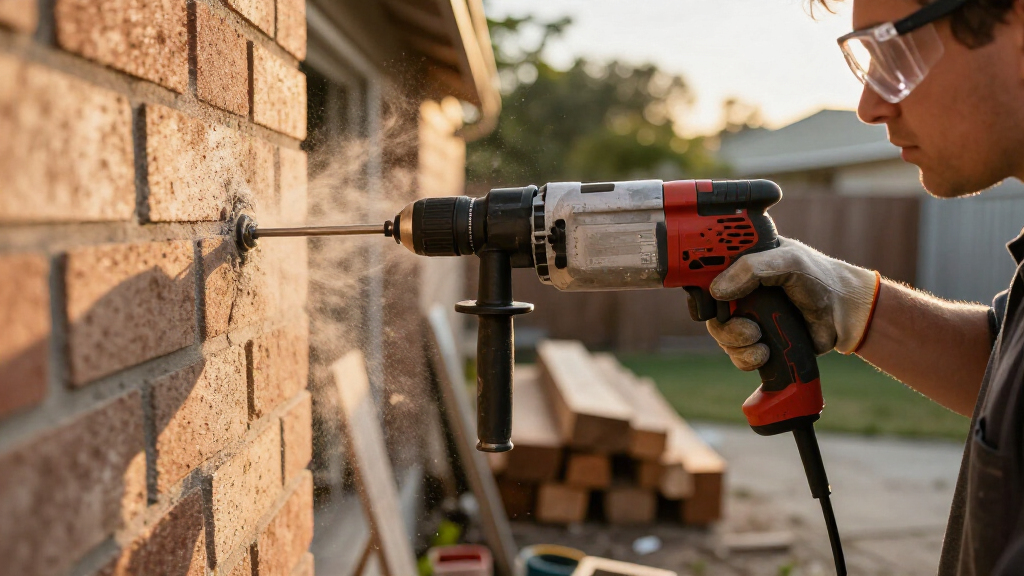

For most buyers comparing rotary hammer drills, I’d start with the DEWALT DCH273B: its brushless cordless platform and 1-inch SDS-Plus capacity make it a strong all-around choice for concrete drilling without a cord. The corded DEWALT D25263K is a standout for users who want continuous power, while the compact DEWALT DCH172B suits lighter drilling and overhead work. The main tradeoff is between corded runtime and cordless mobility, with tool size and drilling capacity shaping how comfortably each model fits a job. Read on for the full comparison, selection criteria, and advice on matching a rotary hammer to your work.

Get business pricing on tools and workshop supplies
- Business-only prices and quantity discounts
- Tax-exempt purchasing
- Multiple users, one account, clear invoices
Complete the kit


Key Takeaways
- The DEWALT DCH273B is my best overall pick for buyers seeking a cordless 1-inch SDS-Plus hammer that balances capacity and mobility.
- Corded models dominate for uninterrupted work; the DEWALT D25263K and several 12.5- to 13-amp options avoid battery swaps but tie you to an outlet.
- Capacity is not the only measure of suitability: 1-1/4-inch models favor heavier drilling and chipping, while the 5/8-inch DCH172B is better matched to smaller, lighter tasks.
- Battery compatibility changes the real value of cordless tools. DEWALT bare tools make the most sense for buyers who already own compatible 20V MAX batteries and a charger.
- Accessories and controls separate similar corded picks. Features such as a safety clutch, vibration control, variable speed, and a supplied adapter can matter more to a particular job than a small difference in stated capacity.


| rotary hammer drill | Impact energy | Power source | Weight | Voltage |
|---|---|---|---|---|
| DEWALT 20V MAX Brushless SDS-P | 2.6 J | Battery powered | 5 lb | 20 V |
| Enventor 13 A SDS-Plus Rotary | 6 J | Corded electric | — | 110 V |
| DESHUO 1-Inch SDS-Plus Corded | 3 J (2.21 ft-lb) | Corded electric | 7.2 lb | 120 V |
| Deshuo 1-Inch SDS-Plus Corded | 3 J (2.21 ft-lb) | Corded electric | 7.19 lb | 120 V |
| ENEACRO 1-1/4-Inch SDS-Plus 12 | 7 J (5.2 ft-lb) | Corded electric | 11.1 lb | 120 V |
| Berserker 1-1/8" SDS-Plus Rota | Up to 3.3 ft-lb | — | 9.5 lb | — |
| DEWALT 20V MAX Cordless Rotary | 2.6 ft-lb | 20 V battery; battery not included | 5.9 lb | — |
| ENEACRO 1-1/4-Inch SDS-Plus 13 | 5.5 ft-lb (7.4 J) | 120 V corded electric | — | — |
| DEWALT D25263K SDS-Plus Rotary | 3.0 J | 115 V corded electric | — | — |
| Seesii 9-Amp SDS-Plus Rotary H | 3 J | 110 V corded electric | 6.83 lb | — |
| VEVOR 1-1/4 Inch SDS-Plus Rota | 5.5 J | Corded electric | 11 lb | 110 V |
| VEVOR 1-1/8-Inch SDS-Plus Cord | 3.2 J | Corded electric | 11.9 lb | 110 V |
| DEWALT 20V MAX Brushless SDS R | 2.1 J | Battery powered | 6.4 lb | 20 V |
| DEKOPRO 1-1/4-Inch SDS-Plus Co | 5.5 J | Corded electric | — | 120 V |
| DEWALT 20V MAX Cordless Brushl | 1.4 J | Battery powered | 4.59 lb | 20 V |
More Details on Our Top Picks
DEWALT 20V MAX Brushless SDS-Plus 1-Inch Cordless Rotary Hammer, Bare Tool (DCH133B)
Cordless freedom and a 5 lb body make the DCH133B the easiest fit here for concrete work spread across multiple locations. Its 2.6 joules of impact energy and three modes cover anchor holes, general drilling, and light chipping, while the brushless motor is designed for efficient battery use. Compared with the corded DESHUO DS-LD26C, it trades higher impact energy for freedom from an extension cord and a lighter carry. That makes it more convenient for overhead or mobile jobs, but less suited to sustained, demanding chiseling than the 6 J Enventor or 7 J ENEACRO. The main catch is the bare-tool format: buyers need a compatible 20V battery and charger, which are not included. I’d choose it for portability, not for maximum breaking force.
Pros:- 5 lb weight is easier to manage for overhead and mobile drilling
- Brushless motor and 20V battery platform provide cordless operation
- Three modes handle drilling, hammer drilling, and chipping
- 360° side handle and depth rod are included
Cons:- Battery and charger are not included
- 2.6 J impact energy is below the corded Enventor and ENEACRO options
- Less suited to extended heavy demolition than the heavier, higher-energy corded models
Best for: DEWALT 20V users who drill concrete at multiple locations and value a lighter tool over the strongest chipping performance.
Not ideal for: Buyers without compatible 20V batteries, or crews doing prolonged heavy chiseling who need more impact energy.
- Power source:Battery powered
- Voltage:20 V
- Motor:Brushless
- Impact energy:2.6 J
- Maximum speed:1,500 rpm
- Operating modes:Drill, hammer drill, chip
- Weight:5 lb
- Included components:Rotary hammer, 360° side handle, depth rod
Our verdict“Choose the DCH133B if cordless convenience and lower weight matter more than maximum chiseling power.”
Enventor 13 A SDS-Plus Rotary Hammer Drill with Safety Clutch
The Enventor suits buyers who want a corded 6 J rotary hammer with accessories ready for varied jobs. Its four modes include a positioning setting, while the safety clutch is useful protection if a bit binds in masonry. The supplied bits, chisels, grease, replacement brushes, and case add practical value for someone starting without a collection of SDS-Plus accessories. Against the ENEACRO 12.5 A, the Enventor lists slightly less impact energy but offers four modes rather than three; compared with the lighter DEWALT DCH133B, it brings much more impact energy at the cost of a cord and greater bulk. The stated wood-capacity figures conflict across the product information, so I wouldn’t use that claim to plan a job. Its short 2 m cord also limits reach, and it remains a corded tool.
Pros:- 6 J impact energy supports more demanding concrete work than the DEWALT DCH133B
- Four modes include a bit-positioning setting
- Safety clutch helps limit sudden twisting if the bit jams
- Includes SDS bits, chisels, maintenance items, and a carrying case
Cons:- Corded operation and a 2 m cord restrict mobility
- Wood drilling capacity is inconsistent across the supplied product information
- Less impact energy than the 7 J ENEACRO
Best for: DIY renovators who need a corded tool for concrete drilling and chiseling and want bits, chisels, and a case included.
Not ideal for: Mobile jobsite users or buyers who need a long reach from the outlet; its 2 m cord can restrict movement.
- Power source:Corded electric
- Motor power:1,500 W, 13 A
- Voltage:110 V
- Impact energy:6 J
- Maximum speed:850 rpm
- Chuck type:SDS-Plus
- Operating modes:Drill, hammer, positioning, hammer drill
- Power cord length:2 m (6.56 ft)
- Included accessories:3 SDS drill bits, 2 chisels, auxiliary handle, grease, guide ruler, 2 replacement carbon brushes, oil cap wrench, dust cover, carrying case, user manual
Our verdict“Pick the Enventor for a well-equipped corded setup with four modes, but verify job requirements rather than relying on its conflicting wood-capacity figures.”
DESHUO 1-Inch SDS-Plus Corded Rotary Hammer Drill with 1/2-Inch Adapter
Four modes, variable speed, and reverse give this DESHUO a useful spread of controls for home projects that mix concrete drilling with light chiseling. The included 1/2-inch adapter lets it accept regular drill bits in drill-only mode, expanding its use beyond SDS-Plus bits; it does not turn the tool into an SDS-Max model. At 7.2 lb and 3 J, it sits between the featherweight cordless DEWALT DCH133B and the more forceful 6 J Enventor. That middle ground suits occasional renovation work, especially with vibration control and a safety clutch in the feature set. The tradeoff is clear: this is a DIY-oriented corded tool, not a substitute for the heavier ENEACRO when sustained chipping is the task. The adapter adds flexibility, but its use is limited to regular drill bits in drill-only mode.
Pros:- Four modes include rotary-only and hammer-only operation
- Variable speed and reverse support more controlled starts and bit removal
- Safety clutch and vibration control add useful handling features
- Includes a 1/2-inch adapter, bits, chisels, and carrying case
Cons:- Not intended for heavy-duty demolition
- Adapter works with regular drill bits in drill-only mode, not SDS-Max bits
- Corded power limits use away from outlets
Best for: Home renovators who need one corded SDS-Plus tool for occasional concrete drilling, light chiseling, and some regular-bit drilling.
Not ideal for: Contractors or demolition-focused buyers who need high impact energy for long or heavy chipping sessions.
- Power source:Corded electric
- Voltage:120 V
- Motor:9 A, 1,050 W
- Impact energy:3 J (2.21 ft-lb)
- Maximum speed:1,100 rpm
- Impact rate:5,300 bpm
- Weight:7.2 lb
- Operating modes:Rotary hammer, rotary only, hammer only, chisel position adjustment
- Included accessories:1/2-inch SDS-Plus chuck adapter, 3 drill bits, flat chisel, point chisel, depth gauge, carrying case, replacement carbon brushes, adjustable handle, user manual
Our verdict“Choose this DESHUO for varied DIY drilling and light chiseling, not for prolonged demolition or heavy concrete removal.”
Deshuo 1-Inch SDS-Plus Corded Rotary Hammer Drill
This Deshuo is a straightforward cord-powered, four-mode SDS-Plus option for drilling concrete and handling light tile or masonry removal. Its 3 J impact energy and 7.19 lb weight are close to the DESHUO DS-LD26C, but this version has no listed 1/2-inch adapter, so its versatility centers on SDS-Plus bits rather than regular drill bits. The safety clutch, vibration control, and tool-less bit changes make it more convenient to operate than a basic hammer drill, and the included bits, chisels, and case cover common small projects. Compared with the Enventor 6 J and ENEACRO 7 J, however, it gives up impact energy and is explicitly aimed at DIY use rather than heavy demolition. The SDS-Plus-only format also means buyers need another tool for ordinary chuck-style drilling.
Pros:- Four operating modes support drilling and light chiseling
- Tool-less SDS-Plus bit changes simplify switching between supplied bits and chisels
- Safety clutch and vibration control support more manageable operation
- Includes drill bits, chisels, depth gauge, and carrying case
Cons:- SDS-Plus bits only; no regular-bit adapter is listed
- 3 J impact energy is below the Enventor and ENEACRO
- Not intended for heavy-duty demolition
Best for: DIY homeowners who need a corded SDS-Plus tool for concrete holes, masonry work, and occasional light chiseling.
Not ideal for: Buyers who need heavy demolition power or one tool that also accepts regular drill bits without an adapter.
- Power source:Corded electric
- Voltage:120 V
- Amperage:9 A
- Impact energy:3 J (2.21 ft-lb)
- Maximum speed:1,100 rpm
- Impact rate:5,300 bpm
- Weight:7.19 lb
- Compatible bits:SDS-Plus only
- Included components:3 SDS-Plus drill bits, flat chisel, point chisel, depth gauge, carrying case, replacement carbon brushes, adjustable handle, user manual
Our verdict“Choose this model for routine DIY concrete work if SDS-Plus-only compatibility and modest chipping power meet your needs.”
ENEACRO 1-1/4-Inch SDS-Plus 12.5-Amp Rotary Hammer Drill
With 7 J of impact energy, the ENEACRO is the strongest chipping-oriented choice in this five-tool group. It is better matched to stubborn concrete and repeated chiseling than either 3 J DESHUO, though its 11.1 lb weight makes overhead drilling and long sessions more tiring. Three modes cover the core drilling and chiseling jobs, while vibration control and a safety clutch address comfort and bit-binding risks. The included bits, chisels, lubricant, and case make it a more complete corded kit than the bare-tool DEWALT DCH133B, but the DEWALT is far easier to carry and use away from an outlet. The ENEACRO’s 880 rpm no-load speed is also lower than the DEWALT’s listed maximum, underscoring its priority: impact force over light, fast handling.
Pros:- 7 J impact energy is the highest among these five products
- Three modes cover drilling and chiseling tasks
- Safety clutch and vibration control help manage binding and tool movement
- Includes bits, chisels, lubricant, and carrying case
Cons:- 11.1 lb weight can tire users during extended or overhead work
- Corded operation limits mobility
- Three modes offer fewer listed settings than the four-mode Enventor and DESHUO models
Best for: DIY renovators and tradespeople who need substantial corded impact energy for concrete drilling and repeated chiseling.
Not ideal for: Buyers who prioritize low weight, overhead work, or cordless mobility; this 11.1 lb tool is heavier and requires an outlet.
- Power source:Corded electric
- Voltage:120 V
- Amperage:12.5 A
- Impact energy:7 J (5.2 ft-lb)
- No-load speed:880 rpm
- Maximum impact rate:4,350 bpm
- Chuck type:SDS-Plus
- Weight:11.1 lb
- Included accessories:3 SDS-Plus drill bits, 2 chisels, auxiliary handle, carbon brushes, lubricant, dust cap, carrying case
Our verdict“Choose the ENEACRO when stronger chiseling performance matters more than a lighter tool or cordless convenience.”
Berserker 1-1/8″ SDS-Plus Rotary Hammer Drill for Concrete 26FA
The Berserker 26FA suits renovation work where a corded tool is welcome but a heavier hammer is not. At 9.5 pounds, it is lighter than the ENEACRO ENRH3201, while its 1-1/8-inch stated concrete capacity and three modes cover routine drilling and lighter masonry tasks. The rotation-only setting also gives it more flexibility for compatible non-hammer drilling than a hammer-only tool. Its overload clutch and adjustable handle add control when a bit binds or the work angle changes.
The tradeoff is impact output: its stated 3.3 ft-lb is below the ENEACRO’s 5.5 ft-lb, so I would not choose it for frequent chiseling or heavier concrete work. It is also corded and SDS-Plus only, limiting mobility and bit compatibility. This is a sensible middle ground for home renovators, not a demolition-focused pick.
Pros:- 9.5-pound weight is comparatively manageable for a corded rotary hammer.
- Three modes cover rotation-only drilling, rotary hammer drilling, and hammering.
- Overload clutch helps limit tool strain when a bit binds.
- SDS-Plus system allows quick, tool-free bit changes.
Cons:- Its 3.3 ft-lb impact energy trails the ENEACRO ENRH3201 for demanding chiseling.
- Corded operation restricts movement away from an outlet.
- SDS-Plus-only compatibility rules out other chuck and bit systems.
Best for: Home renovators who want a relatively light corded SDS-Plus hammer for concrete holes, brickwork, and occasional wood drilling.
Not ideal for: Contractors doing sustained heavy chiseling or demolition, or buyers who need cordless mobility or broad chuck compatibility.
- Power:1050 W
- Voltage and amperage:120 V AC; 9 A
- Weight:9.5 lb
- Impact energy:Up to 3.3 ft-lb
- Maximum speed:1050 rpm
- Impact rate:4200 BPM
- Maximum concrete drilling diameter:1-1/8 in
- Chuck and modes:SDS-Plus; rotation only, hammering with rotation, hammering only
- Warranty:24 months
Our verdict“Choose the Berserker for lighter corded renovation work where lower weight matters more than the ENEACRO ENRH3201’s greater impact energy.”
DEWALT 20V MAX Cordless Rotary Hammer, SDS Plus, D-Handle, 1-Inch
For drilling concrete where a cord gets in the way, the DEWALT DCH133B is the clearest fit in this group. Its 5.9-pound body is much lighter than the corded ENEACRO ENRH3201, and the brushless 20V motor avoids tying the work area to an outlet. That makes it better suited to overhead holes, service work, and locations where extension cords are awkward. It still delivers 2.6 ft-lb of impact energy and a stated one-inch concrete capacity, so it has useful drilling reach rather than just compact convenience.
The compromise is that the battery is sold separately; buyers without compatible DEWALT batteries need to account for that extra piece of the setup. Its impact energy also sits below the Berserker 26FA’s stated 3.3 ft-lb and well below the ENEACRO’s 5.5 ft-lb. I’d pick it for access and portability, not prolonged heavy chiseling.
Pros:- 5.9-pound weight makes it the most portable option among these five.
- Cordless 20V operation simplifies work in restricted or remote locations.
- Brushless motor is designed to maintain speed under load.
- One-inch concrete capacity suits a broad range of anchor and installation holes.
Cons:- Battery is not included, so the tool alone cannot be used immediately.
- Its 2.6 ft-lb impact energy is lower than the Berserker 26FA and ENEACRO ENRH3201.
- Cordless runtime depends on having suitable charged batteries available.
Best for: DEWALT 20V users, electricians, and installers who need a light SDS-Plus rotary hammer for concrete drilling in tight or cord-free locations.
Not ideal for: Buyers without compatible batteries who want a complete ready-to-run setup, or crews prioritizing high impact energy for frequent chiseling.
- Power source:20 V battery; battery not included
- Motor:Brushless
- Weight:5.9 lb
- Chuck type:SDS-Plus
- Impact energy:2.6 ft-lb
- Maximum rotational speed:1500 rpm
- Impact rate:0–5500 strokes per minute
- Concrete capacity:1 in
- Handle type:D-handle
Our verdict“Pick the DCH133B when cordless access and low weight matter more than included batteries or the stronger impact output of corded alternatives.”
ENEACRO 1-1/4-Inch SDS-Plus 13-Amp Rotary Hammer Drill
The ENEACRO ENRH3201 is the strongest match here for buyers who need a rotary hammer to do more than drill anchor holes. Its 5.5 ft-lb impact energy, 1-1/4-inch stated concrete capacity, and four functions—including chisel mode and chisel-position adjustment—give it a wider role in masonry work than the three-mode Berserker 26FA. The package also includes SDS-Plus bits, two chisels, grease, and a case, so it arrives better equipped for drilling and light chipping tasks.
That capability comes with a clear handling cost: at 12.58 pounds, it is substantially heavier than the Seesii 9-Amp, and its cord limits movement. Its 820 rpm no-load speed is also lower than the Seesii’s stated 1300 rpm. I’d choose the ENEACRO for impact and included chiseling accessories, but skip it if overhead work or frequent repositioning is part of the job.
Pros:- 5.5 ft-lb impact energy supports more demanding masonry work than the other corded picks here.
- Four functions include chiseling and chisel-position adjustment.
- Includes three drill bits, two chisels, lubricant, and a carrying case.
- Safety clutch and vibration control support more controlled handling.
Cons:- 12.58-pound bare-tool weight can tire users during overhead or prolonged work.
- Corded power restricts movement around a jobsite.
- 820 rpm no-load speed is lower than the Seesii 9-Amp’s stated 1300 rpm.
Best for: Masonry renovators and DIY users who need a corded SDS-Plus tool for larger concrete holes and occasional chiseling.
Not ideal for: Buyers doing extended overhead work, seeking a lightweight hammer, or needing cordless mobility for dispersed jobsites.
- Power source:120 V corded electric
- Bare-tool weight:12.58 lb
- Impact energy:5.5 ft-lb (7.4 J)
- No-load speed:820 rpm
- Maximum impact frequency:4200 bpm
- Maximum concrete drilling diameter:1.25 in
- Functions:Drill, hammer, hammer drill, and chisel-position adjustment
- Included accessories:Three SDS-Plus drill bits, two 10-inch chisels, auxiliary handle, brushes, grease, dust cap, and case
Our verdict“Choose the ENEACRO ENRH3201 when stronger impact and included chiseling tools outweigh its heavier body and cord.”
DEWALT D25263K SDS-Plus Rotary Hammer, 1-1/8-Inch, Corded
The DEWALT D25263K makes the most sense for buyers who value steadier handling during repeated drilling and chipping. Its active vibration control is the main distinction from the Berserker 26FA, while the integral clutch helps manage sudden torque reaction if a bit jams. With 3.0 joules of impact energy and reverse rotation, it offers a practical corded setup for concrete drilling and occasional chipping without reaching the ENEACRO ENRH3201’s heavier, higher-energy profile.
DEWALT includes a 360-degree side handle, depth rod, and kit box, which makes it a more complete jobsite package than a bare tool. The tradeoffs are the cord, reported noisy operation, and less dramatic impact output than the ENEACRO. The supplied data does not state this model’s weight or concrete capacity, so I would not rank it on those measures against the Berserker or Seesii.
Pros:- Active vibration control is designed to reduce vibration felt at the handles.
- Integral clutch helps limit sudden torque reactions when a bit binds.
- 3.0 joules of impact energy supports drilling and chipping tasks.
- Includes a side handle, depth rod, and kit box.
Cons:- Corded operation limits mobility compared with the DEWALT DCH133B.
- Noisy operation may be unwelcome in occupied buildings or noise-sensitive settings.
- Impact energy is below the ENEACRO ENRH3201’s stated 5.5 ft-lb.
Best for: Installers and remodelers who drill concrete regularly and want vibration-control features, a depth rod, and a protective kit box.
Not ideal for: Workers who need cordless reach, a notably quiet tool, or published weight and concrete-capacity figures for close fit comparisons.
- Power source:115 V corded electric
- Motor:8.5 A
- Impact energy:3.0 J
- Maximum rotational speed:1150 rpm
- Maximum chuck size:1.13 in
- Wood drilling capacity:30 mm
- Metal drilling capacity:12.7 mm
- Included components:360-degree side handle, depth rod, and kit box
- Warranty:3-year limited warranty
Our verdict“Choose the D25263K if vibration control and a useful corded kit matter more than cordless freedom or maximum impact output.”
Seesii 9-Amp SDS-Plus Rotary Hammer Drill
The Seesii 9-Amp offers a useful mix for buyers who want drilling and light chiseling without carrying the ENEACRO ENRH3201’s 12.58-pound body. At 6.83 pounds, it is the lightest corded option in this batch, and its four modes add chisel and Vario-Lock settings that the Berserker 26FA lacks. A stated 3 J of impact energy and 1-3/32-inch concrete capacity suit common home masonry tasks, while the included bits, chisels, depth gauge, and case help cover basic jobs from the outset.
It remains a corded SDS-Plus tool, so it cannot match the DEWALT DCH133B for freedom of movement. Its 850 W motor and stated 3 J impact energy also put it well short of the ENEACRO’s 5.5 ft-lb for heavier chipping. I’d favor it for manageable weight and mode flexibility, not demanding demolition.
Pros:- 6.83-pound weight is comparatively easy to handle for a corded four-mode tool.
- Four modes include chisel and Vario-Lock functions.
- Includes drill bits, chisels, a depth gauge, spare brushes, and a case.
- Safety clutch and adjustable auxiliary handle support controlled use.
Cons:- Corded operation is less convenient than the DEWALT DCH133B for remote or moving work.
- Its stated 3 J impact energy is well below the ENEACRO ENRH3201’s 5.5 ft-lb.
- SDS-Plus chuck limits compatibility with other bit systems.
Best for: DIY renovators who want a lighter corded rotary hammer for concrete drilling and occasional chiseling, with common accessories included.
Not ideal for: Users tackling sustained heavy chipping, working far from outlets, or needing a hammer with stronger impact output.
- Power source:110 V corded electric
- Weight:6.83 lb
- Impact energy:3 J
- Maximum rotational speed:1300 rpm
- Impact rate:5500 BPM
- Maximum concrete drilling capacity:1-3/32 in
- Chuck and modes:SDS-Plus; drill, hammer drill, chisel, and Vario-Lock
- Included accessories:Three SDS-Plus drill bits, two chisels, depth gauge, two carbon brushes, and storage case
Our verdict“Pick the Seesii for a lighter corded tool with four useful modes and accessories, but choose the ENEACRO for heavier chiseling.”
VEVOR 1-1/4 Inch SDS-Plus Rotary Hammer Drill, 13 Amp Corded, Heavy Duty Chipping Hammer with Vibration Control & Safety Clutch, Variable Speed
With 5.5 J of impact energy and a 13 A motor, this VEVOR is aimed at substantial drilling and chiseling rather than light, occasional anchor holes. Its four functions and six speed settings give more control across tasks than the simpler DEWALT DCH172B, though the DEWALT is far easier to handle overhead at 4.59 lb. Vibration control and a rotating auxiliary handle help manage the VEVOR’s 11 lb weight, but they cannot make it a compact choice for long overhead sessions. The corded design also suits a fixed work area better than mobile jobs. I’d rank it ahead of the smaller VEVOR 3.2 J model when impact strength matters most, while its limited 10 mm maximum chuck size is a notable constraint for users expecting broader bit compatibility.
Pros:- 5.5 J impact energy and 13 A motor suit demanding concrete work
- Four functions and six speed settings support varied drilling and chiseling tasks
- Vibration control and adjustable 360° handle aid handling
- Includes bits, chisels, brushes, and a carrying case
Cons:- 11 lb weight can tire users during overhead or prolonged work
- 10 mm maximum chuck size restricts larger-bit use
- Corded operation limits mobility around a jobsite
Best for: DIY renovators and tradespeople tackling repeated concrete drilling and chiseling near a reliable power outlet
Not ideal for: Users doing frequent overhead work or needing a lightweight, cordless hammer drill; its 11 lb weight and cord are limiting
- Power source:Corded electric
- Voltage:110 V
- Amperage:13 A
- Impact energy:5.5 J
- Maximum rotational speed:940 rpm
- Number of speeds:6
- Maximum chuck size:10 mm
- Weight:11 lb
Our verdict“Choose this VEVOR for high-impact corded drilling and chiseling, not for extended overhead work or maximum bit flexibility.”
VEVOR 1-1/8-Inch SDS-Plus Corded Rotary Hammer Drill
This VEVOR balances four working modes with a more moderate 3.2 J impact rating, making it a sensible corded pick for users who split time between drilling and light-to-moderate chiseling. Its 1,100 rpm maximum speed is higher than the larger 13 A VEVOR’s 940 rpm, but that bigger model brings 5.5 J for tougher material removal. So I’d favor this one for mixed household projects, not stubborn demolition. The SDS-Plus chuck makes bit changes straightforward, and the kit includes bits, chisels, a depth gauge, and a case. At 11.9 lb, however, it is heavier than the 11 lb VEVOR despite its lower impact energy, and neither corded model matches the freedom of DEWALT’s cordless DCH273B. Extended overhead drilling is where its weight and cord become harder to overlook.
Pros:- Four modes cover drilling, hammer drilling, chiseling, and chisel positioning
- SDS-Plus chuck allows tool-free bit changes
- Includes drill bits, chisels, depth gauge, and carrying case
- Adjustable side handle supports two-handed control
Cons:- 11.9 lb weight is tiring during extended overhead use
- 3.2 J impact energy is below the 5.5 J VEVOR and DEKOPRO models
- Corded design requires access to an outlet
Best for: Home renovators who need one corded SDS-Plus tool for concrete drilling, occasional chiseling, and depth-controlled holes
Not ideal for: Users prioritizing overhead comfort, cordless mobility, or high-impact chiseling for demanding concrete work
- Power source:Corded electric
- Voltage:110 V
- Amperage:10 A
- Power:820 W
- Impact energy:3.2 J
- Maximum speed:1,100 rpm
- Impact rate:5,000 bpm
- Weight:11.9 lb
Our verdict“Pick this VEVOR for varied corded drilling and occasional chiseling, but choose a higher-impact model for heavy concrete work.”
DEWALT 20V MAX Brushless SDS Rotary Hammer, 1-Inch, Bare Tool (DCH273B)
The DCH273B is the lineup’s more capable cordless middle ground: 2.1 J of impact energy, three modes, and a 6.4 lb tool weight make it more suitable for regular mounting and drilling work than the lighter DEWALT DCH172B, which trades impact strength for a smaller 5/8-inch capacity. Active vibration control and a brushless motor support longer work sessions without adding a cord to manage. Compared with the 5.5 J VEVOR and DEKOPRO corded models, though, this DEWALT gives up impact force for portability; it is not the pick for sustained heavy chiseling. The tool-only format also means buyers need compatible 20V MAX batteries and a charger. Its OSHA Table 1 compliance depends on pairing it with the specified DWH303DH extractor, so dust control requires an additional setup.
Pros:- Cordless operation with 2.1 J impact energy for mobile concrete drilling
- Brushless motor and active vibration control support efficient, more comfortable use
- Three modes cover drilling, hammer drilling, and chipping
- 6.4 lb weight is more manageable than the corded VEVOR and DEKOPRO models
Cons:- Bare tool; compatible battery and charger are not included
- Lower impact energy than the 5.5 J corded options
- Specified extractor is needed for OSHA Table 1 compliance
Best for: 20V MAX owners who regularly drill concrete for anchors, mounting, and installation work away from a fixed outlet
Not ideal for: Buyers who need a complete ready-to-run kit, high-impact demolition power, or OSHA Table 1 compliance without adding an extractor
- Power source:Battery powered
- Voltage:20 V
- Motor:Brushless
- Impact energy:2.1 J
- Maximum rotational speed:1,100 rpm
- Modes:Drill, hammer drill, chip
- Weight:6.4 lb
- Battery compatibility:20V MAX; battery not included
Our verdict“Choose the DCH273B if you already own DEWALT 20V MAX batteries and need a portable, versatile concrete drill rather than a demolition-focused tool.”
DEKOPRO 1-1/4-Inch SDS-Plus Corded Rotary Hammer Drill, 12.5-Amp
The DEKOPRO pairs 5.5 J impact energy with four modes, a safety clutch, and a broad accessory bundle, giving buyers a ready-to-equip corded package for drilling and chipping. Its stated 1-1/4-inch concrete capacity matches the larger VEVOR’s listed capacity, while its 1,000 rpm maximum is slightly higher than that model’s 940 rpm. Both are substantial corded tools, so neither is a natural choice for frequent overhead work; the DEWALT DCH273B is much lighter and cordless, but delivers less impact energy. The DEKOPRO’s safety clutch is useful when a bit binds, and the included SDS-Plus adaptor, chisels, depth gauge, and case reduce the need to source basic accessories separately. The tradeoff is a cord-dependent setup, plus a large bundle that may be unnecessary for buyers who already own bits and chisels.
Pros:- 5.5 J impact energy supports demanding drilling and chiseling
- Four modes include chisel positioning for setup flexibility
- Safety clutch helps manage sudden bit binding
- Includes bits, chisels, adaptor, depth gauge, and carrying case
Cons:- Corded operation limits mobility
- Bulk and weight make it less appealing for prolonged overhead work
- Accessory bundle may add little value for owners who already have SDS-Plus bits and chisels
Best for: DIY remodelers seeking a corded SDS-Plus kit with strong impact energy and accessories for concrete drilling and chiseling
Not ideal for: Mobile crews, frequent overhead users, or buyers who already have a full SDS-Plus accessory set and want a lighter tool
- Power source:Corded electric
- Voltage:120 V
- Amperage:12.5 A
- Impact energy:5.5 J
- Maximum rotational speed:1,000 rpm
- No-load impact rate:4,600 bpm
- Maximum concrete drilling capacity:1-1/4 in
- Modes:Drilling, hammer drilling, chiseling, chisel positioning
Our verdict“Choose the DEKOPRO for a well-equipped corded kit with strong impact energy, and skip it if portability matters more than chiseling power.”
DEWALT 20V MAX Cordless Brushless SDS Plus Rotary Hammer, 5/8 in. (DCH172B), Tool Only
At 4.59 lb with a 5/8-inch maximum drilling capacity, the DCH172B is the compact specialist in this group. Its 1.4 J impact energy suits smaller concrete holes and mounting tasks, especially where a larger rotary hammer feels awkward. Compared with the DEWALT DCH273B, it is lighter and more compact but gives up impact energy and capacity; for broader site work, the DCH273B is the stronger cordless choice. Brushless construction and vibration control add comfort, while the drill and hammer-drill modes cover common installation jobs. This is not a substitute for the 5.5 J corded VEVOR or DEKOPRO when chiseling or drilling larger holes is routine. The tool-only package also requires a compatible battery and charger, and dust-control compliance calls for a compatible shroud and extractor.
Pros:- Lightweight 4.59 lb body suits overhead and tight-space work
- Brushless motor supports efficient cordless operation
- Vibration control reduces vibration at the handles
- SDS-Plus format and two modes cover common concrete mounting tasks
Cons:- 1.4 J impact energy and 5/8-inch capacity limit heavier drilling
- Battery and charger are not listed among included components
- Dust-control compliance requires a compatible shroud and extractor
Best for: Installers and maintenance workers making smaller concrete holes in tight spaces or overhead, particularly those with DEWALT 20V MAX batteries
Not ideal for: Users drilling large holes, chiseling regularly, or seeking a complete kit with battery and charger included
- Power source:Battery powered
- Voltage:20 V
- Chuck type:SDS-Plus
- Maximum drilling capacity:5/8 in
- Impact energy:1.4 J
- Motor:Brushless
- Weight:4.59 lb
- Included components:360° side handle, belt hook, rotary hammer, depth rod
Our verdict“Choose the DCH172B for compact, light-duty concrete drilling in tight or overhead spaces, not for large holes or frequent chiseling.”

How We Picked
I ranked these rotary hammer drills by how well their power source, SDS-Plus capacity, and operating features fit common concrete jobs. I compared cordless mobility with corded runtime, smaller tools with higher-capacity models, and stated features such as a safety clutch, vibration control, variable speed, and included accessories. I also considered practical ownership factors: whether a cordless tool is sold bare, how much flexibility its modes and controls suggest, and whether its size and capacity seem suited to repeated drilling or occasional household work.
The order reflects usefulness across a range of buyers, not maximum stated capacity alone. Versatile options with a clear balance of handling, power, and flexibility rank ahead of more specialized picks; compact and higher-capacity tools follow where their narrower fit is a tradeoff. I treated product descriptions as the basis for comparison and did not assume identical performance from tools with similar ratings. Since the roundup does not establish measured drilling speed, durability, or vibration levels, I avoid ranking on unverified performance claims.
Factors to Consider When Choosing Rotary Hammer Drills
Choosing among these tools is less about finding the biggest number and more about matching the hammer to your work pattern. I’d sort the decision by job size, access to power, and how often you will drill or chip. The following factors help avoid buying either too little capacity or more tool than your projects need.
Match SDS-Plus Capacity to the Holes You Actually Drill
Capacity labels are a starting point, not a promise that a tool will feel equally comfortable across every hole size. A smaller model can be easier to control for anchors and light installation work, while higher-capacity choices are aimed at larger drilling and more demanding chipping tasks. Buying the largest tool just in case can add bulk and fatigue during routine overhead or ladder work. Buying too small can mean slower progress or a poor fit when projects grow. List the hole diameters and materials you handle most often, then treat occasional oversized holes as a separate need. For recurring heavy work, I’d prioritize a suitable higher-capacity tool rather than asking a compact hammer to cover every task.
Choose Corded or Cordless by Work Rhythm
A corded rotary hammer can run without battery changes, which suits longer sessions near reliable power. A cordless model is easier to carry around a site, move between rooms, or use where outlets are inconvenient. The common mistake is comparing the tool body alone: a bare cordless tool may require a compatible battery and charger, adding both expense and logistics. If you already own batteries on the same platform, that tool-only format may be a sensible way to expand your kit. If not, count the full power setup before deciding that cordless is the simpler option. For brief jobs spread across multiple locations, mobility may matter more than uninterrupted runtime.
Check Modes and Accessories Against the Job
Rotary hammer work can include drilling, hammer drilling, and light chiseling, but not every tool or accessory setup serves each task equally well. Before buying, confirm which operating modes the manufacturer specifies and whether the supplied accessories match your intended use. A drill adapter can widen compatibility for ordinary bits, yet it does not turn an SDS-Plus hammer into a dedicated conventional drill for every application. Buyers who mostly need holes for anchors may not benefit from paying for chipping-oriented extras. If demolition or tile removal is part of the plan, confirm the tool supports that work and select appropriate chisels. I’d treat advertised accessories as a convenience, not a substitute for checking the tool’s actual mode capabilities.
Give Handling and Vibration Equal Weight to Power
Repeated drilling can make weight, grip, balance, and vibration controls more important than a small capacity advantage. A tool that is awkward to hold may slow a job even if its rating looks generous. For overhead work or frequent movement, favor manageable size and a comfortable working position; for long sessions, pay attention to vibration-control features and follow the manufacturer’s operating guidance. Safety clutches can help address bit binding, but they do not remove the need for a secure grip and suitable personal protective equipment. Avoid choosing on amperage alone, since electrical input does not tell you how comfortable a tool will be over a workday. If possible, compare the complete tool with its handle and battery attached.
Treat Power Ratings as One Part of Performance
Amps on a corded model and voltage on a cordless model describe different power systems, so they are not direct performance equivalents. A higher amperage figure by itself does not establish faster drilling, better control, or longer service life. Look at the full combination: capacity, operating modes, controls, power source, and how the tool will be used. For repeated work in hard concrete, tool suitability and bit quality both matter; a worn or mismatched bit can undermine the job regardless of the hammer’s rating. If your projects are occasional and modest, prioritize ease of handling and straightforward operation over headline numbers. Reserve high-capacity tools for work that regularly calls for their added scope.
Plan for Bits, Dust, and Ongoing Ownership
SDS-Plus tools require compatible shank bits, so check your existing accessories before assuming they will fit. Concrete dust can affect visibility and cleanup, and drilling overhead calls for a plan to manage debris and protect yourself and nearby surfaces. Keep bits in suitable condition, follow the manual’s maintenance directions, and inspect the cord or battery system before work. A clutch or vibration feature can add useful protection or comfort, but it does not replace safe technique. Buyers comparing a tool with included accessories against a bare tool should separate useful essentials from items they may never use. The right purchase is the one whose power system and upkeep fit the way you expect to work.
Frequently Asked Questions
Is a cordless rotary hammer practical if I already own compatible batteries?
It can be, especially if your work involves moving around a site or drilling where outlets are inconvenient. A bare tool avoids duplicating batteries and a charger when you already own compatible equipment. For long stretches of continuous drilling, battery changes may interrupt the job, so a corded model can be more convenient near an outlet. Check the manufacturer’s battery-platform compatibility rather than assuming every pack fits. I’d choose cordless for mobility and corded for sustained work with dependable power access.
Should I choose a 1-1/4-inch model over a 1-inch rotary hammer?
Choose the larger stated capacity when your regular work calls for larger holes or more demanding drilling and chipping tasks. For anchors, fixtures, and routine smaller holes, a 1-inch or compact tool may be easier to manage and less tool than you need to carry. Capacity alone does not tell you the tool’s handling, comfort, or performance on a specific material. Check the manufacturer’s recommended drilling limits and intended applications before buying. If larger holes are rare, renting or borrowing a heavier tool may make more sense than carrying that capacity every day.
Can I use a rotary hammer as a regular drill for wood or metal?
Some models or accessory packages may support conventional drilling through an adapter or compatible chuck, but that does not make every rotary hammer a good substitute for a standard drill. Confirm that the manufacturer specifies the mode and accessory for the material you plan to work on. SDS-Plus bits and regular drill bits use different shanks, so compatibility needs checking before a job. For frequent wood or metal work, a dedicated drill or driver is often easier to handle and better suited to those tasks. Treat an included adapter as added flexibility rather than the main reason to buy a hammer drill.
Do I need a safety clutch or vibration control for occasional home projects?
These features can still be useful for occasional work, particularly if a bit binds or you expect longer drilling sessions. A safety clutch may help limit the tool’s reaction when a bit catches, while vibration control can improve comfort; neither removes the need for a firm grip or safe technique. If you only drill a small number of holes, ease of handling and having the right bit may matter more than a feature aimed at repeated use. Compare the included protections and controls without assuming they make one tool safe for every situation. Read and follow the manual, and use suitable eye, hearing, and dust protection.
Should I buy a corded model for occasional concrete work instead of a cordless one?
A corded tool can be a practical choice if the work takes place near an outlet and you want to avoid battery readiness and charging. A cordless model is more convenient when outlets are distant, movement matters, or the job involves several locations. For a small project, also consider the complete setup: corded tools need an appropriate power source, while bare cordless tools need compatible batteries and a charger. Neither power source is automatically better for occasional use. Let access to electricity and the length of each work session guide the decision.
Conclusion
For the broadest mix of concrete drilling and cordless convenience, I’d choose the DEWALT DCH273B as best overall. Buyers who want corded runtime should look first at the DEWALT D25263K; among the listed value-oriented choices, I’d compare the corded DESHUO 1-inch models against the features and accessories needed for the job rather than choosing on capacity alone. The DEWALT DCH273B is also my premium pick for a brushless cordless 1-inch platform, while beginners with lighter tasks may prefer the more compact DEWALT DCH172B, provided its 5/8-inch capacity matches their plans. For heavier drilling or chipping, consider a 1-1/4-inch corded option such as the ENEACRO or VEVOR, and confirm its modes and handling suit your work. Match capacity and power source to your actual projects, and you’ll have a clearer choice than any single headline rating can provide.