
TL;DR

Get business pricing on tools and workshop supplies
- Business-only prices and quantity discounts
- Tax-exempt purchasing
- Multiple users, one account, clear invoices
An Ideal Home report outlines six reasons gardeners may want to mulch beds, borders and containers, including protection from weather, moisture retention and improved soil. Its benefits depend on the material, application and garden conditions; the report does not provide independent measurements or comparative trials.
Ideal Home has published a report on six potential benefits of mulching, a garden task that involves spreading organic material over soil in beds, borders or containers. The advice, aimed at gardeners preparing for colder weather, covers frost buffering, protection from heavy rain, soil improvement, moisture retention and wildlife habitat, while experts quoted in the report say results depend on how and where mulch is used.
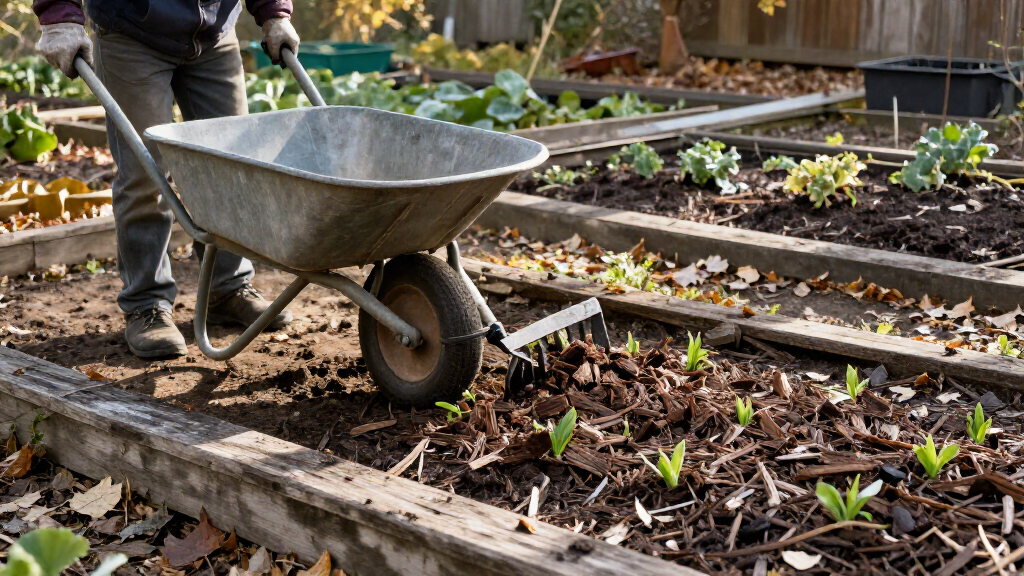
The report describes mulch as a layer of organic matter placed on soil. It says that in colder weather, a covering may help insulate soil and plant roots. James Ewens, a wildlife expert at Green Feathers, compares mulch to a blanket and says frozen ground can make it harder for birds to reach worms. Huw Richards, a grow-your-own author, advises covering compost mulch with straw, leaves or grass clippings to help protect it from winter conditions.
Mulch may also reduce the effects of heavy rain, according to landscape gardener Carl Jones, who says rainfall can wash nutrients from soil and compact it. The report says an organic layer can help protect roots and reduce erosion. Richards recommends applying mulch at a depth of 5–7 centimetres (2–3 inches); as organic material breaks down, it adds matter to the soil and supports organisms such as worms and fungi.
Other benefits described include helping soil retain moisture in warm weather, potentially reducing how often plants need watering, and improving soil structure over time. The report also notes that mulch and leaf litter can provide food and habitat for invertebrates, which in turn are eaten by birds, hedgehogs, frogs and toads. These are expert recommendations and general claims in the report, not results from a cited controlled study.
Mulch Can Buffer Weather and Soil
For gardeners, the practical case for mulching is that one layer may serve several purposes across the seasons: buffering temperature changes, slowing moisture loss and adding organic matter as it decomposes. That may be useful for beds and containers exposed to frost, heat or heavy rain, and for people trying to reduce routine digging.
Those benefits do not mean every mulch suits every plant or site. The report does not quantify how much watering, erosion or frost damage mulch prevents, nor does it establish that all gardens will see the same results. Gardeners should treat the recommendations as practical guidance and match the material and depth to their plants and conditions.
Popular right now

Dyson V8 Cyclone Cordless Vacuum

Vitamix Propel Series 750 Professional-Grade Blender, 4 Programs, Black

TCL QM64L 85-Inch QD-Mini LED 4K Smart Fire TV
As an affiliate, we earn on qualifying purchases.
Six Uses in Seasonal Gardening
The report groups the case for mulching into six areas: frost protection, reduced damage from heavy rain, soil enrichment, moisture retention during hot weather, improved soil structure and support for wildlife. It presents the task as useful beyond winter, with different benefits becoming relevant as temperatures and rainfall change.
It also distinguishes between types of material. Organic options mentioned include compost, straw, leaves, grass clippings, leaf mould and bark chippings. Richards recommends a 5–7 cm layer, while the report suggests that compost may be covered with a second layer of coarse material for winter protection. These are attributed recommendations, not a universal specification for every garden.
“A layer of mulch acts like a blanket to protect the soil from frost.”
— James Ewens, wildlife expert at Green Feathers
Results Depend on Garden Conditions
The supplied report does not identify a publication date, cite controlled trials or provide measurements showing how much mulch changes soil temperature, moisture use, erosion or plant survival. It is also unclear how the effects vary by mulch material, soil type, climate, plant species or application depth.
The wildlife comments describe possible food-web benefits, while the report also acknowledges that mulch can shelter slugs and snails. It does not quantify whether those populations rise or fall in particular gardens. The article’s claims should therefore be understood as expert guidance rather than a guarantee of specific outcomes.
Choose Materials for Your Beds
Gardeners considering the task can start by checking which beds, borders or containers need seasonal protection, then select a mulch suited to the plants and the intended use. The report’s cited advice is to use an organic layer and, for compost mulch exposed to winter weather, consider a covering of straw, leaves or grass clippings. Richards recommends a depth of 5–7 cm, but the source does not give plant-specific directions.
As conditions change through winter and into warmer months, gardeners can observe whether the soil stays moist, whether the mulch remains in place and how plants respond. The report offers no follow-up data or scheduled next update; the practical effects will depend on local weather and garden conditions.
Key Questions
What is mulching?
Mulching means spreading a layer of material over soil in beds, borders or containers. The Ideal Home report focuses on organic materials such as compost, leaves and bark chippings.
How deep should organic mulch be?
Grow-your-own author Huw Richards recommends a layer of 5–7 cm (2–3 inches) in the report. It does not provide separate depths for different plants or materials.
Can mulch protect plants from frost and heavy rain?
The experts quoted say mulch can help buffer soil and roots against frost and reduce the impact of heavy rain. The report does not quantify the protection, and outcomes may vary with local conditions and the material used.
Does mulch help wildlife?
According to Green Feathers wildlife expert James Ewens, mulch and leaf litter can support invertebrates that provide food for birds, hedgehogs, frogs and toads. The report also says mulch may shelter slugs and snails.
Source: idealhome.co.uk