
TL;DR

Get business pricing on tools and workshop supplies
- Business-only prices and quantity discounts
- Tax-exempt purchasing
- Multiple users, one account, clear invoices
Hunker has published a list of 16 ways to reuse concrete blocks around the home and garden, including planters, tables, stairs, privacy walls and water features. The ideas range from simple arrangements to projects requiring stable foundations, waterproofing or permits; the article does not report testing or construction outcomes.
Hunker has outlined 16 ways to reuse concrete blocks as home furnishings and garden features, including planters, tables, privacy walls and fountains. The report presents the blocks as durable, relatively inexpensive building materials, while noting that projects such as permanent stairs, pools and walls require additional support and may involve local permits.
The ideas range from straightforward arrangements to more involved construction. For indoor or outdoor furniture, the report suggests stacking blocks as supports and placing a flat wood or stone top above them. Blocks can also form a TV stand, shelves or a nightstand; the article recommends checking stability and securing tops so they do not slide. Paint or fabric can soften or conceal the blocks’ industrial appearance.
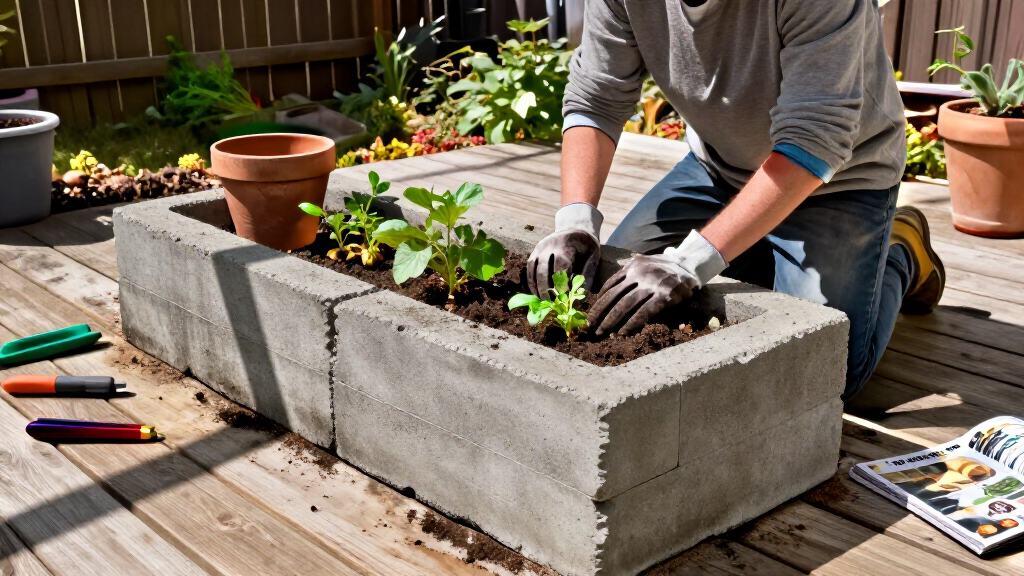
In the garden, block openings can hold plants, allowing individual planters or stacked displays such as towers and walls. Hunker advises putting mesh or landscape fabric at the bottom of the openings to keep soil from falling through. Other decorative proposals include painted block art, sculptural arrangements, a mural surface and seasonal designs.
The more construction-heavy ideas include stairs, privacy walls, a small pool or pond, and a fountain. For permanent outdoor stairs, the report describes a firmer base and filling gaps; pool walls need reinforcement and waterproofing, while fountains also require measures to prevent leaks. It says readers should check local permit rules before beginning pool construction.
From Leftover Blocks to Useful Projects
The roundup gives homeowners and gardeners options for reusing material they may already have, rather than treating concrete blocks solely as hidden construction components. Their regular shape and durability make them adaptable to simple furniture and planting projects, while their appearance can be left plain or changed with paint and other finishes.
The ideas also differ substantially in risk and effort. A small planter or side table is not equivalent to a permanent stairway, retaining structure or water-holding installation. Readers considering structural or water-related work need to distinguish inspiration from a construction plan: the article is a project roundup, not a substitute for engineering advice, code checks or professional installation where required.
Popular right now

TCL QM64L 85-Inch QD-Mini LED 4K Smart Fire TV

Dyson Airwrap i.d. Multi-Styler for Straight and Wavy Hair

Dyson Ball Animal 3 Upright Vacuum
As an affiliate, we earn on qualifying purchases.
The Projects in Hunker’s List
The source groups concrete blocks into several broad uses: furniture, garden planting, decoration and construction. Furniture concepts include tables, a TV stand and a nightstand. Garden ideas include planters, privacy features, ponds and fountains, while painted blocks and stacked forms serve as decorative pieces.
Hunker says many cinder blocks are concrete blocks, but also notes there are differences and advises keeping an eye out for damage. The source provides no detailed product specifications or testing, so readers should inspect reclaimed blocks and confirm that their type and condition suit the intended use.
Safety and Build Details Vary
The source does not provide engineering calculations, load limits, construction drawings or a full materials list for the 16 proposals. It also does not identify which specific projects require permits beyond advising readers to check local regulations before building a pool. Suitability depends on the project, block condition and site, and the roundup does not establish that every idea is safe for every home.
For any structure that supports people, heavy objects or water, readers should verify local building requirements and seek qualified professional guidance as appropriate. The source does not report that any of the projects have been independently tested or completed by Hunker.
Check the Site Before Building
Hunker’s report offers ideas rather than a schedule for future work. Readers can start by identifying the blocks they have, checking them for damage and choosing a project whose demands match their skills and site. For permanent walls, stairs or other structural work, confirm applicable codes and permits and consult a qualified professional where needed.
For water features, plan for reinforcement, waterproofing and circulation before construction; for furniture, test stability and secure tops. The next step for anyone considering a pool is to contact local authorities about permits and requirements before buying materials or beginning work.
Key Questions
What are some of the concrete block projects in the report?
Hunker lists ideas including planters, tables, a TV stand, a nightstand, stairs, privacy walls, painted art, a pool or pond, and a fountain. The source describes 16 ideas overall.
Can concrete blocks be used as planters?
Yes. The report suggests using the openings to hold small plants, either in individual blocks or stacked arrangements. It recommends adding mesh or landscape fabric at the bottom so soil does not fall through.
Does building a concrete-block pool require a permit?
Permit rules depend on location. Hunker advises checking local regulations before starting a pool project; the source does not specify requirements for particular jurisdictions.
Are these projects all simple do-it-yourself jobs?
No. Some arrangements, such as a small planter, are comparatively simple, while permanent stairs, walls and pools involve stability, foundations or reinforcement. The report is an idea list, not a set of complete construction plans.
Source: rss