
TL;DR

Get business pricing on tools and workshop supplies
- Business-only prices and quantity discounts
- Tax-exempt purchasing
- Multiple users, one account, clear invoices
A gardening tip highlighted by Hunker and shown on the 5-Minute Crafts TEENS YouTube channel uses an egg carton as a soil stamper to make several seed holes at once. The method can speed up planting, but carton spacing and pressing depth may not suit every type of seed.
A reused egg carton can be pressed into garden soil to make several planting holes at once, according to a gardening method featured in a Hunker report and a 5-Minute Crafts TEENS YouTube video. The approach offers a simple way to speed up sowing, but gardeners need to check each plant’s spacing and planting-depth needs before using it.
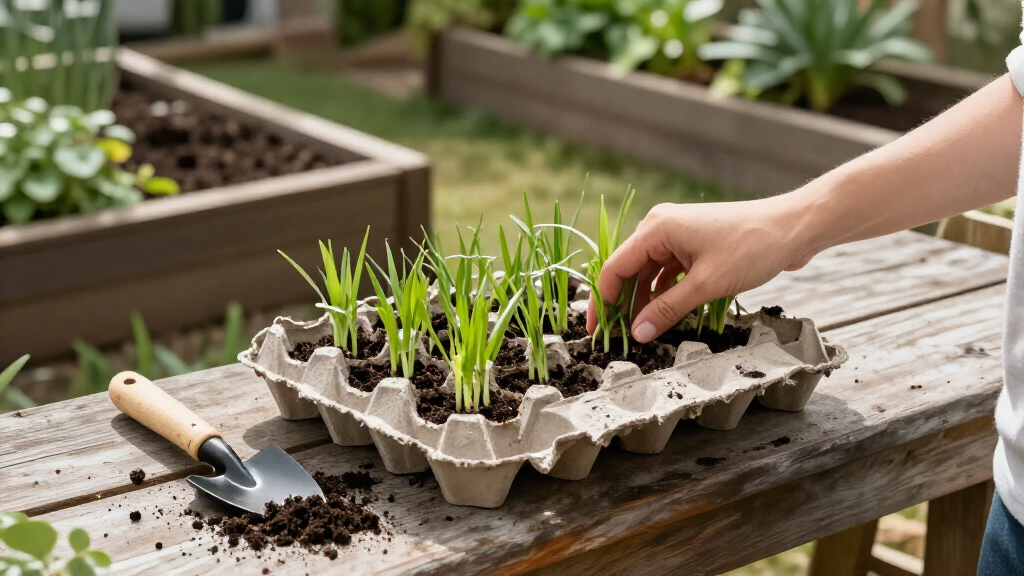
The method repurposes the carton as a soil stamper, rather than using its cups to start seedlings. Pressing the underside of the carton into prepared soil leaves a pattern of depressions. Seeds can then be placed in the holes and covered with soil. A full carton can make up to 12 holes in one press, according to the report.
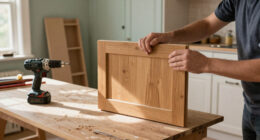
The video demonstration describes attaching an egg carton to a piece of scrap wood with hot glue. A handle or drawer pull can be fixed to the other side, making it easier to apply pressure. The wood provides a flat backing intended to help the cups press into the soil at a more even depth. The report says gardeners can also press a carton directly by hand, or cut it to make a smaller tool.
The carton’s existing cup pattern sets the distance between holes, which can be useful for plants suited to close spacing. The report identifies carrots, greens and radishes as examples that may need about 1 to 2 inches between seeds. It gives beans, beets, peas and onions as examples that need roughly 4 inches, while some seeds require 8 to 12 inches or more. Those figures are guidance from the report, not a universal planting chart; gardeners should check instructions for their specific crop and variety.
A Faster Way to Mark Seed Rows
The practical appeal is speed: instead of making planting holes one by one, a gardener can make a group in a single press. The tool also uses a household item that might otherwise be discarded, and its size can be adjusted by cutting the carton down. For a small garden or a row of closely spaced seeds, that may make sowing simpler and more consistent.
But the carton is not a universal planting guide. Its molded spacing may be too narrow for crops that need more room, and a deep press can create holes that are too deep for small seeds. Since the report says the carton may soften and last no more than a season, the idea is best understood as a low-cost, temporary aid—not a replacement for crop-specific spacing and depth instructions.
Popular right now

Vitamix Propel Series 750 Professional-Grade Blender, 4 Programs, Black

Dyson V8 Cyclone Cordless Vacuum

Bose QuietComfort Wireless Noise-Cancelling Headphones, Petal Pink
As an affiliate, we earn on qualifying purchases.
How the Carton Stamp Works
The report presents the technique as a different use for an empty carton from the familiar practice of starting seedlings in its compartments. Here, the carton’s shape supplies a repeated pattern: its cups leave depressions in the soil, and seeds go into those depressions after the carton is lifted. The source credits the demonstration to the 5-Minute Crafts TEENS YouTube channel; the supplied material does not describe an independent trial of the method.
For wider spacing, the report suggests cutting individual cups from a carton and attaching them to a yardstick or a long, narrow piece of wood at the distance required. This changes the tool’s layout rather than relying on the carton’s original close-set cups. The report also cautions that planting depth depends on seed size: small seeds may need about ⅛ to ¼ inch, slightly larger seeds about ½ inch, and the largest seeds around 1 inch. Pressing the tool fully into the soil could exceed those depths.
“The carton is used “to plant the seeds,” rather than to put the seeds in the carton.”
— Hunker report
Spacing and Depth Depend on Seeds
The source does not report controlled testing, measured time savings, or results across different soil types. It also does not specify how firmly to press the carton or how the tool performs in compacted, wet or uneven soil. The hole pattern depends on the particular carton, and the report warns that the carton can become soft with use.
Planting recommendations vary by crop and may depend on variety and growing conditions. The examples and measurements in the report should not be treated as instructions for every seed. Gardeners should consult the seed packet or a reliable crop-specific guide, especially for depth, thinning and final spacing.
Check Seed Instructions Before Pressing
Anyone trying the method can start by matching the carton’s cup spacing to the seed packet’s directions, then cut the tool down or reposition individual cups if needed. Press only far enough to make holes at the required depth, place seeds in the depressions, and cover them as directed. A scrap-wood backing and handle are optional features described in the demonstration, not requirements for using a carton by hand.
The next step is ordinary garden monitoring: watch for germination and follow the crop’s instructions for thinning or additional spacing. The source offers no reported follow-up data on how well the technique performs over a growing season, so its usefulness will depend on the carton, soil and seeds involved.
Key Questions
What does the egg carton do in this gardening method?
It is pressed into prepared soil to make a group of planting depressions. Seeds are placed in those holes after the carton is lifted; the method does not use the carton as the place where seeds grow.
Can I use a full carton for any seeds?
No. The carton’s cups have fixed spacing, which may be too close for some crops. Check the seed packet and use a modified tool or another planting method when the required spacing differs.
How deep should the holes be?
Depth depends on the seed. The Hunker report gives approximate ranges of ⅛ to ¼ inch for small seeds, about ½ inch for somewhat larger ones, and around 1 inch for the largest. Follow crop-specific instructions and avoid pressing the carton too deeply.
Do I need to attach the carton to wood?
No. The report describes gluing the carton to scrap wood and adding a handle to help apply even pressure, but says it can also be pressed into the soil by hand.
Source: rss