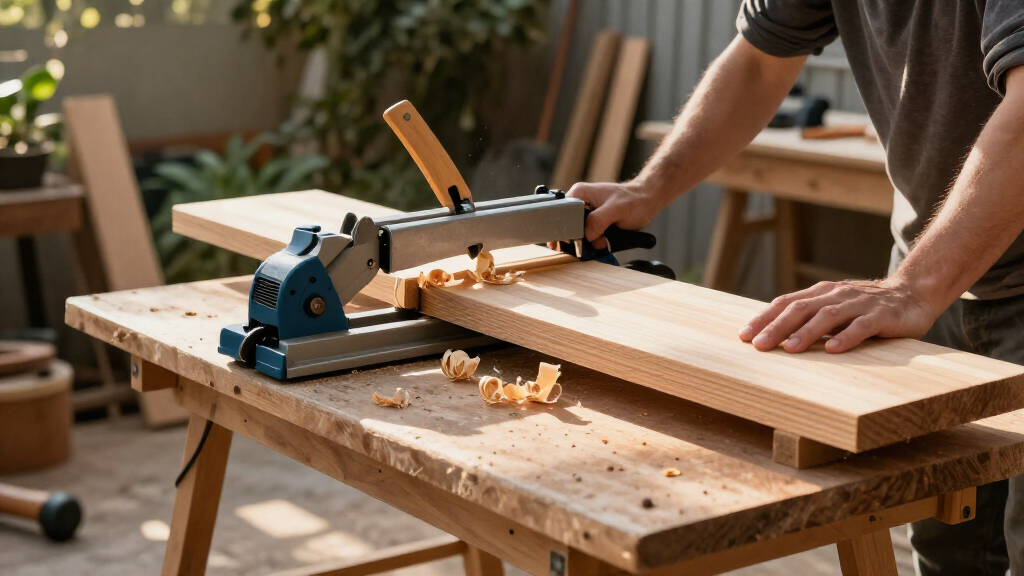

Among these portable thickness planers, I’d put the DEWALT DW735 first for its two-speed feed and broad appeal to woodworkers who want a versatile benchtop machine. The WEN PL1326 stands out for its spiral cutterhead, while the Makita 2012NB is a more compact choice for buyers who put easier transport ahead of extra width. The main tradeoffs are cut quality, board capacity, noise, portability, and cutter maintenance; a wider planer or helical head can add capability but may not suit every shop or budget. I compare all 14 options by their practical strengths and limitations so you can match a planer to your projects. Read on for the full breakdown and buying guidance.

Get business pricing on tools and workshop supplies
- Business-only prices and quantity discounts
- Tax-exempt purchasing
- Multiple users, one account, clear invoices
Complete the kit



Key Takeaways
- The DEWALT DW735 is the most balanced pick: its two-speed feed gives buyers more control over the finish-versus-throughput tradeoff than a single-speed setup.
- Spiral and helical cutterheads define many of the lineup’s differences: models such as the WEN PL1326 and JET 13-inch planer prioritize cutterhead design, while two-knife choices keep the setup more straightforward.
- Portable does not mean equally easy to move: the Makita 2012NB’s 12-inch capacity makes it a more compact option than the 13-inch benchtop machines, while the JET 20-inch model serves a different, less mobile role.
- Included support changes the setup equation: the VEVOR 13-inch model with a foldable iron stand may appeal to buyers who need a dedicated working base, unlike planer-only options.
- The lineup spans very different workshop needs: compact transport, wide capacity, cutterhead style, and feed control matter more here than treating every 12- or 13-inch planer as interchangeable.
| WEN PL1326 15-Amp 13-Inch Spiral Benchtop Thickness Planer |  | Best Value Spiral Cutterhead | Power source: Corded electric | Motor: 15 A | Maximum rotational speed: 10,000 RPM | VIEW LATEST PRICE | See Our Full Breakdown |
| DEWALT DW734 12.5-Inch Benchtop Planer |  | Best for Long, Steady Stock Support | Power source: Corded electric | Motor: 15 A | Maximum rotational speed: 20,000 RPM | VIEW LATEST PRICE | See Our Full Breakdown |
| DEWALT DW735 13-Inch Two-Speed Thickness Planer |  | Best Overall for Adjustable Finish Control | Type: Benchtop thickness planer | Motor: 15 A | Width capacity: 13 inches | VIEW LATEST PRICE | See Our Full Breakdown |
| VEVOR 13-Inch Thickness Planer with Foldable Iron Stand and Dust Exhaust |  | Best Portable Package with Included Stand | Motor power: 15 A / 1800 W | Blade speed: 8000 RPM | Feeding speed: 236 inches per minute (6 m/min) | VIEW LATEST PRICE | See Our Full Breakdown |
| JET 13-Inch Benchtop Thickness Planer with Helical Cutterhead |  | Best Premium Helical Cutterhead | Planing capacity: 13 inches wide × 6 inches thick | Cutterhead: Helical, with 30 four-sided carbide inserts | Motor: 2 HP, 15 A, 120 V | VIEW LATEST PRICE | See Our Full Breakdown |
| DEWALT DW735X 13-Inch Thickness Planer |  | Best Overall for a Fixed Workshop | Cutting width: 13 inches | Motor: 15 A, corded electric | Feed speeds: 96 or 179 CPI | VIEW LATEST PRICE | See Our Full Breakdown |
| WEN PL1252 15-Amp 12.5-Inch Two-Blade Benchtop Thickness Planer |  | Best Value for Everyday Benchtop Work | Cutting width: 12.5 inches | Maximum cutting thickness: 6 inches | Motor: 15 A, corded electric | VIEW LATEST PRICE | See Our Full Breakdown |
| FindBuyTool 13-Inch Benchtop Thickness Planer with Helical Cutterhead (FB132H) |  | Best Helical Head for a Portable Shop Planer | Cutting width: 13 inches | Cutterhead: Four-row helical head with 40 carbide inserts | Motor: 2.5 HP, 15 A | VIEW LATEST PRICE | See Our Full Breakdown |
| Makita 2012NB 12-Inch Portable Planer |  | Best for Compact Transport and Quick Blade Changes | Cutting width: 11.86 inches | Noise level: 83 dB | Power source: Listed as hand powered | VIEW LATEST PRICE | See Our Full Breakdown |
| JET Black 20″ Thickness Planer, Helical Head, 50% Less Friction, 5 HP |  | Best Wide-Capacity Workshop Planer | Planing width: 20 inches | Maximum thickness: 8 inches | Power: 5 HP, 230 V, single phase, 20 A | VIEW LATEST PRICE | See Our Full Breakdown |
| VEVOR 13-Inch Two-Blade Benchtop Thickness Planer |  | Best for Long, Wide Stock | Cutting width: 13 in | Maximum board thickness: 6 in | Motor: 15 A, 2000 W | VIEW LATEST PRICE | See Our Full Breakdown |
| VEVOR 13-Inch Spiral Benchtop Thickness Planer |  | Best Spiral-Head Value | Model: M1B-LS-3301 | Cutting width: 13 in | Maximum board height: 6 in | VIEW LATEST PRICE | See Our Full Breakdown |
| CRAFTSMAN 12.25-Inch Benchtop Thickness Planer, 15 Amp, Two-Knife (CMEW320) |  | Best for Reversible-Knife Maintenance | Model: CMEW320 | Cutting width: 12.25 in | Motor: 15 A | VIEW LATEST PRICE | See Our Full Breakdown |
| WOODERS 13-Inch Benchtop Thickness Planer, 15A, 2000W |  | Best for Included Spare Blades | Model: PL13-15AB | Planing width: 13 in (330 mm) | Planing height range: 1/4–6.3 in (6–160 mm) | VIEW LATEST PRICE | See Our Full Breakdown |
| portable thickness planer | Motor | Weight | Cutterhead | Cutting width |
|---|---|---|---|---|
| WEN PL1326 15-Amp 13-Inch Spir | 15 A | — | Spiral, with 26 staggered, rotatable HSS blades | — |
| DEWALT DW734 12.5-Inch Benchto | 15 A | — | — | 12.5 inches |
| DEWALT DW735 13-Inch Two-Speed | 15 A | 80 or 92 lb. (product data gives conflicting figures) | Three-knife, 10,000 RPM | — |
| VEVOR 13-Inch Thickness Planer | — | — | — | — |
| JET 13-Inch Benchtop Thickness | 2 HP, 15 A, 120 V | 66 lb | Helical, with 30 four-sided carbide inserts | — |
| DEWALT DW735X 13-Inch Thicknes | 15 A, corded electric | 102 pounds | Three knives | 13 inches |
| WEN PL1252 15-Amp 12.5-Inch Tw | 15 A, corded electric | 55.6 pounds | — | 12.5 inches |
| FindBuyTool 13-Inch Benchtop T | 2.5 HP, 15 A | 70 pounds | Four-row helical head with 40 carbide inserts | 13 inches |
| Makita 2012NB 12-Inch Portable | — | 28.07 kg | — | 11.86 inches |
| JET Black 20" Thickness Planer | — | 640 pounds | Four-row helical head with 68 carbide inserts | — |
| VEVOR 13-Inch Two-Blade Bencht | 15 A, 2000 W | 54 lb | Two knives | 13 in |
| VEVOR 13-Inch Spiral Benchtop | — | 61.7 lb | Spiral style with 24 alloy blades | 13 in |
| CRAFTSMAN 12.25-Inch Benchtop | 15 A | 27.71 kg | Solid steel, two-knife | 12.25 in |
| WOODERS 13-Inch Benchtop Thick | 15 A, 2000 W all-copper | — | — | — |
More Details on Our Top Picks
WEN PL1326 15-Amp 13-Inch Spiral Benchtop Thickness Planer
The PL1326 makes a strong case for a spiral cutterhead without stepping up to carbide inserts: its 26 rotatable HSS blades are arranged to smooth a board with smaller cutting edges rather than three long knives. That setup is appealing for DIY shops that want a refined finish and a way to rotate a dull or nicked edge. It matches the DEWALT DW735’s 13-inch width and 6-inch thickness capacity, but the DEWALT adds two feed speeds and fan-assisted chip ejection, while this WEN keeps the setup simpler. Its 26-foot-per-minute feed rate and 1/8-inch maximum cut call for measured passes, especially on demanding stock. Adjustable tables and a depth stop help with repeatable work, but the cord and dust-management needs keep it firmly in benchtop territory.
Pros:- Spiral cutterhead uses 26 rotatable HSS blades for a smoother finish than a basic two-knife head.
- 13-inch width and 6-inch thickness capacity accommodate substantial boards.
- Depth stop and material-removal gauge help repeat thickness settings.
- Adjustable infeed and outfeed tables help support stock and limit snipe.
Cons:- Corded power limits use to a location with a suitable outlet.
- Maximum cut depth is 1/8 inch, so heavy stock removal takes multiple passes.
- Its 26-foot-per-minute feed rate lacks the selectable finish and speed modes of the DEWALT DW735.
Best for: DIY woodworkers who want a 13-inch planer with a multi-blade spiral head for occasional furniture and solid-wood projects.
Not ideal for: Shops that need faster feed options, built-in chip ejection, or a planer they can use away from an outlet.
- Power source:Corded electric
- Motor:15 A
- Maximum rotational speed:10,000 RPM
- Feed rate:26 feet per minute
- Maximum board width:13 inches
- Maximum board thickness:6 inches
- Cutterhead:Spiral, with 26 staggered, rotatable HSS blades
- Included accessories:Depth stop and adjustable dust port
Our verdict“Choose the PL1326 if you want a capable 13-inch spiral-head planer for a home shop and can trade speed features for a straightforward setup.”
DEWALT DW734 12.5-Inch Benchtop Planer
The DW734 earns its place for woodworkers who value stable feeding and straightforward repeat settings over a wider cutterhead. Its extended tables support material across 33.5 inches, a useful advantage when planing long boards that might sag or tip at the infeed and outfeed. The three-knife head delivers 96 cuts per inch, while the four-column carriage lock helps keep the cutter assembly steady. Compared with the 13-inch DEWALT DW735, this model gives up half an inch of capacity and the choice of two feed speeds; in return, it offers a more focused setup with a material-removal gauge and turret depth stop. Reversible knives extend usable life, but they are disposable rather than individually rotatable inserts, so replacement is part of ongoing ownership.
Pros:- Extended feed tables support stock across 33.5 inches.
- Three-knife cutterhead produces 96 cuts per inch.
- Four-column carriage lock helps hold the cutter assembly steady.
- Turret depth stop and material-removal gauge simplify repeatable adjustments.
Cons:- At 12.5 inches, its cutting width is narrower than the 13-inch DW735 and WEN PL1326.
- Reversible knives are disposable and must be replaced when both edges wear.
- It has no selectable feed speeds for adjusting the finish-versus-throughput balance.
Best for: Woodworkers who regularly plane long boards and want generous table support with repeatable depth settings.
Not ideal for: Buyers who need 13-inch capacity, a spiral or helical cutterhead, or selectable feed speeds for finish control.
- Power source:Corded electric
- Motor:15 A
- Maximum rotational speed:20,000 RPM
- Cutter-head speed:10,000 RPM
- Cutting width:12.5 inches
- Maximum cutting depth:0.13 inches
- Cutterhead and cut rate:Three knives; 96 cuts per inch
- Feed table support:33.5 inches
- Warranty:Three-year limited warranty
Our verdict“Pick the DW734 if long-stock support and consistent setup matter more to you than a wider capacity or multiple feed speeds.”
DEWALT DW735 13-Inch Two-Speed Thickness Planer
The DW735 is the most adaptable all-around choice here because its two feed speeds let you choose between faster stock removal and a finer cut. That makes it a stronger fit for mixed project work than the DW734, which has a narrower 12.5-inch capacity and no feed-speed selection. The 13-inch, three-knife cutterhead can take up to 1/8 inch per pass, while the depth gauge and turret stop help make repeated thickness settings easier. Fan-assisted chip ejection also helps move shavings away from the cutting area, though dust collection still matters. The tradeoff is portability: the listed weight varies between 80 and 92 pounds, so I would treat it as a benchtop machine that can be moved occasionally, not one meant for frequent carry. Its knives are reversible but disposable.
Pros:- Two feed speeds let you prioritize faster planing or a finer finish.
- 13-inch width and 6-inch depth capacity suit a broad range of boards.
- Fan-assisted chip ejection helps clear shavings from the cutter area.
- Depth gauge and turret stop support repeatable thickness settings.
Cons:- The listed weight is inconsistent at 80–92 pounds, making frequent moving a poor fit.
- Three-knife cutterhead uses disposable knives rather than rotatable carbide inserts.
- Its corded benchtop format requires a stable work area and dust-management setup.
Best for: Home and small-shop woodworkers who process varied solid-wood stock and want both a faster feed option and a finer-finish setting.
Not ideal for: Buyers who need a lightweight planer for frequent transport or prefer a spiral head with individually rotatable cutting edges.
- Type:Benchtop thickness planer
- Motor:15 A
- Width capacity:13 inches
- Depth capacity:6 inches
- Cutterhead:Three-knife, 10,000 RPM
- Feed settings:96 or 179 cuts per inch
- Maximum cut depth:1/8 inch
- Weight:80 or 92 lb. (product data gives conflicting figures)
- Warranty:Three-year limited warranty
Our verdict“Choose the DW735 if you want a versatile 13-inch planer with selectable feed speeds and do not need to move it often.”
VEVOR 13-Inch Thickness Planer with Foldable Iron Stand and Dust Exhaust
Unlike the WEN PL1326 and DEWALT DW735, the VEVOR arrives with a foldable iron stand, making it a practical package for a garage or workshop where a dedicated planer bench is not available. Its 13-inch width and listed thickness range up to 6.3 inches cover stock sizes comparable to the other full-width benchtop options here. The double HSS blades and automatic feed keep the design straightforward, while the dust exhaust interface can connect to a collector. This is a more complete out-of-box workspace proposition than the JET planer, whose stand and dust collector are separate, but its blade setup is less elaborate than the JET’s 30 four-sided carbide inserts. Stand assembly takes time, and the provided data does not specify a cut-depth limit or weight, so I would not rank it for frequent transport or fine control over demanding cuts.
Pros:- Foldable iron stand provides a working base without requiring a separate planer stand.
- 13-inch maximum cutting width handles full-width boards in this class.
- Double HSS blades and automatic feeding support routine planing work.
- Dust exhaust interface is sized for connection to a dust-collection setup.
Cons:- Stand and accessory assembly can take time before the planer is ready to use.
- The product data does not state a maximum cut depth per pass.
- Blade design is less convenient to maintain than the JET’s four-sided carbide inserts.
Best for: DIY woodworkers setting up a small garage shop who need a planer and foldable stand in one package.
Not ideal for: Users who need detailed published cut-depth limits, a lighter carry-in tool, or a carbide-insert cutterhead for edge rotation.
- Motor power:15 A / 1800 W
- Blade speed:8000 RPM
- Feeding speed:236 inches per minute (6 m/min)
- Maximum cutting width:13 inches (330 mm)
- Cutting thickness range:0.2–6.3 inches (6–160 mm)
- Blades:Two double HSS blades
- Stand:Foldable iron stand
- Dust port:2-inch outer diameter / 1.8-inch inner diameter
Our verdict“Choose the VEVOR if an included foldable stand matters more than a documented cut-depth range or a premium cutterhead.”
JET 13-Inch Benchtop Thickness Planer with Helical Cutterhead
The JET is the premium pick for buyers who put cut quality and replaceable cutting edges ahead of all-in-one portability. Its helical head carries 30 four-sided carbide inserts, so a nicked edge can be rotated instead of replacing a full knife set; the design is also rated at 91 dB. Compared with the WEN PL1326’s spiral HSS blades, the JET uses carbide inserts and a specified 2 HP motor, but it costs you some convenience: the dust collector and stand are sold separately, and the machine weighs 66 pounds. Its folding tables and upright storage help reclaim shop space, while the maximum cut drops to 1/16 inch on full-width boards, so wide stock may take extra passes. It is designed for solid wood only, not sheet goods, painted lumber, or end grain.
Pros:- Thirty four-sided carbide inserts provide multiple usable cutting edges.
- Helical cutterhead is rated at 91 dB and is designed for smoother, quieter cuts.
- Folding tables and upright storage help reduce the planer’s storage footprint.
- Dual-size dust port accepts 4-inch and 2-1/2-inch hoses.
Cons:- Designed for solid wood only; unsuitable for plywood, particleboard, painted or reclaimed lumber, and end grain.
- Dust collector and stand are sold separately.
- Maximum cut depth falls to 1/16 inch on boards at full 13-inch width, adding passes on wide stock.
Best for: Woodworkers who mainly plane solid lumber and want a carbide-insert helical head with folding tables for compact storage.
Not ideal for: Buyers who plane plywood, particleboard, painted or reclaimed lumber, or who need a complete stand-and-dust-collection package.
- Planing capacity:13 inches wide × 6 inches thick
- Cutterhead:Helical, with 30 four-sided carbide inserts
- Motor:2 HP, 15 A, 120 V
- Cutterhead speed:9,500 RPM
- Feed rate:24.6 feet per minute
- Maximum depth of cut:1/8 inch on boards up to 6 inches wide; 1/16 inch at full width
- Dust port:Fits 4-inch and 2-1/2-inch hoses
- Weight:66 lb
- Warranty:Five-year limited warranty
Our verdict“Choose the JET if you plane solid wood regularly and value a carbide helical head more than included accessories or broad material compatibility.”
DEWALT DW735X 13-Inch Thickness Planer
The DW735X is my strongest pick for a workshop that needs broad capacity and dependable control rather than frequent carrying. Its two-speed gearbox lets me choose a faster feed for stock removal or a slower one for a finer finish, while the automatic carriage lock helps limit snipe without a separate manual step. The three-knife head is specified to provide 30% longer knife life, and the included tables and spare knives make it better equipped out of the box than the WEN PL1252. The tradeoff is its 102-pound weight and large footprint: this is portable in the benchtop-planer sense, not a machine I would want to move between jobsites often. Buyers prioritizing carbide inserts and a helical head should compare the FindBuyTool FB132H instead.
Pros:- Two feed speeds balance faster stock removal with finer finishing.
- Three-knife cutter head is specified for 30% longer knife life.
- Automatic carriage lock helps reduce snipe without manual engagement.
- Infeed and outfeed tables plus an extra knife set are included.
Cons:- At 102 pounds, moving it regularly is difficult.
- Its roughly 24.6-by-22-inch footprint takes substantial bench or storage space.
- The conventional knife head lacks the carbide-insert design of the FindBuyTool FB132H.
Best for: Woodworkers who want a 13-inch, two-speed planer to keep set up in a dedicated home or small professional workshop.
Not ideal for: Jobsite users or anyone who must carry and store a planer after each session; at 102 pounds, it is the heaviest practical obstacle in this lineup short of the JET 20-inch machine.
- Cutting width:13 inches
- Motor:15 A, corded electric
- Feed speeds:96 or 179 CPI
- Cutterhead:Three knives
- Cutting depth:0.13 inches
- Base material:Cast aluminum
- Weight:102 pounds
- Dimensions:24.58 × 22 × 20.97 inches
- Warranty:3-year limited warranty
Our verdict“Choose the DW735X for a well-equipped, two-speed 13-inch planer that can stay in your workshop, not for frequent transport.”
WEN PL1252 15-Amp 12.5-Inch Two-Blade Benchtop Thickness Planer
The WEN PL1252 makes a practical choice for buyers who want useful capacity and basic portability without the DW735X’s 102-pound heft. Its 12.5-inch width handles many common boards, and the reversible SK5 blades offer another usable edge before replacement. Height-adjustable infeed and outfeed tables help support stock as it enters and leaves the cutter, while the handles and predrilled mounting holes make it easier to move or secure than a permanently installed shop machine. Its 15-amp motor matches the DEWALT on amperage, but this WEN has one feed rate rather than a two-speed gearbox, so there is less flexibility between fast removal and fine finishing. At 55.6 pounds, it is movable but not effortless to lift, and it needs a separate stable bench or stand.
Pros:- 12.5-inch cutting capacity suits many furniture and general shop projects.
- Reversible SK5 blades provide a second cutting edge before replacement.
- Adjustable infeed and outfeed tables help support boards and limit snipe.
- Carry handles and predrilled mounting holes support transport or bench installation.
Cons:- Single 26-FPM feed rate offers less finish control than the DEWALT DW735X.
- At 55.6 pounds, it can be cumbersome to lift repeatedly.
- A separate stand or suitable workbench is needed for stable operation.
Best for: Hobbyist woodworkers who plane boards occasionally and want a 12.5-inch machine with reversible blades and carry handles.
Not ideal for: Users who need adjustable feed speeds, a ready-to-use stand, or a genuinely lightweight planer for frequent solo jobsite transport.
- Cutting width:12.5 inches
- Maximum cutting thickness:6 inches
- Motor:15 A, corded electric
- Feed rate:26 feet per minute
- Blade type:Two reversible 12.5-inch SK5 blades
- Depth adjustment:0 to 1/8 inch per pass
- Dust port:2 inches
- Weight:55.6 pounds
- Dimensions:22 × 23.5 × 18.25 inches
Our verdict“Pick the PL1252 for capable, occasional benchtop planing with reversible blades, provided you can supply a sturdy work surface.”
FindBuyTool 13-Inch Benchtop Thickness Planer with Helical Cutterhead (FB132H)
The FindBuyTool FB132H stands apart from the conventional knife designs on the DEWALT DW735X and WEN PL1252 with a four-row helical head and 40 carbide inserts. That setup is aimed at smoother cuts and reduced tear-out, a useful distinction when working with figured or difficult hardwood. Two feed rates—12 and 21 feet per minute—let me favor finish quality or throughput, and the precision height adjustment and anti-snipe device speak to buyers focused on accurate stock preparation. Its 70-pound weight is more manageable than the DW735X, though still not light for frequent carrying. Extendable tables and a 4-inch dust port make it better suited to a planned workshop station than an improvised jobsite setup. The 13-inch capacity is generous for a benchtop model, but it cannot handle wider stock.
Pros:- Forty carbide inserts in a four-row helical head are designed to reduce tear-out.
- Two feed rates allow a choice between quicker work and smoother finishing.
- Precision height adjustment and an anti-snipe device support accurate results.
- Extendable tables and a 4-inch dust port suit an organized shop setup.
Cons:- At 70 pounds, it is awkward to move frequently.
- The 13-inch capacity limits work on wider boards.
- Its helical head and workshop-focused setup may be more than occasional users need.
Best for: Woodworkers processing hardwood or figured boards who want carbide-insert cutting and two feed choices in a 13-inch benchtop format.
Not ideal for: Buyers who need a light carry-on planer, a cutting width beyond 13 inches, or a simpler conventional-knife machine.
- Cutting width:13 inches
- Cutterhead:Four-row helical head with 40 carbide inserts
- Motor:2.5 HP, 15 A
- Feed rates:12 or 21 feet per minute
- Maximum rotational speed:20,000 rpm
- Cutting depth:0.03 inches
- Dust port:4 inches
- Weight:70 pounds
- Dimensions:22 × 24.2 × 17.7 inches
Our verdict“Choose the FB132H if smoother hardwood planing and carbide inserts matter more than minimizing weight or setup needs.”
Makita 2012NB 12-Inch Portable Planer
The Makita 2012NB earns its place for buyers who value a compact planer format and quick blade changes more than maximum cutting width. Its stated cutting width is 11.86 inches, narrower than the WEN PL1252 and the 13-inch DEWALT DW735X, so it gives up some capacity for projects involving wide boards. Large table extensions help support longer stock, while the four-post construction and diagonal cross supports are intended to keep the work stable through the cut. Makita lists a quick-change disposable double-edge blade system, which favors straightforward blade swaps over the carbide inserts of the FindBuyTool FB132H. One specification needs careful attention: the supplied product data lists the power source as hand powered, unlike the corded electric machines here. At 28.07 kg, it also is not especially light to carry.
Pros:- Compact planer format is suited to transport and storage compared with larger shop machines.
- Disposable double-edge blades are designed for quick changes.
- Large table extensions support workpieces entering and leaving the cutter.
- Four-post design and diagonal cross supports provide structural stability.
Cons:- The listed hand-powered specification is a mismatch for buyers expecting a corded electric planer.
- Its 11.86-inch cutting width is narrower than the WEN PL1252 and 13-inch models.
- At 28.07 kg, it remains heavy to carry despite its portable design.
Best for: Woodworkers seeking a compact-format planer with table extensions and a quick blade-change system, after confirming the power configuration suits their needs.
Not ideal for: Buyers who require a clearly specified corded electric planer, maximum width, or a lightweight machine for frequent carrying.
- Cutting width:11.86 inches
- Noise level:83 dB
- Power source:Listed as hand powered
- Base material:Aluminum
- Weight:28.07 kg
- Dimensions:30.35 × 19.02 × 15.79 inches
- Blade type:Disposable double-edge blades
- Warranty:1 year
Our verdict“Consider the 2012NB for compact handling and quick blade changes only after verifying its power source and accepting its narrower capacity.”
JET Black 20″ Thickness Planer, Helical Head, 50% Less Friction, 5 HP
The JET JWP-208HH-BLK is the capacity specialist here, not a portable planer in the everyday carry sense. Its 20-inch width and 8-inch maximum thickness far exceed the 13-inch DW735X and FindBuyTool FB132H, making it the choice for wide stock and substantial shop workloads. A 5-HP motor drives a four-row helical head with 68 carbide inserts; the two feed speeds let users favor throughput or a more deliberate finish. The low-friction coated cast-iron table is intended to help stock move across the surface, and extension tables and a dust hood are included. Those advantages come with a 640-pound weight, 230-volt power, and a recommended 40-amp circuit. Unlike the benchtop options, this machine needs a dedicated installation and is not a realistic choice for jobsite portability.
Pros:- 20-inch capacity handles substantially wider stock than the benchtop models.
- Five-horsepower motor and two feed speeds suit demanding shop work.
- Helical head with 68 carbide inserts is designed for smooth cuts.
- Two extension tables, dust hood, and spare inserts are included.
Cons:- At 640 pounds, it is not practical to transport as a portable planer.
- Requires 230-volt power and a recommended 40-amp circuit.
- Mobile base and digital readout are sold separately.
Best for: Professional or serious shop woodworkers who routinely plane wide, thick stock and can dedicate space, power, and a fixed installation.
Not ideal for: Portable-workshop users, hobbyists with standard 120-volt-only setups, or anyone who needs to move a planer between jobsites.
- Planing width:20 inches
- Maximum thickness:8 inches
- Power:5 HP, 230 V, single phase, 20 A
- Recommended circuit:40 A
- Cutterhead:Four-row helical head with 68 carbide inserts
- Feed speeds:24 or 31 feet per minute
- Cutting depth per pass:3/32 inch
- Weight:640 pounds
- Warranty:5 years; 2 years for commercial use
Our verdict“Buy the JET only if you need its 20-inch capacity and have a dedicated, properly powered shop; it is not a portable alternative to the benchtop planers.”
VEVOR 13-Inch Two-Blade Benchtop Thickness Planer
The 13-inch capacity and included table extensions make this VEVOR a practical choice when your projects involve wide boards that need support entering and leaving the cutter. Its 15-amp motor and cast-iron bed give it a sturdier setup than a very light portable machine, while the vacuum-compatible dust port helps manage the heavy chip output a planer creates. Compared with the CRAFTSMAN CMEW320, it accepts wider stock and lists a 6-inch maximum board thickness; the CRAFTSMAN, however, is lighter on the listed specs and has reversible knives. This VEVOR uses a two-knife, single-speed cutterhead, so it lacks the smoother-cutting design of the VEVOR 24-blade spiral model. At 54 pounds, it is benchtop-portable, but not an easy lift for frequent solo repositioning.
Pros:- 13-inch cutting width accommodates wider stock than the CRAFTSMAN CMEW320.
- 15-amp, 2000-watt motor is suited to planing hardwood and softwood.
- Adjustable table extensions provide support for longer boards.
- Vacuum-compatible dust port helps collect chips.
Cons:- Single-speed, two-knife cutterhead offers less cutting versatility than a spiral-head design.
- At 54 pounds, it is cumbersome to move regularly.
- Corded 110-volt operation requires a suitable outlet near the work area.
Best for: Woodworkers who regularly dimension boards up to 13 inches wide and can leave a 54-pound planer set up on a bench.
Not ideal for: Buyers who need frequent easy carrying or want a spiral cutterhead for smoother cuts and less conspicuous knife marks.
- Cutting width:13 in
- Maximum board thickness:6 in
- Motor:15 A, 2000 W
- Maximum rotational speed:23,500 rpm
- Cutterhead:Two knives
- Table extension:12 in
- Base material:Cast iron
- Weight:54 lb
Our verdict“Choose this VEVOR if wide stock and extended board support matter more than light weight or spiral-head cut quality.”
VEVOR 13-Inch Spiral Benchtop Thickness Planer
For buyers prioritizing cut finish in a portable-size planer, this VEVOR pairs a 24-blade spiral cutterhead with a 13-inch capacity and a 2000-watt motor. Multiple small blades are designed to produce smoother results than the two-knife head in the VEVOR 13-Inch Two-Blade, a useful distinction when planing figured stock or when reducing visible cutter marks matters. The 2-inch and 4-inch hose compatibility also gives more flexibility when connecting to an existing dust collector. The tradeoff is its 61.7-pound weight and single-speed operation: it is better treated as a benchtop machine than a grab-and-go tool, and it does not offer speed selection for different work. Its aluminum-alloy base also differs from the cast-iron bed on the two-blade VEVOR, so buyers seeking that listed base material should compare carefully.
Pros:- 24-blade spiral cutterhead is designed for smoother cuts than a conventional two-knife head.
- 13-inch cutting width and 6-inch maximum board height accommodate substantial stock.
- Accepts both 2-inch and 4-inch dust hoses.
- 2000-watt motor is rated for hardwood and softwood planing.
Cons:- At 61.7 pounds, it is the heaviest of the two VEVOR models in this batch.
- Single-speed operation limits adjustment for different materials and finishes.
- Aluminum-alloy base may not suit buyers seeking the cast-iron base of the two-blade VEVOR.
Best for: Small-shop woodworkers who want a 13-inch planer with a multi-blade head and already have a stable bench and dust collection.
Not ideal for: People who carry their planer between work sites, need variable speeds, or specifically want a cast-iron base.
- Model:M1B-LS-3301
- Cutting width:13 in
- Maximum board height:6 in
- Cutterhead:Spiral style with 24 alloy blades
- Motor power:2000 W
- Maximum rotational speed:23,500 rpm
- Dust hose compatibility:2 in and 4 in
- Base material:ADC12 aluminum alloy
- Weight:61.7 lb
Our verdict“Pick this model over the two-knife VEVOR when spiral-head finish and flexible hose connections outweigh portability.”
CRAFTSMAN 12.25-Inch Benchtop Thickness Planer, 15 Amp, Two-Knife (CMEW320)
The CRAFTSMAN CMEW320 earns its place for buyers who value straightforward knife maintenance in a familiar benchtop format. Its double-edged, reversible high-carbon steel knives can be turned when one edge wears, offering a clear upkeep advantage over the two-knife VEVOR, whose supplied data does not specify reversible blades. The 12.25-inch width is narrower than the 13-inch VEVOR and WOODERS models, so it is a less suitable match for boards that use every bit of that extra capacity. Its solid-steel cutterhead runs at 8,000 rpm and delivers 16,000 cuts per minute, while a vacuum port supports chip collection. The listed weight of 27.71 kg makes its portability a concern despite the benchtop format. This is a sensible pick for routine dimensioning, not for buyers seeking a spiral head or a particularly easy-to-carry planer.
Pros:- Reversible, double-edged high-carbon steel knives provide another usable edge before replacement.
- 15-amp motor is specified for hard and soft wood.
- Vacuum port supports connection to dust collection.
- Listed as suitable for planing glued-up materials.
Cons:- 12.25-inch capacity is narrower than the 13-inch VEVOR and WOODERS models.
- Listed weight of 27.71 kg makes frequent moving difficult.
- Two-knife cutterhead lacks the spiral design of the VEVOR 24-blade model.
Best for: Hobbyist and small-shop woodworkers who want reversible knives and commonly work with stock narrower than 12.25 inches.
Not ideal for: Buyers who need a full 13-inch capacity, a spiral cutterhead, or a lightweight machine for frequent transport.
- Model:CMEW320
- Cutting width:12.25 in
- Motor:15 A
- Input voltage:120 V
- Cutterhead:Solid steel, two-knife
- Cutting rate:16,000 cuts per minute
- Cutting depth:0.13 in
- Knife type:Double-edged, reversible high-carbon steel
- Weight:27.71 kg
Our verdict“Choose the CRAFTSMAN if reversible knives matter more than 13-inch capacity or an easier-to-move setup.”
WOODERS 13-Inch Benchtop Thickness Planer, 15A, 2000W
The WOODERS stands out for a practical bundle: it combines 13-inch capacity with dual-edge HSS blades and includes two replacement blades, reducing the need to source spares separately. That makes it a more appealing choice for a buyer who expects regular blade changes than the CRAFTSMAN CMEW320, which has reversible knives but no replacement blades listed among its included items. Its 15-amp, 2000-watt motor, overload protection, height indicator, and dust port cover useful shop basics. The stated height range reaches 6.3 inches, slightly beyond the 6-inch maximum listed for both VEVOR planers. The main uncertainty is portability: no weight is provided, making it harder to judge whether it will be manageable to move. Its height indicator also covers only 0–1/8 inch, limiting what that scale communicates.
Pros:- 13-inch planing width handles wider stock than the CRAFTSMAN CMEW320.
- Includes two extra dual-edge HSS replacement blades.
- 15-amp, 2000-watt all-copper motor includes overload protection.
- Dust port and height indicator add useful setup and collection features.
Cons:- Product data does not specify the planer’s weight, making portability difficult to judge.
- Height indicator range is limited to 0–1/8 inch.
- 10,000 RPM cutterhead speed is lower than the listed 23,500 rpm on both VEVOR models.
Best for: Woodworkers seeking a 13-inch planer with spare blades included and who can verify its handling needs before setting up a bench.
Not ideal for: Buyers who need known machine weight for frequent transport or depend on a height indicator covering larger adjustments.
- Model:PL13-15AB
- Planing width:13 in (330 mm)
- Planing height range:1/4–6.3 in (6–160 mm)
- Motor:15 A, 2000 W all-copper
- Cutterhead speed:10,000 RPM
- Blades:Dual-edge HSS; includes 2 extra replacement blades
- Height indicator:0–1/8 in
- Protection:Overload protection
- Included dust equipment:Dust collector
Our verdict“Pick the WOODERS if spare blades and 13-inch capacity appeal, but check its weight before treating it as a frequently portable planer.”
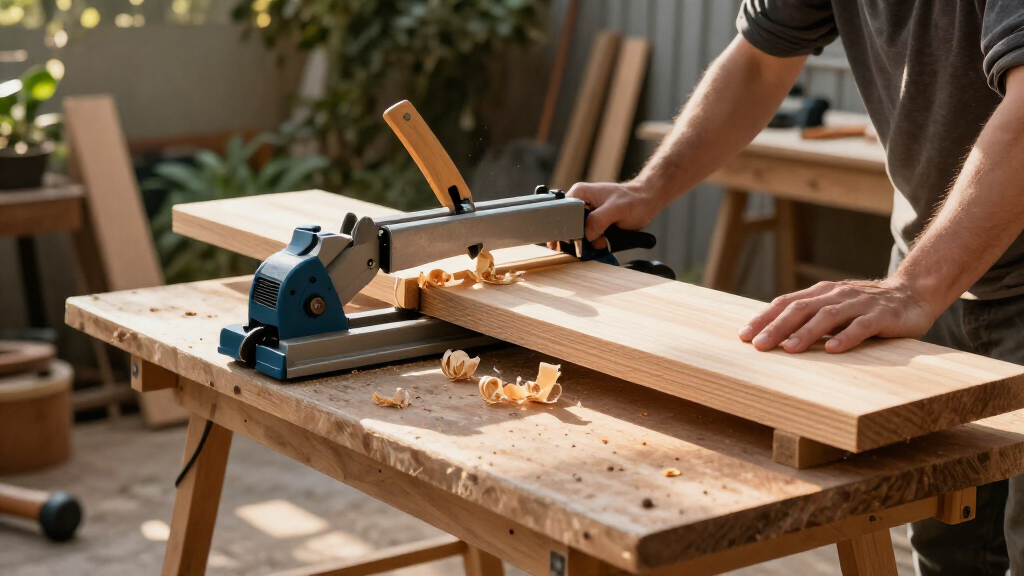
How We Picked
I compared the 14 planers through the lens of a portable workshop: capacity, cutterhead design, feed control, setup, maintenance, and mobility. A planer’s width and depth limits determine which stock it can handle, while cutterhead type affects the likely balance of surface finish, knife upkeep, and operating costs. I also looked at whether a model offers useful workflow features, such as multiple feed speeds or a stand, rather than treating motor power alone as a measure of usefulness.
The ranking favors machines that offer a strong mix of capability and practical usability for common shop tasks. That puts the DW735 ahead as a versatile choice, while specialized options earn distinct roles for cutterhead style, portability, or larger capacity. Benchtop machines with simpler two-knife setups remain relevant for buyers who prefer a more direct configuration, but their tradeoffs are weighed against the broader flexibility of other models. The JET 20-inch planer is included for buyers who need more width, though its size makes it a less natural fit for a roundup centered on portability.
Factors to Consider When Choosing Portable Thickness Planers
Before choosing a portable planer, I’d start with the work it needs to do and the space it will occupy. A feature that improves one shop’s workflow can add bulk, upkeep, or cost without helping another. These factors can help separate meaningful capability from specifications that may not affect your projects.
Match Planer Capacity to Your Stock
Planer width is a hard limit, not a suggestion: stock wider than the stated capacity will not pass through normally. Measure the boards you expect to surface, then allow for the occasional wider piece rather than buying capacity you will rarely use. Length matters too, because short boards can be harder to support and feed consistently, even when they fit the machine’s width. A 13-inch class planer gives more room than a 12-inch model, but it does not replace a larger stationary planer for wide furniture panels. Avoid choosing by the widest board you own alone; frequency of use and storage space should shape the decision as well.
Choose a Cutterhead With Upkeep in Mind
Knife and cutterhead design affects both surface quality and the work involved in keeping the machine ready. Straight-knife designs offer a familiar setup, but knife changes and alignment can take patience, especially for a new owner. Spiral or helical arrangements use multiple small cutters and can make upkeep more modular, though replacement cutters and the specific head design matter when planning long-term ownership. Neither style eliminates tearout, which also depends on grain direction, cut depth, and feed technique. Check the availability and replacement process for the cutters before buying, rather than assuming every head uses the same parts.
Decide Whether Feed-Speed Control Matters
Multiple feed speeds can help when you want to choose between faster stock removal and a slower pass aimed at a finer surface. That flexibility is useful for a mixed workload, but it adds little if most of your boards are simple construction stock and throughput matters most. A single-speed planer can still produce useful results when the cut is kept modest and the stock is prepared well. Do not confuse feed speed with cutting depth: taking too much material in one pass can strain the machine and worsen the finish. For occasional furniture work, controlled passes and sharp cutters may matter more than an extra speed setting.
Plan for Dust Collection and Noise
Thickness planers produce a large volume of chips, so dust handling can affect whether a portable machine works in a garage, basement, or shared shop. Check the dust port size and whether the exhaust arrangement suits your collector or extractor; an adapter may be needed, and a small shop vacuum may struggle with the volume. Noise is another practical limit, especially in attached homes or spaces with neighbors nearby. Hearing protection remains appropriate even when the machine has a dust exhaust. A planer that fits the bench but overwhelms the room’s dust and noise setup may be less usable than a simpler machine with a workable collection plan.
Count the Full Portability Setup
Portable can describe a machine that can be moved occasionally, not necessarily one that is convenient to carry every day. Consider the planer’s weight, footprint, handle or stand arrangement, and where it will sit while feeding long boards. A foldable stand may save floor space and offer a working height, but it does not make a large machine light. Benchtop models also need sturdy support and clear infeed and outfeed paths, which can take more room than the planer itself. Before buying, measure the route from storage to use and the available board-support space, not just the shelf where the tool will be stored.
Pay for Capacity and Features You Will Use
Higher capacity, more elaborate cutterheads, and extra feed control can make sense when they solve a recurring shop problem. They are harder to justify for occasional board flattening if the added bulk and maintenance outweigh the convenience. For a first planer, prioritize stable support, understandable adjustments, replacement-part access, and a setup you can safely use over a long list of features. Buyers who work with wide or figured stock may benefit more from a specialized cutterhead or larger capacity than those processing ordinary boards. Compare the machine’s likely upkeep and required accessories alongside its headline specifications to avoid paying for capability that stays unused.
Frequently Asked Questions
Is a 13-inch planer worth choosing over a 12-inch model?
A 13-inch planer gives you extra width for boards that exceed a 12-inch machine’s capacity, which can prevent awkward workarounds on occasional wide stock. The benefit depends on the lumber you actually use; if your projects stay within 12 inches, a more compact machine may be easier to store and move. Wider capacity can also mean a larger footprint and a heavier setup, so plan for support and board clearance. Compare the exact machine dimensions as well as the cutting width. The extra inch is most useful when it expands the range of projects you can complete regularly.
Should I choose a spiral or helical cutterhead over a two-knife planer?
A spiral or helical head may appeal if you want a cutter arrangement built around multiple small cutters and value the option to address individual cutters as needed. A two-knife planer has a simpler, familiar setup, but knife condition and alignment directly affect the cut. The names alone do not guarantee a better finish; grain, cut depth, and cutter sharpness all matter. Check how replacement parts are sourced and whether the upkeep suits your shop routine. For mostly occasional, straightforward surfacing, a two-knife model can be a practical choice; frequent work with challenging grain may justify closer attention to cutterhead design.
Can a portable thickness planer replace a jointer?
No: a thickness planer reduces board thickness and brings faces parallel, but it does not reliably create a flat reference face from a twisted or cupped board by itself. A jointer is designed to flatten one face and square an edge, while a planer follows the surface presented to its rollers. Some woodworkers use a sled to support uneven stock through a planer, but that adds setup and does not make the planer a direct jointer substitute. If your lumber is rough and warped, plan for a jointer, a suitable sled, or another flattening method before thicknessing. This distinction can prevent disappointment when a new planer leaves a board evenly thick but still bowed or twisted.
What should I check before buying a used portable planer?
Ask to inspect the cutterhead, knives or inserts, feed rollers, and infeed and outfeed tables for damage, wear, or residue that could affect feeding. If possible, run a board through the machine and check for snipe, uneven thickness, unusual vibration, and inconsistent feed. Confirm that replacement cutters and key parts remain available for that model, since a low purchase cost can be offset by hard-to-source components. Check the power requirements and dust port against your shop setup as well. A used planer can be a sensible choice when its condition is clear and the maintenance needs are understood.
When does a larger 20-inch planer make sense if portability is the priority?
A 20-inch planer makes sense when wide boards are a regular part of your work and a 12- or 13-inch benchtop machine would force frequent glue-ups or alternate methods. Its wider capacity comes with a larger footprint and a less convenient moving and storage routine, so it is a different kind of portable than a compact benchtop planer. Think about how often the extra width will be used, not just whether it might be handy one day. You will also need suitable support, power, and dust collection for a larger machine. If moving the planer between locations is central to your work, a smaller model is usually the more natural fit.
Conclusion
For most buyers seeking one versatile benchtop option, I’d choose the DEWALT DW735 as best overall, with its two-speed feed helping it handle a broader mix of work. The WEN PL1326 is my best value-style pick for shoppers drawn to a spiral cutterhead in a 13-inch format, while the JET 20-inch is the premium-capacity choice for shops that regularly surface wider stock and can accommodate a larger machine. Beginners who want a straightforward two-knife setup can compare the WEN PL1252 and CRAFTSMAN CMEW320, focusing on the capacity and support that suit their shop. For easier transport and a smaller working footprint, the Makita 2012NB is the specific-fit choice; for buyers needing a bundled work base, the VEVOR model with a foldable stand merits a look. My final advice is to choose by your typical board width, cutter maintenance preference, and available workspace—not by capacity alone.